How to Diagnose if Spark Plugs Cause Check Engine Light
Are you tired of that pesky check engine light turning on and unsure if your spark plugs are the culprit? You’re not alone—many drivers struggle to pinpoint the cause of engine issues.
Luckily, diagnosing spark plug problems doesn’t have to be complicated.
To diagnose if your spark plugs are causing the check engine light, start by checking for signs like rough idling, misfires, or hard starts.
Inspect the plugs for wear, fouling, cracks, or carbon buildup, and test their resistance with a multimeter.
Using an OBD-II scanner helps identify misfire codes linked to faulty plugs.
If you want to learn more about proper diagnosis techniques, keep exploring to get detailed guidance.
Key Takeaways
- Use an OBD-II scanner to retrieve error codes related to misfires or ignition issues, like P0300 or P030X.
- Inspect your spark plugs visually. Look for fouling, cracks, erosion, or damaged electrodes. These signs can point to potential problems.
- Test the spark plug resistance and spark strength using a multimeter or a spark plug tester. This helps you determine if the plugs are functioning properly.
- Check the spark plug gap and make sure it matches the manufacturer’s specifications. An incorrect gap can cause misfire codes and affect engine performance.
- It’s a good idea to correlate misfire data from live engine diagnostics with your visual inspection of the spark plugs. This way, you can confirm if the plugs are likely causing the issue.
How Do You Know If Your Spark Plugs Are Failing?
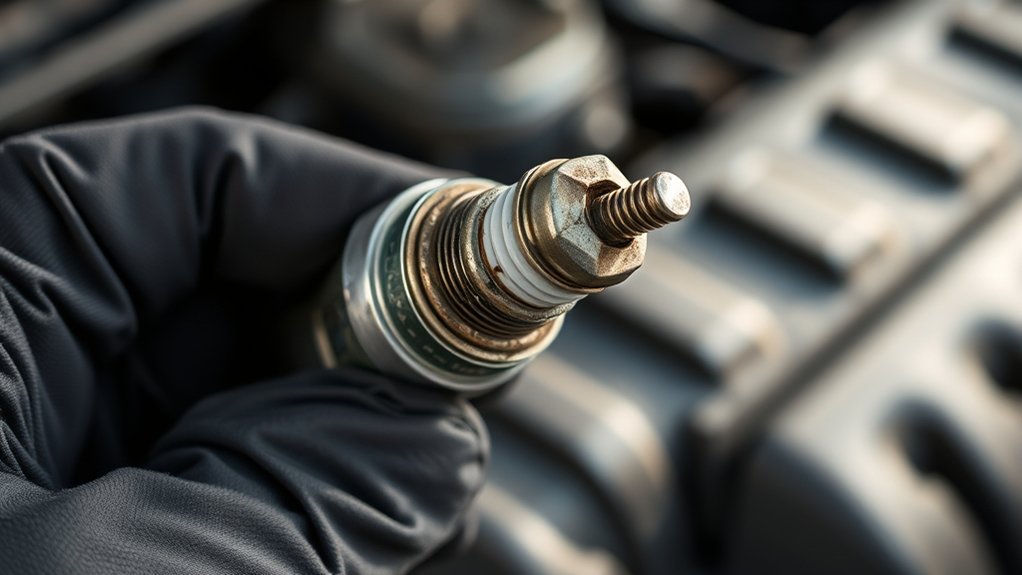
If your vehicle is running rough or hesitating, it might be a sign that your spark plugs are failing. Worn or fouled spark plugs often show visible signs like carbon buildup, cracked insulators, or eroded electrodes.
These issues can cause engine misfires, hesitation, or rough idling. You might also notice it’s harder to start the vehicle or that it takes longer to crank.
Engine misfires, rough idling, and difficulty starting are common signs of failing spark plugs.
A drop in fuel efficiency and sluggish acceleration are common symptoms linked to spark plug problems. Plus, a check engine light might come on, often pointing to misfire codes like P0300.
Wear on the spark plugs affects combustion, which leads to these performance issues. Spotting these symptoms early can help prevent more serious engine damage and keep your vehicle running smoothly.
How to Visually Inspect Your Spark Plugs for Wear and Damage
When inspecting your spark plugs, take a close look at the electrodes for any signs of wear, like erosion or rounded edges. These can affect how well your spark plugs perform.
Check the ceramic insulator for cracks, chips, or discoloration. Such damage could mean overheating or other issues that need attention.
Also, examine the ground and central electrodes for excessive wear or damage, as this can impact the sparking process and overall engine performance.
Signs of Electrode Wear
Inspecting your spark plugs visually is a crucial step in diagnosing engine issues, as worn or damaged electrodes can lead to misfires and poor performance. Electrode wear is a key indicator of spark plug health. Look for:
- Rounded edges or erosion on the electrode, which can reduce spark performance.
- Carbon deposits, oil fouling, or black soot on the electrodes and insulator tip, impairing ignition.
- Excessive wear, melting, or erosion on the ground electrode, which can disrupt the ignition system’s ability to generate a strong spark.
Compare all spark plugs to spot uneven wear patterns, as inconsistent electrode condition can cause engine misfires. Addressing electrode wear ensures reliable spark performance and smoother engine operation.
Detecting Physical Damage
Begin your inspection by removing each spark plug from the engine to carefully examine its condition. Check the ceramic insulator for cracks, chips, or white deposits, which can indicate damage.
Look closely at the electrodes for signs of excessive wear, erosion, or melting, as these issues impair spark efficiency. Inspect the spark plug tips for fouling, such as black soot, carbon buildup, or oil deposits, which suggest fouling or internal engine problems.
Examine the ground and center electrodes for rounded edges, erosion, or an increased gap that could cause misfires. Also, observe the threads and insulator for debris or deposits, as these can signal contamination or improper installation.
Identifying these signs of physical damage helps determine if spark plug replacement is necessary.
Are Engine Misfires and Rough Idling Signs of Bad Spark Plugs?
Engine misfires and rough idling are often signs that your spark plugs may be failing. When spark plugs are worn or fouled, they can’t ignite the air-fuel mixture properly, leading to engine performance issues.
Engine misfires and rough idling often indicate failing spark plugs affecting engine performance.
Specifically, you might notice misfires, hesitation, or sputtering during acceleration. You may also experience rough idling, with the engine running unevenly at stoplights or in neutral.
Symptoms like engine hesitation or irregular behavior are often linked to bad spark plugs with worn electrodes or carbon deposits. These signs can also trigger the check engine light with codes like P0300 or P030X.
A visual inspection of your spark plugs can reveal fouled plugs or damaged electrodes, confirming their role in your engine troubles.
How Can an OBD-II Scanner Help Diagnose Spark Plug Problems?
When your engine misfires or idles roughly, an OBD-II scanner can be a real help in figuring out if faulty spark plugs are the culprit. It pulls diagnostic trouble codes (DTCs), like P0300 or P030X, which point to engine misfires often linked to spark plug problems.
The scanner also shows live data, including misfire counts and performance for each cylinder. This makes it easier to spot which cylinder might be failing. By checking freeze frame data, you can see if the misfires match up with worn or failing spark plugs.
Plus, an OBD-II scanner helps you tell if spark plug issues are causing the problem or if something else is at play. It’s a key tool for troubleshooting engine performance issues and getting to the root of the problem.
How to Test Spark Plugs to Confirm They’re Working Properly
To confirm whether your spark plugs are working properly, you should perform a few simple tests that can reveal signs of wear or failure.
Start by visually inspecting the spark plugs for cracks, carbon buildup, or signs of wear, which could point to problems. Next, use a spark plug tester or multimeter to check the resistance and see if the plug produces a strong spark.
Inspect spark plugs for cracks, buildup, and wear; then test resistance and spark strength with a multimeter.
Reconnect the plug to the ignition wire, ground it against the engine block, and have someone crank the engine to look for a visible spark during the test. Also, check the electrode gap with a feeler gauge to make sure it matches the manufacturer’s specifications, as an incorrect gap can cause misfires.
These tests help determine if your spark plugs are causing engine issues or if they need replacing.
What Do Worn or Fouled Spark Plugs Look Like?
Worn or fouled spark plugs show clear visual signs that can help you know when it’s time to replace them. Look for black, soot-like deposits or oily residues on the electrode tips, which indicate fouling or carbon buildup.
The electrodes might look rounded, eroded, or even melted, signaling excessive wear or overheating. Cracks or chips on the ceramic insulator are also signs of physical damage.
Worn spark plugs often have a worn or rounded center electrode, which can impair ignition. Overall, they tend to look dark, greasy, or carbon-fouled.
When and How Should You Replace Your Spark Plugs?
Regularly replacing your spark plugs is key to keeping your engine running smoothly. Most vehicles need them changed every 20,000 to 30,000 miles.
If you notice symptoms like engine misfires, rough idling, or difficulty starting, it’s probably time to replace your spark plugs. Visual signs such as worn electrodes, cracks, or heavy carbon deposits also mean they need replacing.
To replace spark plugs properly, follow your vehicle’s manufacturer guidelines for the right type and mileage interval. This is especially important for platinum or iridium plugs, which can last up to 120,000 miles.
Make sure to use the proper tools and techniques during installation. This ensures reliable ignition and helps prevent future issues.
Regular vehicle maintenance should include checking and replacing spark plugs on schedule. Doing this helps prevent ignition problems and keeps your engine performing at its best.
Can a Bad Spark Plug Cause the Check Engine Light to Come On?
A faulty spark plug can indeed cause the check engine light to come on, especially if it leads to misfires. Faulty spark plugs disrupt proper ignition, resulting in misfiring sparks that impair engine performance.
When a misfiring spark occurs, the engine control module (ECM) detects irregularities and triggers the check engine light. It often shows codes like P0300 or P030X. While worn or fouled spark plugs are common causes, the ECM can’t directly identify a bad spark plug without further testing.
Other engine issues can also activate the light, so a thorough inspection is necessary. If your check engine light flashes or stays on, consider checking your spark plugs, as they play a key role in keeping your engine running smoothly and healthily.
Tips to Prevent Spark Plug Failures and Extend Their Lifespan
To prevent spark plug failures and extend their lifespan, keeping proper installation and timely replacements in mind is key. Follow your vehicle’s maintenance schedule, usually replacing spark plugs every 20,000 to 30,000 miles, to avoid wear and damage.
Regularly replacing spark plugs every 20,000 to 30,000 miles prevents wear and extends engine life.
Use high-quality, manufacturer-approved spark plugs like platinum or iridium to get the most durability. When installing, make sure the spark plug gap is correct to keep ignition performance at its best.
Address engine problems like oil leaks or carbon buildup quickly, as these can foul your plugs and lead to misfires. Keeping your ignition system clean and well-maintained also helps prevent unnecessary stress on the spark plugs.
Regular inspections and proactive maintenance can stop the check engine light from coming on due to spark plug issues. Staying on top of these tips can help your engine run smoothly and last longer.
Frequently Asked Questions
How Do I Know if My Check Engine Light Is on Because of My Spark Plugs?
You can tell if your check engine light is due to spark plugs by paying attention to engine misfires, rough idling, or poor acceleration.
Use an OBD-II scanner to check for trouble codes like P0300 that point to misfires.
Visually inspect your spark plugs for signs of wear or damage. Also, note if the engine runs poorly or if the light flashes—these often indicate spark plug problems.
How Long Do Spark Plugs Last in a Subaru Crosstrek?
You can expect spark plugs in your Subaru Crosstrek to last between 60,000 and 100,000 miles. Iridium and platinum plugs tend to last even longer, often over 100,000 miles.
Watch out for signs like misfires or rough idling. These are clues that your spark plugs might be nearing the end of their life.
Regular checkups help you stay ahead of problems and keep your engine running smoothly.
What Are Four Signs a Spark Plug Should Be Replaced?
You should replace your spark plugs if you notice visible signs like carbon buildup, oil deposits, or cracked insulators.
Engine misfires, hesitation, or rough idling also indicate they’re failing.
Reduced fuel efficiency and sluggish acceleration are additional warning signs.
Persistent knocking noises at idle, eroded electrodes, and excessive gaps mean it’s time for a change to keep your engine running smoothly.
What Kills Spark Plugs Quickly?
Think of your spark plugs as the heart of your engine—they beat best when cared for. Using the wrong type, running a rich fuel mix, or overheating due to improper gaps can quickly wear them out.
Short trips stop the plugs from reaching ideal temps, leading to fouling. Ignoring early signs like misfires or rough idling speeds up the damage.
If you neglect these issues, your spark plugs will give up faster than you expect. Proper maintenance keeps them running smoothly longer.
Conclusion
Don’t ignore that check engine light; it’s your car’s way of warning you. While a visual check might show worn spark plugs, only thorough testing can confirm if they’re the cause.
Think of your spark plugs as the heartbeat of your engine. When they fail, performance drops and misfires happen. Address problems early to keep everything running smoothly.
To diagnose if spark plugs are the culprit, start with a visual inspection for signs of wear or damage. But don’t rely on that alone—use a diagnostic scanner to pull trouble codes related to misfires or ignition issues.
A professional test, like a spark plug gap check or a compression test, can reveal if your plugs are faulty. These tests help determine if the plugs are causing the check engine light to turn on.
Ignoring small signs can turn a simple fix into costly repairs. So stay vigilant and proactive. Proper diagnosis of spark plugs will save you money and keep your engine running at its best.