How to Flat Tow a Jeep Wrangler in 7 Easy Steps
Many Jeep Wrangler owners want to flat tow their vehicle, but the process can seem complicated and intimidating at first. If you’re feeling overwhelmed or unsure where to start, you’re not alone. Flat towing your Jeep safely requires some planning and the right equipment, but it’s definitely doable with a step-by-step approach.
To flat tow your Jeep Wrangler in 7 easy steps, first check that your model is suitable and gather all necessary equipment. Attach the tow bar securely to the base plates, connect safety chains in a crisscross pattern, and verify tight connections.
Shift the transfer case into neutral, turn the ignition to ACC, and confirm steering is disengaged. Set up electrical wiring for signals and brake lights, then test all lights and connections.
Finally, perform a quick test drive and double-check everything for a safe tow—continue for detailed guidance.
Key Takeaways
- Verify your Jeep Wrangler is suitable for flat towing by checking the owner’s manual. Make sure the transfer case can shift into NEUTRAL.
- Attach the tow bar securely to the vehicle’s base plates. Connect safety chains in a crisscross pattern to ensure safety.
- Shift the transfer case into NEUTRAL, turn the ignition to ACC, and make sure the steering wheel is unlocked.
- Connect the electrical wiring properly. Before hitting the road, test all lights and signals to ensure they work correctly.
- Perform a low-speed test drive to confirm proper tracking. Double-check all connections and safety devices to be sure everything is secure.
Is Flat Towing Right for Your Jeep Wrangler?
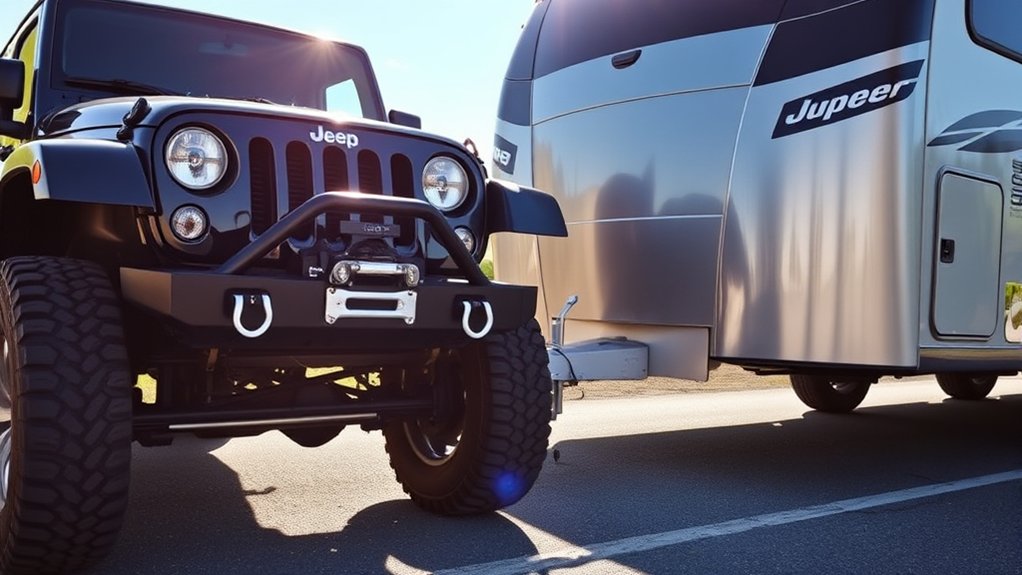
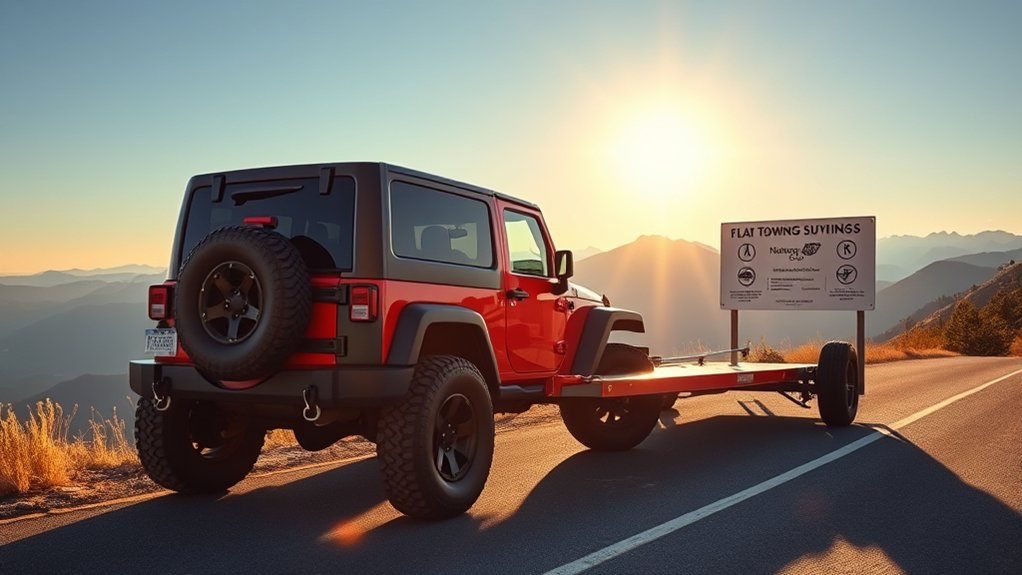
Whether flat towing is suitable for your Jeep Wrangler depends on its specific features and the manufacturer’s guidelines. Many Jeep Wranglers are designed for flat towing, especially those with factory-approved two-speed transfer cases that allow all four wheels to roll on the ground.
To flat tow safely, you need the right equipment, including a sturdy tow bar and a supplemental braking system. You also have to put the transfer case in neutral to prevent damage and ensure smooth towing.
However, not all models are suitable for flat towing, so always check the owner’s manual or manufacturer recommendations before you hit the road. Proper setup and following guidelines are essential to avoid costly damage and to make sure your flat towing is safe and successful.
Check Your Jeep and Equipment Before Towing
Before you start towing, it’s essential to confirm that your Jeep Wrangler is properly prepared and compatible with flat towing. Check your ownership manual to see if the transfer case can be shifted into NEUTRAL and if flat towing is recommended for your model.
Make sure the total weight, including cargo and accessories, stays within your RV or tow vehicle’s towing capacity. Inspect that the base plates are correctly installed and compatible with your tow bar.
Confirm that the wiring harness, safety cables, and supplemental braking system are rated for your Jeep’s weight and properly installed. Conduct a visual inspection of all connections, lights, and safety equipment.
Most importantly, verify that the transfer case is in NEUTRAL before you start towing to avoid any damage.
Attach the Tow Bar and Safety Chains Correctly
Start by securely attaching the tow bar to the base plates on your Jeep, making sure all pins and locks are fully engaged.
Next, connect the safety chains in a crisscross pattern beneath the tow bar, attaching them to the designated points on the frame.
Finally, double-check that all connections are tight and secure. Make sure there’s enough slack for steering, but not so much that they can drag.
Proper Tow Bar Attachment
To guarantee safe and secure flat towing, you need to attach the tow bar properly between your Jeep Wrangler and the RV. Start by connecting the tow bar to the Jeep’s base plates, making sure all pins are securely inserted and locked.
Next, attach the tow bar to the RV hitch, ensuring it’s firmly connected. Check that the tow bar is level with the ground to prevent stress on the connections and make for smooth tracking.
Then, connect safety chains from the Jeep to designated points on the RV, crossing them beneath the hitch for extra security. Use rated, heavy-duty safety cables capable of supporting at least twice the vehicle’s weight.
Regularly inspect all attachment points, pins, and safety chains to keep everything secure and in good shape during towing.
Correct Safety Chain Placement
Proper placement of safety chains is essential for secure flat towing. Start by attaching the safety chains to the designated tow hooks or D-rings on your Jeep, making sure they are connected to sturdy, reinforced points—not suspension or steering components.
Cross the chains underneath the tow bar. This creates a cradle that helps prevent the towed vehicle from separating if the connection fails.
Maintain a slack of about 6-12 inches in the chains. This allows for turns and uneven terrain without putting excessive tension on the system.
Use safety chain hooks or quick links rated at least 1.5 times the weight of your Jeep. Before every trip, inspect the chains for wear, corrosion, or damage, and replace any compromised links or hooks to ensure safety.
Ensuring Secure Connection
Ensuring a secure connection between your Jeep Wrangler and the RV is key for safe flat towing. Double-check that the tow bar is firmly attached to the base plates on your Jeep and the RV hitch, with all pins and latches fully engaged.
Safety chains should be connected correctly, crossing underneath the tow bar to form an X, which helps improve vehicle stability. Use rated safety cables or chains capable of supporting at least 1.5 times the weight of your Jeep, usually over 10,000 pounds.
Make sure safety chains are slack enough to handle turns but not so loose that they drag or get in the way. Always verify all connection points, pins, and locks before you start your trip to prevent accidental disconnection during towing.
Set Up Your Jeep: Transfer Case, Ignition, and Steering
Before flat towing, you need to set your Jeep correctly by shifting the transfer case into NEUTRAL and turning the ignition to the accessory position. This helps prevent damage to the transfer case and keeps the steering lock from engaging.
This is especially important on models after 2009. Always double-check that the transfer case is in NEUTRAL and the ignition is in the right position before you start moving.
Transfer Case Positioning
To flat tow your Jeep Wrangler safely, you need to properly set the transfer case to the NEUTRAL (N) position, which disengages the drivetrain. Confirm the ignition is in the accessory (ACC) position and the engine is off before shifting.
Depress and hold the brake pedal to prevent movement while shifting the transfer case into neutral. For automatic transmissions, shift into NEUTRAL after moving the transfer case, then turn off the engine. For manuals, use the clutch pedal to shift into NEUTRAL.
Always double-check that the transfer case remains in neutral after disconnecting. Follow proper procedures to avoid damage or safety issues. Proper transfer case positioning is essential for a safe flat tow of your Jeep Wrangler.
Ignition State Requirements
Have you checked your Jeep’s ignition position before flat towing? To make towing smooth, set the ignition to the ACC (accessory) position. This keeps the steering lock disengaged and allows shifting into Neutral easily.
For models after 2009, turning the ignition to ON can disable the steering lock, making steering free for towing. Some owners prefer to keep the key in their pocket or turn it to ON to avoid the steering lock during flat towing.
Always follow your owner’s manual for specific ignition procedures. This helps prevent damage to your drivetrain. Here’s a quick overview:
| Key Position | Transfer Case | Steering Lock |
|---|---|---|
| Off | Not relevant | Engaged |
| ACC | Neutral | Disengaged |
| ON | Neutral or Drive | Disengaged |
| Lock | Not relevant | Engaged |
| Start | Not relevant | Disengaged |
Steering Lock Considerations
Since 2009, Jeep Wranglers no longer have a steering column lock, so the steering wheel can turn freely when the ignition is in the ON position. This makes flat towing easier because you don’t have to worry about activating the steering lock.
To avoid issues, you should turn the ignition to the ACC position. This prevents the steering lock from activating and potentially damaging the steering components. For models before 2009, special procedures or disabling devices are needed to stop the steering lock from engaging.
Proper setup involves making sure the transfer case is in NEUTRAL, the ignition is in the right position, and the steering wheel is released. Remember, turning the ignition to ON after setup often keeps the steering wheel free, making towing safer.
- The ignition position determines whether the steering lock engages during towing.
- Modern Jeep Wranglers allow the steering wheel to turn freely in the ON position.
- Proper ignition positioning helps prevent steering lock issues and possible damage.
Connect Electrical Wiring for Brake Lights and Signals
Connecting the electrical wiring for brake lights and signals is a crucial step to ensure safe flat towing. You’ll use a four-wire electrical cord, usually around 80 inches long, to link your Jeep’s lighting system to the RV.
Make sure all wiring connections are secure and protected, especially through the engine compartment. Use flexible conduit or tubing to prevent damage from heat, debris, or movement.
Hard-wiring diode kits offer a permanent, hidden connection that shields your vehicle’s electrical system from back-feed currents. Before heading out, test all connections to make sure brake lights, turn signals, and tail lights work properly.
During your trip, regularly inspect the wiring for signs of wear, fraying, or corrosion. This helps keep everything running smoothly and ensures your safety.
Troubleshoot Common Flat Towing Problems
When flat towing your Jeep Wrangler, troubleshooting common problems quickly can save you from bigger issues on the road. If you notice the transfer case isn’t engaging properly or the brake lights aren’t working, it’s time to check your connections.
Make sure the ignition key is in the correct position, usually ACC or ON, to allow the transfer case to operate properly. Verify that the transfer is fully in NEUTRAL to avoid internal damage during the flat tow.
You should also inspect safety connections like wiring and chains, making sure they’re secure. Problems with the brake lights or signals often come from wiring issues, so test your brake lights before heading out.
Regularly check for mechanical or electrical issues that could interfere with a smooth, safe flat tow. Confirm the transfer case is fully in NEUTRAL, and always verify the ignition key position (ACC or ON). Inspect wiring and safety connections to keep everything in check.
Final Checks for a Safe and Smooth Tow
Before hitting the road, it’s important to do final checks to ensure a safe and smooth flat tow. Start by inspecting safety connections, making sure safety chains, wiring, and hitch pins are secure and properly attached.
Next, verify that the transfer case is in NEUTRAL and the transmission is correctly set to avoid damage to the drivetrain. Then, do a visual check to confirm that lights, signals, and brake systems are working and visible from the tow vehicle.
Double-check that the parking brake is released and that the vehicle is aligned with the tow bar for smooth operation. Finally, take a quick test drive at low speed to assess steering, braking, and tracking, ensuring all safety systems are functioning properly.
| Check Area | Action | Purpose |
|---|---|---|
| Safety connections | Secure chains, wiring, hitch pin | Prevent disconnection |
| Transfer case | Set to NEUTRAL | Protect drivetrain |
| Lights & signals | Confirm proper operation | Visibility and safety |
| Parking brake | Ensure released | Avoid drag or damage |
Frequently Asked Questions
How to Put a Jeep Wrangler in Flat Tow Mode?
To put your Jeep Wrangler in flat tow mode, shift the transfer case lever into NEUTRAL. Make sure the transmission is in PARK if you have an automatic or in neutral if it’s manual.
Start the engine briefly to engage the transfer case, then turn it off. Set the key to ACC (accessory) if you have an automatic, and check that all four wheels are on the ground.
Finally, verify the transfer case stays in NEUTRAL before you start towing.
How to Put a Jeep Wrangler in Neutral for Towing?
Think of putting your Jeep in neutral for towing like setting a ship’s anchor. You want everything stable before moving forward.
Start by turning your ignition to the ACC position to release the steering. Then, hold the brake and shift into Neutral.
For automatic transmissions, also shift the transfer case into Neutral. Start the engine briefly, then turn it off once you’ve confirmed everything is in Neutral.
Always double-check that all parts are in Neutral before you begin towing.
Can a Jeep Wrangler Be Flat Towed Behind an RV?
Yes, you can flat tow a Jeep Wrangler behind an RV, but it depends on your model. Many Wranglers with two-speed transfer cases are approved for flat towing when properly set up.
You need to shift the transfer case into NEUTRAL and verify all four wheels touch the ground. Always check your owner’s manual and manufacturer guidelines to confirm your specific Jeep model is suitable for flat towing and follow the correct procedures.
What Gear Should I Flat Tow My Jeep In?
When flat towing your Jeep Wrangler, you should put the transfer case into Neutral (N).
For example, if you’re planning a long trip, shifting the transfer case to Neutral ensures the drivetrain is disengaged, which helps prevent damage.
If your Jeep has an automatic transmission, keep the transmission in Neutral. For manuals, depress the clutch.
Always double-check your owner’s manual to verify the correct gear setting for your specific model.
Conclusion
Now that you’ve mastered these seven steps, you’re basically a flat-towing superhero, ready to conquer mountains of asphalt and highways with ease!
Your Jeep Wrangler will glide behind your vehicle like a loyal, unstoppable steed, turning heads and making everyone wish they were as cool as you.
Just remember, with great flat towing power comes great responsibility—so double-check everything, stay safe, and enjoy the epic adventures that await on every mile!