Do Spark Plugs Need to Be Torqued?
If you’ve ever struggled with engine misfires or wondered why your car isn’t running smoothly, you’re not alone. Many people find that small details, like spark plug torque, can make a big difference.
Yes, spark plugs need to be properly torqued to stay secure and function correctly. Correct tension prevents leaks, misfires, and damage to the threads or ceramic insulator.
Over-tightening can crack components, while under-tightening causes plugs to loosen over time. Using a torque wrench ensures consistent, accurate installation, especially when anti-seize is involved.
To find out the specific torque settings and best practices for your engine, keep exploring further.
Key Takeaways
- Proper torque is important to make sure spark plugs are securely seated. This helps prevent leaks or misfires.
- If you tighten them too much, you could strip the threads or crack the insulation. That can really damage the engine.
- On the other hand, if you don’t tighten them enough, the plugs might come loose. This can lead to poor engine performance or even damage.
- Using a torque wrench makes it easier to install the plugs correctly. It helps you follow the manufacturer’s specifications every time.
- Regularly checking the torque can keep your engine running smoothly. It also helps you avoid costly repairs down the line.
Why Is Proper Torque Critical for Your Spark Plugs?
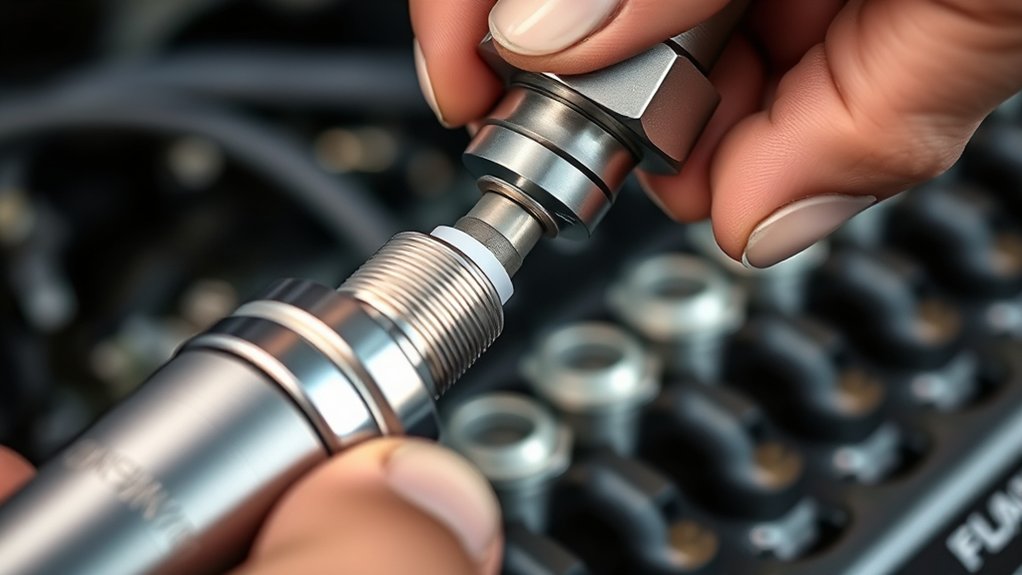
Proper torque is essential because it guarantees your spark plugs stay securely in place and work correctly. When you use the right torque, you make sure the spark plugs are firmly seated, preventing them from loosening due to engine vibrations.
Correct torque also helps maintain an effective seal with the crush washer, stopping leaks and misfires. Applying the manufacturer-recommended torque prevents thread damage and ensures proper heat transfer, keeping your engine running smoothly.
Over-tightening can deform the spark plug or damage the cylinder head threads, leading to costly repairs. On the other hand, under-tightening risks the spark plug loosening, which can cause misfires and poor engine performance.
What Happens if You Don’t Tighten Spark Plugs Correctly?
What happens if you don’t tighten your spark plugs correctly? If the proper plug isn’t secured properly, it can cause incomplete sealing, which leads to compression leaks and engine misfires.
Under-tightened plugs might loosen or even fall out, causing poor engine performance and potential damage. On the other hand, over-tightening can strip threads or crack the ceramic insulator, leading to costly repairs.
Incorrect torque also prevents proper heat dissipation. This can cause the spark plug to overheat and damage your engine over time.
Additionally, improperly installed plugs increase the risk of pre-ignition, knocking, and long-term engine issues.
Making sure you torque your spark plugs to the right specifications helps ensure peak performance, prevents damage, and keeps your engine healthy. Proper installation of the right plug is key for a smooth-running engine.
How Over-Tightening Sparks Damages Your Engine
Over-tightening your spark plugs can seriously damage your engine by stripping the threads in the cylinder head. This often leads to costly repairs.
Excessive torque can crack or eject the ceramic insulator, which causes misfires and poor performance. Applying too much force can also deform the spark plug housing and weaken the seal, leading to leaks and potential engine damage.
When you over-tighten, it stretches the spark plug shell, reducing its lifespan and increasing the risk of failure.
To help you understand the risks, here’s a quick comparison:
| Over-Tightening Consequences | Effects |
|---|---|
| Stripped threads | Difficult to install or remove spark plugs |
| Cracked ceramic insulator | Engine misfires and poor performance |
| Damaged housing | Leaks and potential engine damage |
| Stretched shell | Reduced lifespan and failure risk |
Always tighten spark plugs correctly to avoid these costly issues.
When Should You Use a Torque Wrench for Spark Plug Installation?
Using a torque wrench is essential whenever you install spark plugs, especially if the vehicle’s manufacturer specifies a specific torque value.
You should use a torque wrench whenever you’re installing new spark plugs or replacing existing ones. This tool helps you tighten the plugs to the correct specification and prevents over-tightening that can damage threads or the spark plug itself, especially on aluminum heads.
It’s especially important when dealing with spark plugs with crush washers or anti-seize compounds, as the torque wrench guarantees the proper force for a reliable seal.
For engines that require higher torque ratings, typically above 20 lb ft, a torque wrench becomes even more critical.
Using this tool promotes consistent, reliable sealing and reduces the risk of damage or misfire during installation.
What Are the Manufacturer’s Recommended Spark Plug Torque Settings?
Manufacturers specify spark plug torque settings to ensure a proper seal and prevent damage to the threads or the plug itself. These torque specs are usually listed on the spark plug packaging or in your vehicle’s service manual.
For most standard spark plugs, the recommended torque ranges from 15 to 20 lb-ft, but this can vary depending on the engine type and plug design. Using a torque wrench is essential to applying these specs accurately, so you don’t under-tighten or overtighten.
Getting the torque right helps with heat transfer, engine performance, and the lifespan of the spark plug. Always check your vehicle’s specific guidelines to find the correct torque settings and follow them closely for a safe and effective installation.
How to Properly Tighten Spark Plugs With a Torque Wrench
To guarantee your spark plugs are properly tightened, always set your torque wrench to the manufacturer’s specified torque value before you start. Start by hand-tightening the spark plug to make sure it threads in smoothly and correctly.
Always set your torque wrench to the recommended value before tightening spark plugs for proper, accurate installation.
Once it’s in place, use your torque wrench—preferably with a click or digital setting—to apply force. Gradually tighten the spark plug, and stop once the wrench signals you’ve reached the correct torque.
This helps prevent over-tightening and thread damage. Double-check the torque setting after installation to make sure the spark plug is secured to the right specifications.
Using a torque wrench makes sure everything is tightened consistently and accurately, which reduces the risk of damage and helps your engine perform at its best. Always follow the manufacturer’s recommended torque values for the best results.
Can You Tighten Spark Plugs Without a Torque Wrench?
You can tighten spark plugs by hand or with basic tools, but doing so without a torque wrench can be risky.
Guessing the right tightness increases the chance of over-tightening or under-tightening, which can cause damage or misfires.
Using the proper tools helps guarantee the plugs are installed correctly and safely.
Risks of Guesswork Tightening
Attempting to tighten spark plugs without a torque wrench can lead to serious problems. Without the right torque, you risk over-tightening, which can damage threads or crack the porcelain insulator. On the other hand, under-tightening can cause the plug to loosen over time.
Relying solely on “feel” isn’t reliable because it’s hard to gauge the proper torque manually. This guesswork can result in improper tightening, increasing the chances of engine misfires, reduced performance, or costly repairs.
Using a torque wrench ensures you tighten the spark plug precisely to the manufacturer’s specifications. This helps avoid damage from too much or too little torque.
Skipping the proper tool introduces unnecessary risks, jeopardizing engine integrity and longevity. Proper torque application is essential for safe, effective spark plug installation.
Proper Tool Benefits
Using a torque wrench to tighten spark plugs has clear advantages over just hand-tightening or feeling for tightness. It helps you meet the manufacturer’s exact specs, so you avoid damaging the plug or not tightening enough.
Without a torque wrench, it’s hard to apply the right amount of force. This can lead to over-tightening or under-tightening, both of which can cause problems. Hand-tightening alone might not be enough, especially when anti-seize is used, which changes how much force you need.
A torque wrench ensures consistent and accurate tightening. That’s crucial for proper sealing and heat transfer, helping your engine run smoothly.
Benefits of using a torque wrench include:
- Precise control to prevent engine damage
- Consistent tightening for optimal performance
- Lower risk of thread damage or leaks
How Does Anti-Seize Affect Spark Plug Torque and Installation?
Applying anti-seize compound on spark plug threads can significantly affect the torque needed for proper installation. Because anti-seize reduces friction, the spark plug may seat more easily, often requiring less torque than the manufacturer’s recommended value.
If you don’t adjust the torque, you risk over-tightening, which can damage threads or crack the ceramic insulator. When using anti-seize, it’s important to follow the manufacturer’s guidelines and reduce the torque slightly to prevent over-tightening.
The compound changes the force needed to achieve a proper seal, so always check the spark plug manufacturer’s torque specifications when applying anti-seize. Proper torque ensures a safe, effective installation and helps prevent future issues.
How Can You Tell If Spark Plugs Are Torqued Correctly?
How can you tell if spark plugs are torqued correctly? First, check that they’re seated flush against the cylinder head with no gaps or looseness.
Next, look for even compression of the crush washer and no signs of damage, like cracked ceramic or deformed housing. These can indicate over-tightening.
When using a torque wrench, listen for the click at the specified torque value. This confirms you’ve applied the right amount of force.
After tightening, gently test the spark plug by hand. It shouldn’t feel loose.
Proper torque keeps the spark plug secure, preventing misfires or damage. If all these signs check out, you’ve likely torqued your spark plugs correctly and maintained optimal engine performance.
How Often Should You Check Spark Plug Torque During Maintenance?
To guarantee your spark plugs stay properly secured and functioning well, it’s important to check their torque regularly during maintenance. Typically, you should inspect spark plugs every 30,000 miles or during each major service.
Regularly check spark plug torque every 30,000 miles or during major services to ensure optimal engine performance.
If you’ve removed or replaced the plugs, retorque them regardless of mileage to avoid issues. Regular inspections help catch loose or damaged plugs that could cause misfires or engine damage, affecting your vehicle’s performance.
Environmental factors like vibration and thermal expansion can loosen spark plugs over time, making periodic torque checks essential. Keeping the spark plugs properly torqued not only maintains peak engine performance but also protects your warranty.
Following the manufacturer’s maintenance schedule ensures your spark plugs stay secure and working efficiently, reducing the risk of costly repairs down the line.
Best Practices for Proper Spark Plug Installation
When installing spark plugs, always use a torque wrench set to the manufacturer’s specified torque to ensure proper tightness.
Start by tightening the plugs by hand to prevent cross-threading, then finish with the correct torque.
Following these best practices helps guarantee a secure fit and optimal engine performance.
Use a Torque Wrench
Using a torque wrench is essential for installing spark plugs correctly because it ensures you tighten them to the manufacturer’s specified torque. This tool gives you consistent, accurate force, which helps prevent over- or under-tightening that could damage threads or cause leaks.
When using a torque wrench, remember to set it precisely to the recommended torque value for your vehicle. Apply force smoothly until the wrench signals you’ve reached the correct tightness.
Make sure to confirm proper crush washer compression for a reliable seal and to prevent leaks. Investing in a torque wrench is cheap insurance that helps you avoid costly repairs caused by improper installation.
It also reduces the risk of damaging delicate components like aluminum heads or cracking the ceramic insulator. Proper torque ensures safe, reliable spark plug performance.
Follow Manufacturer Guidelines
Following the manufacturer’s guidelines is crucial for a proper spark plug installation because it ensures you apply the correct torque and get a reliable seal. Always check the vehicle’s service manual or spark plug packaging for specific torque values.
Using a calibrated torque wrench helps you tighten the plugs accurately, so you avoid guesswork or relying just on how it feels. When applying anti-seize compound, follow the manufacturer’s instructions because it can affect the torque needed.
Proper torque guarantees good heat transfer, prevents thread stripping, and reduces the risk of cracking. By sticking to these guidelines, you make sure your spark plugs are installed correctly, which helps the engine perform better and last longer.
Always check and follow the manufacturer’s instructions for safe, effective, and precise installation.
Frequently Asked Questions
Can I Just Hand Tighten Spark Plugs?
You shouldn’t just hand tighten spark plugs. Hand tightening alone isn’t enough to guarantee they’re properly sealed and secured.
Over-tightening can damage the threads or crush the washer, while under-tightening can cause misfires and poor heat transfer.
Use a torque wrench to apply the manufacturer-recommended torque. This ensures the spark plug is snug enough for peak performance without risking damage or leaks.
Following this method helps your engine run smoothly and prevents potential issues down the road.
Do Spark Plugs Need to Get Torqued?
Yes, spark plugs need to be torqued to the manufacturer’s specifications. You should use a torque wrench to tighten them properly, which prevents damage to the threads and insulator.
Over-tightening can deform the plug, while under-tightening risks loosening or leaks. Proper torque ensures a good seal, maximum heat transfer, and reliable engine performance.
Skipping this step can cause misfires, reduced efficiency, or damage over time. It’s an important step to keep your engine running smoothly.
What Kills Spark Plugs Quickly?
You might think spark plugs last forever, but certain habits kill them quickly.
Frequent short trips prevent proper cooling, causing overheating. Using the wrong heat ranges or contaminated plugs speeds up wear. Over-tightening damages the ceramic insulator or strips threads, leading to early failure.
Poor-quality plugs or neglecting proper installation also make them wear out faster. To make them last longer, follow torque specs, replace worn plugs promptly, and avoid short trips and contaminated parts.
How Tight Do Spark Plugs Need to Be Tightened?
You should tighten spark plugs to about 15 to 20 lb ft, but always check your vehicle’s manual for the exact torque. Use a torque wrench to prevent over-tightening, which can crack the plug or damage threads, or under-tightening, causing poor sealing and misfires.
For plugs with crush washers, tighten until the washer compresses properly without deforming the plug. Proper torque guarantees ideal performance and longevity.
Conclusion
Remember, tightening your spark plugs to the correct torque isn’t just about avoiding engine damage. It’s also about ensuring peak performance and longevity.
Did you know that improperly torqued spark plugs can reduce fuel efficiency by up to 15%? That’s a pretty big hit for something so simple.
By using a torque wrench and following manufacturer guidelines, you can keep your engine running smoothly. Plus, you’ll save money on repairs down the line.
Proper installation really makes all the difference. And yes, spark plugs need to be torqued correctly to keep your engine in top shape.