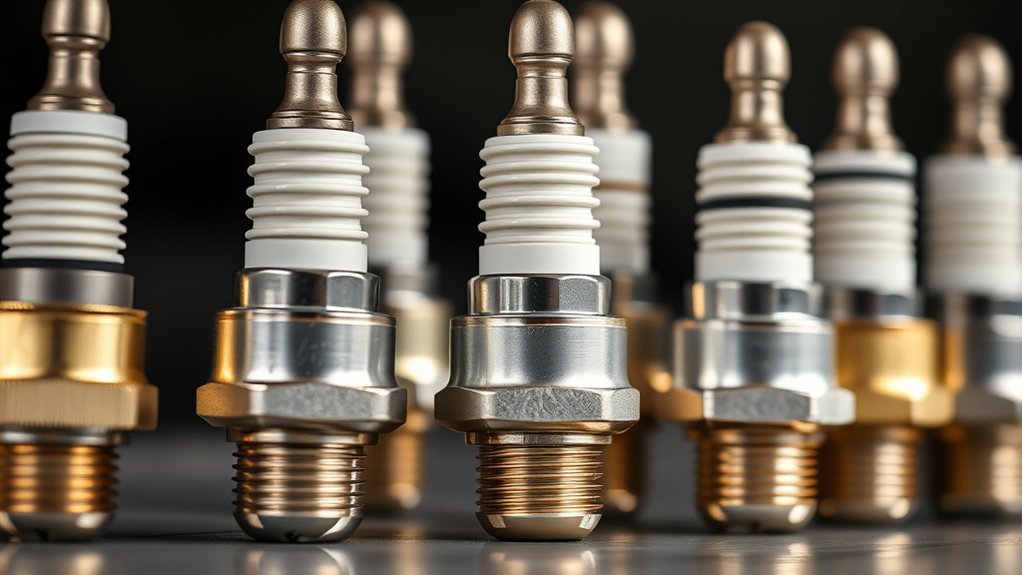
7 Ways Different Spark Plug Materials Do Affect Engine Performance
Are you tired of engine misfires, poor fuel economy, or inconsistent performance? You’re not alone—many drivers struggle with choosing the right spark plug material for their engine. The good news is, understanding how different materials impact performance can make a big difference.
Different spark plug materials impact your engine’s performance in several ways. They affect durability, heat resistance, and ignition stability, which influences smoothness and fuel efficiency.
Copper offers strong sparks but wears out faster, while platinum and iridium last longer and handle higher temperatures better. Choosing the right material also helps prevent misfires and supports ideal combustion.
To learn how each material can improve your engine’s efficiency, keep exploring what suits your driving style best.
Key Takeaways
- Material durability affects how long your spark plugs last. This, in turn, impacts how often you need to perform maintenance and can influence your engine’s long-term reliability.
- Heat tolerance is key to preventing issues like pre-ignition and knocking. When spark plugs handle heat well, your engine runs more smoothly and stays stable.
- Electrode wear resistance helps keep the spark quality consistent over time. That means your engine runs smoothly and efficiently, saving you fuel and reducing misfires.
- The material’s heat range plays a role in ignition stability and how well combustion happens. This directly affects your engine’s power output and overall performance.
- Choosing the right material reduces misfires and makes ignition more reliable. All of this adds up to a better and more dependable engine experience.
Understanding Spark Plug Materials and Their Basic Differences
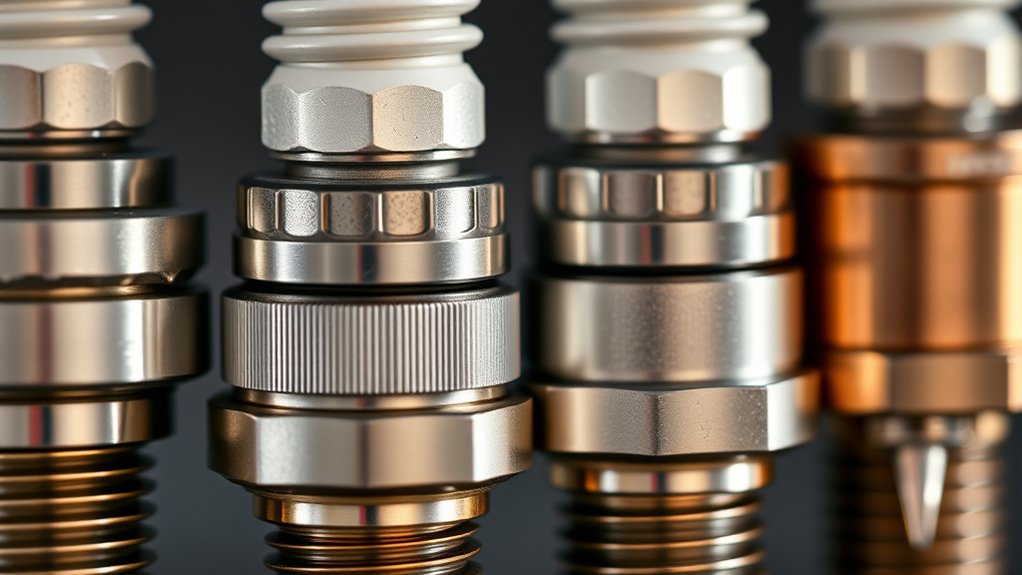
Understanding the different materials used in spark plugs is essential because these materials directly impact their performance, durability, and efficiency. Spark plug materials, such as copper, platinum, and iridium, each offer unique benefits.
Copper spark plugs feature a copper core electrode, providing excellent electrical conductivity and ignition efficiency. However, they wear out faster and usually need replacement every 20,000 miles.
Copper spark plugs offer excellent conductivity but typically need replacing every 20,000 miles.
Platinum spark plugs have a durable platinum disc, which improves electrode durability and heat resistance. This extends their lifespan to about 60,000 miles.
Iridium spark plugs contain a very hard iridium electrode, making them the most durable option with a lifespan exceeding 100,000 miles. These materials influence heat resistance, spark quality, and overall engine performance.
Choosing the right spark plug depends on your needs for maximum efficiency and longevity.
How Spark Plug Material Affects Durability and Service Life
The material of your spark plug directly impacts its durability by determining how well it withstands high temperatures and pressure. Stronger metals like iridium resist electrode erosion and last much longer.
Materials with lower heat tolerance tend to wear out faster. Understanding these factors can help you choose the right spark plug for better performance and a longer service life.
Metal Strength and Resistance
The strength and resistance of spark plug materials are key to how long they last and how durable they are. High metal strength helps the electrodes resist erosion and wear over time, which directly affects their lifespan.
Iridium’s high-temperature resistance and hardness let it keep a fine electrode tip, boosting electrical conductivity and durability. Platinum is six times harder than nickel, making it more resistant to erosion and helping it last longer.
Copper is softer and erodes faster, so it needs to be replaced more often. The table below summarizes these differences:
| Material | Resistance to Wear | High-Temperature Resistance | Electrode Durability |
|---|---|---|---|
| Iridium | Very high | Excellent | Superior |
| Platinum | High | Good | Very good |
| Copper | Low | Moderate | Short |
Choosing the right material can improve engine performance by offering maximum resistance and durability.
Heat Tolerance Levels
Material choice directly impacts a spark plug’s heat tolerance, which in turn affects its durability and service life. The spark plug material determines its ability to withstand high temperatures without electrode melting or fouling, which is essential for maintaining engine efficiency.
Iridium, with a heat tolerance up to 2,600°C, offers superior high-temperature performance and fouling resistance. It’s ideal for demanding engines. Platinum tolerates around 1,700°C and provides a good balance of durability and heat range.
Copper, with a maximum of about 1,200°C, has lower heat tolerance. This limits its lifespan in high-performance applications. The material composition influences the heat range, affecting how well the ignition system dissipates heat.
Electrode Wear Rate
Ever wondered why some spark plugs last longer than others? The electrode wear rate is key to how durable and long-lasting your spark plug is. The material of the electrode impacts erosion resistance, which directly affects how well your spark plug keeps a consistent spark and keeps your engine running smoothly.
Copper electrodes wear out pretty quickly, usually needing replacement around 20,000 miles. Platinum electrodes resist wear better and can last up to 60,000 miles. Iridium electrodes are the most durable, lasting about 100,000 miles because they have superior erosion resistance.
Choosing higher durability materials like iridium means fewer replacements and a longer lifespan for your spark plug. This not only saves you money but also helps keep your engine running efficiently over time. The electrode material you pick really impacts both durability and overall engine performance.
Impact of Metal Types on Ignition Stability and Engine Performance
The metal you pick for your spark plugs directly affects ignition stability and engine performance. Iridium and platinum give more consistent sparks and last longer, helping reduce misfires.
On the other hand, copper offers high conductivity but wears out faster when exposed to heat. Choosing the right material ensures your engine runs smoother and more efficiently, especially in tough conditions.
Electrode Material Durability
Choosing the right electrode material is key for ensuring ignition stability and peak engine performance. The durability of the electrode directly affects how long the spark plug lasts and how resistant it is to erosion.
Iridium spark plugs, known for their exceptional hardness, are six times more durable and eight times stronger than platinum. This means they wear less and keep their shape longer.
Platinum electrodes also resist erosion well, which helps maintain consistent ignition over extended periods. They’re a great choice for a reliable, long-lasting spark.
Copper electrodes are highly conductive, but they wear out quickly. This causes instability and shortens the lifespan of the spark plug.
Picking high-durability materials like iridium or platinum ensures reliable ignition and keeps your engine running efficiently for longer.
Spark Consistency and Efficiency
Since the metal type of a spark plug directly influences its ability to produce stable and consistent sparks, choosing the right material is key for maximum engine performance. Spark consistency and ignition reliability mainly depend on materials like iridium and platinum, which keep their electrode edges sharper over time for better spark stability.
These metals can handle high temperatures, so they resist harsh combustion conditions and prevent electrode erosion. This durability *improves* combustion efficiency, leading to smoother engine operation and better fuel burning.
On the other hand, copper plugs are highly conductive but tend to produce less consistent sparks because their electrodes wear out faster, causing irregular ignition. Picking high-quality spark plug materials has a direct impact on ignition system efficiency, boosting overall engine performance with reliable and efficient sparks.
How Material Choice Influences Spark Efficiency and Combustion Quality
Material selection for spark plug electrodes directly affects how efficiently sparks are generated and how well combustion occurs. Choosing the right spark plug material influences spark efficiency, ignition performance, and combustion quality.
High electrode conductivity, like copper, produces stronger sparks and improves fuel ignition. Precious metals such as platinum and iridium offer better erosion and heat resistance, ensuring consistent spark stability over time.
Iridium’s fine electrodes enable more precise ignition, boosting combustion efficiency and reducing misfires. These materials improve electrode durability and keep spark efficiency high even at high temperatures.
As a result, your engine runs more smoothly, with better fuel combustion and overall performance. The right spark plug material helps your engine operate reliably, efficiently, and with less maintenance.
Heat Resistance and High-Performance Engine Operation
In high-performance engines, maintaining ideal spark ignition requires spark plugs that can handle extreme temperatures without breaking down. Materials like iridium and platinum offer excellent heat resistance, allowing them to endure the hot combustion chamber without melting or eroding.
This high heat capacity helps these plugs run hotter, which burns off carbon deposits and prevents fouling. That keeps the ignition performance at its best. Improved heat resistance also means less electrode wear, so the spark plugs last longer.
Choosing the right heat range is key to keeping your engine running efficiently. It helps avoid issues like pre-ignition or knocking. With materials built for high heat, your spark plug stays reliable under tough conditions, ensuring consistent ignition, better combustion, and sustained power in high-performance engines.
Cost, Maintenance, and Which Spark Plug Material Is Right for You
Choosing the right spark plug depends on your vehicle’s engine type, driving habits, and budget. Spark plug materials vary in cost, maintenance needs, and durability.
Copper plugs are affordable but need replacement every 20,000 miles because of electrode wear. Platinum and iridium spark plugs cost more upfront but last up to 100,000 miles, which means less frequent replacements and maintenance.
Higher-quality materials like iridium can improve engine performance and fuel efficiency, especially if you do high-performance or long-distance driving. When choosing, think about your budget, how often you want to do maintenance, and what your vehicle needs.
Balancing these factors helps you get the most reliable engine, better fuel economy, and ensures you pick the right spark plug material for your driving style.
Choosing the Best Spark Plug Material for Your Vehicle and Driving Style
Selecting the right spark plug for your vehicle depends on your engine’s design and how you usually drive.
Your driving style really affects which spark plug material works best for optimal engine performance.
Your driving habits determine the ideal spark plug material for peak engine performance.
If you’re into demanding driving, iridium plugs are a great choice—they’re durable, boost ignition efficiency, and improve acceleration.
For everyday driving, platinum plugs strike a good balance between durability, cost, and reliable engine performance.
Using the wrong material or heat range can lead to misfires, faster wear, or lower fuel efficiency.
Upgrading to advanced materials like iridium can also mean longer intervals between maintenance, especially for long-distance drivers.
Choosing the right spark plug ensures your engine runs smoothly, uses fuel efficiently, and avoids issues caused by mismatched heat range or material.
Frequently Asked Questions
Is There a Downside to Iridium Spark Plugs?
Yes, there are downsides to iridium spark plugs. They’re more expensive upfront, which can strain your budget, especially if you don’t need their extended lifespan.
Their delicate electrodes can be damaged if mishandled or installed improperly, leading to costly repairs. Also, in older or less demanding engines, you might not see much performance benefit.
What Spark Plugs Are Best for Lexus?
Think of your Lexus as a finely tuned symphony, where each instrument must perform perfectly.
The best spark plugs for your Lexus are platinum or iridium because they act like the conductor’s baton—ensuring smooth, reliable ignition.
These high-quality plugs can handle the engine’s high demands, boosting fuel efficiency and longevity.
Sticking to OEM recommendations guarantees harmony and keeps your vehicle running at its best, mile after mile.
What Spark Plugs for 06 Sienna?
For your 2006 Toyota Sienna, it’s best to go with platinum or iridium spark plugs, as recommended in the owner’s manual. These materials boost fuel efficiency, help prevent misfires, and can last up to 100,000 miles.
Avoid copper plugs unless your vehicle is older or you’re on a tight budget. They need to be replaced more often and don’t last as long.
Always double-check the heat range and electrode design to make sure the spark plugs are compatible with your Sienna’s engine. That way, you get the best performance and longevity.
What Spark Plugs Are Best for 1zz?
For your 1ZZ engine, iridium spark plugs are the best choice because they last up to 100,000 miles and offer reliable ignition performance. They improve engine responsiveness and fuel efficiency, making your vehicle run smoothly.
Platinum plugs are also a good option if you’re balancing cost and longevity. Avoid copper plugs, as they wear out quickly and require frequent replacements, which isn’t ideal for your engine’s needs.
Conclusion
Choosing the right spark plug material is like picking the perfect key for a delicate lock. It can unlock smooth engine performance or lead to frustrating stalls.
Understanding how each material impacts durability, ignition stability, and efficiency helps you tune your vehicle’s heartbeat to match your driving style.
So, weigh your options carefully. The right spark plug material can be the spark that ignites your engine’s full potential and keeps you confidently on the road.