How to Adjust Access Tonneau Cover in 7 Easy Steps
Many truck owners know the frustration of dealing with a tonneau cover that doesn’t quite fit right or starts to sag over time. It can be tricky to get it just right, especially without the right tools or guidance. If you’re tired of leaks, loose parts, or uneven coverage, you’re not alone.
To adjust your Access tonneau cover, start by thoroughly cleaning your truck bed and checking for damage or loose parts.
Next, inspect the fit and seals of the cover for gaps or misalignment.
Loosen the clamps with tools, then slide and realign the cover to fix sagging or uneven edges.
Tighten the clamps evenly after adjustments, and guarantee the seals are pressed firmly to prevent leaks.
If you want to master each step, keep going to find detailed tips.
Key Takeaways
- First, give your truck bed a good cleaning and look over it for any damage or loose parts before you start making adjustments.
- Next, check how well the cover fits, seals, and lines up. Look for gaps, sagging, or edges that aren’t aligned properly.
- Loosen the clamps gradually. Then, slide or move the cover to get it aligned just right and to set the tension properly.
- Make sure to support the cover while you’re adjusting it. This helps prevent it from shifting and keeps the tension even across the bed.
- Once everything looks good, re-tighten the clamps securely. Press the seals firmly into place, and replace any damaged weather seals to keep everything waterproof.
Prepare Your Truck Bed for Adjustment
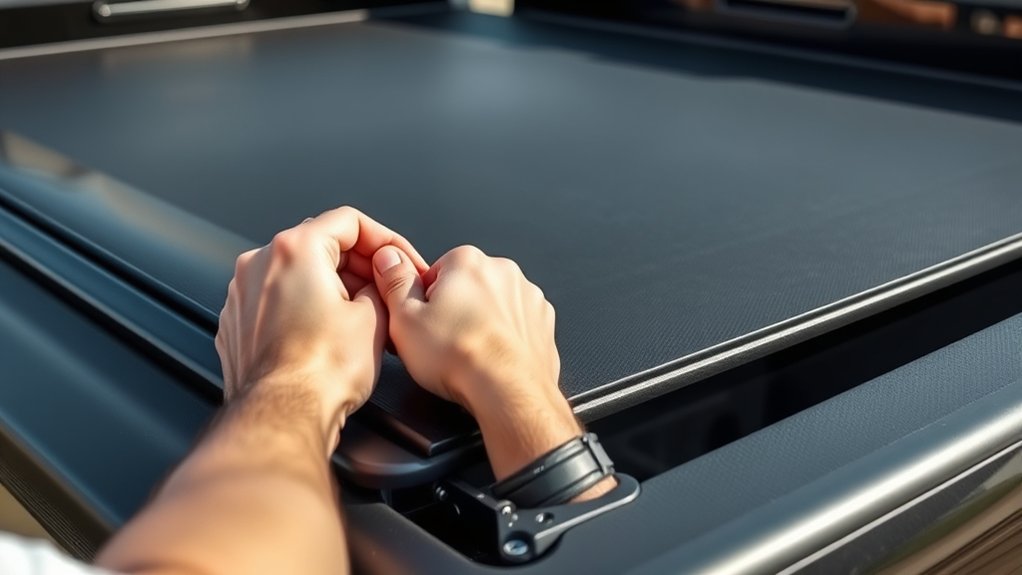
Before adjusting your tonneau cover, make sure your truck bed is properly prepared. Start by thoroughly cleaning the bed, removing leaves, dirt, and debris to ensure accurate adjustments.
Use a brush or vacuum to eliminate stubborn dust and particles from the bed and bed rails. Check the bed rails for dents, damage, or looseness, and make sure they’re securely attached since loose rails can affect alignment.
Make sure all contact surfaces where the cover touches the truck bed are solid, clean, and free of obstructions. Finally, verify that your truck bed dimensions match your tonneau cover’s specifications.
Proper preparation helps you get a secure fit, smooth operation, and prevents issues during adjustment.
Inspect Your Tonneau Cover for Fit and Seal Issues
Once your truck bed is clean and the rails are secure, it’s time to check the fit and seal of your tonneau cover. Look at the edges for any uneven gaps or misalignment along the bed rails.
Ensure a proper fit by inspecting for gaps, misalignment, and sealing issues along the bed rails.
Close the cover completely and see if there’s any lifting, sagging, or warped panels that might mean it’s not fitting right. Run your hand along the seams and around the edges to feel for loose spots, gaps, or areas where the seal isn’t flush.
Use a dollar bill to slide between the cover and bed rail. If there’s resistance, that’s a good sign of a proper seal. Carefully examine the weather seals and gaskets for cracks, tears, or signs of wear that could cause leaks.
Inspecting these areas helps ensure your tonneau cover stays tight and keeps weather out. Proper fit and seal are key to protecting your truck bed from the elements.
Loosen and Adjust Clamps for Proper Alignment
To get the alignment right, start by loosening the clamps that hold the tonneau cover to the bed rails. Use a wrench or socket set to turn the bolts counterclockwise and free the clamps.
Support the cover with one hand to prevent sudden shifts or damage as you loosen. Gently slide the cover forward or backward along the bed rails to fix misalignment and get rid of sagging or gaps.
Make sure the edges of the cover are flush with the bed rails before retightening. Once everything lines up, tighten the clamps securely in an even manner to keep proper tension.
Properly adjusted clamps will keep the cover in place during use, ensuring a tight seal and preventing unnecessary movement.
Realign the Cover to Remove Sagging and Dips
If your tonneau cover is sagging or has dips, you can fix it by realigning it along the bed rails. Loosen the clamps enough to let the cover move freely while supporting its weight to avoid damage.
Adjust the cover by sliding it forward or backward along the bed rails until the tension feels even. Make sure the edges of the cover are flush with the bed rails to get rid of dips and sagging areas.
Slide the cover along the bed rails until tension is even and edges align to eliminate dips and sagging.
Gently press down on any wrinkles or dips to help the material settle evenly. Once everything looks good, retighten the clamps securely to keep the cover in place.
This process helps ensure your tonneau cover stays smooth, tight, and free of sagging or dips.
Adjust Tension Straps for a Snug Fit
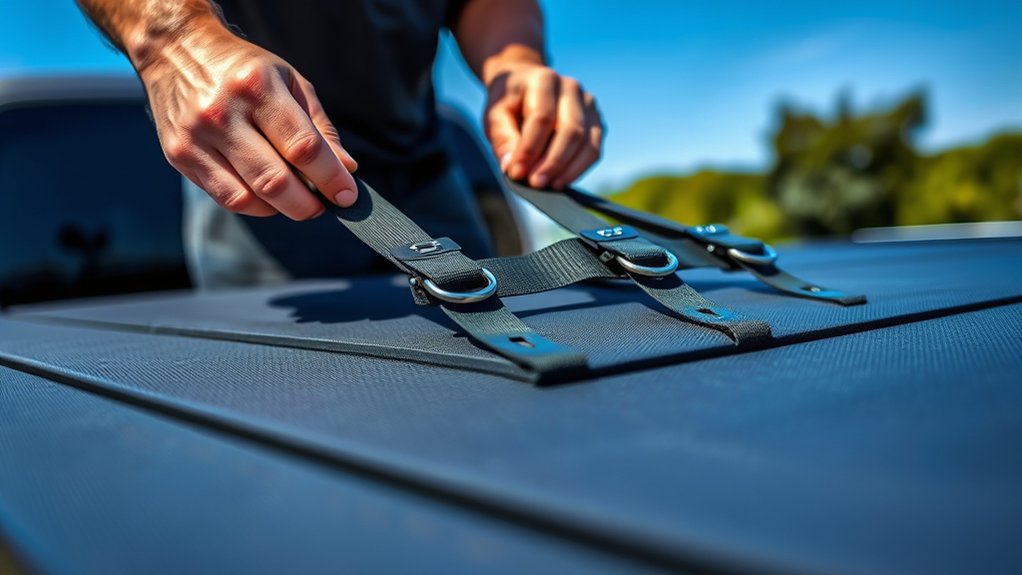
Locate the tension straps near the tailgate of your tonneau cover, as they are essential for achieving a tight fit. To adjust, pull the tension straps to tighten the cover, guaranteeing it stays free of wrinkles or sagging.
Releasing the buckle allows you to reposition the strap for more tension; then, lock it back in place. Check the alignment of all tension straps to ensure even tension across the cover.
A snug fit keeps the cover secure and helps prevent water and dust from entering your truck bed. After adjusting, close the tailgate to verify the cover is properly sealed and flush against the bed.
Regularly tightening the tension straps maintains a secure, water-resistant, and dust-proof fit.
Seal Edges and Prevent Water Leaks
Inspect the perimeter seals regularly for gaps, cracks, or misalignment, as these can compromise the waterproof barrier. If you notice any issues, press the seals firmly to ensure full contact with the truck bed and cover edges.
Regularly check perimeter seals for gaps or misalignment to maintain a reliable waterproof barrier.
During installation or adjustments, remove backing from adhesive weather seals and apply them evenly along the edges. Press down to create a waterproof seal and make sure they stick well.
Use silicone sealant in corners or hard-to-reach spots to reinforce the weather seals and prevent water leaks. Check that all seals are compressed evenly and free from debris or dirt, which can weaken their waterproof effect.
Regularly inspect and replace worn or damaged seals. This helps maintain a reliable, waterproof connection and prevents leaks during heavy rain or washing.
Test and Maintain Your Tonneau Cover for Peak Performance
To keep your tonneau cover performing at its best, regular maintenance and testing are essential. Start by inspecting the seal and edges for gaps or wear to guarantee a tight, weatherproof fit.
Test the locks and latches to confirm they operate smoothly and securely close. Check the tension straps and clamps to ensure they’re tight enough to prevent sagging or movement, adjusting as needed.
Lubricate hinges, locks, and moving parts with a silicone-based lubricant every few months to reduce friction and extend their lifespan. Clean your cover and components with mild soap and water, avoiding harsh chemicals that could damage the material.
Consistent maintenance keeps your tonneau cover aligned, functional, and protected from the elements, ensuring peak performance year-round.
Frequently Asked Questions
How to Adjust Tension on Access Tonneau Cover?
You should find the tension straps near the tailgate and pull them to tighten the cover.
Release the buckle, then adjust the strap length for more tension.
Once you’ve done that, lock the buckle securely. Close the tailgate to see if the cover is snug and smooth.
Repeat this process, readjusting as needed.
Just be careful not to over-tighten the straps to avoid any damage. Keep testing until you get a firm, even fit across the entire cover.
Can I Go Through a Car Wash With a Tonneau Cover on My Truck?
You can usually go through a car wash with your tonneau cover on, but it depends on the type. Soft covers might be more vulnerable to damage or misalignment if not secured properly.
Retractable and hard covers with secure locks usually handle car washes well if you close and seal them correctly beforehand. Always check your manufacturer’s instructions to confirm your specific cover is car wash safe.
Afterward, it’s a good idea to inspect your cover to make sure everything stayed in place. When in doubt, consult your cover’s manual or contact the manufacturer for guidance.
How Do You Adjust the Tension on a Truxedo Tonneau Cover?
To adjust the tension on your Truxedo tonneau cover, locate the tension straps near the tailgate.
Pull the straps to tighten or loosen them as needed. Then, release the buckle to reposition the strap for the right tension.
Once it’s snug, lock the buckle in place.
Make sure the cover stays flush and secure.
Regularly readjust the straps to keep the seal tight and the cover working smoothly.
How to Tighten up a Tonneau Cover?
To tighten up your tonneau cover, start by pulling the tension straps near the tailgate to remove sagging. Release the buckle, adjust the strap for more tension, and lock it in place.
Loosen the clamps securing the cover to the bed rails, then retighten them evenly using a torque wrench or screwdriver.
Finally, close the tailgate and run your hand along the edges to verify a secure, snug fit.
Conclusion
Now that you’ve gone through these steps, your tonneau cover should fit perfectly, keeping your truck bed secure and dry. But don’t stop here—regular adjustments are essential to maintain that flawless seal and smooth operation.
Stay vigilant and keep an eye out for signs of wear or leaks. With a little upkeep, your cover will continue to protect your gear and enhance your truck’s look.
Are you ready to enjoy worry-free drives ahead with your properly adjusted tonneau cover?