What Are the Different Diesel Fuel and Gasoline Differences?
Are you often confused about whether to choose diesel or gasoline for your vehicle? You’re not alone—many people struggle with understanding the key differences between these fuels and what they mean for your engine’s performance. Making the right choice can really impact your vehicle’s efficiency, durability, and your overall driving experience.
Diesel and gasoline fuels differ mainly in their chemical composition and how they burn. Diesel has larger hydrocarbon molecules with higher energy content, igniting by compression. This makes engines more efficient and durable.
Gasoline, on the other hand, has lighter hydrocarbons ignited by spark plugs. It offers quicker acceleration but lower efficiency. Diesel engines tend to be louder and more robust, while gasoline engines are quieter and better suited for speed.
To learn more about their unique features, continue exploring the details below.
Key Takeaways
- Diesel contains hydrocarbons with 12 or more carbon atoms and has higher boiling points. Gasoline, on the other hand, has 5 to 12 carbon atoms and boils at lower temperatures.
- Diesel is refined mainly through fractional distillation and cracking processes. During refining, sulfur and metals are removed to improve quality. Gasoline goes through similar refining steps but is focused on lighter fractions.
- Diesel engines rely on auto-ignition caused by compression. Gasoline engines use spark plugs to ignite the fuel from outside.
- Diesel provides about 15% more energy per liter. This makes diesel engines more efficient and durable, which is why they’re often used for heavy-duty jobs.
- Gasoline engines are known for quick acceleration and tend to be less noisy. They’re usually better suited for lighter vehicles. Meanwhile, diesel engines are tougher and more fuel-efficient, making them ideal for demanding applications.
Which Fuel Is Better for Your Vehicle: Diesel or Gasoline?
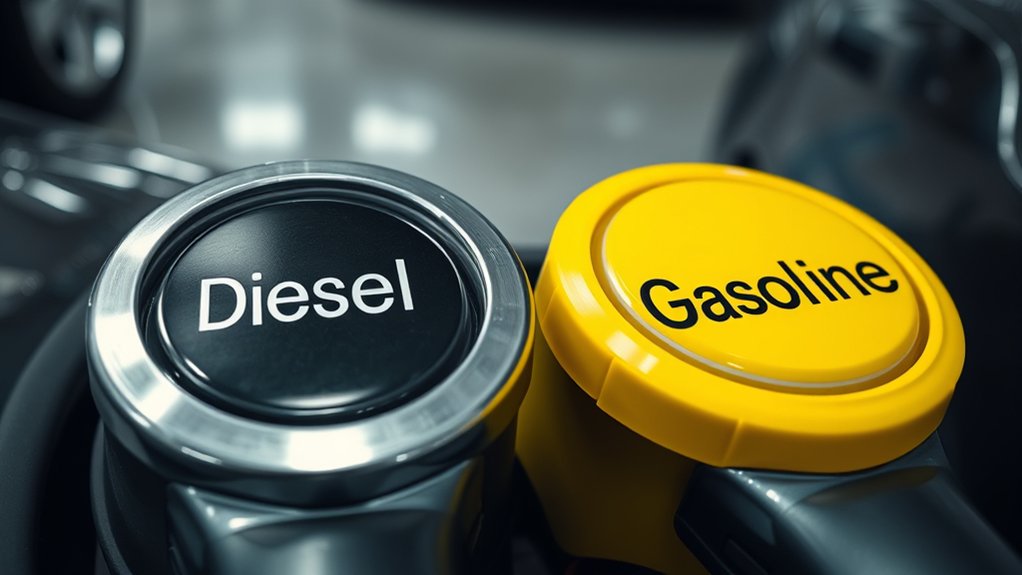
Choosing between diesel and gasoline depends on your driving needs. If you care about fuel efficiency and long-distance driving, diesel is a good pick because it has a higher energy density, offering about 20% better fuel economy.
Choosing diesel or gasoline hinges on your driving needs and preferences.
Diesel engines produce more torque, making them great for heavy-duty tasks and towing. They also tend to last longer and are more durable, which is perfect if you drive a lot.
On the flip side, gasoline is usually cheaper, easier to find, and leads to lower upfront vehicle costs and maintenance. Gasoline engines run more smoothly and quietly, making them better for city driving and lighter vehicles.
Your choice should balance what kind of vehicle performance you want with your budget and your typical driving conditions.
How Do Diesel and Gas Engines Differ in Fuel Composition and Refining
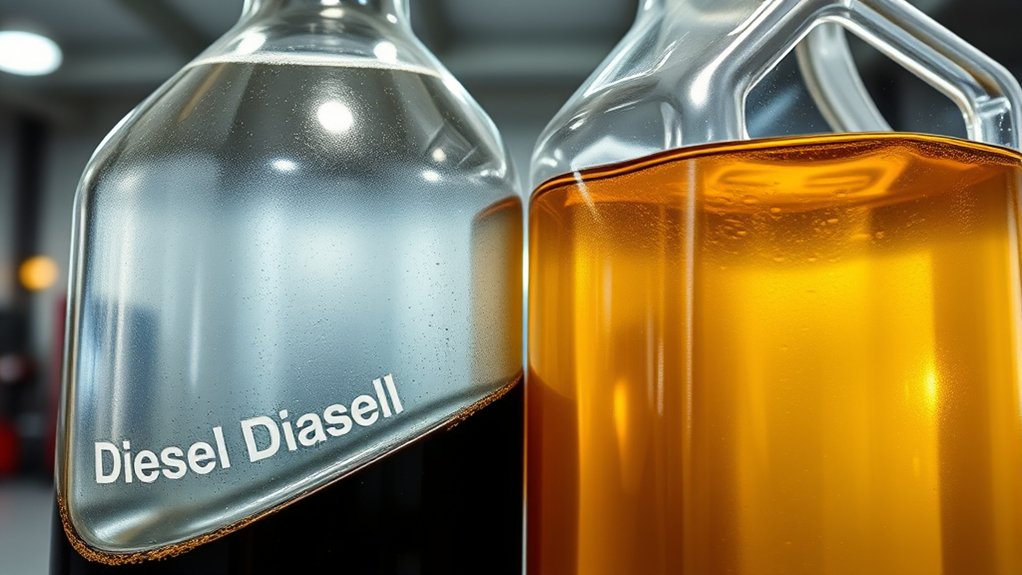
Diesel and gasoline engines differ quite a bit in the fuels they use, mainly because of their different compositions. Diesel fuel has hydrocarbons with 12 or more carbon atoms and boils between 250°C and 350°C, making it denser and more energy-rich than gasoline.
Gasoline, on the other hand, is made of hydrocarbons with 5 to 12 carbon atoms and boils between 40°C and 205°C. During refining, crude oil goes through fractional distillation, which separates lighter hydrocarbons for gasoline and heavier ones for diesel.
The refining process also cracks larger molecules into smaller ones that are suitable for each fuel type. Plus, it removes sulfur, nitrogen, and metals to make sure the fuels burn cleaner.
These differences in fuel composition and refining methods directly affect how each fuel performs and interacts inside their respective engines.
How Do Diesel and Gas Engines Burn Fuel and Generate Power?
You’ll notice that gasoline and diesel engines burn fuel differently to produce power. Gasoline engines use spark plugs to ignite a mixture of air and fuel.
Diesel engines, on the other hand, rely on high compression to ignite fuel spontaneously. These different combustion methods cause variations in how each engine generates torque and operates efficiently.
Combustion Methods Differ
The way these engines burn fuel is fundamentally different, with each relying on a distinct ignition process to generate power.
Gasoline engines use spark plugs to ignite a fuel-air mixture during combustion, igniting at relatively low compression ratios. In contrast, diesel engines depend on spontaneous ignition caused by high compression ratios, typically 14:1 to 25:1, which heat the air inside the cylinder.
When fuel is injected directly into the hot, compressed air, it ignites without a spark, starting combustion. This process produces slower, more controlled power strokes, creating more torque at lower RPMs.
The combustion methods in diesel and gasoline engines influence their efficiency, power delivery, and overall performance. That makes each suitable for different applications.
Ignition Process Varies
Understanding how these engines ignite fuel shows the fundamental differences in how they operate. Diesel engines use compression ignition, where a high compression ratio heats the air until fuel injected into the cylinder spontaneously combusts through auto-ignition.
In contrast, gasoline engines depend on spark plugs to ignite a fuel-air mixture after compression, which happens at a lower ratio. This ignition method ensures precise timing for combustion.
The ignition process in diesel engines involves spontaneous combustion, while gasoline engines need an external ignition system. These differences influence engine performance, with diesel engines running at lower RPMs with higher torque, and gasoline engines operating at higher RPMs for speed.
| Diesel Engine | Gasoline Engine |
|---|---|
| Compression ignition | Spark plug ignition |
| High compression ratio | Lower compression ratio |
| Spontaneous combustion | External spark needed |
| Auto-ignition | Ignition system required |
| Higher torque | Faster acceleration |
Power Generation Mechanisms
How do diesel and gasoline engines turn fuel into power? In an internal combustion engine, the combustion process is what drives the power output.
Diesel engines inject fuel into a combustion chamber with a high compression ratio, usually between 14:1 and 25:1. The ignition depends on compression; air is squeezed until it heats up enough for fuel to ignite spontaneously.
This slower, sustained combustion gives diesel engines higher thermal efficiency. Gasoline engines, on the other hand, use spark ignition. A spark plug ignites a fuel-air mixture at a lower compression ratio of around 8:1 to 12:1.
The rapid combustion in gasoline engines creates quick, controlled explosions that generate power efficiently. Both types convert fuel into mechanical power through their unique combustion methods, which impact their performance and efficiency.
Which Fuel Offers Better Efficiency and Performance?
When comparing efficiency and performance, fuel density and energy content are important. Diesel packs more power per volume, making it a popular choice for many.
Diesel engines are built for higher compression ratios, which boosts combustion efficiency. That makes them perfect for heavy-duty tasks and long-distance driving.
On the other hand, gasoline engines give quicker acceleration and higher horsepower. But they usually don’t match diesel’s durability or fuel economy.
Fuel Density and Energy Content
Have you ever wondered why diesel engines tend to be more efficient than gasoline ones? It’s mainly because of fuel density and energy content. Diesel fuel has about 15% more energy per liter than gasoline, making it more energy-rich per volume.
This higher energy density means diesel engines can get more power out of the same amount of fuel. The calorific value of diesel (around 45.5 MJ/kg) is slightly higher than that of gasoline, providing more energy during combustion.
Because of this increased energy content, diesel engines can travel farther on less fuel. Overall, diesel’s greater energy density makes it more efficient and performance-oriented, especially for long-distance driving and heavy-duty work.
Combustion Efficiency Differences
Diesel fuel generally offers better combustion efficiency and performance than gasoline, mainly because of its higher thermal efficiency and how it ignites. Diesel engines run at higher compression ratios, which helps them burn fuel more completely and extract more energy.
This leads to better fuel economy and overall engine performance. The combustion process in diesel engines is slower, allowing for a controlled burn that maximizes energy density. Gasoline, with its faster burn rate and lower energy content, results in less efficient combustion and reduced fuel economy.
Engine Compatibility and Design
Engine compatibility and design play big roles in deciding which fuel gives better efficiency and performance for different vehicles. Diesel engines have higher compression ratios and rely on compression ignition. This means they are:
- More durable because they use heavy-duty components and larger cylinders.
- More efficient since their combustion process extracts more energy per gallon.
- Better suited for long-distance and heavy-duty use.
- Compatible with engine designs optimized for high compression ratios.
On the other hand, gasoline engines use spark ignition with lower compression ratios. They offer:
- Quicker acceleration and higher RPMs.
- Lighter engine parts, making them ideal for city driving and lighter vehicles.
- Better performance in speed-focused situations.
- Engine designs that prioritize performance over durability.
How Do Diesel and Gasoline Compare in Durability and Maintenance?
Wondering how diesel and gasoline vehicles compare in regards to durability and maintenance? Diesel engines are known for their exceptional durability, often lasting 20-30 years or over 1 million miles with proper care. They’re built with stronger engine components, like heavy-duty cylinders and high-pressure fuel injection systems, which help them last longer.
However, maintenance for diesel engines tends to be more demanding and costly, especially for regular filter and emission system servicing. Gasoline engines usually require less expensive routine maintenance, like oil changes and spark plug replacements, with shorter repair intervals.
Skilled technicians familiar with both engine types are essential. Diesel engines often demand specialized knowledge because of their complexity and increased wear and tear.
What Are the Environmental and Noise Differences Between Diesel and Gasoline?
While diesel engines have traditionally emitted more pollutants and been noisier than gasoline engines, modern advancements have narrowed these gaps considerably. You’ll notice that:
- NOx emissions and particulate matter from diesel have decreased significantly thanks to better emissions control and modern diesel tech.
- Gasoline engines still produce fewer overall pollutants, contributing less to air quality issues.
- Engine noise has been reduced with noise reduction techniques, although diesel engines tend to be louder during startup and operation.
- Stricter emissions regulations have improved both engine noise and environmental impact, making modern diesel vehicles quieter and cleaner than older models and closer to gasoline engine standards.
Frequently Asked Questions
Which Fuel Is Better, Diesel or Gasoline?
You should choose diesel if you need a more fuel-efficient, long-lasting vehicle for heavy-duty work, as diesel engines offer better torque and durability.
However, if you prefer lower upfront costs, easier maintenance, and smoother, quicker acceleration for city driving, gasoline is the better choice.
Think about your driving habits, budget, and long-term needs to decide which fuel type suits you best.
Can Diesel Fuel Cause Hypertension?
Diesel fuel itself doesn’t cause hypertension directly. While it contains chemicals like benzene, there’s no scientific proof linking exposure to diesel fuel with higher blood pressure.
However, inhaling diesel exhaust fumes over a long time might pose heart risks, but studies aren’t conclusive. To stay safe, make sure you have good ventilation and wear protective gear when handling diesel.
Focusing on reducing inhalation exposure helps, but diesel fuel isn’t a direct cause of hypertension.
Are Diesels Ok for Short Journeys?
Like trying to run a marathon on a short walk, diesel engines aren’t ideal for frequent short trips. They need time to warm up and reach their best temperature, or you risk soot buildup, clogged filters, and engine wear.
If you mostly drive short distances, a gasoline engine might suit you better. It handles quick starts and stops more efficiently, which can reduce maintenance costs and help extend engine life.
Will 1 Gallon of Diesel Hurt a Gas Engine?
Yes, even a gallon of diesel can hurt your gas engine. Diesel’s higher viscosity and lubricating properties can clog fuel systems, damage injectors, and cause misfires or knocking.
It can lead to incomplete combustion, rough running, increased emissions, and potentially costly repairs. If you accidentally put diesel in your gas engine, you should have it drained and inspected promptly to prevent serious damage.
Conclusion
Choosing between diesel and gasoline depends on your driving needs. Diesel engines offer better fuel efficiency and durability, making them great for long hauls.
Gasoline engines provide smoother, quieter rides, perfect for city driving. Think of it like choosing between a trusty steed and a speedy chariot.
Consider factors like performance, maintenance, and environmental impact before making your decision. When it comes to diesel fuel and gasoline, understanding the differences is key.
Whichever you choose, just remember: in the world of vehicles, knowledge about diesel fuel and gasoline is the real key to victory.