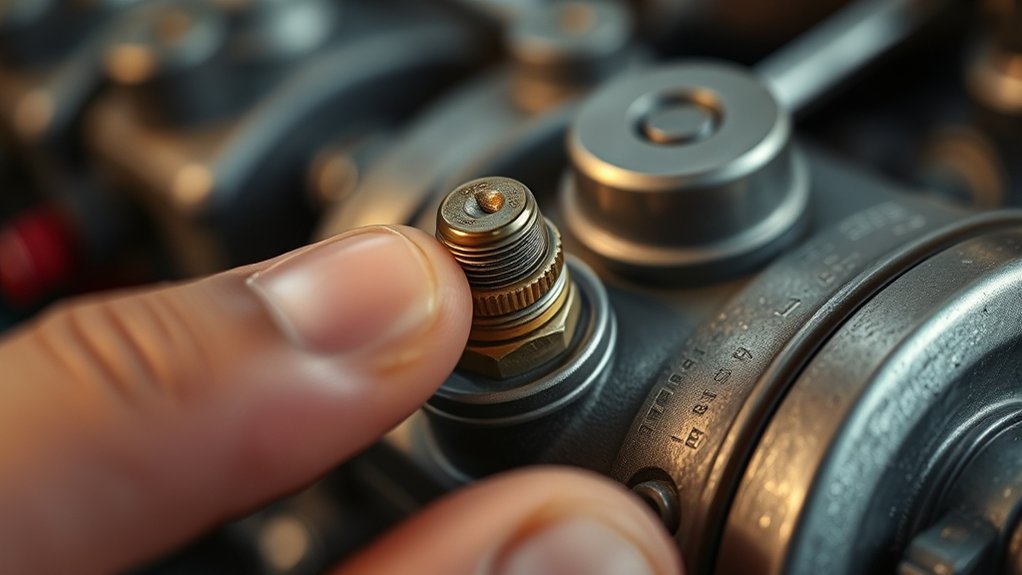
How Do You Adjust the Air Fuel Mixture Screw in 8 Easy Steps?
Are you tired of your engine running rough or not quite performing like it should? You’re not alone—many people struggle with fine-tuning their carburetor’s air-fuel mixture screw.
Luckily, adjusting this screw can make a big difference in how your vehicle runs, and it’s easier than you might think.
To adjust your carburetor’s air-fuel mixture screw in 8 simple steps, first warm up your engine for at least five minutes. Then, locate the mixture screw beneath the air filter and gently turn it clockwise until it just seats, then back it out 1.5–2 turns.
Adjust the idle speed and mixture for smooth, responsive performance, watching for signs of lean or rich mixtures.
If you keep adjusting, you’ll eventually find the perfect balance—more details ahead help you fine-tune it precisely.
Key Takeaways
- Warm up the engine for at least 5 minutes so everything is nice and warm. This helps make sure your adjustments are accurate.
- Next, find the carburetor’s mixture screw. It’s usually a gold-colored, flat-head screw located under the air filter.
- Gently turn the screw clockwise until it just seats lightly. Then, back it out 1.5 to 2 turns to set a good starting point.
- Now, adjust the idle speed screw to get the engine RPM between 950 and 1050. Once that’s set, you can fine-tune the mixture screw for smooth idling.
- Make small, incremental adjustments to the mixture screw. Keep an eye on how the engine responds and aim for the best performance.
Warm Up Your Engine Before Adjusting the Mixture
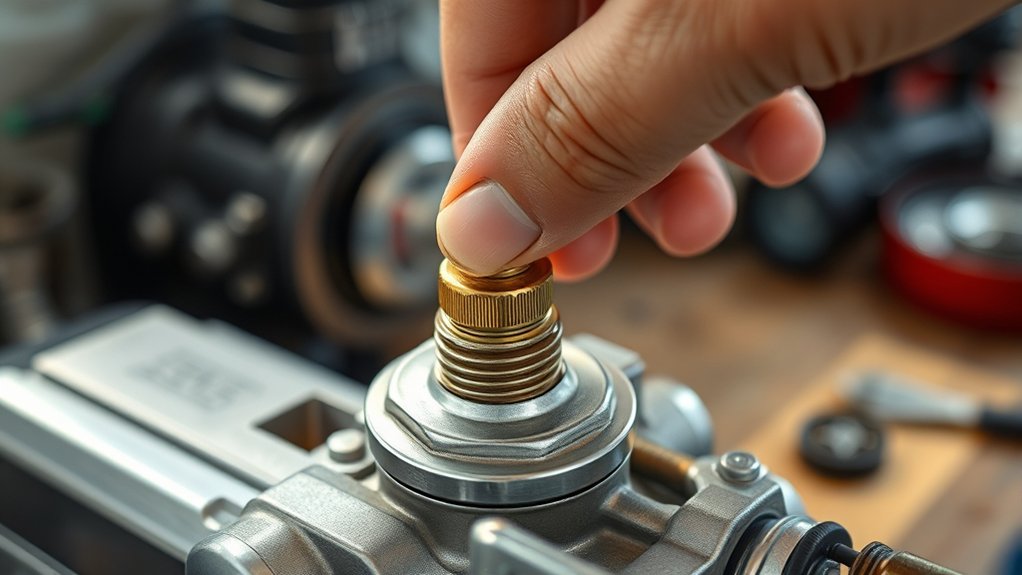
Before adjusting the air-fuel mixture screw, make sure your engine has warmed up for at least five minutes. A warm-up period ensures your engine reaches its normal operating temperature, which is vital for accurate adjustments.
Ensure your engine warms up for at least five minutes for accurate air-fuel mixture adjustments.
When the engine is warm, you can fine-tune the mixture screw based on reliable feedback. This helps prevent false readings caused by cold conditions. Cold engines need different air and fuel settings, so adjustments made when cold won’t be accurate.
Waiting until the engine is properly warmed up also helps avoid issues like stalling or rough idling. Proper warming ensures the carburetor components are in the right operating state, allowing you to get the correct mixture.
This step is essential for precise tuning and achieving peak engine performance.
Find and Access the Carburetor’s Mixture Screw
To find the carburetor’s mixture screw, start by locating the air filter. It’s usually round or cone-shaped and attached on top or to the side of the engine.
Once you spot the air filter, look for the carburetor beneath it. On the side of the carburetor, you’ll see a gold-colored, flat-headed, slotted brass screw. That’s the mixture screw.
Check the screw’s position carefully to make sure it’s accessible for adjustment. Make sure the engine is warmed up to normal temperature before you start.
Using a flathead screwdriver, gently turn the mixture screw to access and adjust it. Recognizing this screw as the idle mixture screw helps you fine-tune the air-fuel mixture for better engine performance.
Set the Mixture Screw to the Factory Baseline (1.5–2 Turns Out)
Start by turning the mixture screw gently clockwise until it just seats, making sure it’s fully closed without forcing it. Then, turn the screw counterclockwise to reach the factory baseline, which is usually between 1.5 and 2 turns out from fully seated.
This initial adjustment gives you a good starting point for further fine-tuning. Make sure the engine is warm and running smoothly before setting the screw to this baseline.
Carefully count the turns as you turn the screw out so you can return to this setting if needed during troubleshooting or additional tuning.
Setting the mixture screw to the factory baseline helps optimize engine performance and gives you a consistent reference for future adjustments.
Adjust the Idle for Smooth, Responsive Performance
To get your engine running smoothly and respond quickly, start by setting the proper idle speed within the recommended range.
Next, fine-tune the mixture adjustment by turning the screw until the engine idles evenly without stumbles.
Finally, listen carefully for a steady, smooth sound to confirm the idle is optimized for peak performance.
Set Proper Idle Speed
Have you ever wondered how to make sure your engine runs smoothly and responds quickly? To do that, you’ll want to set the proper idle speed.
Start by adjusting the mixture screws if needed, then focus on the idle speed screw. Turn it clockwise to raise the engine RPM or counterclockwise to lower it.
Aim for an idle speed within the recommended range of 950-1050 RPM. Make small, incremental turns to fine-tune the idle without stalling or making it too high.
After adjusting the mixture screws, always tweak the idle speed for the best responsiveness and stability. Make sure the engine responds quickly and maintains a steady, smooth idle at your desired RPM before you finish.
Balance Mixture Adjustment
After setting the idle speed, the next step is to balance the air-fuel mixture for smoother, more responsive engine performance. Start by slowly turning the adjusting screw clockwise or counterclockwise, listening for the smoothest engine sound.
Find a position where the engine begins to run rough or irregular, then set the screw approximately midway between these points to get a balanced idle. Fine-tune the screw in small increments, about half a turn, until the engine idles most evenly and responds promptly.
Check that the engine runs smoothly by observing steady RPM and minimal fluctuations during adjustments. Always recheck the idle after making changes to ensure the mixture remains balanced and your engine maintains a steady, responsive idle.
Ensure Smooth Engine Response
How can you guarantee your engine responds smoothly and promptly when you adjust the idle? Start by turning the idle mixture screw until the engine runs most smoothly and responds quickly to throttle input. If the engine begins to run rough, turn the screw clockwise; then back it out counterclockwise until the idle stabilizes and sounds even.
Use the table below to find the optimal position:
| Step | Action | Result |
|---|---|---|
| Initial Adjustment | Turn screw clockwise until rough idle | Identifies rich condition |
| Fine Tuning | Back out screw until idle sounds even | Achieves balanced mixture |
| Final Setting | Set screw midway between rough and even idle | Ensures responsiveness |
After that, fine-tune the idle speed screw for 950–1050 RPM. Test by gradually increasing the throttle to check for smooth, quick engine response.
Identify Signs of Lean or Rich Idle and How to Fix Them
Recognizing whether your engine’s idle is too lean or too rich is key to keeping it running smoothly.
Identifying if your engine’s idle is too lean or too rich is essential for optimal performance.
A lean idle, caused by too much air in the air-fuel mixture, often makes the engine run rough with irregular sounds, popping, or sputtering in the exhaust. You might also notice delayed throttle response and engine overheating.
On the other hand, a rich idle results from excess fuel. It usually sounds smoother but sluggish, and the engine may stumble or stall at low RPMs. Signs include excessive fuel consumption and black smoke from the exhaust.
To fix a lean idle, slightly open the air-fuel mixture screw by turning it counterclockwise until the engine runs smoothly. For a rich idle, turn the screw clockwise to reduce fuel flow and steady the idle.
Fine-Tune the Mixture for the Best Idle and Throttle Response
To get the best idle and throttle response, you need to fine-tune the mixture screw carefully. Start by turning it in small steps—about half a turn—to find the smoothest, most even idle.
Turn the screw clockwise until the engine starts to run rough. Then, turn it counterclockwise until the idle stumbles. Set the screw midway between these points for the best balance.
A well-adjusted mixture screw gives you quick, smooth engine response with minimal hesitation. Keep testing and adjusting while the engine warms up to achieve perfect idle stability and throttle response.
| Adjustment Step | Result |
|---|---|
| Turn clockwise | Slight roughness begins |
| Turn counterclockwise | Idle stumbles |
| Set midway | Best idle and response |
| Fine-tune | Maximize throttle response |
| Verify stability | Confirm proper idle |
Verify Your Settings and Confirm the Mixture Is Correct
Have you confirmed that your mixture screw is set correctly before finalizing your adjustment? First, turn the screw out about 1.5 to 2.5 turns from fully seated to establish the factory baseline.
Ensure your mixture screw is correctly set by turning it out 1.5 to 2.5 turns from fully seated as your baseline.
Make sure the engine is fully warmed up to normal operating temperature because cold starts can mislead your assessment. With the engine running, gently adjust the mixture screw in small increments, about half a turn at a time, to find the smoothest, most responsive idle.
Listen for a steady, even engine sound and observe the idle speed. If you notice roughness, hesitation, or backfiring, your mixture might be too lean or too rich, so adjust accordingly.
Confirming your settings guarantees your engine runs at its best and efficiently.
Troubleshoot Common Carburetor Mixture Problems
When adjusting the carburetor’s air-fuel mixture screw, you might notice signs that the mixture isn’t set correctly. If your engine stalls or runs rough during adjustments, it’s a sign that the settings need fixing.
A lean mixture can cause rough idling, hesitation, and higher engine temperatures. On the other hand, a rich mixture leads to poor acceleration, black smoke, and fouled spark plugs.
If you see a persistent high idle or sputtering when you open the throttle, it’s usually a sign that the mixture is too rich or too lean. To troubleshoot, turn the air-fuel mixture screw slightly—clockwise for a leaner mix and counterclockwise for a richer one.
Your goal is to find that sweet spot where the engine idles smoothly and responds crisply to throttle inputs. Adjust gradually and test often until you get it just right.
Frequently Asked Questions
Which Way Do You Adjust Air Fuel Mixture Screws?
You adjust the air fuel mixture screw by turning it clockwise to lean the mixture, which makes your engine run with more air and less fuel. To enrich the mixture, turn the screw counterclockwise, increasing fuel flow.
Make small adjustments, about half a turn at a time, and listen for a smoother engine idle. Fine-tune by slightly turning the screw until you find the smoothest, most stable engine performance.
How Do You Adjust the Air Fuel Ratio?
You adjust the air-fuel ratio by turning the screw. Turn it clockwise to lean the mixture or counterclockwise to enrich it, listening for the smoothest engine idle.
Small adjustments, about half a turn, can make a big difference in performance. On average, the ideal setting is between 1.5 and 2.5 turns out.
What Is the Factory Setting for Fuel Mixture Screws?
The factory setting for fuel mixture screws is usually about two turns out from fully seated. Start there, as it gives you a balanced air-fuel mix for smooth idling and good engine performance.
Keep in mind, some engines or carburetors might have slightly different factory settings. Always check the manufacturer’s recommendations to ensure proper adjustments and avoid any engine issues.
How to Fix Fuel Air Mixture Too Rich?
Think of your engine like a chef perfecting a recipe. If the mixture’s too rich, turn the screw clockwise gradually, like adding less seasoning, until the engine runs smoothly.
If it stalls or hesitates, back it off slightly. Avoid over-tightening, which can flood the carburetor.
Keep fine-tuning until your engine idles cleanly, with no black smoke or fuel smell—just like a perfectly seasoned dish.
Conclusion
Mastering the air-fuel mixture is like tuning a finely crafted instrument—you’ll find harmony once every note is in place. With patience and a keen ear, you’ll transform your engine’s performance from a rough sketch into a polished masterpiece.
Keep this guide close, and soon you’ll be dancing on the edge of precision. Remember, a well-adjusted carburetor isn’t just a task; it’s the secret to revealing your engine’s true potential.
When adjusting the air-fuel mixture screw, start with the engine off. Turn the screw gently clockwise to lean the mixture or counterclockwise to richen it. Small, slow turns are best.
Next, start your engine and let it warm up to normal operating temperature. Then, turn the screw slowly while listening for changes in engine idle.
Adjust the screw until you find the highest, most stable idle speed. This indicates the optimal air-fuel mixture for your engine.
If the engine stalls or runs rough, fine-tune the screw slightly in either direction. The goal is a smooth, steady idle.
Once set, turn the screw back slightly to prevent running too rich or too lean. This fine-tuning helps your engine perform at its best.
Finally, verify your adjustments by revving the engine and checking for smooth acceleration. Properly adjusting the air-fuel mixture screw is key to peak performance.
With these steps, you’ll master the art of adjusting the air-fuel mixture screw and unlock your engine’s full potential.