How to Install Tonneau Cover Clamps in 7 Easy Steps
Installing tonneau cover clamps can feel tricky if you’re new to it or trying to do it alone. Many people struggle with making sure everything’s secure and properly aligned, which can be frustrating. Don’t worry—you’re not alone, and with a little guidance, you’ll get it done smoothly.
To install tonneau cover clamps in 7 easy steps, first guarantee you select clamps compatible with your cover model and truck bed.
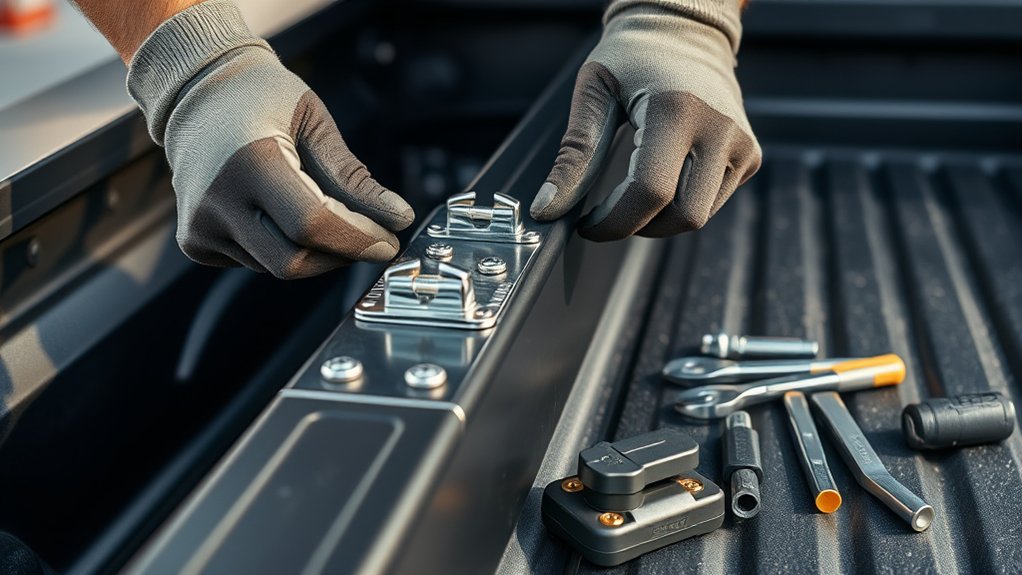
Position the side rails correctly and mark clamp locations near the front, center, and rear for balanced support.
Attach the clamps, making sure they are oriented properly, and tighten them gradually with a wrench, avoiding over-tightening.
Check and adjust clamps after driving to keep your cover secure and weatherproof.
Keep going to learn more about perfect installation techniques.
Key Takeaways
- Check that the clamps you’re using are compatible with your specific tonneau cover model and your truck bed size.
- Then, mark where you’ll place the clamps—usually near the front, center, and rear of the bed. This helps keep everything balanced and secure.
- Attach the clamps, making sure they’re oriented correctly. Tighten them gradually, following the torque specs provided by the manufacturer.
- Before securing everything tight, double-check that the side rails are parallel and flush against the edges of your truck bed.
- After installation, it’s a good idea to regularly inspect the clamps. Re-tighten and adjust them as needed to keep the cover secure and leak-proof over time.
What Are Tonneau Cover Clamps and Why Do You Need Them?
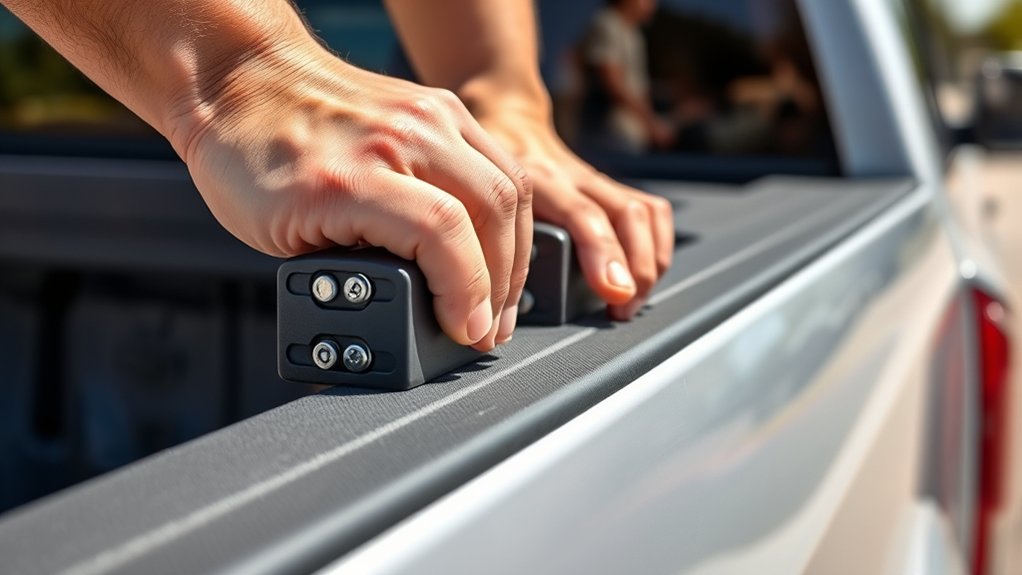
Tonneau cover clamps are key hardware parts that secure the side rails of your truck bed cover. They help keep the cover in place and prevent it from shifting or coming loose while you’re driving.
Made from tough materials like aluminum, steel, or high-strength plastic, these clamps are built to handle weather, rough roads, and high speeds. Different types are designed for specific covers, like soft roll-up, folding, or hard retractable models, making sure you get proper installation.
Using the right clamps ensures your cover stays stable and works well over time. Proper installation is really important—they keep your cover secure, protect your cargo, and make driving safer. Without them, your tonneau cover could become a hazard or might not work properly.
How to Choose the Right Clamps for Your Tonneau Cover
Choosing the right clamps for your tonneau cover depends on matching their type and material to your specific truck bed and cover.
Clamps come in various materials like plastic, aluminum, and steel, each offering different levels of durability and weather resistance.
Clamps made from plastic, aluminum, or steel provide varying durability and weather resistance for your tonneau cover.
For soft roll-up covers, aluminum alloy clamps that attach to side rails and truck edges work best. Folding covers often require stainless steel screws for added strength.
It’s essential to verify the clamps are compatible with your truck’s bed thickness and design, usually specified by the cover manufacturer.
Selecting clamps that suit your environment, especially if you drive in harsh conditions, helps guarantee long-lasting performance.
Properly chosen clamps improve compatibility, security, and durability, making your tonneau cover installation reliable and secure.
Preparing Your Truck Bed and Cover Components for Installation
Start by positioning the side rails along your truck bed edge, making sure they line up with the compartment edge for a secure fit. Double-check that your clamps are compatible with your specific tonneau cover and truck model before proceeding.
Before installation, verify all components are present and in good condition. It’s also a good idea to mark the clamp locations to ensure balanced support.
Aligning Side Rails Properly
Before attaching the clamps, make sure the side rails are properly aligned along the truck bed edges. Proper alignment helps ensure a secure fit and makes clamp installation easier.
Start by positioning the side rails so they are parallel and flush against the bed’s side walls, with no gaps or misalignments. Use a measuring tape to check that both rails are of equal length and centered on the truck bed.
Double-check that the rails are oriented correctly, with any directional markings aligned properly. To keep everything balanced, follow these steps:
- Confirm the side rails are parallel and flush against the truck bed surface.
- Verify measurements to ensure the rails are equal in length and centered.
- Align the front, center, and rear clamps with their designated mounting points for even support.
Verifying Clamp Compatibility
Verifying clamp compatibility is an important step to make sure your tonneau cover installs securely and works properly. First, confirm what type of tonneau cover you have—soft roll-up, folding, or hard—to pick clamps designed for that style.
Next, measure your truck bed rails and side edges to check if the clamps will fit with your specific truck model and cover system. Make sure the clamps are made from durable materials like high-strength aluminum or steel to resist weather and provide long-term support.
Identify where your cover mounts and see if those points line up with your truck bed’s clamp mounting locations. Lastly, review the manufacturer’s instructions or specs to ensure the clamp type matches your truck bed rails and cover mounting points for a secure, reliable fit.
How to Install Tonneau Cover Clamps Correctly
To install tonneau cover clamps correctly, first identify the right type of clamp for your cover. For example, use aluminum alloy clamps for soft roll-up covers or stainless steel clamps for folding covers.
Start by positioning the side rails along the truck bed edge. Make sure they’re aligned with the edge of the truck bed and the compartment. Then, slide the clamps into place near the front, center, and rear of the rails.
Check that the clamps are oriented correctly so they attach securely. Before tightening, verify everything is aligned properly. Use a socket wrench to tighten the clamps securely, but avoid over-tightening.
Finally, double-check all clamps are firmly attached and aligned. This helps ensure your cover stays secure during use. Following these steps will give you a proper, secure clamp installation.
Tips for Tightening Clamps and Ensuring a Secure Cover
To keep your cover secure, use a torque wrench or socket wrench to tighten the clamps to the manufacturer’s recommended specs. Be careful not to over-tighten.
Make sure the clamps are evenly tightened on both sides to keep the pressure balanced. After driving, check and re-tighten them if needed, since materials can settle.
Finally, test the cover’s security by gently tugging on it. If it shifts, re-tighten the clamps until it’s snug.
Use Proper Torque
Achieving a secure and reliable tonneau cover installation depends heavily on applying the correct torque when tightening the clamps. Using a torque wrench helps you reach the manufacturer-recommended torque, usually between 15-25 ft-lb, ensuring a proper fit without damage.
To do this effectively, gradually tighten the clamps in small steps to evenly distribute tension. Regularly check the clamp tension during installation and use, re-tightening as needed.
Be careful not to over-tighten, as this can bend the rails or strip threads, which could compromise the cover’s integrity.
Check Clamp Alignment
Have you checked that your clamps are properly aligned before tightening? Proper alignment is key to making sure the clamps securely grip the side rails or truck bed edges.
Misaligned clamps can cause an uneven fit, which might compromise the cover’s security. Before tightening, make sure the clamps sit flush against the surface without gaps, indicating they’re gripping firmly.
Take your time to make small adjustments, ensuring the clamps are evenly positioned along the bed or rails. Use a torque wrench or a consistent tightening method to avoid over-tightening, which could bend the rails or damage the cover.
After tightening, periodically recheck all clamps to verify they remain secure. Proper alignment during installation guarantees a tight, secure fit and reliable protection for your truck bed.
Re-Tighten Regularly
Regularly tightening your clamps is key to keeping your tonneau cover secure, especially after rough driving or bad weather. It’s a good idea to re-tighten the clamps before long trips or high speeds to prevent them from loosening.
Check the clamps at least once a month, or after heavy use, to catch any wear or looseness early. Use a torque wrench or socket wrench to tighten them gradually and evenly. Just be careful not to over-tighten, which can damage the cover or the bed rails.
Make sure the clamps are snug but not overly tight. Over-tightening can bend the rails or strip the threads, so find the right balance.
Regularly re-tightening your clamps helps keep your cover secure, protecting your cargo and preventing leaks. Doing these quick checks will ensure your tonneau cover stays firmly in place.
Troubleshooting Common Clamp Installation Problems
If your tonneau cover clamps feel loose or aren’t holding securely, the issue usually comes down to improper installation or incorrect positioning. Double-check that you’re using the right clamps for your cover model because incompatible clamps can cause problems.
Make sure the clamps are oriented correctly before tightening. Incorrect placement weakens their hold. Tighten the clamps gradually and evenly, and keep checking their grip to avoid over-tightening, which could bend the rails or damage the cover.
Ensure clamps are properly aligned and tighten gradually to prevent damage and secure a tight fit.
If they still feel loose after installation, recheck their placement and tighten them again as needed. Regular inspection and adjustments are key to keeping a secure, leak-proof fit, especially after rough conditions.
Proper installation and troubleshooting are essential to prevent future clamp problems.
Maintaining and Re-tightening Your Tonneau Clamps Over Time
Over time, the clamps on your tonneau cover can loosen or become corroded, especially after exposure to harsh weather or rough conditions. To keep your cover secure, make sure to regularly check the clamps for signs of damage or corrosion.
If you notice any issues, re-tighten the clamps using a socket wrench. Be sure to tighten them evenly to prevent uneven pressure that could damage the cover or truck bed. Follow the manufacturer’s recommended re-tightening schedule, usually every few months or after heavy use.
Neglecting maintenance can lead to loose clamps, which can compromise weather resistance or even damage your tonneau cover. Proper care helps keep your cover secure, weatherproof, and in good shape for the long haul.
Remember to inspect the clamps regularly, re-tighten them periodically, and replace any worn or damaged clamps promptly. This simple routine will keep your tonneau cover working well for years to come.
Frequently Asked Questions
How Do Tonneau Cover Clamps Go On?
You slide or snap the tonneau cover clamps onto the side rails or support beams of your truck bed, lining them up with pre-drilled holes or grooves.
For soft roll-up covers, you set the side rails first and then position the clamps. Use a socket wrench or screwdriver to tighten them securely.
Folding cover clamps involve inserting screws and securing them onto the bed edge or support frame. Make sure they’re tight and properly oriented.
How to Install Truck Bed Clamps?
Did you know that a properly installed tonneau cover can improve fuel efficiency by up to 10%? To install truck bed clamps, start by positioning the side rails along the edge of the bed, making sure they line up with the mounting points.
Next, insert the clamps into the slots or holes near the front, center, and rear of the bed. Tighten them securely using a wrench or screwdriver, but be careful not to bend the rail.
Finally, double-check that everything is snug and properly aligned. This way, your clamps will hold firmly and keep your cover in place.
How to Assemble a Clamp?
To assemble a clamp, start by lining up all the parts according to the manufacturer’s instructions. Make sure everything matches your cover type.
Next, insert the screw or bolt through the designated hole, ensuring it fits securely and lines up with the mounting surface.
Gradually tighten it using a socket wrench or screwdriver. Check that it’s snug but not over-tightened.
Finally, confirm that the clamp grips firmly and all parts are properly aligned before using it.
Do Truck Bed Cover Clamps Need to Attach to Metal or Plastic?
Think of clamps like sturdy friends holding your truck bed cover in place. You should attach them to metal side rails for the strongest, most durable hold, much like a firm handshake.
If your truck has a plastic bed liner, you’ll need special clamps or adapters. But keep in mind, they might not be as secure as the ones for metal.
Always check your clamp type and truck bed material to guarantee a safe, reliable installation that keeps your cover secure during drives.
Conclusion
Installing tonneau cover clamps might seem simple, but using the right technique ensures a secure fit that keeps your gear safe. Taking your time really pays off.
While the process is straightforward, rushing or skipping steps can leave your cover vulnerable, like a sail in the wind. It’s worth double-checking your work.
Be patient and tighten the clamps properly. A loose clamp can cause the cover to shift or come loose, compromising your cargo’s security.
Enjoy the peace of mind that comes with a snug, reliable tonneau cover. A well-installed clamp acts like a quiet guardian for your truck’s cargo.
Remember, proper installation of tonneau cover clamps blends ease with security. It’s all about doing it right the first time.