How Often to Replace Shocks: 7 Time-Based Guidelines
If you’re like most drivers, you’ve probably felt that unsettling sway or bounce when hitting rough roads or carrying a heavy load. Many people struggle with maintaining smooth handling and safety, often not knowing when to replace their shocks. Staying on top of this can feel confusing, but a little knowledge goes a long way.
You should inspect your shocks every 10,000 to 15,000 miles, especially in tough driving conditions. Replace them every 50,000 to 80,000 miles, or sooner if you notice excessive bouncing, uneven tire wear, or swaying.
If you drive on rough roads or haul heavy loads, consider more frequent checks.
Delaying replacement can compromise safety and handling. Keep an eye out for signs of wear—continue exploring to learn how to keep your shocks in top shape.
Key Takeaways
- Replace shocks every 50,000 to 80,000 miles under normal driving conditions.
- It’s a good idea to inspect your shocks every 10,000 to 20,000 miles for any signs of wear or damage.
- If you’re driving in harsh environments or over rough terrain, consider replacing shocks every 10,000 to 15,000 miles.
- Keep an eye out for signs like excessive bouncing or uneven tire wear, which mean it might be time for new shocks.
- Regular inspections are key. They help you figure out the best timing for replacement, especially once your shocks have gone beyond the typical lifespan.
Why Regular Shock Inspections Are Critical for Your Safety
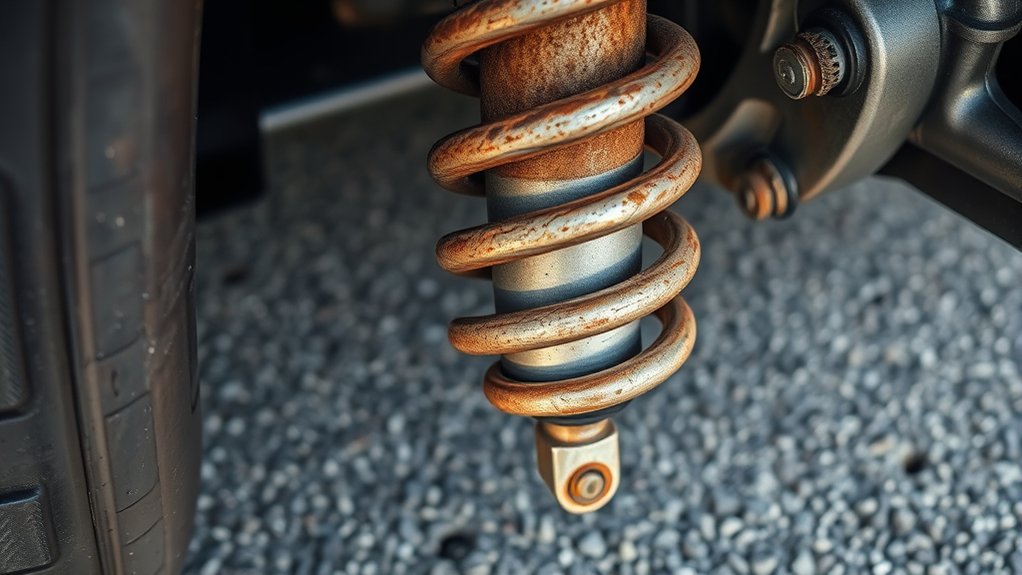
Regular shock inspections are essential because they help you catch signs of wear before they turn into serious safety issues. During these inspections, look for leaks, physical damage, and uneven tire wear that might indicate your shocks are failing.
Regular shock inspections prevent safety issues by spotting leaks, damage, and uneven tire wear early.
Doing bounce tests can help you assess how your vehicle handles and rides. If it bounces excessively, that’s a sign your shocks are worn out. Visual checks are a cost-effective way to spot leaks and damage early on.
When shocks wear out, your vehicle’s stability and safety decline, which can lead to longer stopping distances and increase the risk of accidents. That’s why inspecting them every 10,000 to 20,000 miles is a good idea, especially in rough driving conditions.
Timely replacement based on these inspections keeps your ride comfortable, improves handling, and keeps you safe on the road. Regular shock checks are a simple step to ensure your vehicle performs at its best.
How to Recognize When Your Shocks Are Worn Out
If your car bounces a lot or sways when you hit bumps or turn, your shocks might be worn out.
Look for visible leaks, greasy spots, or damage around the shock body. These are signs that your shocks are deteriorating.
Also, check for uneven tire wear and changes in ride comfort. These are common indicators that your shocks need to be replaced.
Bouncing and Swaying
When your shocks are worn out, you’ll notice your vehicle bouncing excessively after hitting bumps or potholes. This makes the ride feel unstable and uncomfortable. Worn shocks can’t absorb impacts effectively, which leads to poor stability and handling.
You might also experience swaying or body roll during turns, showing that your suspension isn’t controlling movement well. If your car keeps bouncing several times after impacts, that’s a clear sign your shock absorbers are past their prime.
Increased nose-diving during braking and instability on rough roads further confirm it’s time to replace your shocks. Keep an eye out for these signs:
- Excessive bouncing after bumps
- Swaying during turns
- Repeated bouncing after impacts
- Increased nose-diving during braking
- Instability on uneven roads
Visible Leaks or Damage
Visible leaks or damage are some of the easiest signs that your shocks need replacing. If you see oily or greasy fluid on the shock body, it’s a clear sign of wear and that it’s time for inspection.
Damage like dents, cracks, or rust on the shock body also signals deterioration and possible failure. You’ll often notice damage around the shock mounting points or near the piston rod.
Even if there are no leaks, external damage or corrosion can still hurt shock performance. Leaking shocks might leave oil stains on the wheel well or suspension parts, making issues easier to spot.
Regularly checking for leaks and damage helps you catch problems early. Replacing shocks before they affect your vehicle’s handling is always a good idea.
Tire Wear Patterns
Have you noticed unusual tire wear patterns on your vehicle? These signs often point to worn shocks affecting your suspension. Look for uneven tire wear, especially scalloped or cupped tread, which means your shocks aren’t damping suspension movement properly.
Cupping causes tire contact inconsistencies, leading to rough rides and faster tire wear. Feathered edges, or irregular tread patterns, suggest shocks aren’t absorbing impacts well. Rapid tire wear on one side hints at suspension issues and misalignment caused by worn shocks.
When diagnosing tire wear, pay attention to these patterns: uneven wear on the edges, cupping or scalloped tread, feathered tread edges, accelerated wear on one side, and general irregularities in tire contact and tread wear patterns. Recognizing these signs helps you know when it’s time to replace your shocks.
How Long Do Shock Absorbers Last and When to Replace Them
Wondering how long your shock absorbers will last? Typically, they last about 50,000 to 80,000 miles, but it really depends on how and where you drive.
Worn shocks can cause poor handling, uneven tire wear, and a lot of bouncing. These signs often mean it’s time to replace them before hitting the mileage limit.
Regular inspections and bounce tests are great ways to spot wear early. Rough roads, heavy-duty driving, and harsh environments can shorten their lifespan, so replacements might be needed more often.
It’s usually best to replace shocks in pairs. This helps keep your handling balanced and safe.
Keeping an eye out for signs of wear ensures your suspension works well and helps you avoid handling issues down the road.
What Happens If You Delay Replacing Worn Shocks
Ignoring signs of worn shocks can lead to serious safety issues and costly repairs down the line. When you delay replacing worn shocks, your vehicle’s stability suffers, increasing sway during turns and sudden maneuvers.
Worn shocks cause uneven tire contact, which leads to uneven tire wear and earlier replacements. Plus, delaying replacement results in longer stopping distances, reducing your braking efficiency.
Continued use of faulty shocks can also damage suspension components, leading to expensive repairs. All of this makes vehicle control less predictable and driving more dangerous.
- Increased vehicle sway and instability
- Accelerated uneven tire wear
- Longer stopping distances
- Damage to suspension parts
- Poor handling and safety risks
When to Replace Shocks Based on Driving Conditions
Driving often on rough roads, potholes, or salt-covered winter roads speeds up shock wear. Most of the time, shocks need replacing around 50,000 miles. Harsh driving puts extra stress on your suspension, making shocks wear out faster.
If you tend to drive aggressively—hard braking, sharp turns, or quick acceleration—you might need shocks replaced between 50,000 and 75,000 miles. Look for signs like excessive bouncing, nose-diving during braking, or uneven tire wear. These are clues that your shocks aren’t absorbing impacts well anymore.
In areas with poor roads or harsh weather, shocks may need replacing closer to 50,000 miles. Regular suspension inspections every 10,000 to 15,000 miles are key, especially if your driving conditions are tough.
Tips to Extend the Life of Your Shock Absorbers
To get the most out of your shock absorbers, regular inspections are a must. Keep an eye out for signs of wear like leaks, rust, or any physical damage. Catching these early can save you from costly replacements down the line.
Adjusting how you drive can also help. Try to avoid aggressive acceleration, hard braking, and rough roads, as they put extra stress on your suspension. Being gentle over bumps can extend the life of your shocks.
Proper maintenance is key. Make sure your tire pressure is correct and your wheel alignment is in check. This helps prevent uneven tire wear that can speed up shock deterioration.
Using high-quality replacement shocks makes a big difference in durability. It’s worth investing in good shocks to ensure they last longer and perform better.
Lastly, don’t forget routine suspension inspections, especially after hitting rough roads or potholes. Catching issues early keeps your suspension in good shape and saves you money.
Why Replacing Shock Absorbers in Pairs Matters
Replacing shocks in pairs keeps your vehicle handling balanced and smooth. If you only change one, uneven wear and steering issues can happen, making driving less safe.
Experts agree that swapping shocks together prevents these problems and helps your vehicle perform at its best.
Ensures Balanced Handling
When shock absorbers wear unevenly, your vehicle’s handling can become unpredictable, making driving unsafe. Replacing shocks in pairs ensures balanced handling by keeping damping consistent on both sides. This helps prevent issues like vehicle sway, instability, and uneven tire wear.
Mismatched shocks can mess up suspension geometry, which affects your vehicle’s alignment and overall handling. You might notice pulling or drifting during turns, which could be dangerous. Regular shock replacement keeps ride comfort smooth and helps the suspension last longer.
- Keeps suspension geometry proper
- Maintains vehicle stability
- Boosts handling performance
- Stops uneven tire wear
- Ensures a comfortable ride
Prevents Uneven Tire Wear
Uneven tire wear often shows that your suspension isn’t working properly. One common cause is unequal damping from worn or damaged shocks.
When shocks aren’t replaced in pairs, the imbalance can cause inconsistent tire contact, leading to patterns like scalloping or bald spots. Worn shocks disrupt suspension performance and cause premature tire wear.
Replacing shocks on both sides at the same time ensures balanced performance, keeping proper alignment and tire contact. This not only prevents uneven wear but also helps your tires last longer.
Ignoring the need for replacement can cause handling problems and uneven tire wear, which could be unsafe. Regularly replacing shocks in pairs helps maintain vehicle handling and promotes even tire wear for a smoother ride.
Frequently Asked Questions
How Frequently Should I Replace Shocks?
You should replace your shocks roughly every 50,000 to 80,000 miles, but it really depends on your driving conditions.
Watch out for signs like excessive bouncing, uneven tire wear, or fluid leaks—these are clues your shocks might be worn out.
If you often drive on rough roads or off-road, consider replacing your shocks more frequently.
Regular inspections can help you catch issues early, so your vehicle stays safe, handles well, and stays comfortable.
Can Struts Last 200,000 Miles on Reddit?
Yes, your struts can last 200,000 miles, but it’s pretty rare. Think of it like a marathon runner—if you take good care of them, drive smoothly, and avoid rough terrains, they can go the distance.
Environmental factors like salt and aggressive driving can cut their lifespan short. Regular inspections for leaks, bouncing, or uneven tire wear help catch issues early.
This way, you can get the most out of your struts and keep your ride smooth for longer.
Can Struts Last Over 100,000 Miles?
Yes, your struts can last over 100,000 miles if they’re high quality and you drive under ideal conditions. Regularly check for leaks, uneven tire wear, or poor ride quality to see how they’re doing.
Keeping up with proper maintenance like wheel alignments and replacing related suspension parts quickly can make a difference. Avoid rough terrain whenever you can, as it can shorten their lifespan.
With good care, your struts might even last beyond 150,000 miles.
Do I Have to Replace All Four Shocks at Once?
You don’t have to replace all four shocks at once, but it’s like balancing a tightrope—doing so keeps your ride smooth and safe.
Replacing shocks in pairs on the same axle helps maintain even handling and prevents steering issues and uneven tire wear.
While just replacing the worn shocks might seem tempting, it could lead to a bumpy journey. For the best performance and longevity, think about replacing all four at the same time.
Conclusion
Think of your shocks as the unsung heroes of your ride, quietly keeping your journey smooth and safe. Regular inspections and timely replacements are like giving your car a fresh pair of shoes—preventing rough rides and costly repairs down the road.
Don’t let worn shocks turn your adventure into a bumpy rollercoaster. Stay vigilant, replace them when needed, and keep your drive as steady as a well-rehearsed dance.
Remember, knowing how often to replace shocks is key to maintaining a comfortable and safe ride. Your car—and your sanity—will thank you.