How to Use a Torque Wrench for Spark Plugs — Do You Need One?
Many car owners find themselves frustrated when trying to ensure their spark plugs are properly tightened. It’s easy to worry about causing damage or not tightening enough, especially if you’re not familiar with the right tools. You’re not alone—getting it just right can be a real challenge.
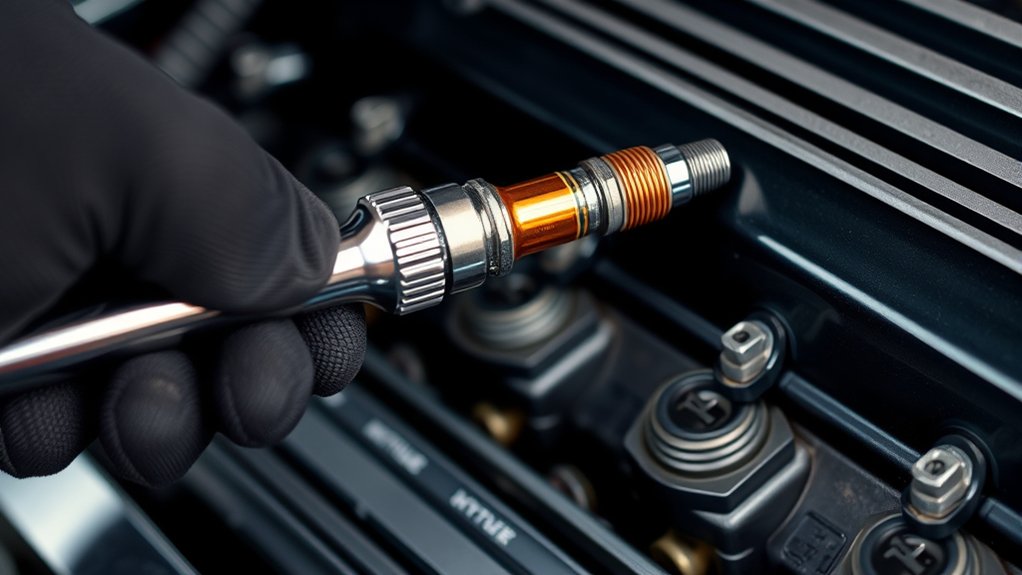
Using a torque wrench guarantees your spark plugs are tightened to the correct specifications, preventing damage and securing ideal engine performance. Start by setting the wrench to the manufacturer’s recommended torque, usually around 13 ft-lbs.
Tighten the plug until you hear a click or feel resistance.
For critical components like spark plugs, a torque wrench is recommended to avoid over- or under-tightening. Keep going if you want to learn how to do it right every time.
Key Takeaways
- Using a torque wrench helps make sure your spark plugs are tightened to the manufacturer’s specifications. This prevents damage and keeps your engine running smoothly.
- It provides consistent and accurate torque readings. That way, you reduce the risk of over-tightening or under-tightening the plugs.
- If your engine needs a precise torque setting, usually around 13 ft-lbs, it’s a good idea to use a torque wrench.
- For spark plug installation, choose a reversible 3/8-inch drive torque wrench with a range of 5-80 ft-lbs. It’s versatile and suitable for most applications.
- Always check the manufacturer’s guidelines. Follow their recommended torque settings and any advice on lubricants or anti-seize.
Why Torque Wrench Use Matters for Spark Plugs
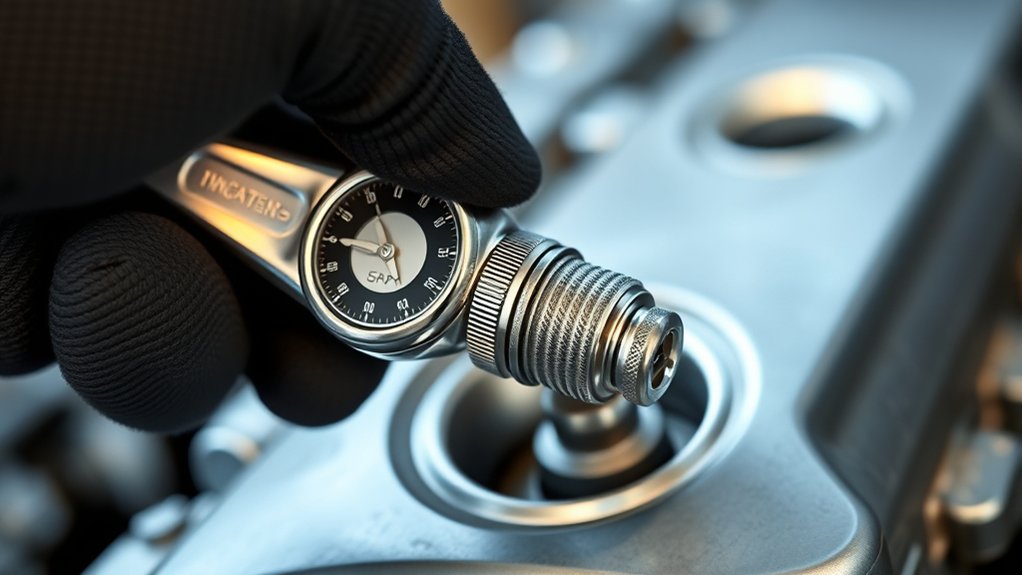
Using a torque wrench is essential when installing spark plugs because it guarantees they are tightened to the exact specifications. This precision helps prevent over-tightening, which can damage aluminum cylinder heads, or under-tightening, risking loose plugs that cause misfires or engine damage.
A torque wrench provides consistent torque, reducing the chance of stripping threads or damaging the spark plugs themselves. When you use one, you ensure each spark plug is secured properly, promoting reliable engine performance.
Many experts call using a torque wrench “cheap insurance” for long-term engine health. It’s a simple tool that offers precise control, especially for components with specific torque requirements.
This makes sure your spark plugs stay in place and your engine runs smoothly.
How to Install Spark Plugs Without a Torque Wrench
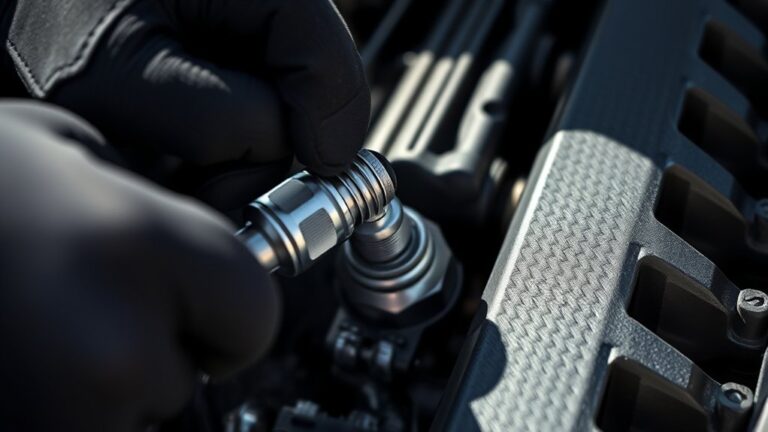
Even without a torque wrench, you can still install spark plugs effectively by following careful, step-by-step procedures. Begin by finger-tightening the spark plug until it’s snug against the cylinder head, making sure the gasket seats properly.
Use a socket and extension to turn the plug an additional 1/4 to 1/2 turn, applying steady, gentle pressure. As you tighten, feel for increasing resistance as the washer compresses; stop once you feel a firm, consistent feel without forcing it.
Applying a light coat of anti-seize on the threads helps prevent cross-threading and makes future removal easier. Avoid over-tightening by stopping when the plug is snug, and always check manufacturer guidelines for specific turn-in recommendations.
This careful approach guarantees proper installation without a torque wrench.
When and Why to Invest in a Torque Wrench for Your Car
Investing in a torque wrench becomes essential whenever you need to guarantee precise tightening of critical engine components, especially spark plugs. Using a torque wrench ensures you tighten to the manufacturer’s specific torque settings, usually around 13 ft-lbs, preventing damage from over- or under-tightening.
It provides consistent, accurate application of torque, reducing the risk of thread damage in aluminum heads and ensuring a proper seal. This is particularly important for sensitive components or during long-term maintenance, where precise torque specifications matter.
While experienced mechanics might rely on feel, a torque wrench offers what you could call “affordable insurance” to avoid costly repairs caused by improper tightening. Reversible click-type torque wrenches are affordable and widely available, greatly improving the quality and safety of spark plug installation.
How to Choose the Right Torque Wrench for Spark Plug Installations
How do you choose the right torque wrench for spark plug installations? First, pick a reversible 3/8-inch drive torque wrench with a range of 5 to 80 ft-lbs. This ensures you can tighten spark plugs accurately without going over the limit.
Second, choose a wrench with a scale positioned away from the ends, especially for low torque settings around 13 ft-lbs. This makes it easier to read and improves precision.
Third, verify that the torque wrench can be calibrated or checked against a standard to keep it accurate over time. Also, pick a wrench that allows you to comfortably apply the required torque without exceeding its capacity.
Proper storage with the setting at its lowest torque helps prevent spring fatigue and keeps the calibration intact. Following these tips will help you install spark plugs correctly every time.
How to Read and Follow Manufacturer Torque Specs and Turn-In Tips
To guarantee proper spark plug installation, you need to carefully read and follow the manufacturer’s torque specs and turn-in tips. Always verify the torque specs for your specific spark plug model before tightening.
Some manufacturers provide a recommended torque value, while others specify a certain number of turns, like 1/16 or 1/4 turn, especially for tapered seat plugs. If the brand suggests a simple turn, such as NGK, follow that rather than a torque value.
When using anti-seize or lubricant, reduce the torque by about 30% to avoid over-tightening and damaging the threads. Cross-reference torque specifications with reliable sources, and be cautious of translation errors or misprints.
The desired reading should always be accurate and tailored to your spark plug type for safe, effective installation.
Risks of Over- or Under-Tightening Spark Plugs : and How to Avoid Them
Over-tightening spark plugs can strip threads or crack the head, leading to costly repairs. On the other hand, under-tightening risks plugs coming loose and causing engine problems.
Using a torque wrench makes it easier to apply the right amount of force, helping you avoid both issues. Knowing the correct torque specs and following them carefully is key to preventing damage and ensuring a good seal.
Proper Tightening Technique
Applying the correct torque when tightening spark plugs is key to preventing damage and ensuring your engine runs smoothly. Using a torque wrench helps you apply the right amount of tightness, avoiding costly mistakes.
To do it right, always follow the manufacturer’s specs, usually around 13 ft-lb. This helps prevent stripping threads or cracking the cylinder head.
Make sure to use the torque wrench accurately, setting it to the recommended torque. This way, you get consistent, proper tightening each time.
If you don’t have a torque wrench, develop a good “feel” by hand-tightening and giving a quarter turn. This helps prevent over-tightening and potential damage.
Risks of Over-Tightening
Have you ever wondered what happens if you tighten spark plugs too much? Over-tightening can cause serious damage.
Using a torque wrench improperly or applying too much force risks stripping the threads in aluminum heads, which can be costly to repair.
Excessive torque may crush the washer or gasket, leading to poor sealing and potential misfires. In some cases, over-tightening can fracture or crack the spark plug, especially ceramic insulators, making removal difficult later.
It also damages the spark plug’s threads, complicating future maintenance. To avoid these issues, always follow the recommended torque specification—around 13 ft-lb—and use a torque wrench properly calibrated.
This guarantees a secure, damage-free installation and prevents costly repairs down the line.
Consequences of Under-Tightening
When spark plugs aren’t tightened to the proper torque, they can loosen over time, which poses serious risks to your engine’s performance. Under-tightening can cause engine misfires, damage to cylinder head threads, and even the plug falling out. This increases the risk of engine damage or fire hazards. Using a torque wrench helps ensure the right tightness every time.
Here’s what under-tightening can cause:
- Poor compression, rough idling, and increased emissions
- Loose plugs that can fall out and cause engine damage
- Thread stripping in aluminum heads, leading to costly repairs
Proper torque application is essential for a secure fit, preventing leaks, misfires, and expensive repairs down the line.
Tips for Achieving Proper Spark Plug Tightening Without Special Tools
Achieving proper spark plug tightening doesn’t always need special tools; you can rely on your feel and simple techniques. Start by finger-tightening the plug until it’s snug, then give it an extra quarter turn to seat it properly without overtightening.
Use a socket and extension to gently tighten the plug, feeling for increased resistance as the washer compresses. Don’t just rely on torque specs—trust your sense of touch instead. Recognize the “feel” of tightness by gradually tightening and stopping once you notice steady resistance, usually after a quarter turn from finger-tight.
Applying a small amount of anti-seize compound can help achieve consistent tightness and make removal easier later. Always double-check that the plug is snug without being overtightened, and when in doubt, check the manufacturer’s guidelines.
How Lubricants and Anti-Seize Affect Spark Plug Torque and Removal
Using lubricants or anti-seize on spark plug threads can significantly affect how they tighten and come out later. Applying a thin layer reduces friction, making it easier to tighten to the correct torque and removing the plug easier later.
Applying a thin layer of lubricant or anti-seize facilitates proper tightening and easier removal of spark plugs.
But be careful—using too much anti-seize or over-application can cause over-tightening. This increases the risk of damaging the threads or cracking the cylinder head.
Some manufacturers, like NGK, actually recommend against using anti-seize because it can change the intended torque values. If you do use it, you should reduce the torque setting by about 30% to compensate.
Keep in mind that proper lubrication helps achieve consistent torque readings. Excessive anti-seize can lead to damage, so always follow the manufacturer’s guidelines for the best spark plug performance.
Troubleshooting Common Spark Plug Tightening Issues
If your spark plugs are too tight or too loose, your engine might not run well, or you could end up damaging something.
Over-tightening can strip the threads or crack the ceramic insulator, while under-tightening might lead to misfires.
Making sure you use the right torque and checking your plugs regularly can help prevent these common problems.
Over-tightening Risks
Over-tightening spark plugs can cause serious damage to your engine and make future removal difficult. Using a torque wrench helps prevent this by ensuring you tighten to the manufacturer’s specs.
Risks of over-tightening include stripped threads in aluminum heads, which can lead to costly repairs and trouble removing plugs later. It can also crush the washer or gasket, causing poor sealing and possible engine misfires.
Additionally, applying too much torque can crack the ceramic insulator or damage the plug itself, which may compromise performance.
Over-tightening weakens the cylinder head threads and reduces the lifespan of the spark plug installation. Always use a torque wrench to tighten spark plugs to the recommended specs and avoid these costly, time-consuming issues.
Under-tightening Problems
When spark plugs aren’t tightened enough, they can gradually loosen over time, leading to various engine issues. Under-tightening can cause misfires, rough idling, and lower fuel efficiency.
Loose plugs might let combustion gases escape, which can trigger warning lights or even damage the engine internally. Without the right torque, plugs may fall out during operation, risking costly repairs.
Additionally, under-tightening increases electrode wear due to vibration, shortening the spark plug’s lifespan. Using a torque wrench helps ensure each plug is tightened to the correct specification.
This creates a secure seal and reliable contact, preventing problems caused by loose plugs and keeping your engine running smoothly. Always double-check your torque settings to avoid these issues and maintain optimal performance.
Proper Tightening Techniques
Achieving the correct spark plug tightness is key for your engine to run smoothly. Using a torque wrench is the most reliable way to get it right. Proper tightening helps prevent damage and creates a good seal.
First, set your torque wrench to the manufacturer’s specified torque, usually around 13 ft-lb. This helps you avoid over- or under-tightening.
Next, tighten the spark plug by hand until it’s finger-tight. Then, use the wrench or turn it until you feel increased resistance, which signals compression.
After removing the spark plug, always inspect the threads for damage. This can indicate improper tightening during installation.
Frequently Asked Questions
Do You Really Need a Torque Wrench for Spark Plugs?
Yes, you really need a torque wrench for spark plugs. It helps you tighten the plugs to the exact manufacturer specifications, preventing damage like stripped threads or cracked porcelain.
Relying on feel might seem easier, but it can lead to inconsistent results and engine problems. A torque wrench is inexpensive and offers peace of mind.
It ensures your spark plugs are installed safely, properly, and reliably every time.
Can I Change Spark Plugs Without a Torque Wrench?
They say “practice makes perfect,” and you can change spark plugs without a torque wrench, but it’s tricky.
Tighten them finger-tight, then give them a small turn, feeling for resistance. Just remember, relying solely on feel isn’t foolproof and could risk damage or loose plugs.
For best results and long-term reliability, using a torque wrench and following manufacturer specs is your safest bet.
What Size Spark Plug Socket for Honda Shadow 750?
You should use a 16mm (or 5/8 inch) spark plug socket for your Honda Shadow 750.
Make sure it has a rubber insert or magnetic tip to securely hold the spark plug during removal and installation.
Some models might need a 14mm socket, so it’s best to double-check your owner’s manual or service guide to confirm the correct size for your specific year and model.
Do Spark Plugs Need to Get Torqued?
Yes, spark plugs need to get torqued properly. You might think hand-tightening is enough, but it isn’t. Correct torque guarantees a proper seal, prevents damage, and keeps your engine running smoothly.
Using a torque wrench ensures you tighten to the manufacturer’s specifications. This helps avoid under- or over-tightening, which can cause problems down the line.
This simple step can save you from costly repairs and improve engine performance. It’s a smart, necessary part of your maintenance routine.
Conclusion
Using a torque wrench guarantees your spark plugs are installed correctly, helping prevent costly engine damage. It’s not just about tightness—it’s about the right tightness according to manufacturer specs.
Did you know that over-tightening spark plugs can lead to threads stripping? This mistake can cost up to $2,000 in repairs, so it’s worth doing it right the first time.
Investing in the right tools and following the recommended torque settings protects your engine and saves you money and time down the road. Proper torque is powerful—your engine will thank you for it.