How to Do Turbos to Increase Fuel Economy
Many drivers want to boost their fuel economy but feel overwhelmed by the options and advice out there. You’re not alone—improving efficiency with turbos can seem tricky, but with the right tips, it’s definitely doable.
Let’s explore how to get the most out of your turbocharged engine to save fuel and keep your vehicle running smoothly.
To increase fuel economy with turbos, guarantee your engine is properly matched to a compatible turbo system and maintain it regularly. Use high-quality synthetic oils, allow your engine to warm up and cool down properly, and fix boost leaks promptly.
Drive smoothly, avoid excessive idling, and shift gears early. Advanced engine management and cylinder deactivation can help too.
Keep exploring to uncover more expert tips on maximizing turbo efficiency and saving fuel.
Key Takeaways
- Match the turbo system to your engine size and performance goals for optimal efficiency.
- Regularly maintain the turbo by checking oil levels and inspecting hoses. Make sure the cooling system is working properly to prevent overheating.
- Use high-quality synthetic oil, and give your engine time to warm up before driving hard. Also, let it cool down after heavy use to protect the turbo.
- Adopt driving habits like maintaining steady speeds and accelerating gently. Shifting gears early can also help reduce turbo load.
- For the best fuel savings, consider combining turbo upgrades with direct injection, cylinder deactivation, and advanced engine management systems.
How Do Turbochargers Improve Fuel Efficiency?
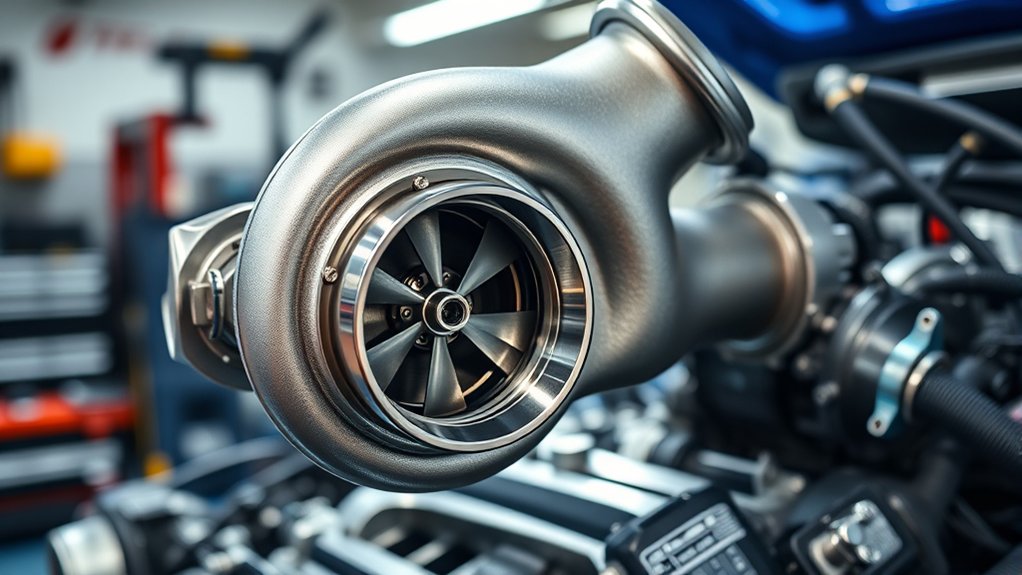
Turbochargers improve fuel efficiency by allowing smaller engines to produce the same power as larger ones, which helps cut down on fuel use.
Turbochargers enable smaller engines to deliver the same power, reducing fuel consumption and improving efficiency.
With turbocharged engines, you get better efficiency because they extract more energy from exhaust gases. This increases airflow and improves combustion, making your engine work smarter, not harder.
Turbocharging also helps your engine perform well at higher RPMs and during heavy loads, optimizing fuel use in tough conditions.
Running at lower RPMs for the same power helps save fuel too. When combined with tech like direct injection and cylinder deactivation, turbochargers can boost your vehicle’s fuel economy even more.
How to Pick the Best Turbo System for Your Car
Choosing the right turbo system for your car means considering your engine size and what you want to achieve with performance. This helps you boost fuel efficiency without losing power.
Focus on key factors like matching the turbo to your engine and goals to get the best results. Pick turbochargers with features like wastegates or electronic actuators for precise boost control and to avoid overfueling.
Look for high-quality parts such as ceramic bearings and advanced cooling systems. These ensure your turbo stays durable and runs efficiently over time.
Finally, make sure the turbo setup is compatible with your existing intake and exhaust systems. This way, you’ll maximize airflow and see better gains in fuel economy and performance.
How to Optimize Engine Settings and Driving Habits
To optimize your engine settings and driving habits, focus on maintaining steady speeds and accelerating gently to reduce turbo lag and save fuel.
Shifting to higher gears earlier helps keep the engine in an efficient RPM range, while using cruise control on highways keeps your speed consistent.
Avoid unnecessary idling and short trips, as these can heat up the turbo and lower your fuel economy.
Maintain Consistent Speeds
Maintaining a steady speed while driving is one of the easiest ways to boost your vehicle’s fuel economy when using a turbocharged engine. Keeping a consistent pace reduces engine load and prevents unnecessary turbo spool-up, which helps save fuel.
Using cruise control on highways makes it easier to keep a steady speed, minimizing fluctuations that cause turbo lag and increase fuel consumption. Here are some tips to help you drive more efficiently:
- Use cruise control whenever you can to keep your speed steady.
- Drive at moderate speeds, around 55-65 mph, for optimal engine performance.
- Accelerate gradually to avoid sudden changes in engine load.
- Shift to higher gears early to lower RPMs and reduce turbo activation.
These habits help you maintain a steady speed, improve fuel efficiency, and extend your turbo’s lifespan.
Accelerate Gently
Gently accelerating your vehicle helps optimize engine performance and fuel economy by reducing stress on the turbocharger. When you accelerate gradually, you allow the turbocharger to build boost pressure smoothly, which improves fuel efficiency and minimizes turbo lag.
Using steady acceleration keeps engine load lower, conserving fuel and preventing excessive heat buildup in the turbo system. Avoid sudden or aggressive throttle inputs, as they cause unnecessary turbo spool-up and increase fuel consumption.
Try to anticipate traffic flow and plan your acceleration to reduce frequent speed changes that strain the turbocharger. Maintaining consistent speeds and avoiding excessive idling also helps the turbo operate efficiently.
How to Maintain Turbo Components for Peak Performance
Ensuring your turbocharger performs at its best requires regular attention and care. Proper maintenance of your turbo components helps keep performance optimal and extends their lifespan. Here are four key steps to follow:
- Regularly check and replace engine oil with high-quality synthetic oil to ensure proper lubrication of turbo parts.
- Allow your engine to warm up before heavy driving, which helps reduce thermal stress on the turbocharger.
- After high-speed driving or towing, idle for a few minutes to cool down the engine. This prevents oil coking and heat buildup.
- Routinely inspect for boost leaks, cracked hoses, or unusual noises that could signal turbo or intercooler issues.
Consistent maintenance keeps your turbo running efficiently, maximizing both fuel economy and overall performance.
Which Technologies Can Boost Turbo Fuel Economy?
Advancements in automotive technology have made it possible to significantly boost turbo fuel economy through a range of innovative systems. Combining turbocharged engines with direct injection improves fuel efficiency by optimizing the air-fuel mixture and combustion.
Advanced engine management systems precisely control turbo boost pressure, helping to maintain efficiency across various driving conditions. Cylinder deactivation technology, when paired with turbos, reduces fuel consumption during light loads.
Lightweight materials and aerodynamic enhancements also play a role by decreasing drag, which further saves fuel. Here’s a quick look at how these technologies work together:
| Technology | Benefit | Impact on Fuel Economy |
|---|---|---|
| Direct Injection | Precise fuel delivery and better combustion | Increased efficiency |
| Engine Management | Optimizes turbo boost and adapts to conditions | Maintains peak performance |
| Cylinder Deactivation | Cuts fuel use during light loads | Saves fuel during everyday driving |
Common Turbo Efficiency Problems and How to Fix Them
Turbo overheating and boost leaks are common issues that hurt efficiency and need quick attention.
Make sure to check for proper cooling, intercooler integrity, and wastegate function regularly.
Fixing these problems helps your turbo run smoothly and boosts your fuel savings.
Turbo Overheating Causes
Turbo overheating often comes from inadequate cooling solutions, like using low-quality oil or clogged intercoolers. These issues cause high temperatures that strain the turbo, leading to oil breakdown and reducing lubrication. This speeds up wear and can cause serious damage.
External factors, such as extreme ambient heat or prolonged high-speed driving, also push turbo temperatures beyond safe limits. To avoid this, it’s important to understand what mainly causes overheating.
Here are the main causes: poor cooling system maintenance or blockages, using low-grade or degraded oil, high ambient temperatures, and extended high-RPM driving without proper cooling.
Boost Leak Solutions
Boost leaks are a common issue that can significantly reduce your turbo’s efficiency and overall engine performance. These leaks happen when cracks or loose connections develop in the intercooler piping, causing compressed air to escape.
Signs include sluggish acceleration, hissing sounds, and lower boost pressure readings on your boost gauge. To fix boost leaks, start by inspecting all intercooler piping and hose clamps, tightening or replacing any damaged hoses.
Seal any cracks with a turbocharger-specific sealant to ensure a secure fit. Performing a smoke test with pressurized air and smoke can help locate hidden leaks in the intercooler and intake system.
Regular maintenance, like replacing worn hoses and cracked pipes, is essential to prevent boost leaks and keep your turbocharger running at peak efficiency.
Expert Tips for Long-Term Turbocharged Engine Care
- Regularly change the turbo engine oil using high-quality synthetic oil to prevent buildup and ensure smooth lubrication.
- Allow the engine to warm up before aggressive driving. This helps reduce thermal stress on turbo components.
- Cool down the engine by idling after high-speed or heavy load driving. It prevents oil coking in the turbocharger.
- Schedule routine professional inspections to catch issues like boost leaks or turbine wear early. This keeps your turbo system efficient and reliable.
Following these tips helps extend your engine’s lifespan and maximize fuel economy.
Frequently Asked Questions
Can a Turbo Improve Fuel Economy?
Yes, a turbo can improve your fuel economy. When you use it properly, it allows your smaller engine to produce the same power as a larger one, which helps reduce fuel consumption.
Can You Run 87 Octane With a Turbo?
You can run 87 octane in a turbo if your vehicle’s manufacturer approves it. Check your owner’s manual to see the recommended octane rating, as some turbos require higher octane to prevent knocking and maintain performance.
Using the right fuel guarantees your turbo runs efficiently and avoids engine damage. If 87 octane isn’t recommended, sticking to higher octane fuels will help your engine perform at its best and last longer.
What Vehicle Gets 140 MPG?
You won’t find a commercial vehicle hitting 140 MPG yet, but imagine a sleek, lightweight electric hybrid gliding smoothly down the highway, powered by cutting-edge batteries and ultra-efficient aerodynamics.
These prototypes, like advanced plug-in hybrids or hydrogen fuel cell vehicles, hint at a future where 140 MPG becomes reality.
While no current model reaches this mark, ongoing innovations in turbocharging and hybrid tech promise to push fuel efficiency closer to this incredible target.
What Is the Best Way to Increase Fuel Economy?
To boost your fuel economy, drive steadily at moderate speeds and avoid sudden acceleration or braking. Regularly maintain your turbocharger for peak airflow, and shift to higher gears early to reduce engine load.
Use high-quality fuel, keep your tires properly inflated, and perform routine tune-ups to prevent boost leaks. These steps help your turbocharged engine run efficiently, saving fuel and enhancing overall vehicle performance.
Conclusion
While adding a turbo can boost your fuel economy, it’s natural to worry about complexity or costs. But with proper maintenance and smart driving habits, you’ll enjoy better fuel efficiency without breaking the bank.
Regular check-ups, tuning, and understanding your turbo system guarantee long-term savings and performance. Don’t let concerns hold you back. Embrace the turbo upgrade, and you’ll experience a more efficient, powerful drive that’s worth every penny.