Are Jeep Wranglers Safe?
Are you considering a Jeep Wrangler but worried about safety? You’re not alone—many Jeep enthusiasts love their rugged style but wonder how safe these vehicles really are on the road.
Jeep Wranglers offer strong off-road durability and standard safety features like airbags and stability control. However, their rugged design comes with safety trade-offs. They score moderate in crash tests and have a high rollover risk due to their high center of gravity, especially with modifications like lift kits.
If you’re concerned about safety, it’s important to understand these risks better. Continue exploring to learn more about what affects Wrangler safety and how to stay protected.
Key Takeaways
- The 2023 Jeep Wrangler has a mixed safety record. It received a 4-star overall rating from NHTSA but shows vulnerabilities in small overlap crashes.
- Its high ground clearance and body-on-frame design can increase the risk of rollover. These features also limit how well the vehicle absorbs crash energy.
- Advanced safety features are often optional or limited, especially on the base models. This reduces the vehicle’s crash avoidance capabilities.
- Rollover risk is quite significant because of the high center of gravity. Around 35% of fatalities involving Wranglers are due to rollovers.
- The structural design and owner modifications can also impact safety. Because of these factors, the Wrangler might not be the best choice for families or less experienced drivers.
How Do Jeep Wranglers Perform in Crash Tests?
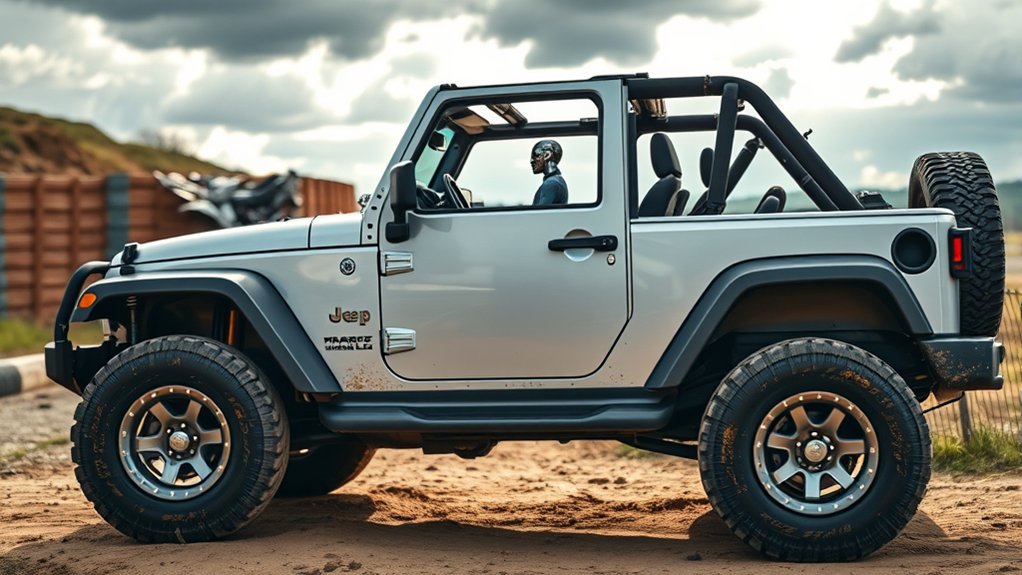
Jeep Wranglers perform reasonably well in crash tests, but they still have some limitations compared to many mainstream SUVs. The 2023 model earned a 4-star overall safety rating from NHTSA, with 4 stars for frontal crashes and 5 stars for side impacts.
In terms of IIHS crash tests, the Wrangler received a “Marginal” rating for driver-side small overlap front and an “Acceptable” rating for passenger-side small overlap front. These results show some vulnerabilities, especially in certain crash scenarios.
The Wrangler’s high ground clearance and body-on-frame design increase rollover risk, which can affect crash performance. Although newer models have better safety ratings, they still trail behind many other SUVs.
Crash test ratings also vary across different model years, highlighting the ongoing improvements and remaining challenges.
What Are the Main Safety Strengths of the Jeep Wrangler?
The Jeep Wrangler’s safety strengths include its rugged off-road durability and strong body construction, which help it withstand tough conditions and crash scenarios.
Modern models also feature advanced safety technologies like blind-spot monitoring and forward collision warning to keep you aware of your surroundings.
Together, these elements make the Wrangler a reliable choice for both adventure and everyday safety.
Rugged Off-Road Durability
What makes the Jeep Wrangler stand out in off-road safety is its rugged construction designed to handle tough terrains with ease. Its body-on-frame design and solid axles give you exceptional durability, making it resistant to damage on rugged trails.
Reinforced features like skid plates and a sturdy roll cage provide extra protection against impacts during challenging off-road adventures. High ground clearance and specialized suspension systems help you navigate uneven, rocky terrain safely, reducing the risk of underbody damage.
The Wrangler’s water-fording capability of up to 30 inches showcases its rugged strength for water crossings and obstacles. Features like electronic roll mitigation and reinforced tires help maintain stability and protect you during extreme off-road maneuvers, making it a reliable choice for off-road safety.
Strong Body Construction
Because of its durable body-on-frame construction, the Jeep Wrangler offers exceptional strength and safety. This design boosts its off-road ruggedness and provides a solid foundation to absorb and distribute crash forces, especially in frontal impacts. Its reinforced roll cage further protects occupants during rollovers and off-road impacts, enhancing safety.
The solid axles and high ground clearance allow the Wrangler to handle tough terrains without sacrificing structural integrity. However, the high center of gravity can increase rollover risk, so careful driving is essential. Overall, the body-on-frame setup gives the Wrangler a strong framework that improves safety.
When combined with its reinforced safety features, this construction makes it a durable and reliable choice for off-road enthusiasts.
Advanced Safety Features
While the Jeep Wrangler is known for its tough off-road skills, its advanced safety features make it even more appealing. The 2024 model offers optional tech like blind-spot monitoring, adaptive cruise control, and forward collision warning with automatic emergency braking (AEB). These features help prevent accidents and keep occupants safe.
Standard safety equipment includes airbags, anti-lock brakes, electronic stability control, and a rearview camera, all of which boost overall safety. However, AEB and some other advanced systems are only available on higher trims, which can create safety gaps on the base models.
Although the Wrangler’s rugged design adds crashworthiness with reinforced roll cages and skid plates, it lacks some modern active safety features found in other SUVs. Overall, the Wrangler offers solid safety options, especially in its higher trims.
Where Are the Safety Gaps and Weaknesses in Wrangler Design?
You should be aware that the Wrangler’s high ground clearance and body-on-frame design increase its rollover risk and reduce crash energy absorption.
Its removable doors and roof lower side-impact protection and pedestrian safety. Furthermore, the lack of advanced safety features like automatic emergency braking and blind-spot monitoring leaves some gaps in overall protection.
Rollover Risk Factors
Jeep Wranglers are naturally more prone to rollovers because of their design. Their high center of gravity makes them less stable, especially during sharp turns. With a Static Stability Factor (SSF) around 1.18–1.25, they tend to be less stable than most vehicles.
The body-on-frame construction and solid axles also play a role. They transfer more impact energy during a rollover, which can increase injury risks. Plus, removable doors and roofs leave side-impact protection gaps.
Aftermarket modifications like lift kits and oversized tires further raise rollover chances. These changes alter how the vehicle behaves, making it more likely to tip over in tricky situations. All these factors combined make Wranglers more vulnerable during rollovers.
Structural Impact Limitations
Have you ever wondered where the safety gaps lie in the Wrangler’s design? Its crash protection reveals some notable structural weaknesses. The body-on-frame construction and high ground clearance, while great off-road, make it prone to rollovers and less capable in frontal and side impacts.
The rigid frame absorbs less crash energy, which increases vulnerability during collisions. Removable doors and roof also reduce side-impact protection, exposing occupants to higher injury risks. Crash tests show the Wrangler scores lower in small overlap front and side impact categories, highlighting these vulnerabilities.
Plus, modifications like lift kits and oversized tires can make the vehicle even less stable, worsening its structural safety weaknesses. All these factors point to some clear limitations in the Wrangler’s design when it comes to protecting occupants during crashes.
Safety Technology Gaps
While the Wrangler’s rugged build offers off-road prowess, it also creates notable gaps in safety technology that can compromise occupant protection. The Jeep Wrangler’s safety features are limited, with key options like automatic emergency braking and pedestrian detection often only available on higher trims.
Its high ground clearance and body-on-frame design increase rollover risk and reduce crash energy absorption in collisions. Short side-impact door structures and the lack of full side curtain airbags leave rear occupants more vulnerable in side impacts.
Many advanced safety tech options, such as blind-spot monitoring and lane departure warning, are restricted to premium trims or optional packages. These design choices prioritize off-road capability over modern crash mitigation, exposing safety gaps in critical crash scenarios.
How Do Rollover Risks Impact Wrangler Safety Ratings?
Rollover risks significantly affect the safety ratings of Wranglers because their high ground clearance and body-on-frame design make them more likely to tip over during sharp turns or quick maneuvers.
With a rollover probability of about 26.7%, these risks heavily influence crash test scores from agencies like IIHS and NHTSA. Rollover incidents make up roughly 35% of Wrangler fatalities, highlighting safety concerns.
The vehicle’s higher center of gravity reduces its static stability factor, which increases the chance of tipping. While features like electronic stability control (ESC) help cut fatalities by 50–80%, the basic design still presents a safety challenge.
As a result, rollover risks are a key factor in determining the Wrangler’s overall safety ratings.
What Safety Features Come Standard on the 2025 Jeep Wrangler?
The 2025 Jeep Wrangler comes with a variety of standard safety features to keep you protected on the road. You’ll find essential safety equipment like front and side airbags, anti-lock brakes, and electronic stability control.
All models include a rearview camera, making parking and reversing much safer and easier. Basic trims also come with tire pressure monitoring systems and seat belt alerts to boost safety awareness.
While advanced driver-assistance features like automatic emergency braking or blind-spot monitoring aren’t standard, higher trims might offer these as optional upgrades. Overall, the Wrangler focuses on core safety features to help keep you safe during your adventures.
How Do Advanced Safety Technologies Improve Wrangler Safety?
Advanced safety tech like collision warnings and automatic emergency braking helps you avoid accidents before they happen. Features such as blind-spot monitoring and stability control keep you aware of your surroundings and improve vehicle stability.
Together, these systems boost your safety by preventing crashes and reducing rollover risks. They work seamlessly to give you more confidence and peace of mind on the road.
Enhanced Collision Avoidance Systems
Modern Jeep Wranglers come equipped with advanced collision avoidance systems that actively work to prevent accidents before they happen. Features like collision warning with automatic emergency braking (AEB) detect potential frontal crashes and automatically apply brakes to avoid or lessen impact.
Blind-spot monitoring and rear cross-traffic alert enhance your awareness of vehicles in your blind spots, reducing side collisions during lane changes or reversing. These systems use sensors and cameras to provide real-time alerts, giving you vital extra seconds to react.
While some features are optional, their integration greatly boosts safety by helping you avoid crashes altogether or minimizing their severity. With these advanced collision avoidance systems, your Wrangler becomes a smarter, safer vehicle on both city streets and off-road adventures.
Improved Rollover Prevention Features
Building on collision avoidance tech, improved rollover prevention features actively work to keep you safer during sharp turns or sudden maneuvers. Electronic stability control (ESC) helps you maintain vehicle stability and reduces rollover risk.
Electronic roll mitigation systems monitor your vehicle’s tilt and can apply brakes to individual wheels, preventing or lessening rollovers. The integration of side curtain airbags in 2024 models adds extra protection against side impacts and rollover injuries.
Load limiters and pre-tensioners in seat belts improve occupant restraint, decreasing injury severity during rollovers. These advanced features work together to boost your safety, but the Wrangler’s high center of gravity still presents inherent rollover risks that these systems aim to mitigate.
Automatic emergency braking supports you during sudden obstacles. Stability control actively manages vehicle balance, and roll mitigation systems intervene before dangerous tilt angles.
Side curtain airbags provide added rollover protection.
Advanced Driver Assistance Technologies
When you drive a Jeep Wrangler with advanced driver assistance tech, it actively helps keep you safer by alerting you to hazards and preventing accidents before they happen. Features like adaptive cruise control and forward collision warning lower the chances of crashes.
Blind-spot monitoring and automatic emergency braking boost occupant protection, especially in city and highway driving. Modern Wranglers with these systems have improved crash test scores, reducing frontal and side collision risks.
These technologies also help lower rollover chances by providing stability alerts and intervention systems. Adding advanced safety tech helps cover safety gaps caused by the Wrangler’s rugged design, making both off-road and on-road driving much safer.
| Technology | Benefit | Impact on Crash Tests |
|---|---|---|
| Adaptive cruise control | Maintains safe distance | Reduces frontal collision risk |
| Forward collision warning | Alerts to potential hazards | Improves crash avoidance |
| Blind-spot monitoring | Detects vehicles in blind spots | Prevents side collisions |
Do Off-Road Capabilities Affect Crash Safety and Stability?
Off-road capabilities, while making a Jeep Wrangler more rugged and versatile, can hurt its crash safety and stability on paved roads.
The high ground clearance and body-on-frame design increase the risk of rollover during sharp turns or collisions. A higher center of gravity makes the vehicle more prone to tipping.
Reinforcements like skid plates and roll cages help protect in crashes but don’t fully improve stability. Lifting the vehicle with aftermarket modifications raises rollover risk even more.
These off-road features, though great off-road, often compromise safety during emergency maneuvers on paved surfaces.
What Does Real-World Accident Data Say About Wrangler Safety?
Real-world accident data shows that Jeep Wranglers face some safety challenges, despite their tough reputation. The 2021 death rate for Wrangler Unlimited models is about 18 fatalities per million miles, which is higher than the average for midsize SUVs.
Jeep Wranglers have a higher fatality rate than average midsize SUVs, highlighting safety concerns despite their rugged reputation.
Rollover incidents make up roughly 35% of Wrangler fatalities, mainly because of their high center of gravity. Crash data also indicates that Wranglers are more vulnerable to side impacts due to limited door reinforcement and their overall structural design.
Many accidents involve rollovers, especially during off-road driving or sharp turns. This highlights how susceptible Wranglers are in certain crash scenarios.
Even with safety features, the rugged, off-road focus of Wranglers increases the risk of injuries and fatalities in crashes. This real-world data really points out the safety challenges drivers face with Wranglers in various crash situations.
How Do Safety Ratings and Features Compare Across Wrangler Models?
Since safety features and ratings have improved over the years, newer Jeep Wrangler models from 2018 onward tend to perform better in crash tests. Still, they generally receive only moderate safety scores overall.
The 2023 Wrangler earned a 4-star overall rating from NHTSA, with better scores in side crashes but a moderate rollover risk. Safety features vary depending on the model year and trim level.
Higher trims often include advanced driver-assistance systems like blind-spot monitoring and forward collision warning. Standard safety features across recent models include airbags, anti-lock brakes, electronic stability control, and rearview cameras.
However, options like automatic emergency braking are usually available only on higher trims. Overall, the safety of different Wrangler models depends on their year and included features, which influence crash test results and safety ratings.
How Do Owner Modifications Affect Wrangler Safety?
Owner modifications can significantly impact the safety of a Jeep Wrangler, especially if they’re not done correctly. Changes like lift kits and oversized tires raise the vehicle’s center of gravity, which can increase rollover risks during sharp turns or in an accident.
Aftermarket bumpers and safety features might interfere with factory sensors and airbags, reducing crash protection. Adding safety equipment such as roll cages or skid plates can improve off-road safety but may compromise crashworthiness if not installed professionally.
Altering suspension or body structure can weaken the vehicle’s ability to absorb crash energy, decreasing overall safety. While properly vetted and expertly installed modifications can enhance safety, improper ones often increase accident and rollover risks.
Your choice of modifications plays a vital role in maintaining your Wrangler’s safety.
Is the Jeep Wrangler a Safe Choice for Families and Young Drivers?
Is the Jeep Wrangler a safe choice for families and young drivers? Usually, it’s best to proceed with caution. The Wrangler’s high ground clearance and body-on-frame design can make it more prone to rollovers, especially for new drivers.
The Jeep Wrangler’s design increases rollover risk, especially for inexperienced drivers. Proceed with caution.
Its crash safety ratings tend to be lower than many other SUVs, often just acceptable or marginal. Plus, it doesn’t come with many advanced safety features like automatic emergency braking or blind-spot monitoring, which are important for safety.
Rollover risks are higher, especially if you add modifications like lift kits. Its crash ratings are often not as high as other SUVs, which should give you pause.
The lack of modern safety tech means it’s not the safest option for less experienced drivers. Overall, it’s probably not the best primary family vehicle if safety is a top concern.
Frequently Asked Questions
Are Jeep Wranglers Safe in Accidents?
Jeep Wranglers can be safe in accidents, especially newer models with better crash protection.
But their body-on-frame design and high center of gravity mean they have a higher rollover risk. They also often lack advanced safety features like automatic emergency braking.
While they do perform well in some crash tests, their structural limits and fewer safety systems mean you’re at a higher risk of injury compared to more modern SUVs.
What Are the Unspoken Jeep Rules?
The unspoken Jeep rules are your secret code to surviving the wild, or at least looking cool trying.
You’ll prioritize off-road mods over smooth rides, respect the rugged design by avoiding reckless speeds, and always check your aftermarket parts.
Remember, proper recovery gear and off-road techniques aren’t just tips—they’re sacred commandments.
Follow these, and you’ll blend into the Jeep tribe, risking your safety just enough to earn bragging rights.
Are Jeep Wranglers Safe for First Time Drivers?
Jeep Wranglers can be safe for first-time drivers if you exercise caution and get proper training. Their high center of gravity increases rollover risk, especially during sharp turns or emergency maneuvers, so you need to drive carefully.
Be aware of limited safety features and handle the off-road design responsibly. With cautious driving and practice, you can enjoy the vehicle’s capabilities while minimizing safety risks.
Is It Safe to Drive a Jeep Wrangler?
Driving a Jeep Wrangler can be safe if you stay cautious and aware of its limitations. Its solid construction and safety features help protect you, but be mindful of the higher rollover risk, especially if you modify the vehicle or drive aggressively.
Always wear your seatbelt, avoid sharp turns at high speeds, and drive responsibly. Regular maintenance and safe driving habits are key to keeping yourself secure on the road.
Conclusion
In the end, choosing a Jeep Wrangler is like riding a wild stallion—exciting but requiring caution. While it offers solid safety features and impressive off-road capabilities, its rollover risk and design quirks mean you should stay vigilant.
If you’re a family or a young driver, weigh the adventure against the safety trade-offs. With proper modifications and cautious driving, you can navigate the open road safely.
Remember, when considering the safety of a Jeep Wrangler, it’s important to be aware of its strengths and weaknesses. Every hero needs a cautious sidekick, especially when safety is a priority.