
How Do Hydrogen Fuel Cell Vehicles Work?
Many people are looking for eco-friendly ways to reduce their carbon footprint, but the options can feel overwhelming. You’re not alone in wanting a cleaner, more efficient vehicle that doesn’t sacrifice convenience. That’s where hydrogen fuel cell vehicles come into play.
Hydrogen fuel cell vehicles work by combining hydrogen with oxygen in a fuel cell to generate electricity that powers the motor. You store hydrogen in high-pressure tanks, which are quickly refilled in minutes.
The fuel cell uses catalysts to split hydrogen into electrons and protons, with electrons creating electric power and protons producing water vapor. Their simple, clean process makes them eco-friendly and fast to refuel—exploring further reveals how these cars compare and improve over time.
Key Takeaways
- Hydrogen fuel cell vehicles generate electricity by combining hydrogen with oxygen in a fuel cell, which then powers the electric motor.
- The hydrogen is stored in high-pressure tanks and fed into the fuel cell. Inside, it reacts electrochemically to produce electricity.
- Electrons from the hydrogen flow through an external circuit to power the vehicle’s motor. Meanwhile, protons pass through a membrane to the cathode.
- At the cathode, protons, electrons, and oxygen come together to form water vapor. This is the only emission from the vehicle.
- The system includes several components like a fuel cell stack, hydrogen tanks, a high-voltage battery, and power electronics. These parts work together to keep everything running smoothly.
What Is a Hydrogen Fuel Cell Vehicle and How Does It Work?
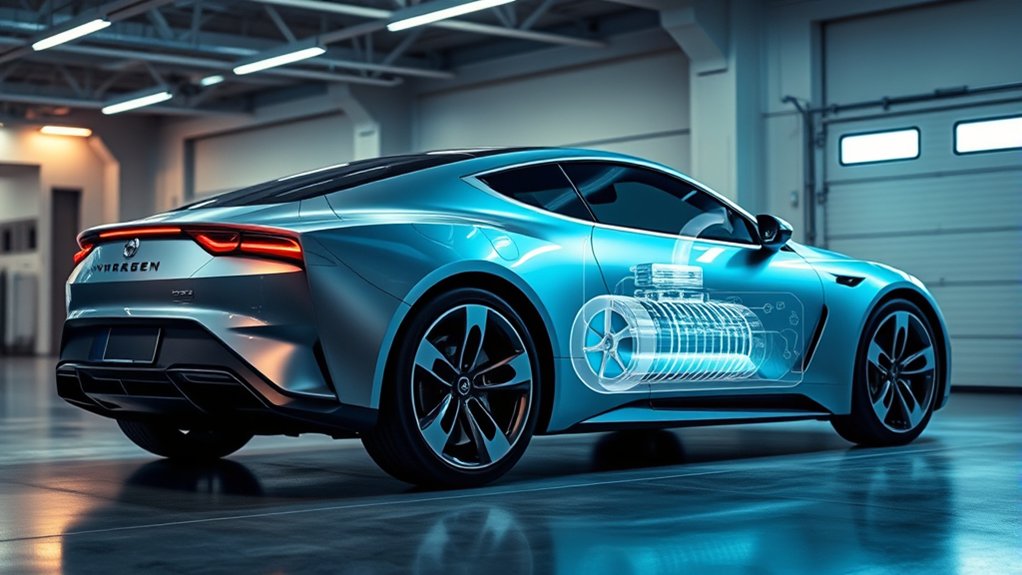
A hydrogen fuel cell vehicle is a type of electric vehicle that uses a fuel cell to generate electricity on the spot, which powers the motor.
Inside, a hydrogen fuel cell combines hydrogen with oxygen through an electrochemical reaction that produces electricity, water, and heat. Hydrogen is stored in onboard high-pressure tanks and fed into the fuel cell.
There, catalysts at the anode split hydrogen into electrons and protons. The electrons flow through an external circuit to power the electric motor, while protons pass through a membrane to the cathode.
At the cathode, they combine with oxygen to form water. This process makes the vehicle a zero-emission option, emitting only water vapor and heat.
It’s a clean, efficient way to drive using hydrogen as fuel.
How Do Fuel Cells Convert Hydrogen Into Electricity?
When hydrogen enters the fuel cell, it reacts with oxygen through an electrochemical process, producing electricity without burning fuel.
The catalyst at the anode splits hydrogen molecules into protons and electrons, setting the reaction in motion.
As the electrons flow through an external circuit, water vapor and heat are created as harmless byproducts.
Electrochemical Reaction Process
The electrochemical reaction process in a hydrogen fuel cell involves a series of precise steps that convert hydrogen into electricity. Hydrogen enters the anode, where a catalyst separates electrons from protons.
The electrons then flow through an external circuit, generating an electric current that powers your vehicle. Meanwhile, the protons pass through a membrane electrolyte toward the cathode.
At the cathode, oxygen from the air combines with the electrons returning from the circuit and the protons passing through the membrane. This reaction produces water vapor, completing the electrochemical process.
Catalyst Role in Reaction
At the heart of a hydrogen fuel cell’s ability to produce electricity is the catalyst, usually platinum. It speeds up the electrochemical reactions needed to split hydrogen molecules.
As hydrogen reaches the anode, the catalyst helps break it into protons and electrons. The electrons are forced to travel through an external circuit, creating an electric current that powers your vehicle.
Meanwhile, the protons pass through the electrolyte to the cathode. There, the catalyst helps combine protons, electrons, and oxygen to form water as a byproduct.
Without the catalyst, these reactions would occur too slowly to generate useful electricity. The efficiency of this catalyst directly affects the fuel cell’s overall performance and energy output, making it a key component in hydrogen fuel cell technology.
Water and Heat Formation
Fuel cells turn hydrogen into electricity through a precise electrochemical reaction that creates water and heat as byproducts.
In this process, hydrogen molecules split into protons and electrons at the anode. The electrons generate an electric current that powers your vehicle.
Meanwhile, the protons pass through a membrane to the cathode, where they combine with oxygen and electrons to form water vapor.
This water formation is a key byproduct of the reaction. The heat produced helps keep the fuel cell at the right temperature for efficient operation.
The entire process happens without combustion, directly converting hydrogen’s chemical energy into electrical energy.
As a result, your fuel cell vehicle emits clean water vapor and uses heat to boost performance.
Main Components of a Hydrogen Fuel Cell Car
Understanding the main components of a hydrogen fuel cell car shows how it generates and manages power efficiently. The fuel cell stack is key—it converts hydrogen and oxygen into electricity through an electrochemical process, powering the electric motor that drives your vehicle.
The fuel cell stack converts hydrogen and oxygen into electricity, powering the electric motor for efficient driving.
Hydrogen is stored in onboard tanks, supplying fuel to the fuel cell as needed. Power electronics control the flow of electricity, helping optimize motor operation and energy use.
The high-voltage battery stores energy from regenerative braking and helps during acceleration. The auxiliary battery provides initial power to start the vehicle and run electrical accessories.
Together, these parts work smoothly to deliver a clean, efficient driving experience, with each component playing a vital role in the vehicle’s energy management.
How Is Hydrogen Stored and Refilled in These Vehicles?
You’ll find that hydrogen is stored in high-pressure tanks made from reinforced carbon fiber, which keep the gas safe and compact.
Refilling is quick—just connect a nozzle, and hydrogen flows in at high pressure until the tank is full in about 3-5 minutes.
These tanks are designed to handle extreme conditions, ensuring safety and reliable storage for your vehicle’s range.
High-Pressure Hydrogen Tanks
How is hydrogen stored securely and efficiently in fuel cell vehicles? It’s stored in high-pressure tanks, usually at 700 bar (10,000 psi), to maximize how much hydrogen they can hold.
These tanks are made from carbon fiber-reinforced composites, which provide strength, durability, and safety under high pressure. Safety features include pressure relief valves and sensors that prevent over-pressurization, ensuring safe operation.
During refueling, a nozzle connects to the vehicle’s hydrogen inlet, allowing pressurized hydrogen to flow into the tank quickly. This process typically takes about 3 to 5 minutes.
Regular inspections and testing keep these tanks in line with strict safety standards for pressure, leakage, and impact resistance. This high-pressure storage system makes sure fuel delivery is safe, reliable, and efficient for fuel cell vehicles.
Refueling Process Overview
When refueling a hydrogen fuel cell vehicle, a special nozzle connects securely to the vehicle’s hydrogen inlet.
The process involves transferring pressurized hydrogen from refueling stations into the vehicle’s high-pressure tanks, which are usually at 700 bar (10,000 psi).
This quick transfer typically takes about 3 to 5 minutes and fills the hydrogen tank efficiently, much like filling a gasoline tank.
Hydrogen is stored as a compressed gas, so there’s no need for cryogenic cooling.
Safety systems and sensors monitor the pressure and check for leaks during refueling, keeping everything secure.
Once the tank is full, the nozzle is disconnected, and the vehicle is ready to generate electricity from the stored hydrogen for driving.
Safety and Storage Measures
Hydrogen is stored onboard fuel cell vehicles in high-pressure tanks designed for safety and efficiency. These tanks, often at 700 bar (10,000 psi), use advanced composite materials like carbon fiber to handle the high pressure and prevent leaks.
Safety valves and sensors constantly monitor pressure levels, automatically venting or shutting off if there are irregularities or leaks. Refilling is quick, with a nozzle that allows hydrogen to transfer in just 3-5 minutes.
The system’s leak detection and explosion-proof components are essential for safety because hydrogen is flammable. Features like leak sensors and alarms help identify issues early, ensuring safe operation.
| Feature | Function | Material Used |
|---|---|---|
| Pressure tanks | Store hydrogen at high pressure | Carbon fiber composites |
| Safety valves | Prevent overpressure and vent leaks | Metal and safety sensors |
| Leak detection | Identify hydrogen leaks quickly | Sensors and alarms |
| Refill system | Rapid, safe hydrogen transfer | Specialized nozzles |
What Are the Benefits and Challenges of Hydrogen Cars?
Hydrogen cars offer big environmental and convenience benefits, making them a tempting alternative to traditional vehicles. They only produce water vapor as a byproduct, which helps cut pollution. Plus, they can be refueled in about 3 to 5 minutes, similar to gasoline cars, making them convenient to use.
But there are still some hurdles. Producing hydrogen from fossil fuels creates CO₂ emissions, which lessens their environmental benefits. Also, high costs and limited refueling stations make it hard for many people to adopt hydrogen cars.
Storing hydrogen safely is another challenge. It needs high-pressure tanks, which can raise safety concerns and technical issues. Overcoming these obstacles is key for hydrogen cars to become a practical and sustainable transportation option.
How Do Hydrogen Vehicles Compare to Battery Electric Cars?
While both hydrogen fuel cell vehicles and battery electric cars aim to cut emissions, they operate quite differently and suit different driving needs. Hydrogen cars can be refueled quickly—about 3 to 5 minutes—and typically have a range of 200 to 300 miles, making them great for longer trips.
Battery electric cars usually take longer to recharge, anywhere from 30 minutes to several hours, and they tend to have slightly lower energy efficiency. Hydrogen vehicles produce only water vapor, so they are very clean, but electric cars depend on how clean your local electricity grid is.
Refueling hydrogen cars is fast, unlike charging electric vehicles. Hydrogen vehicles also offer longer range without frequent stops. On the other hand, battery electric cars benefit from a more extensive charging network, making them more convenient in many areas.
The Future of Hydrogen Fuel Cell Vehicles: Developments and Trends
Recent advancements in hydrogen fuel cell technology are leading to big changes in the future of clean transportation. Major automakers like Toyota, Hyundai, and Honda are investing more in this tech, developing new models and expanding refueling stations.
There’s a strong push to produce green hydrogen from renewable energy sources, which could really cut down the environmental impact of fuel cell vehicles. Even though the global market was around 70,200 units sold by 2022, improvements are making these vehicles more efficient and affordable.
The focus is shifting towards heavy-duty transport, shipping, and specialized sectors like buses and forklifts. However, challenges like high production costs, limited refueling infrastructure, and safety concerns still need to be addressed for wider adoption of hydrogen fuel cell vehicles.
Are Hydrogen Cars Safe and Environmentally Friendly?
Are hydrogen cars safe and environmentally friendly? Hydrogen cars produce only water vapor and heat as emissions, making them a clean and eco-friendly option during operation.
However, since hydrogen is flammable, it needs to be stored under high pressure, which raises safety concerns. Modern tanks have multiple safety features to prevent leaks and explosions.
Extensive testing shows hydrogen vehicles can operate safely in various conditions over decades. The environmental impact also depends on how the hydrogen is produced.
Green hydrogen from renewable sources significantly lowers carbon emissions, making it even more eco-friendly. To stay safe and green, proper handling, storage, and refueling protocols are essential.
- Hydrogen storage safety measures protect against leaks and explosions
- Green hydrogen reduces overall emissions considerably
- Proper protocols ensure safe operation and environmental friendliness
Frequently Asked Questions
What Is the Biggest Problem With Hydrogen Cars?
The biggest problem with hydrogen cars is the limited infrastructure for refueling. You’ll find few hydrogen stations, making it hard to plan long trips or rely on the technology daily.
Plus, producing green hydrogen is expensive and energy-intensive, which raises costs and environmental concerns. High-pressure storage tanks also increase safety risks and vehicle costs.
Until infrastructure and green hydrogen production improve, widespread adoption remains a significant challenge for you.
How Long Does It Take to Refuel a Hydrogen-Powered Car?
Refueling a hydrogen-powered car takes about 3 to 5 minutes, making it quick and convenient. You connect the high-pressure hydrogen nozzle to the vehicle’s fuel tank inlet, and the station supplies fuel at around 700 bar (10,000 psi).
This fast process is similar to filling a gasoline or diesel car, so you won’t experience long waits. That makes hydrogen vehicles practical for long-distance travel without delays.
How Many Miles per Gallon Does a Hydrogen Fuel Car Get?
Hydrogen fuel cell cars typically get about 50 to 60 miles per gallon equivalent (MPGe). You can usually travel around 300 to 400 miles on a full tank of hydrogen.
This depends on the vehicle’s efficiency, driving conditions, and storage capacity. Basically, one kilogram of hydrogen has about the same energy as 1.3 gallons of gasoline.
That means you can cover a similar number of miles efficiently, making hydrogen cars a promising alternative for longer trips.
Which Country Is Leading in Hydrogen Fuel Cells?
You’ll find Japan leading in hydrogen fuel cell technology, with the most vehicles on the road and strong government backing. South Korea follows closely, investing heavily in infrastructure and deployment.
Germany excels in research and development, pushing innovations forward. The United States advances through state initiatives and private investments.
China is rapidly expanding its hydrogen sector, focusing on heavy-duty trucks and large infrastructure projects. Each country is competing to shape the future of hydrogen-powered transportation.
Conclusion
Think of hydrogen fuel cell vehicles as ships sailing the vast ocean of innovation, guided by the lighthouse of sustainable energy. As you steer through the waves of technological advancements, these vehicles promise a cleaner, greener voyage ahead.
While challenges remain on the horizon, your journey toward eco-friendly transportation is fueled by hope and progress. Hydrogen fuel cell vehicles offer a sustainable way to move forward with cleaner energy options.
Welcome this voyage, for each step forward turns the tide toward a more sustainable and radiant future. Embracing hydrogen fuel cell vehicles helps us achieve a greener, more sustainable world.