How Do You Reset the Fuel Pump in 10 Easy Steps?
Many car owners have faced the frustrating moment when their vehicle suddenly won’t start, and you’re left wondering if it’s a fuel pump issue. If you’re struggling with this problem, you’re not alone. Resetting your fuel pump can seem tricky, but with a few simple steps, you can get your car back on the road.
To reset your fuel pump, first turn off your vehicle and disconnect the battery.
Locate the fuel pump shutoff or inertia switch—usually in the trunk or behind panels—and press the reset button if it’s triggered.
Reconnect the battery and turn on the ignition without starting the engine, listening for the pump’s humming sound.
If it still doesn’t work, verify the fuse and relay are in good condition.
More detailed steps follow if you want to get it just right.
Key Takeaways
- Locate the fuel pump relay or fuse in the fuse box. Remove it and check for any damage.
- Find the fuel pump shutoff or inertia switch. It’s usually in the trunk or behind panels.
- Reset the inertia switch by pressing the reset button. Do this after any impact or collision.
- Reinstall the fuse or relay securely. Make sure it’s properly in place.
- Turn the ignition on. Listen carefully for the fuel pump priming sound.
- If you hear the pump, it’s a good sign that everything is reset properly.
How Do You Reset the Fuel Pump in 10 Easy Steps?
If your vehicle isn’t starting properly or you suspect the fuel pump needs resetting, the process is straightforward.
First, check if your car has a mechanical inertia switch or an electronic fuel pump shutoff system.
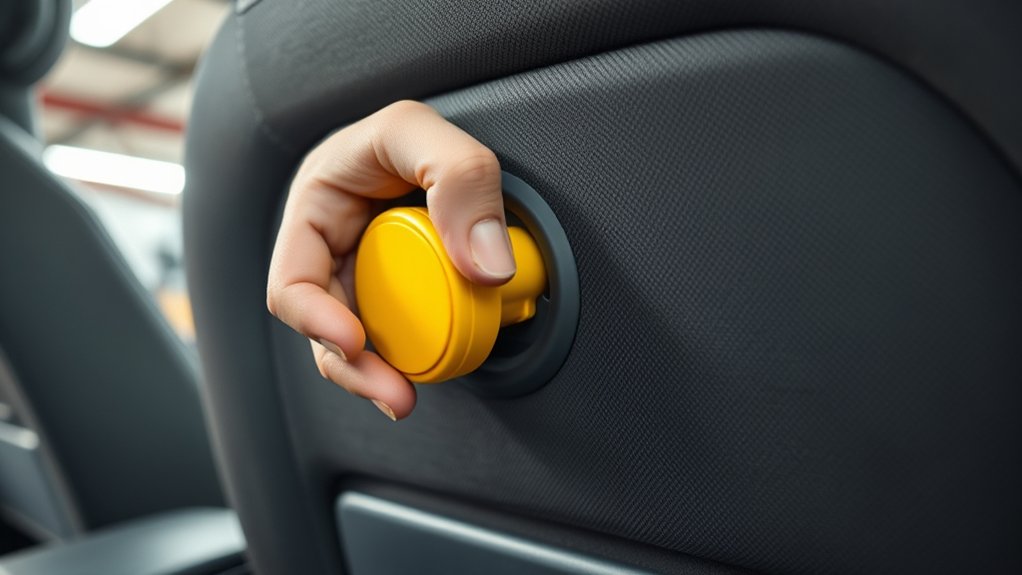
For mechanical switches, locate the reset button—usually in the trunk or behind a panel—and press it.
For electronic systems, disconnecting the battery is essential. Turn off the ignition, disconnect the battery, and wait 10-15 minutes to allow the control module to reset.
Afterward, reconnect the battery. Always test the fuel pump by turning the key to the “on” position—listen for the pump priming before trying to start the engine.
This simple process helps reset your fuel pump efficiently.
Why Is Your Fuel Pump Not Working?
Your fuel pump might not be working because of electrical issues like a blown fuse or damaged wiring. These problems can stop it from getting the power it needs.
Faulty parts such as a bad relay or a worn-out fuel pump can also cause it to fail. Spotting these issues is key to getting your fuel system back in good shape.
Fuel Pump Power Issues
Fuel pump power issues often come from electrical problems that stop the pump from getting the right voltage to work properly.
This could be caused by a blown fuse, a faulty fuel pump relay, or issues in the electrical system that interrupt the power supply.
Your vehicle’s battery voltage being low or dead can also limit power to the pump.
Sometimes, safety systems or a fuel pump shutoff switch activated after an impact can cut power too.
To troubleshoot, check for common causes like blown fuses or relays, damaged wiring or loose connections, and the condition of your battery.
Make sure the safety or fuel shutoff switch hasn’t been triggered either.
Fixing these issues can help restore proper power to your fuel pump.
Faulty Fuel Pump Components
Faulty fuel pump components are common culprits when your vehicle’s fuel pump stops working properly. A clogged filter, worn-out motor, or damaged relay can all prevent the pump from delivering fuel efficiently.
Electrical issues like corroded wiring or a blown fuse can disrupt power to the pump, causing it to fail.
Additionally, a malfunctioning fuel pump pressure regulator or faulty fuel pump control module can impair operation, leading to insufficient fuel flow or pressure.
Overheating or prolonged use can cause the motor to wear out prematurely. Contaminants or debris in the fuel tank can clog the pump or restrict fuel flow, further impairing its function.
Identifying these faulty components is vital to restoring proper fuel system performance.
How to Locate Your Vehicle’s Fuel Pump
Your vehicle’s fuel pump is usually located inside the tank, accessible through an access panel or by dropping the tank entirely.
In some models, you’ll find it under the rear seat or behind removable covers in the trunk.
Check your owner’s manual for specific details on the location and safety instructions before you start.
Typical Fuel Pump Locations
Locating the fuel pump can vary depending on your vehicle’s make and model, but it’s usually found inside the fuel tank, accessible through an access panel or sometimes under the rear seat. In many vehicles, the fuel pump is part of the fuel sending unit, integrated into the fuel module assembly.
Some cars have the fuel pump mounted on the frame rail or beneath the vehicle near the tank. To find it, check your vehicle’s service manual for diagrams. When inspecting, you’ll see electrical connectors and fuel lines attached to the pump, which should be handled carefully.
Here are common locations:
- Inside the fuel tank via an access panel
- Under the rear seat or trunk area
- On the frame rail near the fuel tank
- Mounted on the fuel sending unit within the tank
- Beneath the vehicle near the fuel tank
Vehicle Model Variations
The location of the fuel pump can vary a lot depending on your vehicle’s make and model. Different models mean different spots—inside the tank, beneath rear seats, or in the trunk.
Some cars have an access panel for easy removal, while others require lifting the vehicle or removing panels. Always check your owner’s manual or repair guide for exact instructions.
Here’s a quick overview:
| Vehicle Type | Typical Fuel Pump Location | Access Point |
|---|---|---|
| Sedans (e.g., Honda Civic) | Inside fuel tank | Top of tank or rear seat area |
| SUVs (e.g., Ford Explorer) | Inside fuel tank | Access panel in trunk or rear |
| Compact Cars (e.g., Toyota Corolla) | Inside fuel tank | Under rear seats or cargo area |
Knowing your vehicle model variations helps ensure an accurate repair guide and makes fuel pump access easier.
Accessing the Pump
Ever wonder where to find the fuel pump in your vehicle? Usually, it’s inside the fuel tank, accessible through an access panel.
To locate it, you might need to remove the rear seat cushion or fold the seat to reveal the access panel. Check the trunk area for a removable cover.
For older models, look underneath the vehicle for a service port or cover. And don’t forget to consult your owner’s manual for the exact access points.
Always make sure the vehicle is turned off and keys are removed for safety. Once you find the access panel, carefully remove it to reach the fuel pump.
Remember to prioritize safety at every step to prevent accidents.
Safety Precautions Before Resetting the Fuel Pump
Before you start resetting the fuel pump, it’s important to take safety precautions to prevent any accidents or injuries.
Make sure your vehicle is on a flat, stable surface with the parking brake engaged. Disconnect the battery to avoid electrical shocks or accidental ignition, which helps protect your electrical system.
Ensure your vehicle is on a flat surface with the parking brake engaged before starting.
Keep open flames, sparks, and smoking materials away from the fuel system to reduce the risk of fire. Wear protective gloves and safety goggles to protect against fuel spills or contact with hazardous substances.
Always confirm that the engine and electrical system are completely powered down before you proceed. Following these safety tips helps minimize hazards and keeps you safe while working near the fuel system and electrical components.
Step 1: Turn Off Your Vehicle and Disconnect the Battery
Are you ready to start working on your vehicle’s fuel system? The first step is to turn off your vehicle and disconnect the battery. This helps ensure safety before you begin any maintenance.
Here’s what you should do: Remove the ignition key to prevent accidental starting. Then, locate the negative terminal of the battery. Use a wrench or socket tool to loosen the battery clamp.
Carefully disconnect the negative terminal to cut power to the electrical system. Wait at least 10-15 minutes to let any residual electrical charge dissipate.
Taking these steps reduces the risk of electrical hazards and keeps you safe during the process. Always prioritize safety when working on your vehicle’s fuel pump.
Step 2: Find the Fuel Pump Relay or Fuse
To find the fuel pump relay or fuse, start by locating your vehicle’s fuse box, which is usually under the dashboard, glove compartment, or engine bay. Use your owner’s manual or the fuse diagram to identify the correct component, often labeled as “FUEL PUMP.”
Make sure the vehicle is off before removing the fuse or relay to guarantee safety. This helps prevent any electrical issues or injuries while working on your car.
Locating the Fuse Box
Locating the fuse box is a key step when resetting your fuel pump since that’s usually where the fuel pump relay or fuse is found.
Depending on your vehicle, the fuse box might be under the dashboard, in the engine compartment, or near the passenger side kick panel.
Check your owner’s manual or a fuse diagram to find the right fuse or relay.
Inside the fuse box, the fuel pump fuse is typically a blade-type fuse rated between 15 to 20 amps, and the fuel pump relay looks like a small rectangular box with multiple terminals.
Carefully remove the fuse or relay after turning off your vehicle to inspect or reset it.
Identifying the Correct Relay
Finding the correct relay for your fuel pump involves inspecting the fuse box for components labeled “Fuel Pump” or “FP.” These labels help you quickly identify the right part among other relays and fuses.
The fuel pump relay is usually a small rectangular or square component with multiple metal pins connecting to the fuse box. Check the fuse box cover or diagram for clarity.
If you’re unsure, your vehicle’s owner’s manual can provide the exact location and relay number. Some vehicles use a dedicated fuse instead of a relay, which is also labeled in the fuse box.
Identifying the correct relay is essential, especially if fault codes point to issues with the fuel pump circuit. This helps you troubleshoot effectively.
Step 3: Check for a Fuel Pump Shutoff Switch or Inertia Switch
If your vehicle has recently experienced a collision or sudden impact, the fuel pump might have been automatically shut off by a safety switch. This switch is usually an inertia switch that cuts power to prevent fires.
To check, look for the fuel pump shutoff switch, often a small, red or black button. It’s typically located in the trunk, under the dashboard, or behind a side panel, depending on your vehicle.
You might see a small reset button, a switch that looks like a tiny box, a label indicating fuel shutoff, a mechanical ball and magnet mechanism, or an electronic system integrated into the vehicle’s computer.
If triggered, simply pressing the reset button restores fuel flow.
Step 4: Reset the Fuel Pump Shutoff Switch
Once you’ve found the reset button, you’ll need to reset the fuel pump shutoff switch properly. First, turn off the ignition to prevent any electrical issues.
Locate the fuel pump shutoff switch, which is usually a red reset button found in the trunk or behind a panel. Press and hold the reset button for 3-5 seconds to allow the system to reset.
After releasing the button, turn the ignition back to the “on” position and listen for the fuel pump priming sound. If you hear it, the reset was successful, and your fuel pump should be ready to operate.
Always perform this step in a safe location and make sure the vehicle is secure before working with the fuel system.
Step 5: Reconnect the Battery and Turn On the Vehicle
After resetting the fuel pump shutoff switch, reconnect the vehicle’s battery terminals securely to restore power. Make sure the connections are tight and free of corrosion to keep the electrical flow steady.
Turn the ignition key to the “On” position without starting the engine. This allows the vehicle’s electronic systems to initialize. Wait about 30 to 60 seconds for the electronic control module (ECM) to finish its system checks.
During this time, watch for any dashboard lights or indicators that show the reset was successful. Once the system checks are done, start the engine to ensure everything is functioning properly after the reset.
Step 6: Test the Fuel Pump Functionality
To verify that your fuel pump is working correctly, turn the ignition switch to the “on” position without starting the engine. You should hear a humming sound from the rear, signaling proper operation. If you don’t hear it, check the fuel pump relay and fuse, especially in modern vehicles with different engine control systems.
Use a fuel pressure gauge to measure pressure at the fuel rail; it should match the manufacturer’s specs. This helps confirm whether the pump is delivering fuel properly.
| Fuel Pump Status | Action Needed | Possible Issue |
|---|---|---|
| Humming sound | Pump working | Good condition |
| No sound | Check relay & fuse | Faulty relay or fuse |
| Low pressure | Test pressure | Fuel pump or pressure regulator problem |
Frequently Asked Questions
How Can I Reset My Fuel Pump?
To reset your fuel pump, first figure out whether your vehicle has a mechanical inertia switch or an electronic system.
If it’s a mechanical switch, find the reset button—it’s usually in the trunk or under the vehicle. Turn off the ignition, press and hold the button for a few seconds, then turn the ignition back on.
For electronic systems, disconnect the battery for 10 to 15 minutes, then reconnect it and turn the ignition on.
If needed, you can also use an OBD scanner to clear any fault codes.
What Is the Fuel Pump Reset Button For?
The fuel pump reset button is a safety feature that cuts off fuel flow after an impact or collision. You press it to restore the fuel supply once the vehicle is safe and the system is reset.
It helps prevent fuel leaks and reduces fire risks during accidents. Usually, you’ll find it in the trunk, under the dashboard, or behind panels.
It’s important for ensuring your vehicle’s safety and proper functioning after emergencies.
Does a Fuel Pump Control Module Have to Be Reprogrammed?
Yes, a Fuel Pump Control Module (FPCM) often needs reprogramming after replacement or updates. You might think it’s automatic, but without proper reprogramming using specialized tools, your vehicle’s ECU may not communicate correctly with the FPCM.
This can cause engine issues, error codes, or even fuel pump malfunction. Reprogramming ensures the FPCM manages fuel pressure properly, helping your engine run smoothly and avoiding performance problems.
How Do You Reset Your Fuel?
To reset your fuel, first figure out if your vehicle has a mechanical or electronic shutoff system.
For mechanical systems, find the red reset button in the trunk or behind panels. Press and hold it for 3-5 seconds after turning off the ignition.
If your vehicle uses an electronic system, disconnect the battery for 10-15 minutes. Then reconnect it and wait for the system to reset.
Always follow safety precautions or check your vehicle’s manual if you’re unsure.
Conclusion
Now that you’ve followed these steps, your fuel pump should be back in action. But what if it still doesn’t work? Sometimes, the issue runs deeper than a simple reset.
Keep an eye on how your vehicle performs. Any unusual sounds or stalls could hint at bigger problems. Don’t rush to judgment.
With patience and a little troubleshooting, you’ll find out whether your fuel pump’s just reset or if a professional’s needed. This way, you can keep your engine running smoothly.