How to Install a Tonneau Cover in 7 Simple Steps
Many truck owners want a reliable way to protect their cargo from the elements, but installing a tonneau cover can seem intimidating. You’re not alone—lots of people struggle with getting it just right.
Luckily, with a little patience, you can do it yourself and enjoy a weatherproof, sleek look in no time.
Start by preparing your truck bed, cleaning it thoroughly, and gathering all your tools. Attach the side rails, making sure they’re level and aligned. Then seal the front edge with weatherproofing material for protection.
Mount the tonneau cover onto the rails, adjusting the tension and locking it securely. Install drainage tubes and double-check the seals for leaks.
Finish with a final inspection, testing the cover’s function. Keep going to learn how each step guarantees a perfect, weatherproof fit.
Key Takeaways
- Prepare the truck by cleaning the bed and gathering all tools before beginning installation.
- Loosely position the side rails first. Then, tighten and align them properly along the truck bed.
- Seal the front edge of the bed with a weatherproof seal. This helps with water resistance and keeps everything dry.
- Mount the tonneau cover onto the side rails. Adjust it so it operates smoothly and fits just right.
- Do a final check. Test the drainage and make sure all fasteners are secure for the best performance.
Prepare Your Truck Bed and Gather Tools
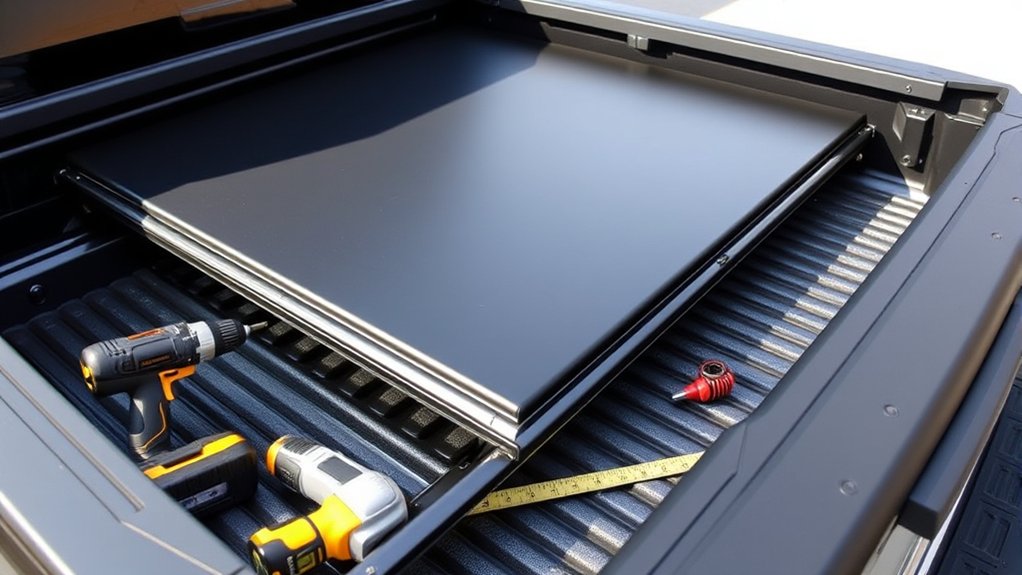
Before installing your tonneau cover, make sure to prepare your truck bed and gather all the tools you’ll need. Park your truck on a level surface to ensure everything lines up correctly during installation.
Next, clean out the truck bed thoroughly, removing any dirt, debris, or obstructions that might get in the way. Gather all the tools listed in the installation guide, like clamps, screwdrivers, a socket set, measuring tape, utility knife, and gloves.
Double-check that the tonneau cover is compatible with your specific truck model and bed size before you start. Open the tailgate and clear away any obstacles so you can easily access the truck bed rails.
Lay out all the parts and hardware on a clean, flat surface. Verify that everything matches the parts list. Proper preparation makes the installation smoother and helps prevent mistakes.
Attach and Level the Side Rails for a Secure Frame
To attach the side rails securely, start by positioning them loosely onto the truck bed. Make sure they sit flush with the front of the bed rail and run parallel to each other. Use clamps to temporarily hold the rails in place.
Check that the rails are level and aligned with the truck bed sides. Ensure they do not extend into the cab gap and stay aligned with the bed rails, not level with the tailgate. Sight along the length of the rails to verify they are straight and free of tilt or misalignment.
Once you’re satisfied, tighten the clamps from front to rear. Recheck their level and parallelism before finalizing. Properly aligning and leveling the side rails creates a secure frame for your tonneau cover.
Seal the Front Header for Better Weatherproofing
Before applying the header seal, clean the truck bed’s front edge with rubbing alcohol to ensure good adhesion.
Carefully align the seal along the top edge and press firmly to hold it in place.
Warming the seal with a heat source helps it conform better and creates a stronger, weatherproof bond.
Proper Surface Preparation
Have you cleaned the truck bed’s front edge thoroughly with rubbing alcohol? This step guarantees a clean, residue-free surface, which is essential for a proper seal. A clean edge allows the adhesive on the front header to bond effectively, preventing leaks.
Carefully peel back the adhesive backing on the seal and position it along the truck bed’s front lip, making sure it fits snugly. Press firmly to secure the seal in place, removing any air bubbles with a clean cloth or roller.
Trimming any excess material helps achieve a neat, flush fit, enhancing weatherproofing. Allow 10-15 minutes for the adhesive to set and bond fully before continuing with the installation.
Proper surface prep creates a strong, lasting seal, ensuring your tonneau cover stays weatherproof.
Applying Seal Correctly
Applying the front header seal correctly is key to creating a strong weatherproof barrier.
Peel back the adhesive backing on the seal and carefully align it along the truck bed’s front edge. Before applying, clean the area thoroughly with rubbing alcohol to remove dirt, grease, and residues. This helps ensure a strong bond.
Once aligned, press the seal firmly into place, applying even pressure along its length. This helps eliminate air bubbles and promotes good adhesion. Take your time to make sure the seal is flush against the truck bed and cab for a tight fit.
If needed, trim any excess seal with a utility knife for a clean, precise edge. Let the adhesive set for 10-15 minutes before moving on to the next step to maximize weatherproofing.
Ensuring Seal Adhesion
To guarantee the seal adheres properly and provides a reliable weatherproof barrier, start by thoroughly cleaning the truck bed’s front edge with rubbing alcohol. This removes dirt and residue, ensuring a clean surface for the adhesive to bond effectively.
Peel the backing off the adhesive side of the front header seal carefully, avoiding contact to prevent contamination. Press the seal firmly onto the cleaned edge with even pressure to promote proper adhesion and eliminate air pockets that could compromise the seal.
Trim any excess material for a snug fit along the front of the cab, making sure there are no gaps. Allow the adhesive to cure for at least 10-15 minutes before proceeding, giving the seal time to set and maximize weatherproofing.
Mount the Tonneau Cover Onto the Rails
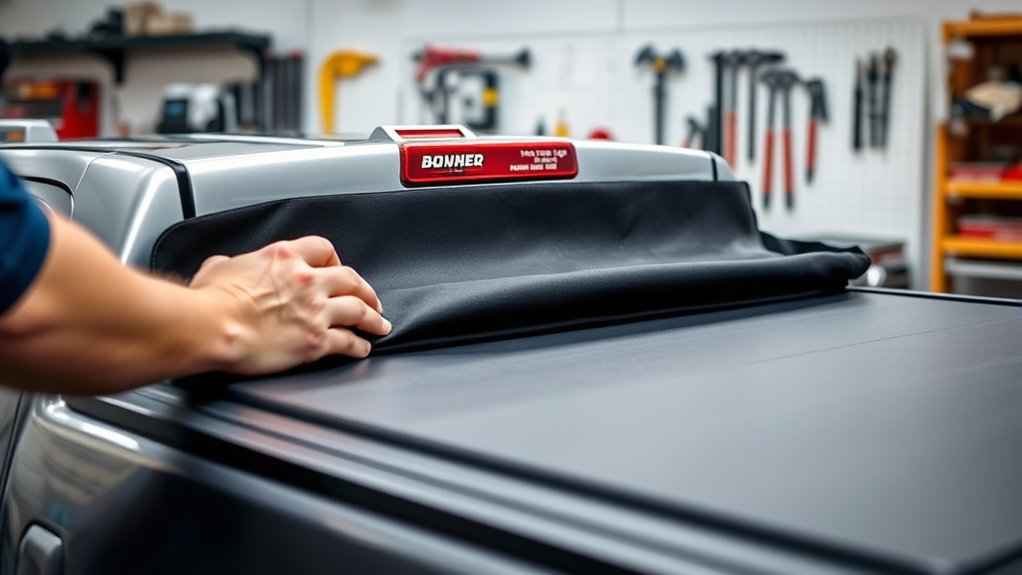
Before securing the tonneau cover onto the rails, make sure the side rails are aligned with the bed rails and centered on both sides. Proper alignment helps the cover sit evenly and function smoothly.
Place the cover’s mounting holes onto the side rails, matching them with the bolts or hooks listed in the instructions. Use the provided clamps or fasteners to secure the cover to the side rails, tightening them gradually for a snug fit.
Check that the cover is properly centered and flush with the truck bed edges before tightening all securing points fully. Once everything is in place, test the cover’s movement by unrolling or unfolding it to ensure it sits evenly and opens smoothly.
Proper mounting now will prevent issues later on and keep your cover working great.
Adjust Tension and Lock the Cover in Place
Once you’ve installed the cover, use the tension adjusters to tighten or loosen it for a snug fit.
Make sure the cover is stretched evenly and secure the locking mechanisms to prevent movement during travel.
Regularly check the tension and locks to keep everything secure, especially with temperature changes.
Tension Adjustment Techniques
Adjusting the tension on your tonneau cover is key for a secure fit, and you can do it with just a few simple steps. Use the tension adjusters, usually small screws or knobs, to gradually tighten or loosen the cover until it’s snug but not overly tight.
Proper tension helps keep everything aligned and stops warping or damage. Tighten the tension screws evenly on both sides to make sure the cover stays in place during your drive.
It’s a good idea to check the tension regularly, especially after installing or if the weather changes. Make adjustments as needed to keep it just right.
Once you find the perfect fit, lock the tension settings in place to keep the cover secure while you’re on the road. This simple step makes sure your tonneau cover stays functional and well-fitted.
Secure Locking Methods
To keep your tonneau cover securely in place, make sure to properly secure the locking mechanisms after adjusting the tension. First, tighten the tension adjusters, like screws or bolts, so the cover stays taut and doesn’t flap around.
Next, engage the locking mechanisms—these include clamps, latches, or locks built into the rails or cover. Proper alignment of these locking points is key to ensuring your cover stays secure.
Finally, secure everything with the provided keys, clips, or manual clamps. To maintain security over time, regularly recheck and adjust the tension screws and locks.
Remember:
- Tighten tension adjusters for a snug fit
- Engage clamps or latches firmly
- Lock with keys, clips, or manual clamps for added security
Install Drainage Tubes and Verify Seals
Start by attaching the drain tubes at the front of your truck bed, routing them through either factory holes or carefully drilled ones to guarantee proper drainage. Make sure the drainage pathways are clear and unobstructed so water can flow out effectively.
Check the seals around the tonneau cover and bed rails, ensuring they are flat and securely contact the surfaces. This helps prevent water from leaking inside. If you notice leaks during water testing, apply weatherproof sealant or add foam seals at connection points.
Perform a water test by pouring water over the cover and seals, then watch the drainage tubes to confirm water flows freely out of the bed. Regularly inspect and clear the drainage tubes to prevent clogs, which helps maintain good drainage and protects your truck bed from water damage.
Perform Final Inspection and Test the Cover’s Functionality
Ever wonder if your tonneau cover is properly installed and working as it should? The final inspection is key to making sure everything functions smoothly. Here’s what to do:
Start with a visual check to see if all clamps, bolts, and fasteners are tight and aligned properly. It’s a quick way to catch any obvious issues before moving on.
Next, test how it opens and closes. Do this several times to confirm the movement is smooth and the seal is tight. This helps spot any sticking points or leaks early on.
Finally, do a water test by pouring water over the cover and seals. Look for any leaks or gaps, and make adjustments if needed.
During this final check, focus on the cover’s alignment and operation. Make sure it opens easily and seals tightly. Also, ensure the drainage system is clear of debris and the tarp tension fits properly.
Frequently Asked Questions
What Is the Easiest Tonneau Cover to Install?
The easiest tonneau cover to install is a soft roll-up cover. You’ll appreciate its simple clamp-on design, which needs minimal hardware and no tools.
Just align the cover with your truck bed, secure the clamps, and you’re all set. Its lightweight design and straightforward mounting make installation quick and hassle-free.
It’s perfect if you want a no-fuss solution you can handle on your own without any complicated steps.
How Difficult Is It to Install a Tonneau Cover?
Installing a tonneau cover isn’t too complicated; with patience, you’ll find it quite manageable. Most covers, especially soft roll-up types, come with clear instructions and pre-measured parts, making the process smoother.
You’ll attach side rails with clamps, secure the cover, and check alignment—all doable with basic tools. Overall, it’s a straightforward task that most truck owners can confidently handle in a couple of hours, no pro needed.
Can You Go Through a Carwash With a Tonneau Cover on Your Truck?
Yes, you can go through a car wash with your tonneau cover on, but it really depends on the type. Hard covers are usually fine if the clamps are tight.
Soft roll-up covers should be removed beforehand to avoid any damage. Always double-check that all locks and clamps are secure before you go in.
For soft covers, it’s best to choose touchless or hand washes. This helps prevent potential harm from brushes or high-pressure water.
What Are the Disadvantages of a Tonneau Cover?
Like Pandora’s box, a tonneau cover reveals benefits but exposes some drawbacks. You might find it reduces your truck’s clearance, which can affect fuel efficiency and handling.
Heavy hard covers can be cumbersome to remove, making it a hassle when you need quick access to your bed. Some models also interfere with bed accessories like racks or liners.
If not maintained properly, moisture can build up and cause rust over time. Plus, not all covers are fully weatherproof, so water leaks during storms or washes could damage your truck bed.
Conclusion
Now that you’ve finished installing your tonneau cover, your truck bed is protected and ready for any adventure. Think of it like tuning a musical instrument—every part needs to be just right. The cover’s performance depends on careful setup and attention to detail.
While the process might seem simple, skipping steps can affect weatherproofing and security. It’s important to follow the instructions closely to get the best results. Proper installation ensures your tonneau cover will work smoothly and last longer.
In the end, the key is balancing careful setup with regular use. This harmony will keep your tonneau cover in top shape, transforming your truck from just a vehicle to a reliable, weather-resistant companion.