How Do I Safely Dispose of Diesel Fuel in 10 Steps
Dealing with diesel fuel can be tricky, especially when it’s time to get rid of it safely. Many people struggle with knowing the right way to dispose of contaminated or old diesel without risking harm or environmental damage. If you’re feeling unsure, you’re not alone—proper disposal is important, and it’s good you’re looking for guidance.
To safely dispose of diesel fuel, first determine if it’s contaminated, degraded, or aged over 12 months. Always wear proper safety gear like gloves, goggles, and a mask before handling. Transfer the diesel into approved, labeled containers and keep them upright during transport.
Find local hazardous waste facilities and follow legal regulations for disposal. You can also recycle or reuse clean diesel properly. Guarantee storage is secure and sealed before taking it to disposal sites.
If you want detailed guidance, continue exploring these steps thoroughly.
Key Takeaways
- Wear appropriate safety gear, including gloves, goggles, and respirators, before handling diesel fuel.
- Transfer diesel into approved, labeled containers and seal tightly for secure transport. This helps prevent spills and leaks during moving.
- Store used diesel in a cool, ventilated area away from heat or flames until disposal. Keeping it in a safe place reduces fire risk and exposure.
- Locate certified hazardous waste disposal facilities or auto parts stores accepting used diesel. They know the proper way to handle and dispose of it safely.
- Transport containers upright, secure, and ensure compliance with legal regulations during disposal. This way, you avoid accidents and stay within the law.
Should You Dispose of Diesel Fuel Yourself or Call a Professional?
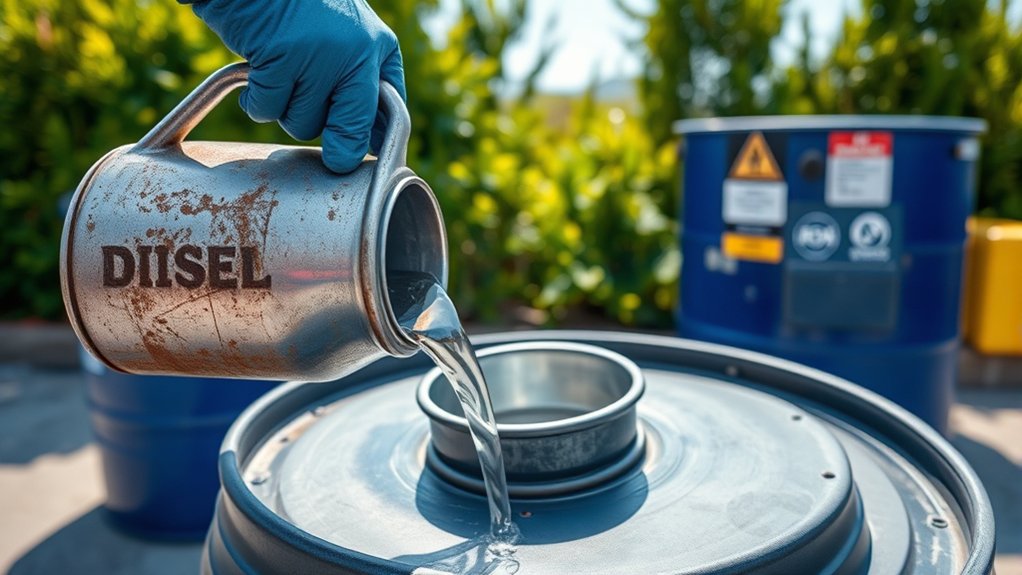
Deciding whether to dispose of diesel fuel yourself or call a professional depends on understanding the risks involved. Diesel fuel is hazardous waste, and mishandling it can lead to serious safety and environmental issues.
Proper disposal requires safety equipment, knowledge of regulations, and access to designated disposal sites. Trying to do it yourself can cause spills, fires, or toxic exposure, and you might break local laws and face penalties.
Professionals are trained to handle hazardous waste safely, reducing health risks and preventing pollution. They follow strict procedures to ensure diesel fuel is disposed of responsibly and legally.
Calling a professional minimizes dangers, protects your health, and makes sure the fuel is disposed of correctly. This helps you avoid legal issues and environmental damage.
How to Know When Diesel Fuel Needs Disposal
Knowing when to dispose of diesel fuel is essential for keeping your engine running smoothly and safely.
Proper disposal of diesel fuel ensures engine safety and environmental protection.
You should consider disposal if you notice cloudy diesel with floating particles or water separation, which shows contamination.
A sour or rancid smell indicates the diesel has degraded and is no longer suitable for use.
If you’ve stored diesel for over 12 months without proper precautions, it might have aged and degraded, so disposal is a good idea.
Engine performance issues like struggles or poor output after using the fuel suggest deterioration.
You can also shake the container to test for water—if water settles at the bottom, it’s a sign of water separation.
When these signs appear, it’s time for proper disposal to avoid engine problems and protect the environment.
Always handle degraded diesel safely and follow the proper disposal procedures.
Gather the Right Safety Gear Before Handling Diesel
Before you handle diesel fuel, it’s essential to gather the proper safety gear to protect yourself from potential hazards. Start by wearing chemical-resistant gloves to prevent skin contact, which can cause irritation or dermatitis.
Use safety goggles or a face shield to shield your eyes from splashes and fumes during handling. A respirator or mask rated for chemical vapors is important, especially if you’re working in poorly ventilated areas, to avoid inhaling harmful fumes.
Wear protective clothing, such as long sleeves and pants, to minimize skin exposure from spills or leaks. Make sure you have sturdy, closed-toe boots to protect your feet from accidental spills.
Proper safety gear is critical for safe and effective diesel fuel handling.
How to Transfer Diesel Safely Into Approved Containers
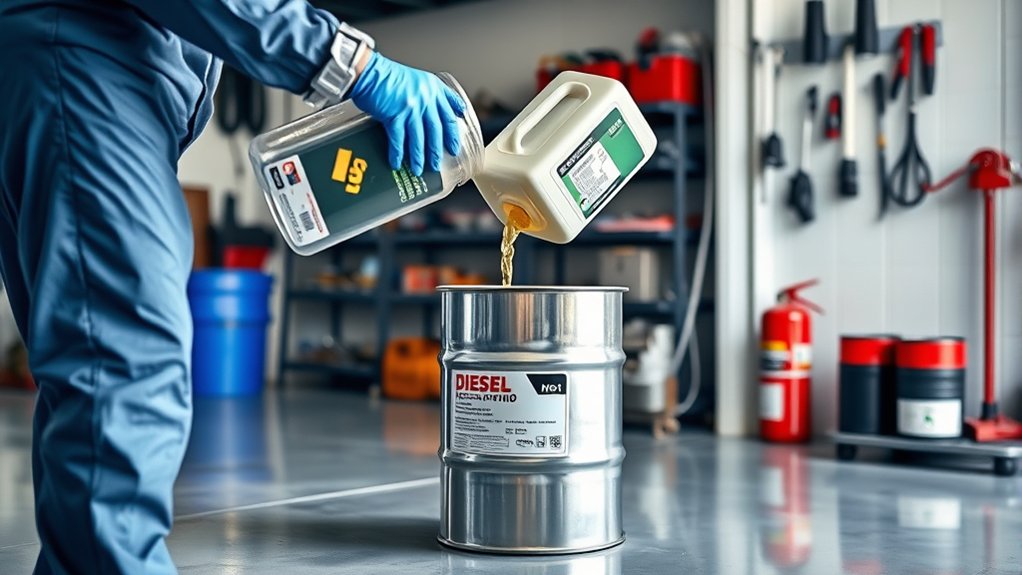
Start by choosing approved, leak-proof containers made of metal or high-density plastic designed for fuel.
Make sure they’re clean and dry before pouring in the diesel, and seal them tightly right after filling.
Label each container clearly as “Used Diesel Fuel” or “Hazardous Waste.”
Secure them upright during transport to prevent spills.
Choosing Appropriate Containers
How can you guarantee you’re using the right containers to transfer diesel fuel safely? First, choose fuel containers made of metal or high-density plastic, designed specifically for hazardous liquids. These containers help ensure proper storage and prevent leaks.
Next, check that your containers are clean, dry, and free of any residual contaminants before using them. Make sure they have secure caps or lids to prevent spills during transportation.
Finally, clearly label each container with “Used Diesel Fuel” and hazard warnings so you can easily identify the contents. Always handle these containers in well-ventilated areas, keeping them upright and secure.
Using approved fuel containers reduces risks and ensures safe disposal of hazardous waste. Choosing the right containers is key for safe handling and protecting the environment.
Securing and Labeling Properly
When transferring diesel fuel, handle the process carefully to avoid accidents or spills. Always use approved containers made of metal or high-density plastic designed to resist chemicals.
Before pouring, make sure the containers are clean, dry, and free of residues to prevent contamination. Once filled, tighten the lids securely to prevent leaks, spills, or vapor escaping during transport.
Proper labeling is crucial. Clearly mark each container with “Used Diesel Fuel” and add hazard warnings so everyone can quickly identify what’s inside.
Keep the containers upright during transfer and transport. This helps minimize the risk of spills and keeps everything safe.
Where to Find Local Hazardous Waste Disposal Facilities
Finding local hazardous waste disposal facilities is key to safely getting rid of used diesel fuel. To find authorized disposal sites, you can:
- Search online using terms like “hazardous waste disposal” along with your city or ZIP code.
- Contact your local waste management or environmental agency for specific locations and hours.
- Check if your community hosts hazardous waste collection events, which often accept diesel fuel free of charge.
- Make sure beforehand that the disposal site accepts petroleum products like diesel fuel so you don’t waste a trip.
Using these methods helps you find certified disposal sites that handle hazardous waste responsibly. Always confirm the facility’s acceptance of your specific waste and follow their guidelines for safe disposal at local waste and hazardous waste centers.
How to Pack and Transport Diesel for Disposal
To transport diesel safely, use approved leak-proof containers made of metal or high-density plastic that are clean and free of contaminants.
Make sure to seal the containers tightly and label them clearly as “Used Diesel Fuel” or “Hazardous Waste.”
Finally, secure the containers upright in your vehicle, avoiding overfilling and following disposal facility guidelines.
Use Approved Containers
Using approved containers is essential for safely packing and transporting diesel fuel for disposal. Choose containers made of metal or high-density plastic that are leak-proof and resistant to chemicals.
To ensure proper disposal, follow these steps: Transfer diesel into approved containers that are clean and free of residues. Seal the containers tightly with secure caps or lids to prevent spills or leaks.
Clearly label each container with “Used Diesel Fuel” and hazard warnings for easy identification. Transport the containers upright, securing them properly in a well-ventilated vehicle.
Keep them away from passenger areas and make sure they stay stable during transit. Using approved containers helps contain hazardous waste safely and reduces risks during transportation.
It also helps you stay compliant with disposal regulations.
Secure and Seal Properly
Securing and sealing your containers properly is key to ensuring safe transportation of used diesel fuel. Use approved, leak-proof containers made of metal or high-density plastic to prevent spills.
Once filled, tightly seal the containers with secure caps or lids. This helps prevent leaks and evaporation during transport, keeping everything contained.
Make sure to keep the containers upright and stable to avoid tipping or damage that could cause leaks. Always follow the disposal facility’s guidelines about how much diesel fuel you can transport.
Taking these steps helps ensure your containers are safe for transit and that hazardous materials stay contained, protecting both you and the environment.
Label Clearly
Proper labeling is essential when packing and transporting used diesel fuel for disposal. It helps everyone handling the containers quickly identify the contents and understand the hazards involved.
To ensure proper identification, you should label each container clearly with “Used Diesel Fuel.” Also, include hazard warnings to alert handlers of potential dangers.
Use weather-resistant labels to prevent fading or peeling during transit. Make sure the labels are prominently displayed and easy to read from a distance.
Clear labeling helps prevent accidents, spills, and improper handling. Use durable, legible labels that stand out to communicate the contents effectively.
Following these steps ensures safe transport and compliance with regulations. It also reduces risks for everyone involved in the process.
Legal Rules You Must Follow When Disposing of Diesel
Disposing of diesel fuel illegally can lead to serious legal consequences, so it’s important to follow the rules. Regulations say that hazardous waste, like used diesel, should only be handled and disposed of at authorized facilities certified to manage petroleum products.
You need to transport diesel in approved, clearly labeled containers that are sealed and secure to prevent leaks or spills. Proper disposal must also follow federal, state, and local environmental laws that often require reporting and documentation for hazardous waste.
Never pour diesel down drains or onto the ground. This is illegal and can cause environmental contamination. By following these rules, you can avoid legal trouble and help protect the environment from pollution caused by improper disposal.
Recycling or Reusing Old Diesel: What Are Your Options?
You have a few options for recycling or reusing old diesel, but it’s important to know what’s safe. Approved facilities and collection programs can handle contaminated fuel properly.
Testing can also help determine if the diesel is still suitable for reuse in compatible equipment.
Just be careful not to mix old diesel with fresh fuel, as that can damage your engines and make recycling more difficult.
Alternative Reuse Methods
When dealing with old diesel fuel, exploring alternative reuse methods can be a practical way to minimize waste and extend its usability. You might consider the following options:
- Recycling: Take contaminated fuel to authorized hazardous waste facilities or auto parts stores that accept old diesel for proper disposal.
- Reuse in non-vehicle applications: Use relatively fresh and uncontaminated diesel as heating oil in furnaces or for other off-road equipment.
- Filtering and blending: Carefully filter stale diesel and blend it with fresh fuel or additives to extend its life, but only if you have proper knowledge.
- Community reuse: Check if local farms or communities accept used diesel for generators or machinery, making sure the fuel is tested and safe for reuse.
Always verify local regulations before attempting any reuse or recycling.
Recycling Opportunities
Have you thought about recycling your old diesel fuel instead of just letting it go to waste? Recycling or reusing used diesel can be a practical option.
You can take your old diesel to hazardous waste facilities or auto parts stores that accept petroleum products. If the diesel isn’t too contaminated, reusing it in equipment like oil-burning furnaces or generators is possible.
Just remember, proper filtering and testing are essential to ensure safety and performance standards. Many recycling centers process used diesel into refined fuels or additives, which helps reduce environmental impact.
Always check local regulations and disposal facilities to confirm your options. Here’s a quick overview:
| Recycling Method | Suitable for | Notes |
|---|---|---|
| Hazardous waste facilities | Old diesel | Must meet safety standards |
| Auto parts stores | Used diesel | Accepts petroleum products |
| Reuse in equipment | Slightly contaminated diesel | Proper filtering needed |
Tips for Storing Diesel Safely Before Disposal
Properly storing diesel before disposal is essential to prevent spills, leaks, and potential hazards. To ensure safe storage as hazardous waste, follow these tips:
- Use approved, tightly sealed containers made of metal or high-density plastic to prevent leaks.
- Store diesel in a cool, well-ventilated area away from heat sources, sparks, or flames.
- Clearly label containers with “Used Diesel Fuel” or “Hazardous Waste” for proper identification.
- Keep containers upright and secure to avoid tipping and spills.
Regularly inspect your storage for signs of contamination, such as cloudiness or foul odors. Proper storage safeguards the environment and keeps you safe during disposal.
Final Checklist: Ensuring Safe and Environmentally Friendly Diesel Disposal
Before disposing of diesel fuel, check that it’s free from water, cloudiness, or particles by inspecting it and performing a water test. This step helps ensure you’re handling it safely and avoiding contamination.
Transfer the diesel into approved, clearly labeled, leak-proof containers. Keep these containers upright during transport to prevent spills.
Take the containers to an authorized hazardous waste disposal facility or recycling center that accepts diesel fuel. Make sure to confirm any documentation or specific requirements they might have for proper disposal.
Never pour diesel down drains, onto the ground, or into storm drains. Doing so can cause serious environmental damage. Following these steps helps you handle and dispose of diesel safely and responsibly, minimizing environmental impact and staying within waste regulations.
Frequently Asked Questions
How to Properly Dispose of Diesel Fuel?
You should transfer your diesel fuel into approved, clearly labeled, leak-proof containers. Then, take it to a certified hazardous waste disposal facility or an auto parts store that accepts hazardous materials.
Never pour diesel down drains, onto the ground, or into water sources, as this can harm the environment. Contact your local waste management agency for specific disposal instructions and safety guidelines, including protective gear and proper transport procedures.
Does Autozone Accept Old Fuel?
AutoZone generally doesn’t accept old fuel like diesel or gasoline. Imagine you’ve drained a tank and wonder where to go; auto parts stores usually avoid hazardous fuels for safety reasons.
Instead, you should take your diesel to a designated hazardous waste disposal site. Call ahead to confirm policies at your local store, but it’s safest to handle old fuel through proper disposal facilities, not auto parts stores.
How to Get Rid of Unwanted Diesel?
To get rid of unwanted diesel, take it to an authorized hazardous waste disposal facility or recycling center that handles petroleum products.
Don’t pour it down drains, onto the ground, or into water sources. Use approved, labeled containers that are sealed and kept upright during transport.
For small amounts, local household hazardous waste collection sites often can help.
For larger quantities, consider professional hazardous waste disposal services for safe pickup and processing.
What Dissolves Old Diesel Fuel?
If you’re wondering what dissolves old diesel fuel, bioremediation agents are your best bet. For example, imagine a small farm spill; applying bacteria-based cleanup products speeds up natural breakdown.
This process transforms diesel into harmless substances. These microbes eat and break down diesel efficiently, making cleanup safer and more eco-friendly.
Conclusion
Disposing of diesel safely is like steering a delicate dance—you need the right steps and timing. Knowing when and how to handle it, wearing proper gear, and following legal guidelines helps protect both you and the environment.
Think of it as tending a fragile garden. With care and respect, you’ll ensure your actions leave the surroundings healthy and thriving. Taking these steps seriously makes the process smooth and safe for everyone involved.
Handling diesel disposal properly is essential. Following proper procedures keeps you safe and prevents environmental harm. Remember, safe disposal of diesel fuel is crucial for protecting our planet.