How to Change Your Oil Filter Without Changing the Oil
Changing your oil filter without draining the oil might sound like a quick fix, but many people struggle with the mess and hassle it can cause. If you’re looking for a way to save time and reduce the cleanup, you’re not alone.
This method is especially handy for those who want to keep their vehicle running smoothly without the full oil change process.
To change your oil filter without draining the oil, first loosen the filter carefully using a filter wrench, then remove it, allowing a small amount of oil to escape.
Pre-fill the new filter with fresh oil and install it until the gasket contacts the surface, tightening by hand.
This method is faster and less messy, but for best results, consider changing both the filter and oil together.
If you want to learn more, let’s examine each step in detail.
Key Takeaways
- You can replace the oil filter without draining the oil, since only the oil in the filter and nearby galleries gets lost.
- Use a filter wrench to carefully remove the old filter. Catch any drips with a container or plastic bag so you don’t make a mess.
- Before installing the new filter, pre-fill it with fresh oil. This helps minimize spills and makes sure the filter starts working right away.
- Check that the new filter’s gasket seals properly. Tighten it by hand first, then turn it a little more to secure it.
- After putting in the new filter, start the engine briefly. Then, let it sit overnight so the oil can drain back, making future removal easier.
What Is an Oil Filter and Why Does It Matter?
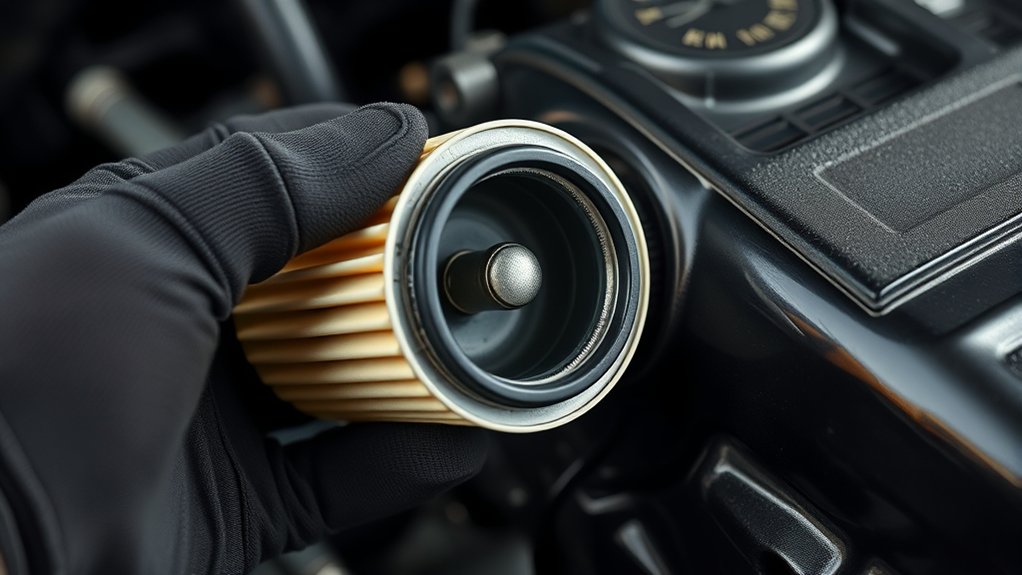
An oil filter is a key engine component that removes impurities, debris, and harmful particles from the engine oil as it circulates. Without it, dirt and debris can build up and cause engine wear and potential damage over time.
The oil filter makes sure the engine oil stays clean, so it can lubricate engine parts effectively. High-quality filters are essential for proper filtration and protection, helping to extend your engine’s lifespan.
Regularly replacing the oil filter keeps oil flowing smoothly and maintains good engine performance. When the oil filter works correctly, it helps preserve engine longevity by ensuring clean lubrication.
In short, the oil filter plays an essential role in keeping your engine running smoothly and preventing costly repairs.
Can You Change the Oil Filter Without Draining the Oil?
Changing the oil filter doesn’t always require draining the oil first, and many car owners do it easily without doing so. You can replace the filter without draining because only the oil in the filter and nearby galleries is lost during removal.
When the engine is off and cooled, the oil remaining in the sump stays mostly unaffected, so there’s minimal oil loss. Many filters have Anti Drain Back Valves (ADBVs), which help prevent oil from draining out and make removal less messy.
Removing the filter causes only a small spill of oil, usually from the filter and surrounding areas. While it’s possible to change the oil filter without draining, it’s generally recommended to replace both the filter and oil together for better engine health.
When Is It Better to Drain the Oil Before Changing the Filter?
You should consider draining the oil before changing the filter if you want to minimize oil spills and keep your workspace cleaner.
Draining the oil isn’t always necessary because only a small amount, about a cup to half a quart, drains from the filter and galleries. Most of the oil stays in the sump, so the engine remains well-lubricated.
Waiting until the vehicle has sat overnight allows oil to drain back into the sump naturally, which reduces the mess when removing the filter. Changing the filter without draining the oil makes the process quicker and cleaner.
Unless you’re doing a full oil change, you don’t need to drain all the oil. Draining beforehand is mainly useful if you want to reduce mess or if the engine hasn’t been sitting long enough for oil to drain naturally.
What Are Anti-Drain Back Valves, and How Do They Prevent Oil Loss?
Anti-Drain Back Valves (ADBVs) are small rubber or silicone flaps placed behind the oil filter inlet. They stop oil from draining out when the engine is turned off.
By keeping oil in the filter and upper engine galleries, they help reduce dry starts and ensure quick oil flow during startup. When you turn off the engine, ADBVs close tightly, sealing the filter and preventing backflow.
This helps minimize oil leaks during filter changes, which keeps your engine bay cleaner. Here’s how they work:
| Function | Benefit |
|---|---|
| Prevent oil from draining | Less mess during filter change |
| Seal tightly when off | Maintains oil in filter and galleries |
| Guarantee consistent oil pressure | Protects engine components |
Making sure ADBVs work properly is key to keeping the oil pressure steady and maintaining the right oil levels between changes.
How Do You Safely Remove an Oil Filter Without Making a Mess?
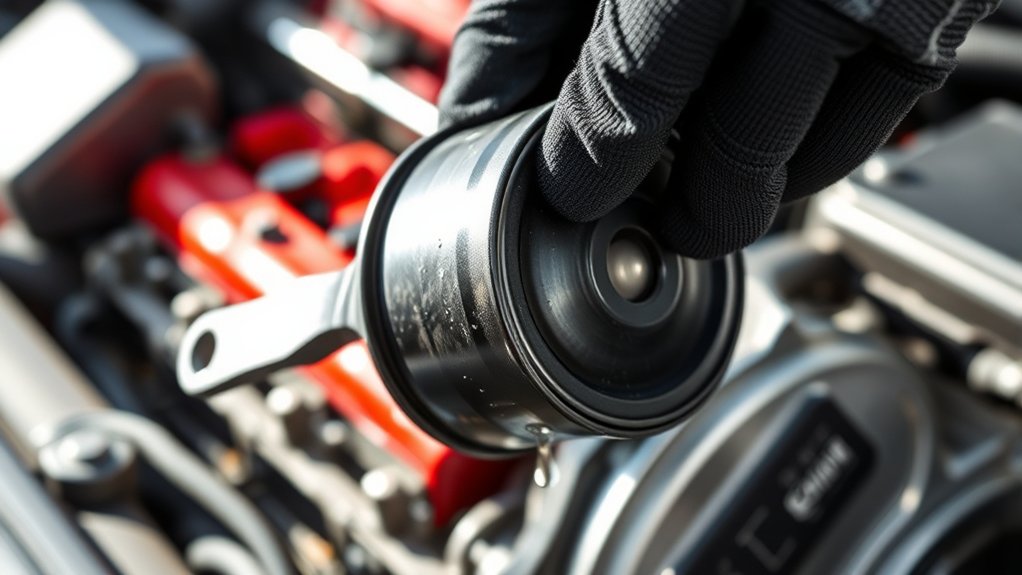
To remove an oil filter without making a mess, it’s important to control the flow of residual oil as you loosen it. Start by placing a large plastic bag or disposable container around the oil filter to catch any drips, helping prevent spills.
Slightly loosen the filter just enough to let some oil drain out slowly, minimizing mess. Turn the filter counterclockwise carefully, allowing trapped oil to escape gradually.
Before installing the new filter, pre-fill it with fresh oil to reduce spills during reinstallation. After removing the filter, wipe the mounting area thoroughly to remove residual oil and prevent leaks.
How Much Oil Do You Lose When Changing the Filter Without Draining?
When you change the oil filter without draining the engine, only a small amount of oil—usually less than a quart—may spill out. This mostly comes from residual oil in the filter and galleries.
Since the engine’s sump oil has been off for a while, it mostly stays in the sump, so your oil level won’t drop much. Using quick tricks like pre-filling the new filter can help reduce any loss during the process.
Oil Remaining in System
Changing your oil filter without draining the engine oil results in only a small amount of oil being lost—usually just a cup to half a quart. The oil in the filter and upstream galleries drains out, but most of the oil stays in the sump.
Since the sump remains closed during the process, the overall oil level stays pretty stable. Doing the change after sitting overnight helps residual oil drain back into the sump, reducing loss even more.
Keep in mind, the oil left in the filter and its passageways, called residual oil, accounts for this small volume. To keep the oil level correct, it’s a good idea to top off the engine oil afterward.
This method ensures minimal oil loss while keeping your engine properly lubricated.
Typical Oil Spill Volume
Replacing your oil filter without draining the engine oil usually causes a small spill, typically between a quarter and half a quart. This minor spill happens because some oil trapped in the filter media and galleries above the filter escapes when you remove it.
The actual amount spilled is generally minimal—about 0.2 to 0.5 liters (roughly 0.2 to 0.5 quarts)—especially if the engine has been off and cooled. Most of the engine oil stays in the sump, so the total oil loss from just changing the filter without draining is limited.
Using techniques like pre-filling the new filter or carefully removing the filter can help reduce spillage. Overall, the oil spill from changing the filter without draining is small, making it a manageable task.
Impact on Oil Level
Have you ever wondered how much oil you might lose when swapping out your filter without draining the engine? The oil level impact is usually small, often just a few ounces to a quarter of a quart. Most of the residual oil stays in the engine’s sump because only the oil in the filter and small galleries above it drain during removal.
The oil in the filter itself will drain out when you remove it, causing minor oil level drops. To minimize loss, perform the change after the vehicle has sat overnight, allowing oil to drain back into the sump. After replacing the filter without draining, it’s essential to top off the oil.
Keep in mind:
- Small oil loss occurs during filter change without draining
- Oil in the filter drains out upon removal
- Residual oil remains mostly in the sump
- Sitting overnight helps reduce oil loss
- Always check and refill to the proper oil level
How to Pre-Fill and Install a New Oil Filter Correctly
Pre-filling a new oil filter with oil before installation is an easy step that can save you mess and make sure your engine gets lubrication right away. Just pour clean oil into the filter until it’s about halfway or three-quarters full.
When installing, lubricate the gasket with a bit of new oil to help create a proper seal and prevent leaks. Hand-tighten the filter until the gasket touches the mounting surface, then turn an additional ¾ to 1 turn to secure it snugly.
Afterward, wipe away any excess oil from the filter and surrounding area using a clean rag or disposable gloves. This keeps everything clean and helps avoid contamination. Lastly, check for leaks to ensure the filter is secure and properly installed.
What Tools and Tips Help Make Oil Filter Changes Cleaner and Easier?
Using the right tools, like a filter wrench or strap wrench, makes removing stubborn filters easier and safer.
Practical tips such as pre-filling the new filter and applying a light coating of oil on the gasket can help prevent spills and leaks.
Keeping your workspace clean with rags and catch containers ensures a mess-free, efficient oil filter change.
Essential Tools for Oil Changes
Equipping yourself with the right tools can make oil filter changes much cleaner and easier. A quality filter wrench or strap wrench provides a secure grip, reducing slips and preventing damage to the filter.
Pre-filling the new oil filter with clean oil minimizes spills and ensures immediate lubrication. Placing a plastic bag or oil catch container around the filter catches drips, keeping your engine bay cleaner.
Applying a small amount of fresh oil to the gasket of the new filter helps create a proper seal and makes tightening easier. Ultimately, wiping the filter mounting area with a rag or shop towel prevents dirt contamination and leaks.
- Filter wrench or strap wrench
- Clean rags or shop towels
- Plastic bag or oil catch container
- Fresh oil for gasket lubrication
- Container for pre-filling the filter
Practical Tips for Clean Work
Keeping your work area clean during an oil filter change is essential, and the right tools can make a big difference. To prevent messes, use a plastic bag or disposable glove over the oil filter during removal to catch drips.
Pre-filling the new oil filter with fresh oil helps reduce spillage and speeds up oil circulation once installed. Use a filter wrench or channel lock pliers to loosen tight filters safely, especially when they’re hot.
Before installing the new filter, wipe the mounting area thoroughly with a clean rag to remove old oil and debris, preventing contamination. Slightly loosen the filter to let residual oil drain into a container, minimizing spills.
These tips and tools make changing the oil filter cleaner and more efficient.
Should You Change the Oil When Replacing the Filter?
When replacing the oil filter, it’s generally best to change the oil as well. Doing so ensures your engine stays clean and runs smoothly, preventing contamination buildup. If you only change the filter with old oil, debris and contaminants may bypass the filter, causing wear over time.
Many professional service procedures recommend changing both components together to maintain proper oil circulation and engine health.
Consider these points:
- Fresh oil improves lubrication and engine performance
- Old oil may contain debris that hampers filter effectiveness
- Changing only the filter can lead to increased engine wear
- Combining both changes prevents future problems
- Regularly changing both helps maintain long-term engine longevity
In short, replacing the oil when changing the filter is the best way to keep your engine running efficiently.
Troubleshooting Common Problems During Oil Filter Replacement
You might run into problems with oil draining or find it tough to remove a stuck filter. These issues can be frustrating, but knowing how to handle them can save you time.
Over-tightening the filter can lead to leaks or even damage the housing. So, be careful not to tighten it too much when installing the new one.
Being aware of these common problems can help you avoid costly mistakes and make the whole replacement process go more smoothly.
Oil Draining Challenges
Oil draining challenges are common issues that can make changing the filter more complicated. You might face stubborn drain plugs or unexpected oil leaks when draining oil.
Using the right tools and techniques can help. Carefully loosen the drain plug to avoid stripping or breaking it. Make sure the vehicle is level so the oil drains evenly.
Use a container to catch the oil when removing the filter, especially if there are no anti-drain back valves. Pre-fill the new filter or punch a small hole in the old filter to reduce spillage.
Finally, check the gasket seals and ensure proper installation to prevent leaks after replacing the filter.
Over-Tightening Risks
Ever wonder what can go wrong if you tighten that oil filter too much? Over-tightening your oil filter can cause serious problems.
When you apply too much torque beyond the manufacturer’s recommended 3/4 to 1 full turn after gasket contact, you risk crushing the filter or stripping threads. This can lead to leaks because the gasket may deform or fail to seal properly.
Over-tightening also makes future removal difficult, often requiring special tools or risking damage to nearby components. Plus, excessive force can deform the filter, impairing its seal and increasing the chance of oil leaks during operation.
To avoid these issues, tighten the filter by hand until the gasket contacts, then give it an additional 180° turn. Proper tightening guarantees a secure, leak-free fit without risking damage.
Final Tips to Maintain Your Engine’s Oil System Between Changes
Maintaining your engine’s oil system between changes is key to keeping it running smoothly and lasting longer. Regularly check your oil filters to make sure they’re working properly and catching any dirt or debris.
Use high-quality filters with anti-drain back valves (ADBVs). These help hold the oil in the filter, so you don’t lose oil when you change the filter.
Before installing a new filter, pre-fill it with oil. This reduces spillage and helps the engine start filtering immediately once you turn it on.
Waiting overnight after driving your car allows the oil to drain back into the sump. This makes removing the old filter cleaner and easier.
After changing the filter without draining the oil, make sure to top off the engine oil to the recommended level so everything stays well-lubricated.
Frequently Asked Questions
Can I Just Change My Oil Filter Without Changing Oil?
Yes, you can change your oil filter without changing the oil. When you do, only a small amount of oil spills from the filter and upstream galleries, so it’s manageable.
Just make sure the engine is off and cooled, and use a filter with an Anti Drain Back Valve if possible.
Keep in mind, though, that replacing just the filter isn’t ideal long-term because old oil’s effectiveness diminishes over time.
Can I Change the Oil Filter Without Losing Oil?
Yes, you can change your oil filter without losing much oil. It’s almost like magic—minimal spillage happens if you do it with the engine off and cooled.
The residual oil in the filter and passages drains out slowly, thanks to anti-drain back valves. Just remember to top off the oil afterward, since some oil does escape.
It’s a simple trick that saves oil and mess, with a little effort.
What Kind of Oil Filter Does a 2018 Kia Optima Take?
You should use a spin-on oil filter with a 64mm diameter and a 16 or 20mm nut on top for your 2018 Kia Optima. The recommended filter is the Kia Genuine Part #26300-3X300.
But aftermarket options like Fram CH10285, Bosch 72161, or K&N equivalents that meet OEM specs are also suitable. Just make sure they fit your vehicle properly.
Always check your owner’s manual to confirm fitment and guarantee proper installation.
What Engine Oil for Lexus?
For your Lexus, use synthetic 0W-20 or 0W-16 engine oil, depending on your model and year. Check your owner’s manual to confirm the exact viscosity and API certification needed.
High-quality synthetic oils with Toyota’s certification, like ILSAC GF-6 or API SN/SM, offer better engine protection and efficiency. Regularly changing to the recommended oil helps keep your engine clean, running smoothly, and prolongs its life.
Conclusion
Changing your oil filter without draining the oil can save time and mess, but it’s important to do it correctly. A clean filter can help your engine run better and last longer. Did you know that maintaining your filter can extend engine life by up to 50%?
Regularly replacing your filter keeps your engine running smoothly and helps prevent costly repairs down the line. With the right tools and some simple techniques, you can do this yourself and keep your vehicle in top shape.
Stay vigilant, and your engine will thank you for the effort. Remember, changing the oil filter without draining the oil is possible and effective when done properly.