
How to Use Diesel Fuel to Kill Weeds Safely
Are you tired of stubborn weeds taking over your yard and ruining your outdoor space? Many homeowners struggle with controlling invasive plants without harming the environment or their other plants. If you’re exploring effective weed control options, you’re not alone.
To use diesel fuel safely for weed control, wear protective gear like gloves, goggles, and a mask, and apply in well-ventilated outdoor areas. Mix one part diesel with two parts water in a labeled, secure container, then carefully target deep-rooted weeds using a sprayer.
Avoid spraying desirable plants and water sources to prevent accidental damage. Keep spills to a minimum and store diesel away from heat. Staying cautious helps prevent environmental harm.
If you want to know more, there’s additional important guidance to follow.
Key Takeaways
- Always wear protective gear, including gloves and goggles, when handling diesel. This helps prevent skin and eye contact, keeping you safe.
- Mix diesel with water outdoors in a well-ventilated area. Apply directly to the weeds you want to get rid of, but be careful to avoid any desirable plants nearby.
- Store diesel in secure, labeled containers. Keep them away from heat, children, and pets. This reduces the risk of accidents and helps protect the environment.
- Use diesel only on deep-rooted or woody weeds. Avoid applying it near water sources or sensitive ecosystems where it could cause harm.
- If you’re looking for safer options, consider eco-friendly alternatives like boiling water, vinegar, or manual removal. These methods can be effective and are better for the environment.
How to Safely Use Diesel Fuel for Weed Control
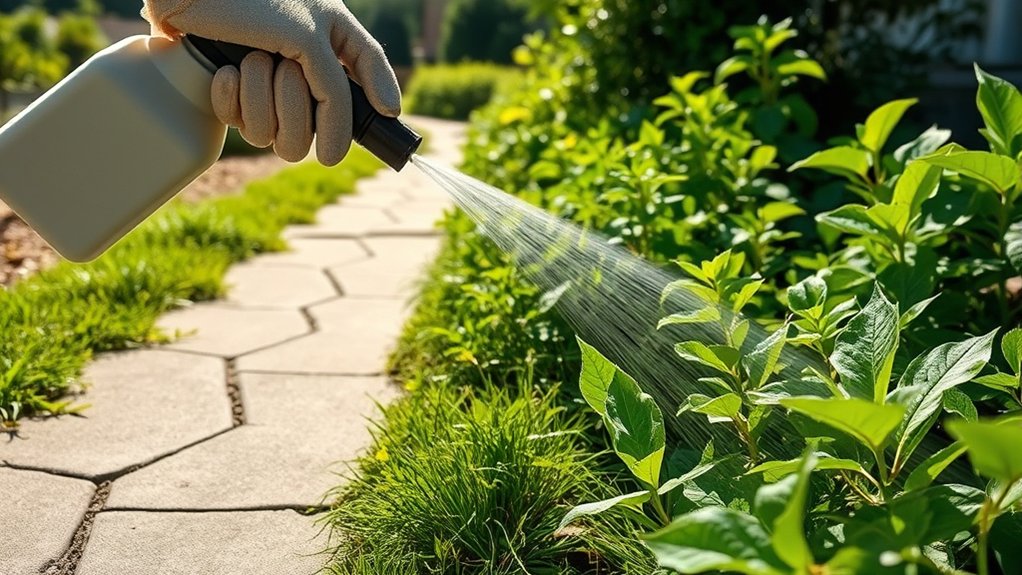
To safely use diesel fuel for weed control, you need to take proper precautions to protect yourself and the environment. Always wear chemical-resistant gloves, safety goggles, long sleeves, and a mask to shield yourself from diesel fumes and skin contact.
Always wear protective gear when handling diesel for weed control to ensure safety and prevent skin or eye contact.
Mix one part diesel with two parts water in a well-ventilated outdoor container, and clearly label the mixture before application. Use a pump sprayer or similar equipment designed for herbicide application to target weeds precisely.
Avoid spraying on desirable plants, water sources, or soil areas to prevent environmental contamination. Apply diesel directly onto isolated patches of weeds, being careful to minimize spread.
Store unused diesel mixture away from heat, children, and pets. After use, clean your tools thoroughly to maintain safety and effectiveness in your weed control efforts.
Identifying Weeds That Respond Best to Diesel Treatment
You’ll get the best results using diesel on perennial weeds with deep roots, like dandelions and thistles. Woody plants such as brambles and wild raspberry also respond well because of their tough, established growth.
Keep in mind that broad-leafed weeds absorb diesel more efficiently, which makes treatment faster and more effective.
Effective on Perennial Weeds
Perennial weeds with deep, extensive root systems respond best to diesel treatment because their persistent roots absorb the fuel and are more vulnerable to its effects. Using diesel to kill weeds is especially effective on weeds like dandelions, thistles, and bindweed, which have fleshy roots that store energy and resist removal.
The penetrating properties of diesel allow it to reach these deep roots, disrupting their function and causing the plant to die. Diesel’s ability to coat leaves and stems helps target stubborn, established perennial weeds more effectively.
Since these weeds rely on their extensive root systems for regrowth, diesel acts internally by dehydrating and damaging them from within. This makes diesel a potent, targeted solution for managing persistent perennial weeds effectively.
Best for Woody Plants
Diesel fuel works well for controlling woody weeds like brambles and wild raspberry because it can penetrate deep into their extensive root systems.
Woody weeds with thick bark, such as certain thistles and blackberry bushes, absorb diesel more efficiently, making it more effective for control.
Applying diesel directly to cut stumps can prevent regrowth by damaging the remaining roots.
Diesel’s ability to coat and penetrate woody plant leaves makes it useful against persistent, invasive species.
However, careful targeting is essential because diesel is non-selective and can harm desirable woody plants if misapplied.
For the best results, focus on specific woody weeds and avoid overspray.
Treat roots or cut stumps directly for effective and safe control.
Preparing and Applying Diesel Mixture: Step-by-Step Guide
Start by measuring one part diesel fuel and two parts water, then mix them in a well-ventilated outdoor container.
Wear chemical-resistant gloves and protective eyewear to stay safe during the process.
Always label your container clearly and store it away from heat, children, and pets to prevent accidents.
Measure and Mix Ingredients
Before mixing, make sure you have a clean, well-ventilated outdoor container that’s only used for this purpose.
To measure the mixture, pour one part diesel fuel and two parts water into the container. Use a measuring cup or marked container to ensure accuracy.
Once measured, carefully pour the ingredients into the container. Then, mix everything thoroughly by stirring gently with a stick or mixing tool.
This helps the diesel and water combine evenly, making an effective weed-killing solution.
Always use a clean, labeled container specifically for mixing to avoid accidental misuse.
Proper measurement and mixing are key for safety and effectiveness.
After blending, keep the mixture in a secure, labeled container away from heat, children, pets, and ignition sources.
Use Proper Safety Gear
To protect yourself during mixing and application, it’s crucial to wear the right safety gear. This helps reduce exposure to harmful diesel fumes and splashes, keeping you and your garden safe.
Always wear chemical-resistant gloves, safety goggles, and long sleeves to shield your skin and eyes. Using a mask or respirator is important to avoid inhaling fumes.
Wear closed-toe shoes and stay near a water source for emergencies. Here’s a quick guide:
| Safety Gear | Purpose | Additional Tips |
|---|---|---|
| Gloves | Protect hands from splashes | Choose chemical-resistant |
| Safety goggles | Shield eyes from fumes and splashes | Ensure a comfortable fit |
| Long sleeves, shoes | Cover skin and feet | Wear in well-ventilated areas |
This gear makes sure you handle everything safely and protect your garden at the same time.
Store and Label Mixture
Once you’ve prepared your diesel and water mixture safely, it’s important to store it properly to prevent accidents or environmental harm. Store the mixture in a well-ventilated outdoor container, keeping it upright to avoid leaks or spills. Clearly label the container with “Diesel Herbicide” to prevent mishandling.
Always double-check the label and safety data sheets to confirm proper storage and handling procedures. Keep the container away from heat sources, children, and pets to minimize risks. Use gloves and protective eyewear when handling or transferring the mixture.
Proper storage and clear labeling help ensure safety during both storage and future use. Maintaining these precautions helps protect you, others, and the environment from accidental exposure or contamination.
Safety Gear and Precautions for Diesel Weed Killing
Using diesel fuel for weed control means you need to wear the right safety gear to protect yourself from harmful exposure. Always put on chemical-resistant gloves, safety goggles, and long-sleeved clothing to avoid getting diesel on your skin or in your eyes.
Wear protective gear like gloves, goggles, and long sleeves when using diesel fuel for weed control.
A mask or respirator is a must to prevent inhaling toxic fumes during application. It’s best to do this outside in a well-ventilated area to cut down on inhalation risks and keep things safe.
Keep a water source or hose nearby so you can rinse off any spills or splashes quickly. Store diesel fuel and its mixture in clearly labeled, sealed containers away from heat, kids, and pets to prevent accidents.
Following these safety tips helps you stay safe while effectively controlling weeds.
When to Avoid Using Diesel and When to Call a Professional
Avoid applying diesel fuel for weed control in large infestations or near sensitive water sources, as it can cause environmental harm and contaminate water supplies. Recognize when to avoid using diesel to prevent unintended damage and pollution.
If you lack proper safety equipment or experience, it’s best to call a professional rather than risking improper application or exposure. Diesel is non-selective and can harm desirable plants, so avoid using it near lawns or garden beds.
When dealing with extensive or hard-to-reach infestations, hiring a licensed pest or weed control expert ensures safe, effective treatment. Furthermore, consider calling a professional in regulated areas where local laws restrict diesel herbicides.
Knowing when to avoid using diesel helps protect the environment and your property.
Environmental Risks of Using Diesel and How to Minimize Impact
Applying diesel fuel for weed control carries significant environmental risks, especially if not done carefully. Diesel can contaminate soil and groundwater, harming ecosystems and entering the food chain. It also impacts beneficial soil organisms, reducing soil health over time.
Spills or improper application in sensitive areas can cause long-term damage. To minimize impact, target only the weeds you want to eliminate and keep diesel away from water sources and delicate habitats.
Use protective gear and avoid overspray to prevent environmental contamination.
Safer, Eco-Friendly Alternatives for Weed Control
Fortunately, there are several safer, eco-friendly alternatives to diesel that effectively control weeds without harming the environment. These methods protect beneficial insects and help keep soil healthy.
You can use organic options like boiling water or vinegar-based sprays, which naturally kill weeds. Mulching is another good strategy; it blocks sunlight and stops seed germination without chemicals.
Manual removal through hand-pulling or using tools is safe and works well for small areas. It ensures no harm to beneficial insects. Organic herbicides made from natural ingredients like clove oil or citric acid are also effective options.
Choosing these sustainable practices over chemicals helps preserve beneficial insects, maintain healthy ecosystems, and reduce environmental risks linked to diesel use.
Frequently Asked Questions
What Can I Mix With Diesel Fuel to Kill Weeds?
You can mix water with diesel at a ratio of one part diesel to two parts water for safer application. Adding a surfactant or dish soap helps the mixture stick to weed leaves and boosts effectiveness.
Some people combine diesel with herbicides like 2,4-D or Dicamba to improve weed control. Just make sure to follow safety guidelines and legal restrictions.
Always wear protective gear and handle mixtures outdoors carefully.
Can I Mix Roundup With Diesel Fuel?
You shouldn’t mix Roundup with diesel fuel. Doing so isn’t recommended because it can weaken the herbicide’s effectiveness and create safety risks.
Diesel fuel can dilute glyphosate, making it less effective at killing weeds. Mixing these substances isn’t supported by any official guidelines.
To control weeds safely and efficiently, apply Roundup and diesel separately. Just be sure to follow each product’s instructions carefully.
What Do Farmers Use Instead of Roundup?
Farmers often use alternatives like herbicides such as 2,4-D, glyphosate (Roundup), and dicamba. For tougher weeds, they turn to Tordon RTU.
Mechanical methods like hand-pulling, mulching, or flame weeding are common non-chemical options. Organic solutions made from vinegar, clove oil, or citric acid are gaining popularity.
Crop rotation and cover cropping also help control weeds naturally, reducing reliance on chemical herbicides.
Why Mix Herbicide With Diesel?
You mix herbicide with diesel because, ironically, diesel was once thought to boost weed-killing power. It acts as a carrier, helping herbicides like 2,4-D penetrate leaves more effectively.
While this old trick seemed smart, it’s now unsafe and environmentally risky. So, if you’re considering this method, know that modern, safer alternatives exist—and it’s best to avoid mixing chemicals with diesel altogether.
Conclusion
While diesel might seem like a quick fix for weeds, it’s definitely not your garden’s best friend. You’ll save time and effort, but at the risk of harming your soil, plants, and the environment.
So, next time you’re tempted to reach for that old diesel can, remember: there are safer, greener options that won’t turn your backyard into a toxic wasteland. Ironically, they’ll probably do a better job—without the collateral damage.
Using diesel fuel to kill weeds isn’t recommended because of its harmful effects. Instead, consider natural or organic weed control methods that are safer for your garden and the planet.