How Do I Fix My Jeep That Has Power but Is Not Starting?
Many Jeep owners know the frustration of turning the key and feeling like everything’s working—lights, radio, power—but the engine just won’t start. If you’re in this boat, you’re definitely not alone. Many people struggle with this issue, and luckily, there are some simple steps you can take to get your Jeep back on the road.
If your Jeep has power but won’t start, start by checking the battery voltage—it should be around 12.6V—and verify your terminals are clean and tight.
Test the starter motor by listening for clicking sounds or trying a bench test.
Also, examine the ignition switch and neutral safety switch for proper function.
Inspect wiring and sensors for corrosion or damage.
If you keep troubleshooting, you’ll uncover more tips to get your Jeep back on the road.
Key Takeaways
- Check the battery voltage and terminals for corrosion or loose connections. Make sure the battery is fully charged.
- Test the starter motor by listening for clicking sounds when you turn the key. You can also bench test it to see if it’s working properly.
- Verify that the neutral safety switch and ignition switch are functioning correctly. These are important for allowing the engine to start.
- Inspect wiring, sensors, and electrical connectors for any damage, corrosion, or moisture buildup.
- If you notice warning codes on your dashboard or if these basic checks don’t fix the problem, it’s best to seek professional diagnosis.
How to Identify Why Your Jeep Won’t Start
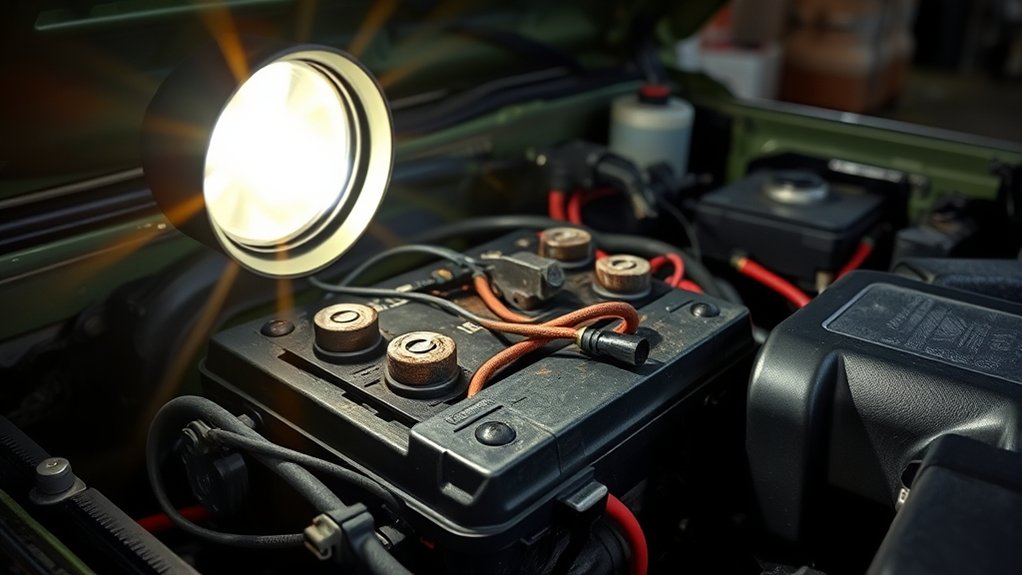
When your Jeep has power but refuses to start, the first step is to figure out what’s causing it. Check the battery voltage and connections—make sure they’re clean and tight. A healthy battery should read around 12.6V.
Listen for a clicking noise when you turn the key. A single click might mean a faulty starter motor, while rapid clicks often point to a weak battery or battery drain.
Also, see if your dashboard lights and accessories are flickering or dimming. Electrical issues like parasitic draw can prevent the engine from starting properly.
Testing the neutral safety switch by shifting into park or neutral can help determine if it’s stopping the engine from starting.
Diagnosing these issues can help you figure out if the problem is with your starter motor or an electrical drain.
Check Your Battery and Charging System
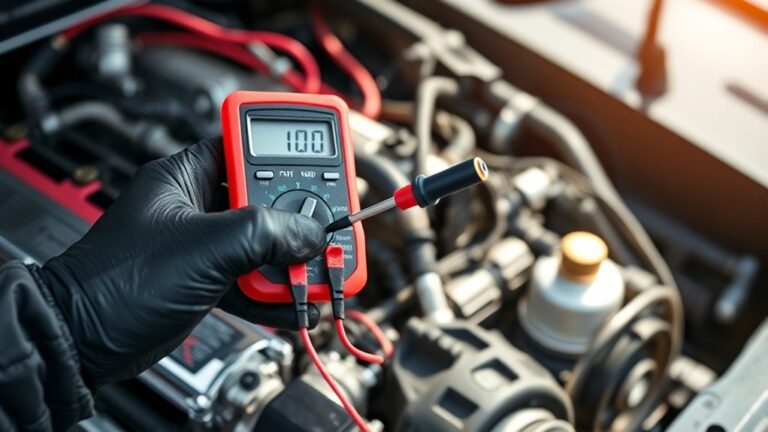
To figure out if your battery or charging system is causing the starting issue, start by measuring the battery voltage with a multimeter. A healthy battery should read around 12.6 volts when fully charged.
Check the battery terminals to make sure they’re clean, tight, and free of corrosion. Corrosion can disrupt the electrical flow and cause problems.
Next, test the alternator output; it should produce between 13.8 and 14.8 volts when the engine is running. If your battery voltage is below 12.4 volts or the alternator output is weak, your battery or charging system could be the culprit.
Use the table below for a quick reference:
| Battery Voltage | Alternator Output | Battery Terminals |
|---|---|---|
| ≥12.6 V | 13.8-14.8 V | Clean, tight, corrosion-free |
Test and Replace Your Starter Motor if Needed
If your Jeep still won’t start despite a good battery, it’s time to test the starter motor.
Look for signs like a clicking sound or no response when turning the key. Also, check the voltage at the starter terminal with a multimeter.
If these tests suggest a faulty starter, consider removing it for inspection and replacing it if necessary.
Signs of Faulty Starter
A faulty starter motor often shows up with a distinctive clicking sound when you turn the key, even if the engine doesn’t crank. This usually means the starter isn’t engaging properly to turn over the engine.
You might notice slow or labored engine cranking, or sometimes no response at all, even if your battery is healthy. Tapping gently on the starter can sometimes help temporarily if worn brushes or internal parts are the issue.
If you see these signs, it’s a strong indication you’ve got a faulty starter. To be sure, you’ll want to test the starter motor’s voltage and do a bench test.
Replacing the starter is necessary if these tests show it’s no longer working right. Spotting these signs early helps you fix the problem before any further damage happens.
Testing the Starter Motor
Before replacing your starter motor, it’s important to test if it’s actually the problem. Use a multimeter to check the voltage at the starter solenoid terminal during ignition; it should read around 12V when you turn the key.
Listen for a clicking sound—if it’s rapid, that could mean a faulty starter solenoid or motor. You can also tap lightly on the starter with a hammer or wrench while trying to start the engine.
If the engine turns over after tapping, the starter might have worn brushes or internal faults. For a more thorough check, remove the starter and perform a bench test by applying 12V directly to its terminals.
If the starter doesn’t spin or makes grinding noises, it probably needs to be replaced.
Replacing the Starter
When you find out your starter motor isn’t working properly, the next step is to replace it carefully by following the right procedures. Start by disconnecting the negative battery terminal to prevent electrical shorts.
Remove the starter, following your vehicle’s manufacturer instructions, and check the electrical connections for corrosion or looseness. Look for worn gears, damage, or internal faults in the starter and replace it if needed.
Before installing the new starter, make sure all electrical connections are clean, tight, and free of corrosion. During installation, connect the electrical connections securely and then reconnect the battery.
Test the starter by turning the key. If the engine turns over smoothly and consistently, you’ve successfully replaced the faulty part. Handling the starter properly helps ensure reliable performance and prevents future starting issues.
Inspect the Ignition and Neutral Safety Switches
Ensuring your ignition and neutral safety switches are working properly is key to diagnosing starting problems. The neutral safety switch makes sure the engine only starts when your vehicle is in park or neutral.
Check that your gear shift is fully engaged in these positions. To test the switch, shift through the gears and see if the vehicle only starts in park or neutral. This indicates it’s functioning correctly.
A faulty ignition switch can also cause starting issues, especially if the key is hard to turn or electrical circuits aren’t completing. Worn or damaged switches may lead to intermittent starting problems.
Inspecting and replacing these switches if needed is important. Properly functioning ignition and neutral safety switches help the starter motor engage and ensure the engine starts smoothly.
Find and Fix Wiring or Sensor Problems
Start by inspecting the door handle sensors and their wiring for signs of corrosion, damage, or loose connections, especially where the wiring bends.
Use electrical contact cleaner to remove corrosion from connector pins, and replace any connectors or wiring that’s badly damaged.
Check for moisture buildup on the pins and apply dielectric grease to prevent future issues.
Inspect Door Handle Sensors
Since faulty or water-damaged door handle sensors can keep the electrical circuit open and prevent your Jeep from starting, it’s important to thoroughly inspect the wiring and sensor components.
First, check the door handle sensors for any signs of water damage or corrosion. Next, examine the electrical connection at the wiring harness for green or white buildup, loose pins, or corrosion.
Finally, test the wiring by gently wiggling it or pressing on the sensor to see if the electronics respond. If you find corrosion or broken wires, replace the wiring harness or the entire door handle assembly.
Making sure the connection at the sensor and wiring harness is secure and clean is essential to restoring proper operation and starting your Jeep.
Clean and Replace Connectors
To effectively diagnose wiring or sensor problems, start by inspecting the front door handle connectors for signs of corrosion, dirt, or water intrusion. These issues can disrupt the electrical circuit.
If you notice corrosion or dirt, use an electrical contact cleaner to thoroughly clean the connector pins and sockets. This helps ensure a solid electrical connection.
Check for damaged or corroded connectors, like part number 8335267A, and replace them if needed to restore wiring integrity.
Also, examine the wiring harness where it flexes between the door and vehicle body for fraying, cuts, or broken wires. Repair or replace as needed.
Before reassembling, apply dielectric grease to the connectors to prevent moisture buildup and corrosion, which helps maintain good electrical performance.
When to Call a Professional and Prevent Future Issues
Even if your Jeep shows power lights but refuses to start after basic checks, it’s time to call in a professional. Persistent issues like ongoing starting problems, dashboard flickering, or warning codes such as B25 or A90 point to complex electrical issues that need expert diagnosis.
Getting a professional to diagnose guarantees accurate identification of problems with the starter motor, ignition switch, or wiring harness, which are tricky to handle on your own.
To prevent future issues, consider these steps:
- Schedule regular preventive maintenance to catch potential electrical problems early.
- Seek expert inspections after recent dealer repairs or calibrations.
- Address recurring parasitic drain or dashboard flickering promptly with professional help.
Taking these actions helps avoid costly repairs and keeps your Jeep running smoothly.
Frequently Asked Questions
Why Is My Jeep Having Power but Not Starting?
Your Jeep has power because the battery supplies electricity, but it’s not starting because the starter or ignition system might be faulty. You could have a weak or dead battery, corroded or loose terminals, or a worn-out starter motor.
Furthermore, issues with the ignition switch or neutral safety switch could prevent the engine from turning over. Check these components to identify and fix the problem.
Why Does My Car Have Full Power but Won’t Start?
Your car’s full power is like a storm-ready sky, but if the engine’s core is silent, the spark isn’t reaching the sky. It could be a weak battery, loose terminals, or a faulty starter relay blocking the engine’s call to action.
Check the neutral safety switch, wiring, and fuses—these are the hidden pathways that, if compromised, keep your vehicle from awakening. Fixing these issues will reignite your engine’s life.
How to Reset Jeep Electrical System?
To reset your Jeep’s electrical system, start by disconnecting the negative battery terminal. Wait at least 10 minutes for the system to reset.
Reconnect the terminal securely, then turn the ignition to “ON” without starting the engine. Repeat this a few times, pressing the brake or clutch pedal during the process.
You can also use a scan tool or the vehicle’s reset feature to clear error codes.
What Happens if Your Car Won’t Start but Has Power?
If your car has power but won’t start, it’s like having a phone with a full battery but no signal—you see the lights but can’t get going.
Your issue might be a faulty starter relay, a weak battery, or a bad ignition switch.
You need to check the battery’s health, listen for the starter’s click, and verify that safety switches are working properly.
Fixing these parts can get your engine turning over again.
Conclusion
Think of your Jeep as a trusted friend; sometimes, it just needs a gentle nudge or a clear signal to start up.
Diagnosing each part with patience and care helps you get to the root of the problem.
You’re not just fixing a vehicle—you’re reconnecting with your journey.
Even the strongest engines need a moment of reflection and renewal.
With attention and persistence, you’ll keep your adventure on the road.
If your Jeep has power but won’t start, fixing it is all about troubleshooting and perseverance.