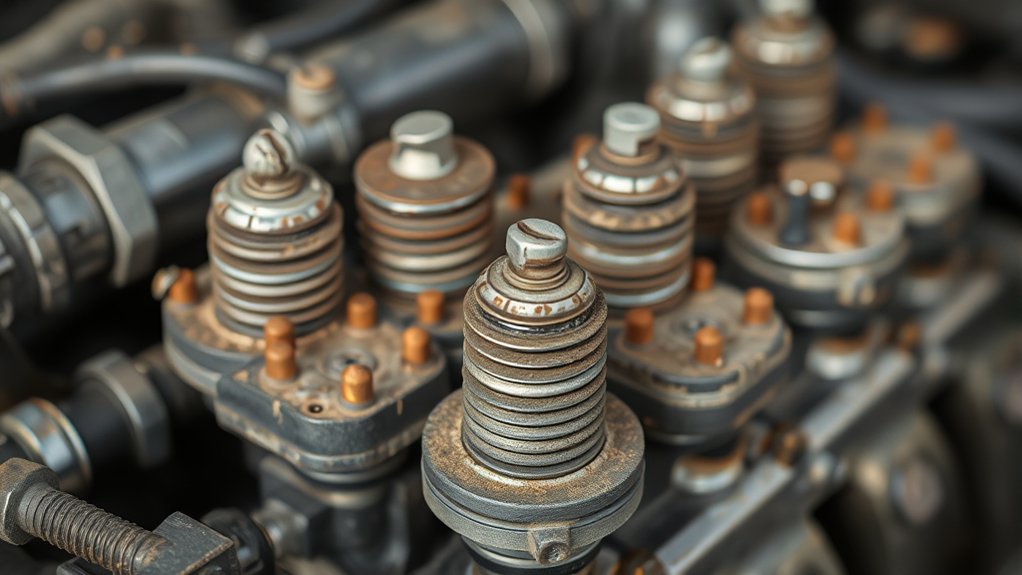
What Happens If You Don’t Change Spark Plugs?
Are you tired of your engine running rough or hesitating when you hit the gas? Many drivers struggle with these issues and wonder if it’s just normal or something more serious. You’re not alone—these problems are often linked to worn or fouled spark plugs.
If you don’t change your spark plugs, your engine can misfire, run roughly, and hesitate during acceleration. Worn or fouled plugs cause incomplete combustion, which reduces fuel efficiency and increases your fuel bills.
Over time, neglect can lead to hard starts, engine stress, or even internal damage. Continuing to ignore signs of worn plugs risks costly repairs down the line.
Stay tuned to learn more about how to keep your engine running smoothly.
Key Takeaways
- Engine misfires and rough running get worse, making the car feel less smooth and responsive.
- Your fuel economy drops because the combustion isn’t happening properly, which means you’ll be spending more at the pump.
- Starting the engine can become hard, and acceleration might feel sluggish as the spark gaps widen and the ignition weakens.
- If you ignore these signs, it can lead to internal engine damage from broken or fouled plugs.
- Over time, neglecting spark plug maintenance can lead to higher repair costs and even engine failure.
What Are Spark Plugs and How Do They Work?
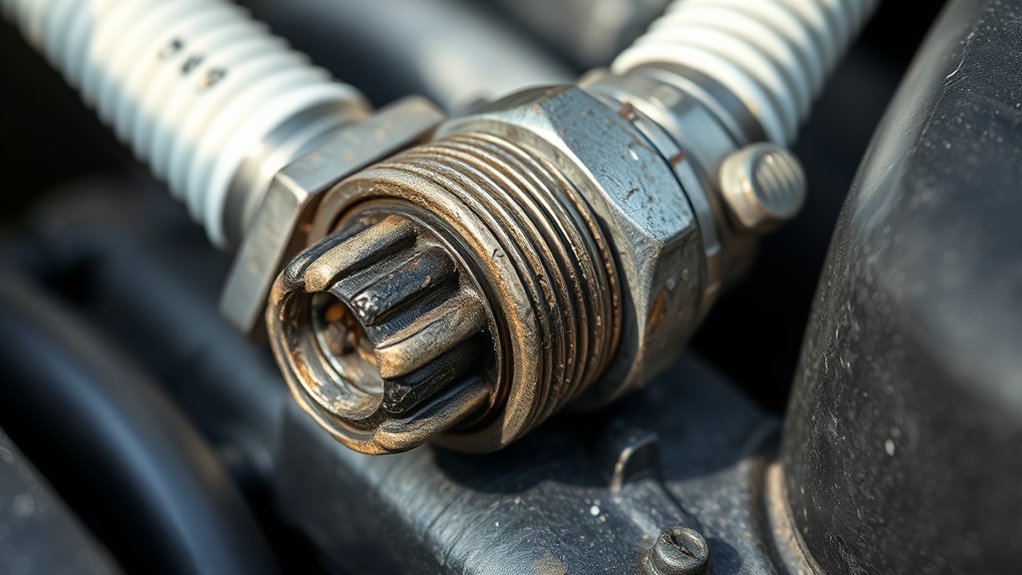
Have you ever wondered how your car’s engine starts and runs smoothly? It all begins with spark plugs.
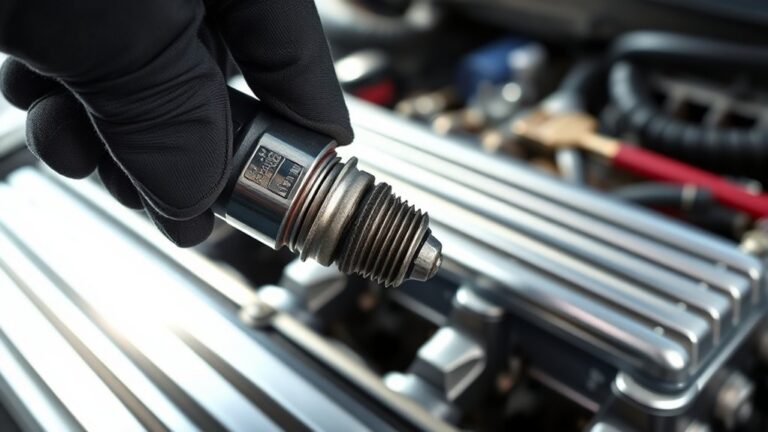
These small devices deliver an electrical spark to ignite the air-fuel mixture inside the combustion chamber. Spark plugs consist of two electrodes separated by a tiny gap, which creates a spark when high voltage from the ignition system is applied.
The ignition system generates this electrical current, traveling through the spark plug to produce a spark at just the right moment. This spark ignites the air-fuel mixture, causing combustion that powers the engine.
Properly functioning spark plugs guarantee reliable ignition, smooth engine operation, and efficient fuel combustion. Without them, your engine wouldn’t start or run effectively, highlighting their essential role in your vehicle’s performance.
What Signs Indicate Your Spark Plugs Need Replacing?
When your engine isn’t running as smoothly as it used to, it might be a sign that your spark plugs are wearing out. You may notice decreased fuel economy, sometimes dropping by up to 30%, which shows your spark plugs aren’t firing efficiently.
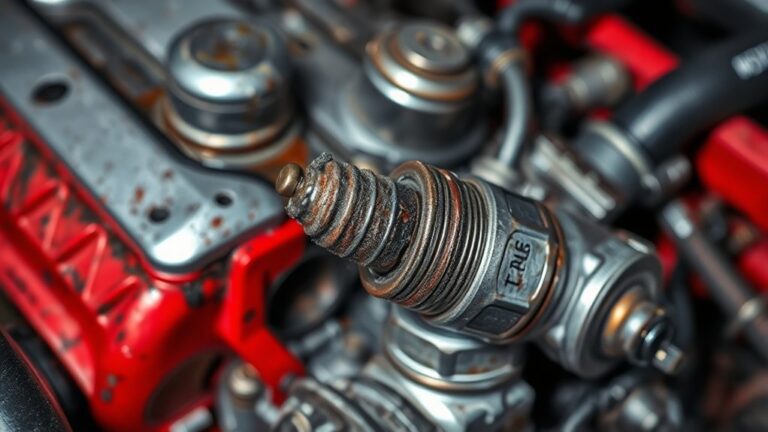
Fouled spark plugs, with visible carbon deposits or oil residue, are clear signs they need replacing. Engine misfires can cause rough idling and reduced performance, making your drive uncomfortable.
Fouled spark plugs with deposits or oil indicate they need replacement to prevent engine misfires and rough performance.
Also, difficulty starting your vehicle, especially in cold weather, points to failing spark plugs. Persistent engine hesitation or sputtering during acceleration is another warning sign.
These signs indicate your spark plugs need replacing, so paying attention to them can prevent further engine problems and keep your vehicle running smoothly.
How Does Not Replacing Spark Plugs Affect Engine Performance?
When you don’t replace worn spark plugs, your engine can misfire and run roughly, making your drives less smooth. Over time, ignition becomes unreliable, which can also reduce your fuel efficiency by up to 30%.
If you ignore these signs, you risk sluggish acceleration and potential engine damage. Keeping up with spark plug replacement helps maintain engine performance and saves you money in the long run.
Engine Misfires and Rough Running
Neglecting to replace worn or fouled spark plugs can cause your engine to misfire and run roughly. When spark plugs degrade, they create larger spark gaps, leading to incomplete combustion and engine hesitation. This results in engine misfires, rough idling, and sputtering during acceleration.
Over time, these issues stress engine components and reduce overall performance. Here’s a closer look at how fouled plugs impact your engine:
| Issue | Effect | Consequence |
|---|---|---|
| Engine misfires | Uneven firing, vibrations | Reduced power and responsiveness |
| Rough idling | Engine shakes, stalls | Poor driveability |
| Fouled plugs | Larger spark gaps, incomplete burn | Increased misfires |
| Performance decline | Sluggish acceleration, hesitation | Decreased efficiency |
| Engine stress | Strains components over time | Potential damage |
Fuel Economy Decline
Have you noticed your vehicle consuming more fuel than usual? Worn spark plugs can become fouled or develop carbon buildup, which hurts their ability to ignite the fuel-air mixture effectively.
This leads to incomplete combustion, reducing engine performance and making your car work harder.
As spark plugs age, their gaps widen and ignition strength diminishes. This means you need more fuel to produce the same power.
Engine misfires caused by failing plugs also lead to unburned fuel being expelled, lowering your vehicle’s fuel economy.
Neglecting to replace worn spark plugs causes the engine control unit to compensate, often increasing fuel consumption.
Over time, degraded spark plugs not only cut fuel efficiency but also strain engine performance, making your vehicle less responsive and more costly to run.
What Are the Common Problems Caused by Worn or Damaged Spark Plugs?
Worn or damaged spark plugs can lead to a variety of engine problems that impact your vehicle’s performance. You might notice issues like engine misfires, rough idling, or sluggish acceleration. These happen because worn spark plugs build up carbon, which reduces spark efficiency and hampers combustion.
Ignoring these signs can make starting your engine harder or even cause engine damage if broken pieces get lodged inside the combustion chamber. Here’s a quick overview of common problems caused by spark plug issues:
| Problem | Cause | Effect |
|---|---|---|
| Engine misfire | Worn spark plugs | Poor acceleration |
| Rough idling | Carbon buildup | Unsteady engine operation |
| Hard starting | Faulty spark plugs | Difficult to start engine |
| Reduced fuel economy | Inefficient combustion | Increased fuel use |
| Engine damage | Broken spark plug parts | Severe internal damage |
Regularly replacing your spark plugs can help prevent these problems and keep your engine running smoothly.
When and How Should You Replace Your Spark Plugs?
Knowing when to replace your spark plugs is key to keeping your engine running smoothly. Usually, you should change them every 30,000 to 100,000 miles, but this can vary based on your vehicle and driving habits.
Regular checks are important. Look for signs like wear, fouling, or damage to see if you need to replace them sooner. Using manufacturer-recommended OEM or equivalent spark plugs helps ensure a proper fit and top performance.
Replace your spark plugs if you notice engine misfires, rough idling, trouble starting, or if your fuel efficiency drops. Always follow your vehicle’s owner manual for recommended intervals.
If you’re unsure how to do the replacement yourself, it’s a good idea to have a professional mechanic handle it. They can inspect and replace the plugs properly to keep your engine in great shape.
Why Regular Spark Plug Maintenance Saves You Money?
Regular spark plug maintenance can save you a lot of money by stopping engine misfires that hurt fuel efficiency. When spark plugs wear out or get fouled, your engine has a hard time igniting fuel properly, which can reduce your fuel economy by as much as 30%.
Regularly inspecting and replacing spark plugs on time keeps them in top shape, helping your engine run smoothly. Proper maintenance also helps prevent engine damage; fouled or broken plugs can get lodged inside the engine, leading to expensive repairs.
Frequently Asked Questions
What Happens if I Don’t Change My Spark Plugs for 5 Years?
If you don’t change your spark plugs for five years, your engine performance will decline quite a bit. You might notice rough idling, misfires, and your fuel efficiency could drop by as much as 30%.
Over time, carbon buildup and corrosion can damage the electrodes. This makes it harder to start your car and can cause other issues. Plus, your emissions will increase, and your vehicle’s power output will decrease.
Ignoring these signs can lead to more serious engine damage in the long run. So, staying on top of spark plug maintenance is really important to keep your car running smoothly.
What Are the Symptoms of Bad Spark Plugs?
Bad spark plugs can turn your ride into a nightmare. You might notice engine misfires, rough idling, or difficulty starting your car. Reduced fuel efficiency, sometimes by a shocking 30%, is another sign.
Look for visible fouling like carbon deposits or oil residue. You could also experience engine hesitation or sputtering during acceleration. These symptoms mean your spark plugs aren’t doing their job.
Ignoring them could lead to bigger, more costly problems. So, keep an eye out for these signs to keep your engine running smoothly.
How Many Spark Plugs Does a Hyundai Tucson Have?
You’ll find that a Hyundai Tucson typically has four spark plugs if it has the standard inline-four engine.
If you have a V6 model, it might have six spark plugs. Each plug corresponds to a cylinder, igniting the air-fuel mixture to power your engine.
Keeping all spark plugs in good shape guarantees your Tucson runs smoothly and efficiently, so regular maintenance is key to preventing performance issues.
How Long Do Spark Plugs Last in a Subaru Crosstrek?
Spark plugs in your Subaru Crosstrek usually last between 60,000 and 100,000 miles. You should replace them based on your driving habits and how well you take care of your vehicle.
If you ignore changing them within this range, you might experience misfires, lower fuel efficiency, and even engine damage. Regular inspections can help catch signs of wear early, keeping your engine running smoothly and efficiently.
Conclusion
Ignoring your spark plugs is like neglecting a trusty steed—you might make it to the finish line, but don’t expect a smooth ride. Worn or damaged plugs can cause poor performance, higher fuel costs, and engine trouble, turning your daily drive into a quest for trouble.
Regular maintenance, much like a medieval knight tending to his armor, keeps your engine running strong and saves you a hefty toll on repairs. Don’t delay—your engine will thank you for changing your spark plugs regularly.