Why Won’t My Jeep Start and How Do I Fix It
Having your Jeep refuse to start can be incredibly frustrating, especially when you’re counting on it to get you where you need to go. Many people struggle with this issue, and it’s a common problem that can often be fixed with some quick checks.
If your Jeep won’t start, it’s likely due to a weak or dead battery, faulty starter, or fuel system issues.
First, check your battery voltage and terminals for corrosion or looseness. If that’s fine, inspect the starter motor and confirm it gets power.
Also, verify your fuel level and filters aren’t clogged. If these quick checks don’t solve the problem, there’s more to investigate that can help you fix it efficiently.
Key Takeaways
- Check the battery voltage and terminals for corrosion or loose connections. A weak or dead battery will prevent the engine from starting.
- Listen for clicking noises when you turn the key. That could mean there’s a faulty starter motor or solenoid that needs inspecting or replacing.
- Make sure the fuel tank is full, and check that the fuel filter is clean. Also, ensure the fuel pump is working properly.
- Test the ignition system components like spark plugs, wires, and the ignition switch. They all need to be in good working order for the engine to start.
- Finally, do a thorough check of the electrical wiring, fuses, and relays. Sometimes wiring issues can cause starting problems.
Why Won’t My Jeep Start? Common Causes Explained
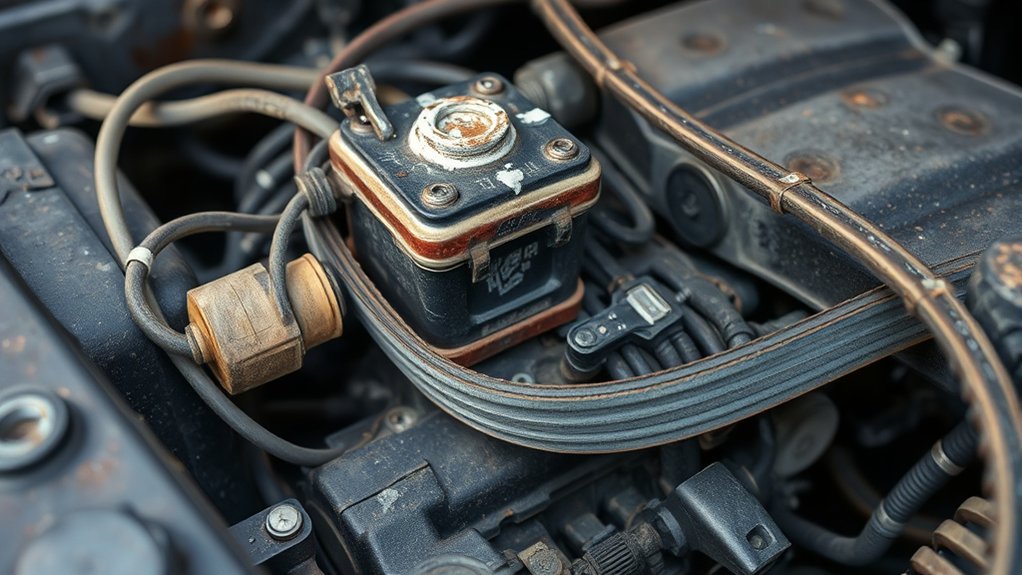
When your Jeep won’t start, the issue is often related to the electrical or fuel systems. A dead or weak battery is a common cause, especially if you notice dim lights or hear a clicking sound when turning the key.
Loose, corroded, or disconnected battery terminals can block electrical flow, preventing the engine from turning over. The starter motor might be faulty, producing a clicking noise but failing to start the engine.
A clogged fuel filter or an empty gas tank can also stop fuel from reaching the engine. Making sure your battery is charged, terminals are clean and tight, and the fuel filter is clear can fix many starting problems.
These are usually the first things to check when your Jeep refuses to start.
How to Check Your Jeep’s Battery and Terminals
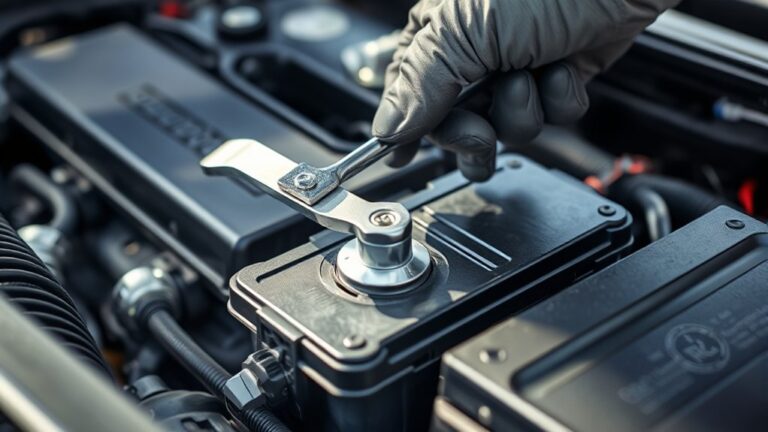
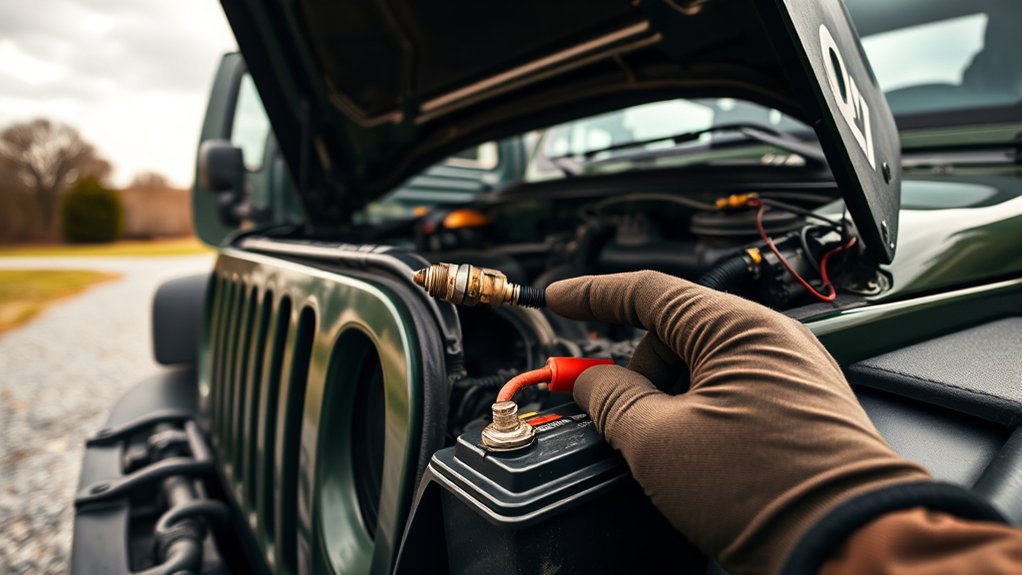
Checking your Jeep’s battery and terminals is pretty simple and can quickly spot common issues that stop your vehicle from starting. First, grab a multimeter to measure the battery’s voltage; a healthy, fully charged battery should read around 12.6 volts.
Next, take a look at the terminals for any corrosion, rust, or dirt, and clean them up with a wire brush if needed. Make sure the terminals are tightly connected—no looseness or damage.
Check the battery case for cracks or bulges, which could be signs of damage. Finally, test the battery’s health by watching for voltage drops when you try to start your Jeep. A big voltage drop may mean the battery is weak or failing and needs further attention or replacing.
Diagnosing Problems With the Starter Motor
A clicking sound when you turn the key often points to a problem with the starter motor, even if your battery is fully charged. This noise usually means the solenoid is engaging, but the motor isn’t turning over.
To check further, use a multimeter to measure the voltage at the starter’s solenoid terminal. If you see less than 12 volts, the issue might be with wiring or the relay.
Sometimes, lightly tapping the starter with a wrench or hammer can temporarily free stuck brushes and get it working again. However, if the problem persists, replacing the starter may be necessary.
| Condition | What It Means | Action Step | Possible Fix |
|---|---|---|---|
| Clicking sound | Faulty starter motor or solenoid | Test voltage with multimeter | Replace starter if voltage is low |
| No response | Dead solenoid or wiring issue | Check wiring connections | Repair or replace wiring |
| Voltage below 12V | Insufficient power | Use multimeter to verify voltage | Charge battery or check alternator |
| Motor not turning | Brushes stuck or worn | Tap starter lightly | Replace starter if persistent |
How to Inspect the Fuel System and Pump
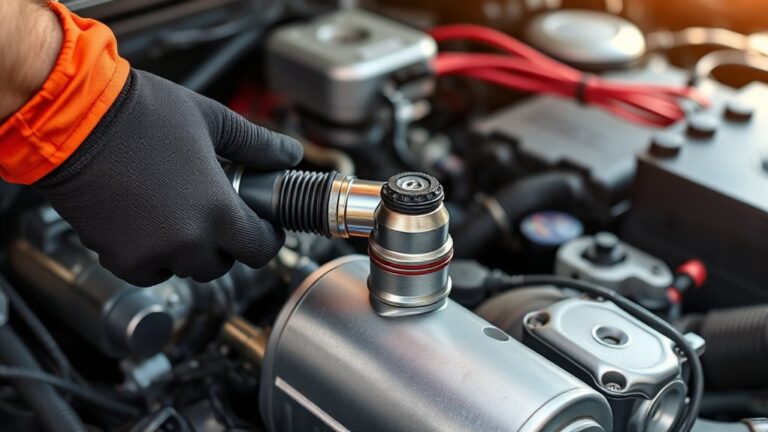
To determine if your fuel system is causing starting issues, start by listening for a humming noise from the fuel pump when you turn the ignition to the “on” position. This indicates the pump is working properly. If you don’t hear it, inspect the fuel pump by removing the relay or fuse and testing it directly by applying power.
Check the fuel gauge to make sure there’s enough gas, as running out can mimic fuel system problems. Next, inspect the fuel lines for leaks, cracks, or blockages that could restrict fuel flow. Also, examine the fuel filter—replace it if it looks dirty, clogged, or hasn’t been changed according to the maintenance schedule.
These steps help pinpoint issues within your fuel system and pump.
Troubleshooting the Ignition System in Your Jeep
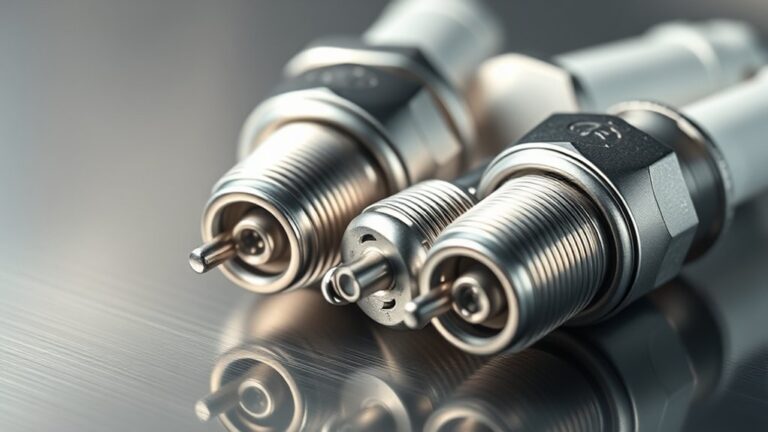
Start by inspecting your spark plugs and wires for wear, fouling, or damage, as these can prevent proper ignition.
Next, test the ignition switch to verify it’s functioning correctly and sending power to the system.
If these components check out, you might need to do further diagnosis with a multimeter or scanner to pinpoint the issue.
Inspect Spark Plugs and Wires
Since faulty spark plugs and wires are common causes of starting issues, inspecting them should be your first step. Check the spark plugs for fouling, wear, or damage, and replace any that are dirty or worn out.
Make sure the wiring is secure, with no cracks or corrosion, especially where it connects to the distributor and spark plugs. Use a spark tester to verify each plug fires properly when you crank the engine.
Also, examine the ignition coil with a multimeter to confirm it’s providing proper voltage output, as a faulty coil can prevent spark generation. Replacing damaged or worn spark plugs and wires restores proper ignition and improves your chances of starting your Jeep.
Clear, functional wiring and plugs are essential for reliable engine startup.
Test Ignition Switch Function
Testing the ignition switch is a key step because it controls the electrical flow that starts your engine.
To check it, turn the key to the “Start” position and use a multimeter to see if there’s voltage at the ignition switch terminals.
If you don’t see power, the switch might be faulty. A good ignition switch sends electrical signals to the starter when you turn the key.
If your test shows no voltage or inconsistent readings, the switch could be worn or damaged.
Symptoms like no response when turning the key or intermittent starting issues often point to a bad ignition switch.
Replacing a faulty switch can restore proper electrical flow and make sure your Jeep starts reliably again.
Always test thoroughly before considering other causes.
How to Tell if Your Fuel Filter Is Clogged
A clogged fuel filter can be hard to notice, but there are clear signs it might be restricting fuel flow to your engine. You might find it tough to start your car, especially after sitting overnight or in cold weather, or notice the engine stalls in the middle of driving.
Reduced engine performance, like poor acceleration and misfires, is common with a clogged filter. You could also hear a whining noise from the fuel pump or no sound at all when you turn the key.
Using an OBD2 Scanner to Read Error Codes
Using an OBD2 scanner is a great way to figure out why your Jeep won’t start. You just connect the scanner to the vehicle’s diagnostic port, which is usually under the dashboard, to get trouble codes.
These codes are standardized and point to specific issues in the engine, transmission, or other systems. To run diagnostics, turn on the ignition, connect your device, and scan for stored trouble codes.
Once you have the codes, use a reference chart or scanner software to interpret them. This will help you identify the exact part causing the problem. After fixing the issue, you can clear the codes with the scanner to reset the vehicle’s diagnostics.
This process makes it easier to find and fix problems quickly and accurately, saving you time and guesswork when working on your Jeep.
When Should You See a Mechanic for Your Jeep?
Wondering when to see a mechanic for your Jeep? If your vehicle won’t start even after checking the battery, starter, and fuel system, it’s time to get professional help.
When warning lights stay on or flash on the dashboard after trying to restart, it’s best to have a mechanic diagnose the issue.
Unusual noises like grinding or clicking during startup could mean mechanical problems that need an expert’s attention.
If your Jeep has complex electrical issues, like intermittent starting or dashboard malfunctions, a certified technician should check it out.
Basic repairs won’t fix advanced parts like the ignition switch or fuel pump.
When troubleshooting doesn’t work or dashboard problems stick around, it’s time to see a mechanic for a thorough inspection and proper repairs.
Simple Maintenance Tips to Keep Your Jeep Starting Reliable
To keep your Jeep starting reliably, make sure to regularly check and clean your battery terminals to prevent corrosion.
Replacing your fuel filter every 30,000 miles helps maintain proper fuel flow, which is essential for reliable starting.
Inspecting and tightening electrical connections prevents starting issues caused by loose wires.
Keeping your battery charged and scheduling routine maintenance also help ensure your vehicle runs smoothly and starts consistently.
Regular Battery Checks
How often do you check your Jeep’s battery? Regular inspections can prevent starting issues. Start by examining the battery terminals for corrosion. White or greenish deposits can hinder the electrical connection. Use a wire brush to clean any corrosion you find.
Test your battery’s voltage with a multimeter at least twice a year. A healthy battery should read around 12.6 volts. Keep an eye on your interior and exterior lights. If they flicker or dim, it might signal a weakening battery.
Make sure all electrical connections are tight and free of dirt or corrosion. Remember, a battery over 3 to 5 years old or that consistently shows low voltage should be replaced to ensure reliable starts. Regular checks help keep your Jeep running smoothly.
Replace Fuel Filters
Replacing your Jeep’s fuel filter regularly is key to keeping it starting reliably. A new fuel filter ensures proper fuel flow and helps prevent starting issues caused by clogged fuel.
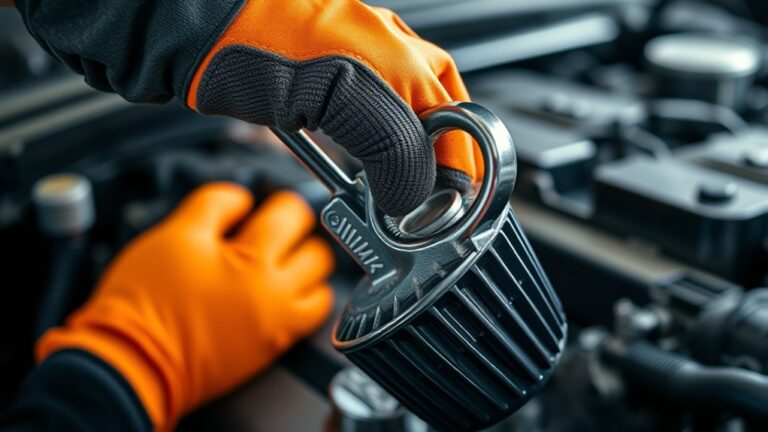
If your engine has trouble starting, stalls, or has poor acceleration, a clogged fuel filter might be the problem. To replace it, find the filter near the gas tank or in the engine compartment and follow safety steps.
Regularly changing the fuel filter, usually every 30,000 miles or as recommended, helps prevent clogs that can cause starting problems. This simple maintenance also helps extend your fuel pump’s life and avoids costly repairs.
| Step | Action | Tips |
|---|---|---|
| 1 | Locate the fuel filter | Near tank or engine bay |
| 2 | Turn off the engine | For safety |
| 3 | Disconnect fuel lines | Use proper tools |
| 4 | Replace with new filter | Make sure connections are secure |
| 5 | Start the engine and check | Look for leaks |
Maintain Electrical Connections
Ensuring your Jeep starts reliably often comes down to maintaining solid electrical connections. A loose or corroded battery connection can cause starting problems, so regularly inspect and tighten the terminals to guarantee a secure contact.
Clean corrosion from battery terminals and cable ends with a wire brush, which helps maintain peak conductivity. After cleaning, apply a thin layer of dielectric grease to prevent future corrosion buildup.
Use a multimeter to check the voltage at the battery terminals. Around 12.6V indicates a healthy connection. Don’t forget to verify that all ground connections are secure and free of corrosion, as poor grounding disrupts electrical flow.
Keeping these connections clean, tight, and corrosion-free ensures your Jeep fires up reliably every time.
Frequently Asked Questions
Why Is My Jeep Not Starting but Has Power?
Your Jeep isn’t starting despite having power, probably because of a weak or dead battery that can’t power the starter. It might also be a faulty neutral safety switch or ignition switch that’s stopping the engine from cranking.
Another possibility is a clogged fuel filter or a failing fuel pump, which can prevent fuel from reaching the engine. Make sure to check your battery terminals for corrosion or looseness.
It’s also a good idea to test your battery and starter system to pinpoint the exact issue. That way, you’ll know what needs to be fixed to get your Jeep running again.
What Will Make a Jeep Not Start?
A Jeep won’t start if the battery is dead or weak, which stops it from providing enough power.
Loose, corroded, or disconnected terminals can block the electrical flow, making it hard to start the engine.
A faulty starter motor or solenoid might cause clicking sounds, preventing the engine from turning over.
Clogged fuel filters, an empty gas tank, or issues with the ignition switch and neutral safety switch can also stop the Jeep from starting.
Check these components to figure out what’s causing the problem and get it fixed.
How to Force Start a Bad Starter?
To force start a bad starter, first disconnect the battery to ensure safety.
Then, connect jumper cables from a good battery directly to the starter solenoid’s terminals to bypass the ignition switch.
Alternatively, use a remote starter switch across the relay terminals to manually engage the starter.
How to Do a Hard Reset on a Jeep?
To do a hard reset on your Jeep, disconnect the negative battery terminal and wait at least 15 minutes. Reconnect it securely, making sure there’s no corrosion or loose connection.
Turn the ignition to “On” without starting the engine and hold for about 10 seconds. For push-button models, hold the Start/Stop button for 10-15 seconds with the fob inside.
Then, try starting your Jeep normally.
Conclusion
So, after all that troubleshooting, it turns out your Jeep’s just as stubborn as you thought—demanding patience, a bit of know-how, and maybe a mechanic’s touch.
Ironically, the very things that seem simple—like a dead battery or a clogged fuel filter—can cause hours of frustration.
But don’t worry; once you crack the code, you’ll appreciate the reliability when your Jeep finally roars to life again.
Sometimes, the fix is right under your nose, especially when dealing with common issues that prevent your Jeep from starting.