What Causes Spark Plugs to Foul?
If you’ve ever experienced rough idling, misfires, or trouble starting your car, you’re not alone. Many people struggle with spark plug fouling, which can really mess with your engine’s performance.
Luckily, understanding what causes fouling can help you keep your engine running smoothly.
Spark plugs foul mainly due to oil leaks, fuel mixture issues, coolant leaks, and deposit buildup. Oil fouling occurs when worn seals allow oil to coat the plug, leading to poor ignition.
Rich fuel mixes leave soot and carbon deposits that hamper spark efficiency.
Coolant leaks create ash-like deposits that damage the spark and reduce performance.
If you notice these issues, it’s likely your spark plugs are fouling. Keep an eye out for signs like rough idling, misfires, or difficulty starting.
By understanding these causes, you can take steps to prevent fouling and keep your engine running at its best.
Key Takeaways
- Oil leaks from worn piston rings or valve seals coat spark plugs with oily deposits, leading to fouling.
- When there’s too much fuel in the mixture—often caused by faulty injectors or sensors—the spark plug tips can get filled with unburned fuel. This makes it harder for the spark to ignite properly.
- Coolant leaks can create mineral or ash-like deposits on the plugs. These deposits can damage the insulators and electrodes, affecting performance.
- Carbon buildup is another common cause. It usually happens when combustion isn’t complete, often due to a poor air-fuel mixture or contaminated engine components.
- Lastly, if you don’t perform regular maintenance or use the wrong spark plug heat range, deposits can accumulate. This buildup can also lead to fouling and misfires.
Why Do Spark Plugs Get Fouled?
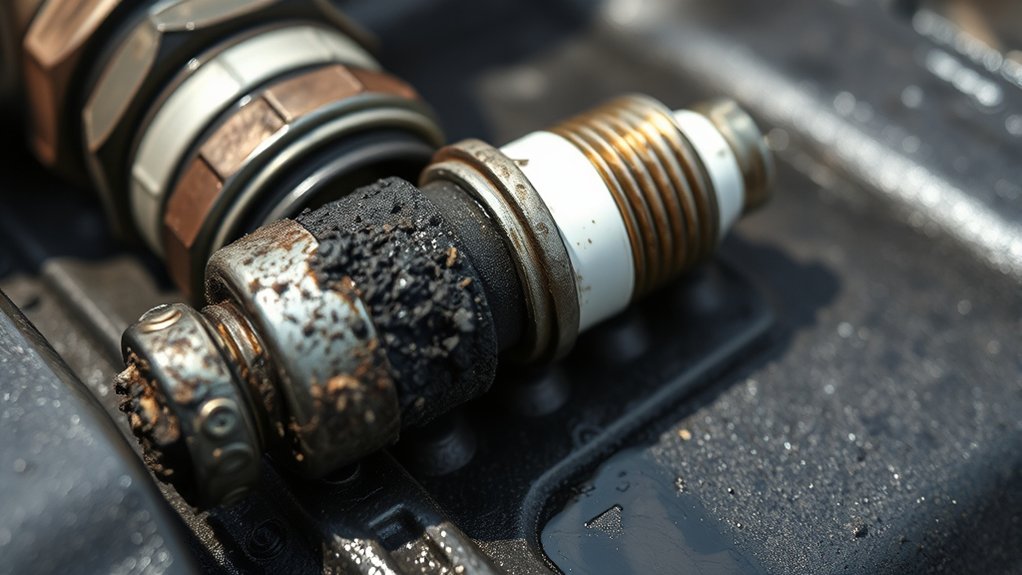
Spark plugs get fouled for several reasons, and knowing these can help you avoid engine issues. Fouling happens when deposits build up on the plugs, messing with their performance.
Oil leaks from worn piston rings or valve seals can coat the plugs with oily deposits, leading to fouling. A rich air-fuel mix caused by faulty fuel injectors, sensors, or carburetors results in incomplete combustion, leaving carbon buildup on the plugs.
Using the wrong or low-quality spark plugs, especially those with incompatible heat ranges, can also cause fouling because they don’t dissipate heat properly. Additionally, oil contamination from leaks in grommets, valve covers, or PCV systems can coat the plugs with oil, making fouling worse.
How Does a Fuel Mixture Imbalance Cause Spark Plug Fouling?
A fuel mixture imbalance, especially when it’s too rich, causes spark plug fouling by leaving unburned fuel on the plug tips. When there’s too much fuel and not enough air, combustion isn’t complete, and unburned fuel ends up coating the spark plug electrodes with carbon deposits.
This buildup makes it harder for the spark to jump across the gap, reducing spark efficiency. Faulty sensors like oxygen sensors or mass airflow sensors can cause the engine to run rich, increasing these deposits. An improperly adjusted carburetor or fuel injection system can also deliver excess fuel, making fouling worse.
As a result, the excess fuel creates a perfect environment for deposit buildup. Over time, this makes your spark plugs less effective, leading to misfires and performance issues in your engine.
In What Ways Do Oil Leaks Lead to Spark Plug Fouling?
Oil leaks from worn piston rings or valve seals can seep into the combustion chamber, coating your spark plugs with greasy deposits.
Leaking valve cover grommets or PCV system failures also allow oil to enter, leading to fouling. These oil intrusion issues create oily deposits that impair spark plug performance and ignition.
Oil Seeping Into Combustion Chamber
Have you ever wondered how oil leaks can cause spark plugs to foul? When oil seeps into the combustion chamber, it coats the spark plug with greasy deposits, leading to oil fouling. This buildup creates a shiny, oily layer on the spark plug tip, disrupting the spark needed for proper ignition.
As oil accumulates, it can cause misfires, rough idling, and poor engine performance. Common sources include worn piston rings, valve seals, valve cover gaskets, PCV system leaks, and turbocharger seal failures. The table below highlights the emotional toll of these issues:
| Problem | Impact |
|---|---|
| Oil fouling on spark plugs | Causes engine misfires and hesitation |
| Excessive oil consumption | Leads to frequent repairs |
| Poor engine performance | Results in frustration and costs |
| Greasy deposits on plugs | Diminishes reliability |
| Engine damage risk | Threatens long-term engine health |
Worn Valve Seals or Piston Rings
Worn valve seals or piston rings allow oil to seep into the combustion chamber, where it coats the spark plug tips with greasy deposits. When valve seals become worn, they fail to keep engine oil out of the combustion area, leading to oil leaks onto spark plugs.
Likewise, damaged piston rings create excessive oil consumption and enable oil to enter the chamber. This buildup of oil on the spark plug tips causes fouling, making them wet, oily, and prone to misfiring.
The oil forms a shiny, greasy layer that hampers proper ignition and accelerates carbon deposits. Over time, these issues reduce spark plug lifespan and engine efficiency.
Addressing worn valve seals and piston rings is essential to prevent oil leaks that lead to spark plug fouling and ensure reliable engine performance.
Impact of PCV System Leaks
When the PCV system develops leaks, it can let oil vapors and droplets into the intake manifold, which then go to the combustion chamber. Oil leaks from the PCV system can cause deposits on your spark plugs, leading to fouling.
Malfunctioning or clogged PCV valves increase crankcase pressure. This forces oil past piston rings and valve seals onto the spark plug electrodes. When oil enters the combustion chamber, it causes oily fouling with shiny, black deposits on the plug tips.
Leaking PCV grommets or hoses let engine oil seep into the intake. This promotes carbon buildup and speeds up spark plug fouling. Persistent PCV leaks cause ongoing oil contamination, reducing spark plug life and hurting engine performance.
How Do Coolant Leaks Cause Spark Plug Deposits?
When coolant leaks into your engine, it leaves behind deposits that can foul your spark plugs. These deposits often look like chalky, white residues.
They can create hot spots and cause misfires, which can affect your engine’s performance.
Over time, the buildup turns into ash-like deposits that can damage your spark plugs and catalytic converter.
Coolant Composition and Deposits
Have you ever wondered how coolant leaks lead to spark plug fouling? When internal coolant leaks from the intake manifold or head gasket happen, coolant deposits form on the spark plugs. These deposits often look chalky or ash-like.
Sometimes, these deposits are localized on specific cylinders affected by the leak. Over time, this buildup causes hot spots, which can increase engine knocking and reduce spark efficiency.
Understanding coolant composition helps explain this process. Here’s a quick look:
| Coolant Type | Deposits Formation | Effect on Spark Plugs |
|---|---|---|
| Traditional | Faster buildup, chalky deposits | Higher risk of fouling |
| Modern | Slower deposit formation | Less fouling, but leaks still cause issues |
| Additive-Free | Minimal deposits | Still prone to fouling with leaks |
This buildup from coolant deposits impacts your engine’s performance over time.
Formation of Ashy Residue
Coolant leaks from the intake manifold or head gasket can introduce mineral deposits onto your spark plugs, forming a distinct ash-like residue. These ash deposits develop as coolant, which contains low levels of corrosive additives, evaporates and leaves behind mineral residue on the electrodes and insulators.
The build-up appears as a powdery or crusty coating, especially on the porcelain and electrode areas. This ash-like residue can disrupt spark formation, cause misfires, and accelerate fouling.
Continuous coolant leaks worsen the deposits, damaging the spark plug insulator and impairing engine performance. The ash deposits from coolant leaks are a clear sign of internal issues that need fixing before more serious engine damage occurs.
Proper diagnosis and repair are essential to prevent further fouling and keep your engine running smoothly.
Impact on Engine Performance
Internal coolant leaks from head gaskets or intake manifold gaskets can cause mineral deposits to form on spark plugs. These deposits make it harder for the spark plugs to ignite the air-fuel mixture properly.
When spark plugs get fouled with coolant deposits, engine performance drops. You might notice misfires, rough idling, or less power because these deposits create hot spots and block spark efficiency.
The table below shows how coolant-related fouling affects engine function:
| Effect | Cause | Result |
|---|---|---|
| Misfires | Fouled spark plugs from deposits | Rough engine operation |
| Reduced power | Impaired spark ignition | Loss of acceleration |
| Engine knocking/pre-ignition | Hot spots on spark plug insulator | Engine damage |
Fouled spark plugs caused by coolant leaks can seriously reduce engine performance, lowering efficiency and increasing the risk of further damage.
What Are the Signs That Your Spark Plugs Are Fouled?
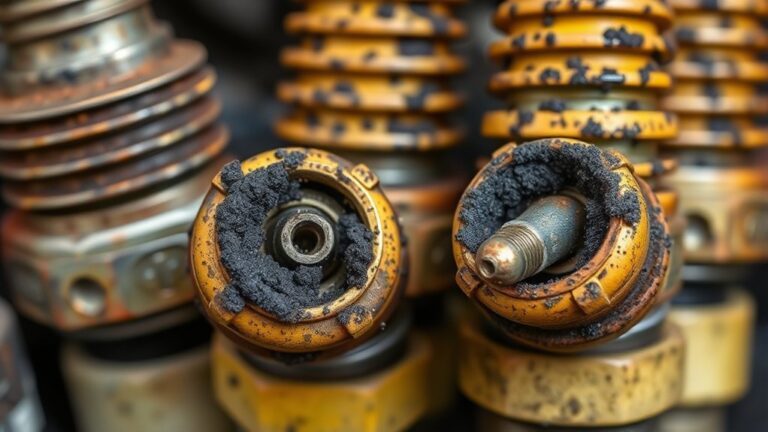
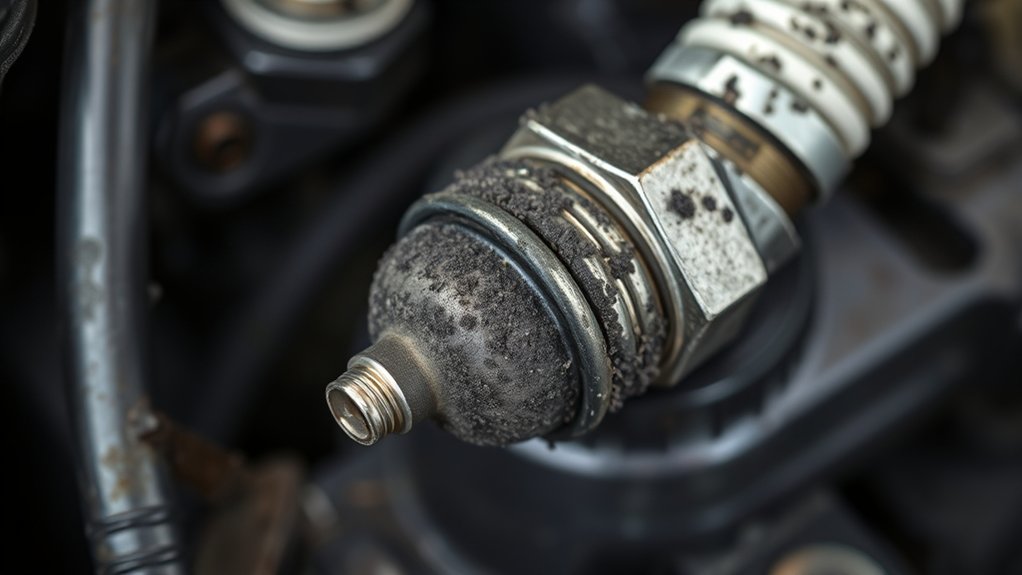
Fouled spark plugs often show clear physical signs that indicate trouble. If your spark plugs are fouled, you’ll notice a black, carbon-coated tip or a shiny, oily residue on the plug, signaling contamination.
Fouled spark plugs show black, carbon-coated tips or oily residue, indicating contamination and potential engine issues.
Common signs include rough idling, engine misfires, and difficulty starting your vehicle. You might also experience a drop in fuel efficiency and sluggish acceleration.
Visual inspection can reveal deposits like black soot, wetness, or a sooty appearance on the electrodes. If you keep experiencing misfires or a noticeable decline in engine performance after replacing spark plugs, it’s a strong indicator they are fouled.
Recognizing these signs early helps prevent further engine damage and guarantees your spark plugs remain in good condition.
How Can You Diagnose Different Types of Spark Plug Fouling?
To diagnose different types of spark plug fouling effectively, start by carefully inspecting the deposits on the plug’s electrodes. Carbon fouling looks like a dry, matte black buildup, often caused by a rich fuel mixture or incomplete combustion.
Oil fouling shows shiny, wet, oily deposits and usually indicates worn piston rings or valve seals. Fuel fouling is characterized by wet, sooty, black deposits, typically from excess fuel entering the chamber or faulty injectors.
To confirm, perform a compression test and check if oil or fuel is present on the plug. These visual clues help you identify the fouling type and guide targeted repairs.
Proper diagnosis of spark plug fouling guarantees you address the root cause effectively, which helps prevent further engine issues.
What Steps Can You Take to Prevent Spark Plug Fouling?
Proper engine maintenance plays a big role in preventing spark plug fouling. Keeping your engine in good shape reduces the chances of deposits forming on your spark plugs.
Regular engine maintenance helps prevent spark plug fouling and keeps your vehicle running smoothly.
To do this effectively, regularly replace or clean air filters to stop dirt and debris that cause rich fuel mixtures, which foul spark plugs. Using the correct spark plug heat range recommended by the manufacturer also helps prevent operating conditions that promote fouling.
Make sure you get proper oil changes and valve seal inspections to prevent oil leaks, which can lead to fouling. Keeping your fuel quality high and avoiding contaminated or low-octane fuels also helps prevent incomplete combustion and deposit buildup.
Lastly, routine inspection and timely replacement of spark plugs at recommended intervals minimize fouling caused by aging or worn plugs.
How Do Engine Maintenance and Components Influence Fouling?
Engine maintenance and the condition of your vehicle’s components directly impact how quickly spark plugs become fouled. Worn piston rings or valve seals can let oil seep into the combustion chamber, causing oil fouling of spark plugs. A malfunctioning PCV system can also send excess oil vapors to the plugs, speeding up fouling.
If your fuel mixture is too rich because of faulty injectors or sensors, carbon deposits start to build up on the spark plugs. Inadequate engine maintenance, like infrequent oil changes or dirty air filters, allows deposits to accumulate and increases the risk of fouling.
Mechanical issues such as a clogged EGR system can change how combustion happens, leading to fouling. Regularly checking and maintaining your engine oil and these components helps reduce deposits and keeps your spark plugs cleaner longer.
When Should You Replace Spark Plugs to Avoid Fouling?
Regularly checking and maintaining your spark plugs is essential to prevent fouling and avoid unnecessary engine trouble. Most spark plugs should be replaced every 30,000 to 50,000 miles, or as your vehicle manufacturer recommends.
You should consider replacing them if you notice persistent misfires, rough idling, or difficulty starting the engine. Heavy carbon buildup, oil fouling, or worn electrodes are clear signs it’s time for a change.
Regular inspections during maintenance help catch early fouling signs before they cause damage. You should replace spark plugs when they show heavy fouling or deposits, have worn or damaged electrodes, or if you experience engine misfires or rough idling.
Using the correct spark plug type and heat range can also extend their lifespan and reduce the risk of fouling.
Frequently Asked Questions
What Is the Most Common Cause of Spark Plug Fouling?
The most common cause of spark plug fouling is oil entering the combustion chamber. You might notice this if your piston rings or valve seals are worn out, allowing oil to leak past.
This oil creates a greasy, black buildup on your spark plugs, which can cause misfires and performance issues. If your engine leaks oil or uses too much, it increases the chances of fouling, so keep an eye on these problems.
How to Get Rid of Spark Plug Fouling?
To get rid of spark plug fouling, start by removing and inspecting the plugs to see what kind of deposits are on them. Light fouling can be cleaned with a wire brush, but if the plugs are heavily fouled or damaged, it’s best to replace them.
Make sure to address any underlying issues like oil leaks or a rich fuel mixture. Proper gapping and choosing the right heat range for your plugs are also important for preventing fouling.
Regular engine maintenance, such as changing filters and oil, can help stop fouling before it starts. Keeping up with these steps will help your engine run smoothly and avoid future problems.
How Long Do Spark Plugs Last in a Subaru Crosstrek?
You’ll find your Subaru Crosstrek’s spark plugs last between 60,000 to 100,000 miles, but they might burn out quicker if you’re always taking short trips or facing extreme weather.
Think of them like the batteries in your remote. If you don’t replace them on time, your car’s performance drops.
Regular inspections and using the right plugs can help you avoid those pesky misfires and keep your Crosstrek running smoothly.
Is WD-40 Good for Cleaning Spark Plugs?
WD-40 isn’t a good choice for cleaning spark plugs. It might temporarily remove dirt, but it doesn’t effectively clean carbon or oil buildup.
Plus, it can leave flammable residues that could damage your engine’s ignition system. Instead, use a wire brush, specialized cleaning solutions, or ultrasonic cleaning for proper maintenance.
Relying on WD-40 could mess with spark plug performance and engine safety, so it’s best to avoid using it for this task.
Conclusion
To keep your engine running smoothly, regularly inspect and replace your spark plugs. Fouling can cut your fuel efficiency by up to 30%, so staying on top of it is a smart move.
Issues like fuel imbalance, oil leaks, or coolant leaks can cause spark plugs to foul. Addressing these early can help you avoid costly repairs down the line.
Remember, well-maintained spark plugs ensure proper combustion and can extend your engine’s life. Stay proactive with routine checks.
If you neglect your spark plugs, you might see increased emissions and decreased performance. Over time, this can cost you hundreds in repairs. Proper maintenance of spark plugs is key to keeping your engine in top shape.