
What Do Fouled Spark Plugs Look Like?
If you’re dealing with engine misfires, rough running, or difficulty starting your vehicle, you’re not alone. Many car owners struggle with spark plug issues and often wonder what exactly to look for. Recognizing the signs of fouled spark plugs can save you time and money on repairs.
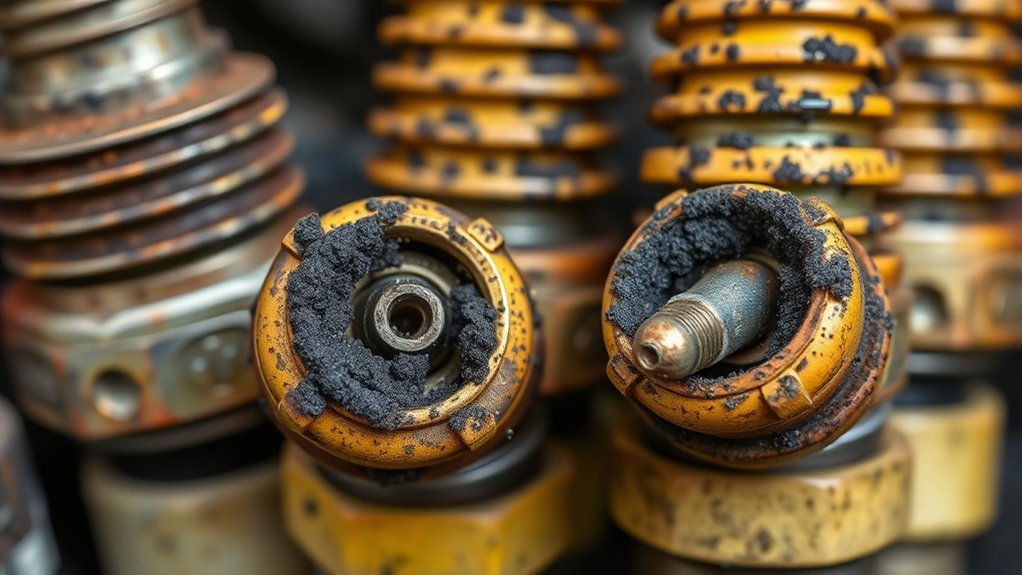
Fouled spark plugs display various signs depending on the cause. You might see black, greasy deposits if oil or carbon is involved, and these deposits can be wet, shiny, or crusty. White or grayish deposits may indicate coolant leaks, while eroded or flattened electrodes show wear.
Burned or blistered electrodes suggest overheating. Spotting these signs can help you diagnose issues. Keep investigating to uncover how to best address these problems.
Key Takeaways
- Fouled spark plugs often have deposits that are black, greasy, or soot-like. This usually means there’s carbon buildup from rich fuel mixtures or incomplete combustion.
- If the electrodes are wet and shiny, it could be oil fouling. That’s often caused by oil leaks from piston rings, valve seals, or issues with the PCV system.
- White or grayish crusty deposits with a sweet smell might indicate coolant leaks or antifreeze contamination.
- Burned or blistered electrodes show signs of overheating or severe fouling. This can happen due to misfires or improper ignition timing.
- When the electrodes look worn or eroded, they tend to be rounded or flattened. That’s a sign of extensive use or advanced fouling affecting spark performance.
How to Visually Identify Fouled Spark Plugs
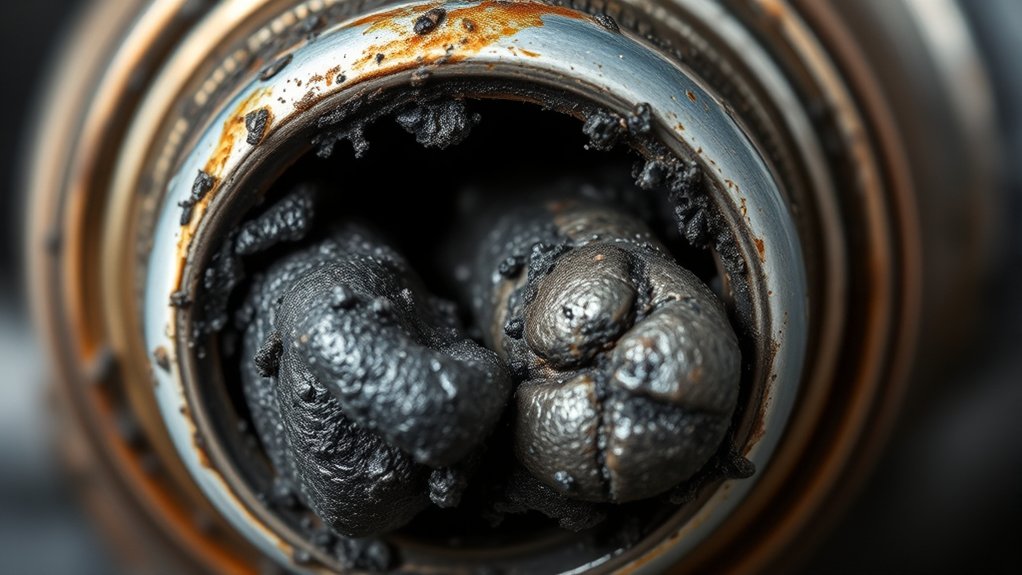
To effectively determine if your spark plugs are fouled, start by inspecting the electrodes and insulator tip closely. Look for deposits, which are key indicators of fouling.
Carbon fouling appears as dry, powdery, black deposits. It shows incomplete combustion or a rich fuel mixture. Fuel fouling looks like wet, shiny black deposits, indicating excess fuel or poor vaporization.
Carbon fouling is dry, powdery black deposits indicating incomplete combustion. Fuel fouling is wet, shiny black deposits from excess fuel.
Oil fouling presents as greasy, shiny black deposits, often with a strong oil smell. The texture and appearance of these deposits help identify the issue.
Dry, powdery deposits suggest carbon fouling, while wet, oily deposits point to oil fouling. Carefully examining the deposits’ color, texture, and spread on the spark plug provides essential clues.
This can help you diagnose the problem and take the right steps to fix it.
Recognizing Carbon Fouling on Spark Plugs
You can recognize carbon fouling by looking for a dry, black, soot-like deposit on the spark plug’s tip. It may feel greasy or powdery when you touch it.
This buildup often happens because of issues like excessive idling, rich fuel mixtures, or a dirty air filter. Knowing these causes can help you figure out when the fouling is due to incomplete combustion.
Appearance and Texture
Carbon fouling on spark plugs usually appears as a dry, black, soot-like deposit that covers the electrodes and insulator tip.
These deposits are often matte or velvety in texture, which indicates unburned fuel residues that have built up over time.
When you touch them, they tend to feel flaky or powdery and can be easily chipped off if they’re not heavily ingrained.
The buildup can make the spark plug look dark and sooty, and sometimes shiny if mixed with oil or other contaminants.
Visually, the surface looks blackened, and the thickness of the deposit varies depending on how severe the fouling is.
Causes of Carbon Buildup
When the air-fuel mixture becomes too rich, it can lead to excess unburned fuel that leaves behind carbon deposits on your spark plugs. This carbon fouling looks like dry, black, soot-like buildup on the electrodes and insulator tip.
Faulty fuel injectors or carburetors often cause these rich mixtures, which promote carbon buildup. Plus, prolonged idling or low-speed driving reduces combustion temperatures, encouraging deposits to form.
Restricted airflow or malfunctioning sensors can cause incomplete combustion, leaving unburned fuel that contributes to carbon fouling. A dark, matte black coating on the spark plug indicates these issues.
Recognizing these signs helps you understand that improper fuel mixture or engine operation are key causes of carbon buildup on your spark plugs.
Detecting Oil Deposits and Their Appearance
Oil deposits on spark plugs are usually easy to spot because they look shiny, black, and greasy. They coat the electrode and insulator tip, making it clear there’s oil fouling.
This usually happens when engine oil leaks into the combustion chamber. When inspecting, you’ll notice the deposits are oily and slick to the touch and often have a distinctive oily smell.
The ceramic insulator may also appear dark or stained with an oily sheen. These visual cues help you identify oil fouling early.
But you’ll need further diagnosis to find the source, like piston ring leaks, valve seals, or PCV system problems. Catching oil deposits early can prevent more serious engine issues and keep your spark plug working well.
What Coolant Leaks Look Like on Spark Plugs
When coolant leaks onto your spark plugs, you’ll notice chalky, white or grayish deposits that can look crusty or powdery. These deposits often have a sweet antifreeze smell and can cover the electrode and insulator.
Continuous leaks can cause hot spots, which may lead to misfires and even more damage to the spark plugs. If you see these signs, it’s a good idea to get your vehicle checked out.
Chalky White Deposits
Have you noticed chalky white deposits on your spark plugs? These white deposits often mean coolant is leaking into your engine’s combustion chamber.
They’re usually hard, crusty, and can cover the insulator and electrodes with a powdery look. When coolant leaks inside—often from a head gasket failure or a cracked intake manifold—it fouls the plugs with these white, ash-like buildups.
You might also see corrosion on the ceramic insulator. To be sure, check for other signs like milky oil or your engine overheating.
The presence of these white deposits suggests coolant intrusion, which can cause misfires and damage if not fixed quickly. A visual check of your spark plugs can help you catch this problem early.
Hot Spots Formation
Ever wonder what specific signs coolant leaks leave on your spark plugs? Coolant leaks can cause hot spots on the electrode and insulator tip. These hot spots happen because of overheating caused by coolant getting into the plug.
You might notice irregular, uneven deposits that stand out from typical carbon or oil fouling. Often, these deposits look crusty or powdery, indicating internal coolant intrusion.
The overheating caused by coolant leaks can also produce a sweet or antifreeze smell near the engine. If you see uneven discoloration or blistered areas on your spark plug, it’s a sign that coolant is leaking and creating hot spots.
Addressing this promptly helps prevent further damage and engine issues.
Signs of Wet, Burned, or Worn Electrodes
Identifying signs of wet, burned, or worn electrodes is essential for diagnosing spark plug issues that can affect engine performance. Wet electrodes often look shiny and oily, which indicates fuel or oil fouling.
Burned electrodes show blistered, melted, or white deposits, signaling overheating or an incorrect heat range. Worn electrodes appear eroded, with rounded or flattened tips, reducing the spark gap and firing efficiency.
Here are the key signs to look for:
- Wet electrodes with a shiny, oily appearance
- Burned electrodes with blistered, melted, or white deposits
- Worn electrodes with eroded, rounded, or flattened tips
These issues can cause misfires, rough idling, and starting problems. That’s why inspecting electrode condition regularly is so important.
How Fuel Mixture Issues Cause Spark Plug Fouling
When the fuel mixture is too rich, unburned fuel creates black soot on your spark plugs, leading to fouling. Faulty sensors or incorrect ignition timing can also cause improper fuel delivery, making fouling worse.
Understanding how these issues mess with the air-fuel ratio can help you prevent spark plug problems before they start. Keep an eye on your engine’s performance to catch any signs early.
Excess Fuel Accumulation
Have you noticed black, sooty deposits on your spark plugs? This is a sign of fuel fouling caused by excess fuel buildup. When your engine runs too rich, unburned fuel sticks to the spark plug, making it look shiny or black.
Here are three common causes:
- Carburetor or fuel injection problems that cause a rich air-fuel mixture
- Prolonged idling or low-speed driving preventing proper engine warm-up
- Faulty sensors like oxygen or mass airflow sensors, which trick the engine into running rich
All these issues lead to excess fuel buildup, creating wet, fluffy deposits that impair ignition. Spotting fuel fouling early can help prevent more engine problems and keep your vehicle running smoothly.
Sensor Malfunctions Impacting Mixture
Sensor malfunctions, like a faulty mass air flow sensor or oxygen sensor, can cause your engine to run too rich by giving incorrect data to the engine control unit (ECU).
When these sensors break down, the ECU might inject too much fuel, leading to black, wet, sooty deposits on spark plug tips. A malfunctioning oxygen sensor can especially mess up air-fuel mixture adjustments.
This disruption increases the chance of fouling because the mixture becomes overly rich. Inaccurate sensor readings delay the ECU’s ability to regulate the mixture properly.
Over time, unburned fuel can build up and foul the spark plugs. Fixing sensor problems quickly is important because persistent issues from faulty sensors speed up spark plug fouling and can cause engine misfires.
Ignition Timing Disruptions
Faulty sensor readings that cause a rich fuel mixture can also disrupt your engine’s ignition timing. When the timing is off, it hampers proper combustion, which can lead to carbon buildup and fouling on spark plugs.
Here are three signs of ignition timing issues:
- Misfires – Disrupted timing causes incomplete combustion, leaving wet or black deposits that look like fuel or oil fouling.
- Black Carbon Deposits – Regular misfiring from timing problems results in a characteristic black buildup on the spark plug insulator.
- Unburned Fuel Deposits – If the timing is advanced or retarded, unburned fuel can build up, fouling the plug insulator and hurting performance.
Making sure your ignition timing is correct is key to preventing fouling caused by fuel mixture issues.
How Oil Leaks Lead to Spark Plug Oil Fouling
Oil leaks into the combustion chamber happen when parts like piston rings, valve seals, or the PCV system fail, letting engine oil escape where it shouldn’t.
This extra oil causes fouling on your spark plugs, leaving behind black, shiny deposits on the electrodes and insulator tip. These deposits often smell oily and look greasy or dark.
When you see oil fouling, it’s a sign that oil is getting into the cylinders, usually from worn piston rings or seal failures. To fix this, you need to find out what’s causing the leak.
Check for excessive oil consumption, perform leak-down tests, and inspect the PCV system. Fixing the leak will stop the fouling and help protect your engine from further damage.
Indicators of Turbocharger or Valve Seal Problems
When your engine’s spark plugs show dark, greasy deposits that are shiny and black, it’s often a sign that your turbocharger seals or valve seals are leaking. These oil deposits mean oil is getting into the combustion chamber because of seal failure. To confirm, look for:
Dark, greasy spark plug deposits indicate turbo or valve seal leaks causing oil to enter the combustion chamber.
- Excessive oil consumption and engine smoke, which suggest oil is leaking into the cylinders.
- Spark plugs covered in oily, heavily carbonized deposits, especially around the electrodes.
- Rapid fouling with wet, oily deposits that stick around even after regular maintenance.
These signs point to issues with turbo or valve seals, letting oil bypass the seals and foul your plugs. Spotting these indicators early can help prevent more serious engine damage caused by ongoing oil leaks.
Using Diagnostic Tools to Confirm Spark Plug Fouling
Using diagnostic tools is essential to accurately confirm spark plug fouling, especially when visual inspections alone can be inconclusive. Diagnostic tools like air-fuel ratio gauges help identify if the engine runs too rich or too lean, which can cause fouling.
Comparing readings from multiple sensors can reveal consistent discrepancies indicating fouling issues. Exhaust gas analyzers detect abnormal combustion patterns linked to fouled plugs, providing further evidence.
Furthermore, using a scope or endoscope to visually inspect spark plug deposits alongside sensor data improves accuracy. Correlating diagnostic readings with visual findings helps you pinpoint the specific type and cause of fouling.
What to Do After Detecting Fouled Spark Plugs (Cleaning or Replacement Tips)
Once you’ve confirmed that your spark plugs are fouled, the next step is to decide whether cleaning or replacing them is best.
After confirming fouled plugs, choose between cleaning or replacing for optimal engine performance.
If deposits are light and not ingrained, you can often restore functionality by cleaning the spark plugs with a wire brush or spark plug cleaner. But heavy fouling with thick carbon, oil, or fuel deposits usually means they need replacing to guarantee proper engine performance.
Always inspect the electrode and insulator after cleaning for signs of wear or damage, which also means it’s time for a replacement.
Consider these tips:
- Use the manufacturer-recommended spark plug type and heat range when replacing.
- Regular maintenance helps reduce fouling and keeps your engine running smoothly.
- Address underlying engine issues to prevent future fouling.
Frequently Asked Questions
How Can I Tell if a Spark Plug Is Fouled?
You can tell if a spark plug is fouled by inspecting how it looks. Check for black, carbon deposits that might be dry or greasy. These signs mean contamination.
An oily, shiny coating suggests oil fouling, while black soot points to carbon buildup. If the electrode appears dull or blackened, it’s a sign the plug isn’t working properly.
Comparing multiple plugs can also help spot fouling patterns and identify specific issues. That way, you’ll get a clearer picture of what’s going on.
How Long Do Spark Plugs Last in a Subaru Crosstrek?
In your Subaru Crosstrek, spark plugs typically last between 60,000 to 100,000 miles—sometimes even longer if you’re lucky! It’s a good idea to inspect them around the 60,000-mile mark to catch any signs of wear early.
Using the right type of spark plug and keeping up with proper driving habits can help extend their lifespan. If you notice rough idling or your fuel efficiency drops, it’s probably time to replace them before engine performance takes a hit.
What Can Be Mistaken for Bad Spark Plugs?
You might mistake worn ignition coils or wires for bad spark plugs because they cause misfires and rough running.
Engine timing issues or faulty sensors can also mimic spark plug problems by affecting combustion.
Moreover, dirty air filters, fuel injectors, or exhaust leaks create similar symptoms like poor performance and rough idling.
Carbon buildup on valves or chambers can cause misfires, making it easy to confuse these issues with fouled spark plugs.
How Many Spark Plugs Does a Hyundai Tucson Have?
You’ll find that a Hyundai Tucson typically has four spark plugs if it has a 4-cylinder engine, one for each cylinder.
However, if your Tucson has a 6-cylinder engine, it may have six spark plugs, one per cylinder.
These spark plugs are located on the engine’s cylinder head, making them accessible for inspection and replacement.
Always check your owner’s manual to verify you use the correct number and type of spark plugs.
Conclusion
Now that you know what fouled spark plugs look like, you can spot issues early before they turn into bigger problems.
Regular inspections help you avoid costly repairs and keep your engine running smoothly. It’s all about catching problems early.
Remember, a stitch in time saves nine—don’t ignore those signs. When in doubt, consult a mechanic to ensure your spark plugs are in top shape.
Staying vigilant today with your spark plugs can prevent unexpected breakdowns tomorrow.