
How Tight Should Spark Plugs Be?
Many car owners find themselves confused about how tight spark plugs should be. It’s a common worry—are they too loose, or maybe too tight? Don’t worry, you’re not alone in this. Getting the right torque is key for a smooth-running engine and avoiding damage.
You should tighten spark plugs to the manufacturer’s specified torque, usually between 14 to 20 foot-pounds. It’s best to use a torque wrench to ensure precise tightening, preventing damage or performance issues.
Start with finger-tightening, then turn the wrench until it clicks at the recommended torque. Proper tightening guarantees a secure seal and efficient engine operation.
Keep going, and you’ll find out how to do it the right way for your vehicle.
Key Takeaways
- Check your vehicle’s service manual or the spark plug box for the recommended torque specs.
- It’s best to use a torque wrench to tighten the spark plugs accurately. This helps you avoid both under-tightening and over-tightening.
- For tapered seat plugs, start by tightening them finger-tight. Then, turn about two-thirds of a turn to secure them properly.
- For gasket plugs, tighten them finger-tight first. After that, give them about a ¼ to ⅝ of a turn.
- Always follow the manufacturer’s guidelines. Doing so ensures a proper seal and helps prevent any engine damage.
How Do You Determine the Correct Spark Plug Torque?
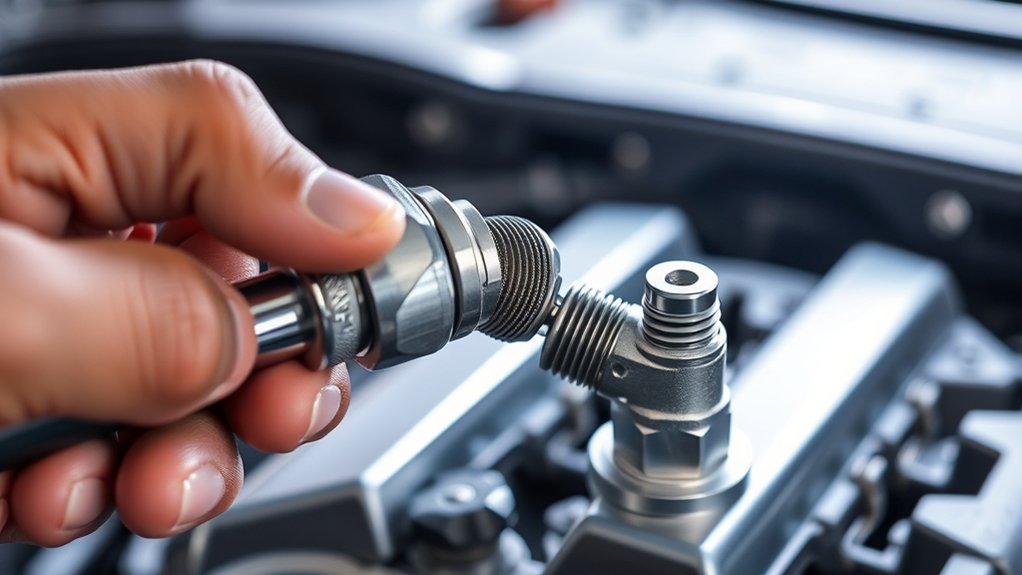
To figure out the right spark plug torque, start by looking at your vehicle’s service manual or the spark plug box for the recommended torque value. This way, you’ll know the exact amount of force needed to tighten your spark plugs properly without risking damage.
Next, use a torque wrench to apply the correct torque. This helps prevent under- or over-tightening, which can cause issues. For tapered seat spark plugs, tighten them finger tight first, then turn about two-thirds of a turn.
For gasket plugs, follow specific guidelines based on the gasket condition. Make sure the gasket or washer is correctly crushed to form a good seal, which indicates you’ve reached the right torque.
If you’re unsure about the exact setting, always check the vehicle’s manual or manufacturer guidelines. Getting it right keeps your spark plugs secure and your engine running smoothly.
Why Is Proper Tightening Essential for Spark Plug and Engine Health?
Proper tightening ensures your spark plug creates a secure seal, which prevents compression leaks that can cause misfires. When it’s tightened correctly, heat transfers efficiently, helping keep your engine from overheating and getting damaged.
Over- or under-tightening can lead to expensive repairs and even engine failure. That’s why using the right torque is so important for your engine’s health and longevity.
Ensures Proper Seal
Ensuring a proper seal between the spark plug and the cylinder head is crucial because it prevents combustion gases from leaking out, which can reduce engine efficiency. When your spark is sealed correctly, it maintains ideal compression and ensures consistent ignition.
Proper tightening also allows for efficient heat transfer from the spark plug to the cylinder head, preventing overheating and pre-ignition issues. Using the correct torque with a torque wrench guarantees a secure fit and avoids damage caused by over-tightening or loosening during operation.
If the spark plug isn’t tightened properly, gases can escape, leading to misfires and poor engine performance. Keeping the right tightness helps keep the spark plug sealed firmly, maximizing engine operation and preventing costly repairs.
Prevents Engine Damage
Why is tightening your spark plug correctly so vital for engine health? Proper torque makes sure the spark plug is securely seated, preventing leaks and misfires that could harm the engine. It also helps with heat transfer, which reduces the risk of overheating.
When you don’t use the right torque, you could damage the threads or crack the spark plug or cylinder head by over-tightening. It can also lead to incomplete sealing, letting exhaust gases escape and hurting performance.
Loosening the spark plug too early can cause misfires and engine issues. Plus, improper tightening increases the risk of costly repairs down the line.
Using a torque wrench to apply the manufacturer’s recommended torque values helps keep your engine in good shape. It prevents damage and ensures everything runs smoothly.
Getting the tightening right is essential for the long-term health and performance of your engine.
What Are the Risks of Under- or Over-Tightening Spark Plugs?
If you don’t tighten spark plugs properly, you could end up damaging your engine or causing seal failures.
Under-tightening can lead to misfires and leaks, which might affect your engine’s performance.
On the other hand, over-tightening might crack the insulator or deform the threads, leading to more serious issues.
Both mistakes can end up costing you a lot in repairs and make your engine less reliable.
Engine Damage Risks
Tightening your spark plugs too little or too much can lead to serious engine problems. Under-tightening lets the plugs loosen, causing misfires and poor performance. Over-tightening risks deforming threads or damaging the cylinder head, which can lead to costly repairs. Excessive torque can crack the insulator or cause pre-ignition, putting your engine at serious risk of damage. Moreover, improper tightening prevents proper heat transfer, increasing overheating chances.
To sum up:
- Loosened plugs cause misfires and reduced power.
- Over-tightening damages threads and components.
- Cracked insulators can lead to pre-ignition.
- Poor heat transfer raises overheating risk.
Both errors threaten engine integrity, so using the right torque is crucial to prevent damage.
Seal Failure Potential
Properly securing your spark plugs is key to maintaining a good seal, but both under- and over-tightening can cause problems. Under-tightening risks the plug loosening, which leads to poor combustion and misfires. Over-tightening can deform threads or crack the insulator, leading to costly repairs.
If the torque isn’t enough, it won’t create the proper seal needed to keep combustion gases contained. This increases the chance of leaks and engine damage. On the other hand, too much torque crushes the washer or gasket, causing leaks and overheating.
Getting the right torque is essential for a reliable seal. It keeps combustion gases from escaping and helps your engine run smoothly. Proper tension prevents leaks, protects parts, and keeps repairs affordable.
| Tension Level | Potential Seal Issue |
|---|---|
| Under-tightened | Increased risk of leaks and misfires |
| Proper torque | Adequate seal, engine runs smoothly |
| Over-tightened | Cracked insulator, damaged threads |
| Excessive force | Seal failure, overheating, costly repairs |
How Can You Properly Install Spark Plugs on Your Motorcycle?
To install spark plugs on your motorcycle correctly, start by carefully finger-tightening the plug to make sure it threads in smoothly and lines up properly. Once it’s finger-tight, use a torque wrench to tighten the plug to the manufacturer’s specified torque, usually about two-thirds of a turn after finger-tight.
Follow these steps: verify the correct torque setting from your owner’s manual, then use a torque wrench to apply even pressure. For tapered seat plugs, tighten until the washer is crushed and the plug feels snug.
When reinstalling with a gasket, turn the plug ¼ to ⅝ of a turn after finger-tight, depending on gasket condition. Proper torque prevents damage and ensures a good seal, helping your motorcycle run smoothly.
What Tools and Resources Help Ensure You Tighten Spark Plugs Correctly?
Using the right tools and resources is key to tightening your spark plugs correctly and safely. A torque wrench is the most accurate tool to ensure you apply the manufacturer’s specified torque.
Many spark plug boxes include recommended torque values or installation instructions, which you should follow closely. Using a calibrated torque wrench prevents under-tightening, which can cause leaks, and over-tightening, which risks damaging threads.
For tapered seat plugs, tightening about 2/3 of a turn after finger tightening often works, but it’s best to check your vehicle’s manual for confirmation. Consulting the manufacturer’s guidelines or service manual gives you the exact torque specs for your engine, ensuring a secure and proper fit every time.
How Do You Recognize and Fix Damage Caused by Incorrect Spark Plug Tightening?
Incorrect tightening of spark plugs often leaves telltale signs that you can spot with a close look. Damage from over-tightening may show cracked insulators or stripped threads, while under-torqued plugs can appear loose with gaps, leading to misfires.
Look for things like visible deformation of the spark plug housing, cracks or chips in the ceramic insulator, gaps between the plug and cylinder head, or signs of gasket failure such as leaks or overheating.
To fix damage, replace any damaged spark plugs right away. If you find stripped threads, you might need re-tapping or thread repair. Catching damage early can prevent serious engine issues and ensure your spark plugs work properly.
Always tighten the plugs to the manufacturer’s specifications to avoid doing more damage or having to fix the same problem again.
Frequently Asked Questions
Should Spark Plugs Just Be Hand Tight?
No, spark plugs shouldn’t just be hand tight. You should tighten them by hand first to make sure they seat properly, then use a torque wrench to reach the manufacturer’s specified torque.
This helps ensure the plugs are secure without risking damage to the threads or causing leaks. Relying only on hand tightening can lead to them being too loose or too tight, which can cause engine problems or damage.
Getting the right torque is key for your engine to perform at its best.
How Do You Know if a Spark Plug Is Tight Enough?
You know a spark plug is tight enough when it’s snug and resists turning by hand, but doesn’t require a lot of force with a wrench.
It’s a good idea to check the torque using a torque wrench set to the manufacturer’s specs, usually around 18-20 ft-lb for motorcycles.
When properly tightened, the washer will slightly crush, creating a secure seal without damaging the plug or the head.
This ensures peak performance and helps prevent leaks.
Does a Spark Plug Need to Be Tight?
Yes, your spark plug needs to be tight enough to create a proper seal and prevent leaks, but not so tight that you damage the threads or crack the plug.
Use a torque wrench to tighten it within the recommended range, usually between 15 to 30 ft-lb.
This ensures it’s secure and helps avoid misfires or engine issues caused by loose or overtightened plugs.
What Is the Recommended Spark Plug for Honda GX160?
The recommended spark plug for your Honda GX160 is the NGK BPR5ES or an equivalent.
Choose a spark plug that matches the specific specifications for your engine to get the best performance and durability.
Make sure to pick the right heat range and follow the installation instructions. Tighten it finger-tight, then give it a slight turn to seat snugly.
Using properly selected and installed spark plugs helps keep your engine running efficiently and smoothly.
Conclusion
Remember, tightening your spark plugs isn’t just a simple task. It’s the key to unlocking your engine’s true potential. Think of it as a handshake that seals your engine’s health, making sure everything runs smoothly and lasts longer.
Don’t let a loose or overtightened plug secretly steal your car’s power. With the right tools and a bit of care, you can keep your engine running like a finely tuned symphony.
So, when it comes to spark plugs, tighten with confidence. Properly torqued spark plugs are essential for optimal performance and engine longevity.