How to Install Gas Shocks in 10 Easy Steps
Are you tired of struggling with installing gas shocks? Many people find this task tricky, especially if you’re not sure where to start or worry about making mistakes.
To install gas shocks in 10 easy steps, start by measuring your application carefully, including distances from hinges to attachment points and offsets. Use these measurements in an online calculator to select the right shock.
Mark your mounting points accurately, then install the shocks with the piston rod facing downward and fittings tightened to the correct torque.
Test the installation for smooth operation, make needed adjustments, and avoid common mistakes.
Keep everything maintained and properly stored to guarantee lasting performance.
Next, you’ll find out how to do it right.
Key Takeaways
- Measure and mark your mounting points accurately. Take into account the orientation, offsets, and specifications from an online calculator to get it just right.
- Make sure to store and install the gas shocks with the piston rod facing downward. This helps prevent leaks and damage, keeping everything working smoothly.
- Use the correct fittings and tighten them to the recommended torque. Fully screw in the end fittings to ensure they’re securely attached and won’t come loose.
- After installation, test the shock’s movement. Check if it operates smoothly and provides proper support for lids or other moving parts.
- Keep an eye on your shocks regularly. Inspect, maintain, and store them properly to keep them performing well for a long time.
How to Measure Your Application for Gas Shock Compatibility
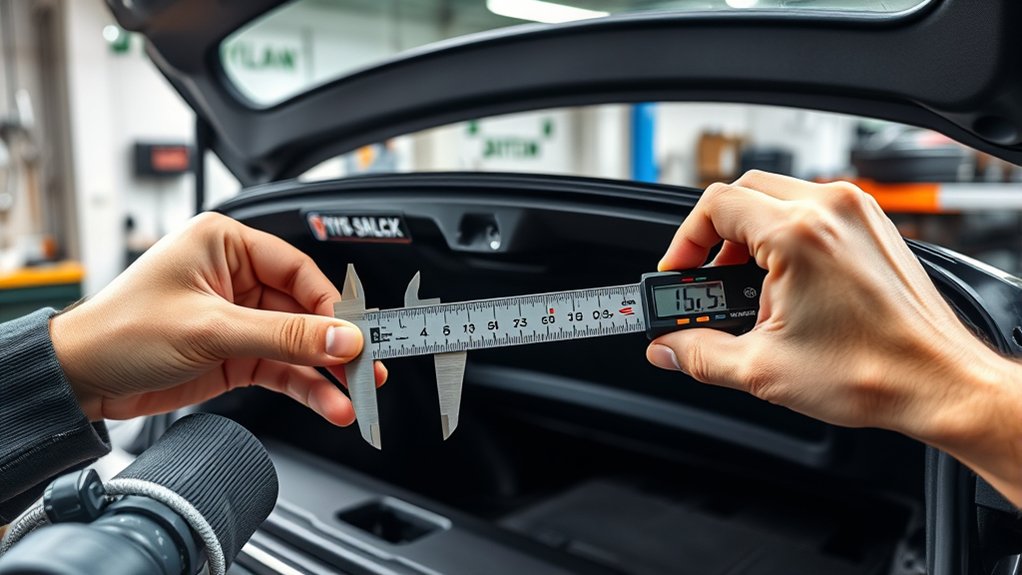
To guarantee you select the right gas shock, start by carefully measuring your application. When installing gas struts, you need accurate measurements of the mounting points.
Measure the distance from the hinge to the attachment point along the lengthwise direction, called measurement A. Next, find the vertical distance from the hinge to the fixed world, measurement D, and the horizontal distance, measurement C.
Don’t forget to include the height offset—measurement B—adding 20mm if a bracket is involved. These measurements help ensure you install gas springs correctly. Make sure to input all four measurements into the calculator for the right gas shocks.
Installing a gas strut is easy, and these simple steps help reduce guesswork. Feel free to reach out if you need more information you might find helpful.
How to Choose the Correct Gas Shock Based on Your Measurements
Once you’ve gathered your measurements—A, B, C, and D—it’s time to use an online calculator to find the right gas shock for your needs. Input these measurements, which include the distance from the hinge to the attachment points along the lengthwise and height directions, as well as the horizontal and vertical distances from the hinge to the attachment points on the fixed world.
Make sure these measurements are accurate and taken with the gas shock in its extended state. This helps ensure compatibility and accurate sizing. The calculator will then give you precise specifications like force and stroke length.
Use the output to pick a gas shock that fits your application. This will help you get proper support, smooth operation, and durability that lasts.
Mounting Gas Shocks in the Right Orientation for Better Durability
To make sure your gas shocks last longer, mount them with the piston rod facing downward. This helps with lubrication and protects the seal better.
Always use the correct fittings and follow the manufacturer’s instructions. This prevents side loading, which can cause the shocks to fail early.
Getting the right orientation and fitting placement keeps the shock working smoothly and reduces unnecessary stress.
Store Rod Downward
Mounting gas shocks with the piston rod facing downward is key to their durability and proper function. Storing them in this position helps keep the internal pressure balanced and prevents oil from leaking out.
When the rod is downward, it keeps the lubrication inside where it’s needed most, which reduces wear and tear over time. This position also stops dirt and debris from settling on the piston, helping it operate smoothly longer.
Storing shocks rod down also helps maintain the internal gas charge, so your damping performance stays consistent. Always follow the manufacturer’s recommendations for storage and installation.
Proper orientation not only extends the life of your shocks but also ensures they work at their best. This makes your vehicle safer and more reliable overall.
Mount With Correct Fittings
Using the correct fittings when installing gas shocks is key to their durability and performance. Always mount shocks with the piston rod pointing downward to ensure proper lubrication, which helps extend their lifespan.
Whenever possible, use ball joint end fittings to reduce side-loading. This makes the shock more durable and reliable over time. Installing shocks in pairs helps balance forces and prevents uneven wear or stress on the mounting points.
Make sure all end fittings are fully tightened to prevent leaks and keep performance at its best. Follow the manufacturer’s guidelines for the right orientation and pairing of shock components to maximize their lifespan.
Proper fitting and orientation ensure your shocks work smoothly and last longer. This saves you time and money on replacements in the long run.
Marking Exact Mounting Points Using the Calculator’s Measurements
Before you start marking the points, carefully review the measurements provided by the calculator. Use these measurements to precisely mark points A, B, C, and D on your application.
Point A is the distance from the hinge to the attachment point along the lengthwise direction. Measure carefully to match the calculator’s output. For Point B, account for a 20mm bracket offset in height when marking the attachment point.
Horizontal distance C and vertical distance D should be measured accurately from the hinge to the attachment points on the fixed world. Refer to the assembly drawings from the calculator to verify your marked points align with the specified measurements.
Accurate marking guarantees proper fit and function during installation.
Installing Gas Shocks Step-by-Step Safely and Correctly
To install gas shocks correctly, start by verifying you have the proper tools and the matching installation diagram in hand. Use the diagram to mark precise mounting points based on measurements like A, B, C, and D.
Mount the shocks with the rod facing downward to ensure proper lubrication and damping. Secure all end fittings tightly to prevent leaks and allow smooth movement during operation.
Always install shocks in pairs to avoid side loading and keep force distribution balanced. Before tightening everything fully, test the shocks by gently pushing the cover to confirm smooth, supported movement.
If the shocks move freely without resistance or wobbling, you’re ready to finalize the installation. Proper preparation and careful steps ensure safety and long-lasting performance.
Tips for Properly Mounting Gas Shocks for Long-Lasting Performance
To guarantee your gas shocks last, you need to mount them correctly, with the piston rod facing downward for proper lubrication.
Always install shocks in pairs to keep force balanced and performance consistent. Tighten all fittings to the manufacturer’s specified torque to prevent loosening and future issues.
Use Correct Mounting Orientation
Have you ever wondered why gas shocks often fail prematurely? Proper mounting orientation is key. You should install the shocks with the piston rod pointing downward. This allows gravity to keep lubrication where it’s needed and prevents seal damage.
Whenever possible, use ball joint end fittings to minimize side-loading. Side-loading can cause uneven wear and reduce the shock’s lifespan. Always install shocks in pairs to distribute forces evenly and prevent stress on mounting points.
Make sure all brackets and fittings are fully tightened. Loose fittings can cause side-loading that shortens the shock’s life. Finally, follow the manufacturer’s recommended mounting orientation for peak performance and safety.
Proper installation not only extends your shocks’ lifespan but also ensures your vehicle operates smoothly.
Maintain Proper Pairing
Ensuring you install gas shocks in pairs is essential for maintaining balanced support and preventing uneven wear over time. Proper pairing guarantees both sides of your vehicle or equipment work together harmoniously, which helps extend shock life and performance.
When mounting, remember these key points:
- Always match shocks on the same axle or side to ensure balanced support.
- Mount gas shocks with the piston rod facing downward for better lubrication.
- Use full thread engagement and tighten fittings securely to prevent leaks or breakage.
- Prefer ball joint end fittings when possible, as they reduce side-loading and boost stability.
Following these steps helps maximize shock lifespan and keeps your vehicle riding smoothly and safely. Proper pairing isn’t just a recommendation, it’s essential for optimal long-term performance.
Tighten All Fittings Securely
Achieving long-lasting performance from your gas shocks depends heavily on properly tightening all fittings. Loose connections can lead to leaks and premature failure, so it’s important to get this right.
Use a torque wrench to tighten fittings to the manufacturer’s recommended torque, usually between 20-40 Nm depending on the shock model. Fully screw end fittings into the application until spanner flats are reached—this helps prevent threaded stud breakage.
Be careful not to over-tighten, as that can damage seals or strip threads, which could compromise the shock’s durability. Regularly inspect fittings after installation and during maintenance to make sure they stay secure.
Proper tightening ensures a tight seal and reliable performance. This extends the lifespan of your gas shocks and helps you avoid costly repairs down the line.
How to Test Your Gas Shock Installation and Make Final Adjustments?
After installing gas shocks, it’s important to check their performance to make sure everything’s working right. First, gently push down on the vehicle or the part you’re working on to see if the shocks absorb the movement smoothly and return to their original position without bouncing too much.
Next, look at the lid or cover. It should lift to about 90 degrees and stay supported, which shows the pressure is correct. If it doesn’t close automatically or lifts too easily, try adjusting the mounting points for better balance.
The lid should lift to 90 degrees and stay supported, indicating proper pressure and balance.
Finally, listen for any strange noises like squeaking or knocking when you operate the shocks. These sounds might mean something’s not installed properly. To finish up, do a road test or simulate typical use to ensure the shocks perform consistently and dampen as they should.
These steps help confirm your shocks are installed correctly and working at their best.
Common Mistakes to Avoid When Installing Gas Shocks
Installing gas shocks correctly is key to making sure they work properly, but there are some common mistakes that can cause problems or even be unsafe.
For example, don’t apply solvents or paint to the piston rod because it can damage the seals and lead to leaks. Also, avoid gripping or pressing directly on the piston rod during installation, as this can cause seal failure.
Never pierce or heat gas springs—they are pressurized and can be dangerous if tampered with. Make sure to install the shocks in the correct orientation. Mounting with the rod up when the manufacturer recommends rod down can affect how they function.
Finally, don’t over-tighten fittings. Using too much force can damage the threads and weaken the shock’s structure. Paying attention to these simple tips helps ensure a safe and effective installation.
Maintenance Tips to Keep Your Gas Shocks Working Like New
To keep your gas shocks working like new, regular maintenance is key. Start by inspecting the piston rod for dirt, rust, or damage to make sure the seals stay in good shape.
Keep your shocks stored upright with the rod facing downward to help maintain proper lubrication. Avoid exposing them to extreme temperatures or direct sunlight, which can weaken the materials over time.
Periodically check the mounting fittings and fasteners; tightening them prevents side loads and uneven wear.
Lastly, clean the shock body with a damp cloth, steering clear of solvents or paint that could damage seals or lubricants.
Troubleshooting Tips for Installation and Performance Issues
If your gas shocks aren’t working right, start by checking for common installation mistakes. Make sure the rod isn’t facing the wrong way and that pairs are installed evenly.
Also, double-check that all hardware is tightened correctly and that the shocks move smoothly without making noise. Keep an eye out for leaks, wear, or damage, which could mean they need fixing or replacing.
Common Installation Mistakes
One of the most common mistakes during gas shock installation is mounting the shock in the wrong orientation, which can cause oil leaks and lower performance. If you install the shock with the piston rod facing up, oil might seep out and affect how it works. To avoid this, always follow the recommended orientation for your shocks.
Here are some other common mistakes to watch out for:
- Using shocks that aren’t compatible or properly rated, which can lead to support problems or too much force on the components.
- Not tightening the end fittings enough, risking loose parts or complete failure.
- Mounting with side loads or uneven force, which can cause early wear or damage.
- Improper handling or storage, which can hurt internal lubrication and shorten the shock’s lifespan.
Steer clear of these mistakes to keep your shocks working smoothly and lasting longer.
Adjusting for Proper Performance
When adjusting gas shocks for ideal performance, careful testing and small tweaks are important. Start by opening and closing the lid repeatedly to see how it moves.
If the lid doesn’t close automatically, try repositioning the mounting points to increase the horizontal angle and pressure. Adjust the attachment points so the gas strut supports the lid’s weight smoothly.
If you notice excessive resistance or noise, it might mean the strut is over-pressurized. Try reducing the pressure or moving the mount to a more vertical position.
When the lid won’t lift easily, make the mounting points more horizontal to lessen the load on the gas strut. Conduct small adjustments and test often to get the best, smooth operation.
Signs of Faulty Shocks
Faulty shocks can quickly affect your vehicle’s handling and safety, so spotting the signs early is important. If your ride feels bouncy or unstable over bumps, your shocks might not be absorbing shocks properly.
Look for leaking oil or fluid around the shock body. That’s a sign of seal failure and means you should get them replaced. Unusual noises like knocking or clunking over rough patches also point to worn or damaged shock parts.
Uneven tire wear or cupping patterns can mean your shocks aren’t keeping the tires in proper contact with the road. And if your ride feels less comfortable, with more sway or body roll during turns, it’s likely your shocks are deteriorating.
Catching these signs early helps keep you safe and ensures your shocks work as they should.
Frequently Asked Questions
Are Gas Struts Easy to Install?
Yes, gas struts are easy to install. You just need to measure and mark the attachment points accurately, then mount the strut in its extended position.
Using the right tools and following the manufacturer’s instructions makes the process straightforward. With a bit of preparation, you can finish the installation quickly, even if you’re a beginner.
Just stay patient, and you’ll have your gas struts working in no time.
Which Way to Mount Gas Shocks?
You should mount gas shocks with the piston rod pointing downward to ensure proper lubrication and prevent seal damage.
Follow the manufacturer’s recommendations for orientation, whether horizontal or vertical, to get the best performance.
Always install shocks in pairs to keep force balanced and avoid side loading.
Screw the ball joint end fittings into the application until they’re secure, reaching the spanner flats for a solid attachment.
Proper mounting is key to ensuring your shocks last longer and work well.
What Is the Angle for Gas Strut Installation?
You should aim for an angle between 45° and 70° when installing a gas strut. This balanced range helps improve both support and stroke efficiency, making your lift smoother and more reliable.
Aiming around 60° is often the sweet spot for balanced force and easy movement. It’s a good target to ensure everything works smoothly.
Avoid angles over 75°, as they can cause extra wear and weaken the support. Proper positioning is key to getting the best performance and extending the life of your gas shock.
How to Compress a Gas Shock for Installation?
To compress a gas shock for installation, gently press the piston rod with your hand or a suitable tool to reduce its length. If manual compression is tough, use a shock compressor or clamp designed for this purpose.
Support the shock securely to prevent slipping, and avoid over-compressing beyond the recommended length. Keep it compressed until you’re ready to mount it, ensuring a proper fit and preventing internal damage.
Conclusion
Now that you’ve gone through the steps to install gas shocks, you’re well on your way to a smooth ride. Think of your shocks as the backbone of your setup—flexible yet sturdy, ready to absorb any bumps in the road.
With careful measurement, proper mounting, and regular maintenance, your gas shocks will perform at their best. They’re like a well-tuned orchestra, keeping everything in harmony and ensuring a comfortable journey.
So, tighten those bolts and enjoy the ride. Your craftsmanship with gas shocks is now ready to shine and make a real difference in your vehicle’s performance.