How to Fix a Hole in a Tonneau Cover in 8 Easy Steps
Dealing with a hole in your tonneau cover can be frustrating, especially when you rely on it to protect your truck bed and gear. You’re not alone—many people struggle with keeping their covers in top shape.
Luckily, fixing small damages like holes is easier than you might think.
To fix a hole in your tonneau cover, start by identifying the cover type and damage. Gather the proper repair supplies like patches and waterproof sealants.
Clean and dry the area thoroughly, then cut a patch slightly larger than the hole. Apply the patch and seal the edges completely with a waterproof sealant for a watertight fix.
Test the repair for leaks and maintain it regularly. Keep going for more tips on ensuring your cover stays protected.
Key Takeaways
- First, figure out what kind of damage you’re dealing with and what material your cover is made of. This will help you choose the best repair method.
- Next, clean and dry the area around the hole really well. You want it spotless before you put on any patch or sealant.
- Then, cut a patch that’s a little bigger than the hole. Make sure the corners are rounded — it helps the patch stick better and last longer.
- Apply the adhesive evenly over the patch and press it firmly onto the damaged area. Smooth out any air bubbles and make sure the patch extends beyond the hole for a secure hold.
- Finally, seal the edges with waterproof sealant. Let it cure completely before testing for leaks. Once it’s good and dry, you’re all set to expose your cover to the elements again.
Identify the Damage and Cover Type
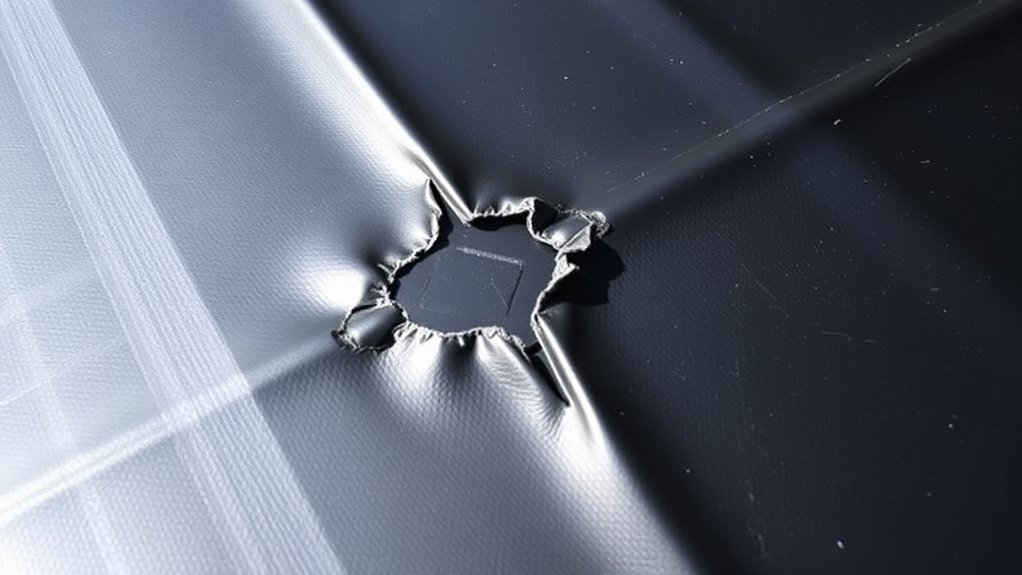
How can you effectively repair a hole in your tonneau cover? First, identify the damage and determine your cover type. Check if the damage is a tear, puncture, or impact mark, and note its location—top surface, underside, or along the seams. This helps you choose the right repair method.
For soft covers like vinyl or fabric, the damage often involves tears or punctures, which usually require patching or adhesive repairs. For hard covers like fiberglass or aluminum, repairs may involve filling or repainting.
Also, recognize the cover style—soft roll-up, hard folding, etc.—since it affects how you access and repair the damage. Correctly identifying the damage and cover type ensures you pick the most effective repair approach.
Gather the Right Repair Supplies for Your Tonneau Cover
Before starting your repair, it’s important to gather the right supplies based on your tonneau cover’s material. Whether it’s vinyl, fabric, fiberglass, or plastic, your repair kit should match.
For vinyl covers, a vinyl repair kit with patches and adhesive works best. If your cover is fabric, go for heavy-duty outdoor fabric patches and waterproof adhesive.
For fiberglass or plastic covers, epoxy or resin-based repair kits are recommended. Make sure all materials are waterproof and UV-resistant to withstand outdoor conditions.
You’ll also need scissors, cleaning supplies, and a clean cloth to prep the surface. Keep some tape handy to hold patches in place temporarily.
Having the right repair supplies ensures a durable, long-lasting fix for your tonneau cover.
Clean and Prepare the Damaged Area for Patching
To guarantee a strong, lasting repair, it’s essential to thoroughly clean and prepare the damaged area before applying the patch. Start by cleaning the surface around the hole with mild soap and water to remove dirt, debris, and oils. This helps the patch stick properly.
Dry the area completely with a clean cloth or towel to prevent moisture from interfering with adhesion. Next, trim any loose threads, frayed edges, or rough material to create a smooth, even surface.
For extra cleanliness, use a gentle solvent like rubbing alcohol to remove any remaining residues or slick substances. Make sure the surrounding area is free of dust and dirt.
Properly cleaning and preparing the surface guarantees the patch bonds well, providing a durable, long-lasting repair.
Cut and Apply a Suitable Patch to Your Cover
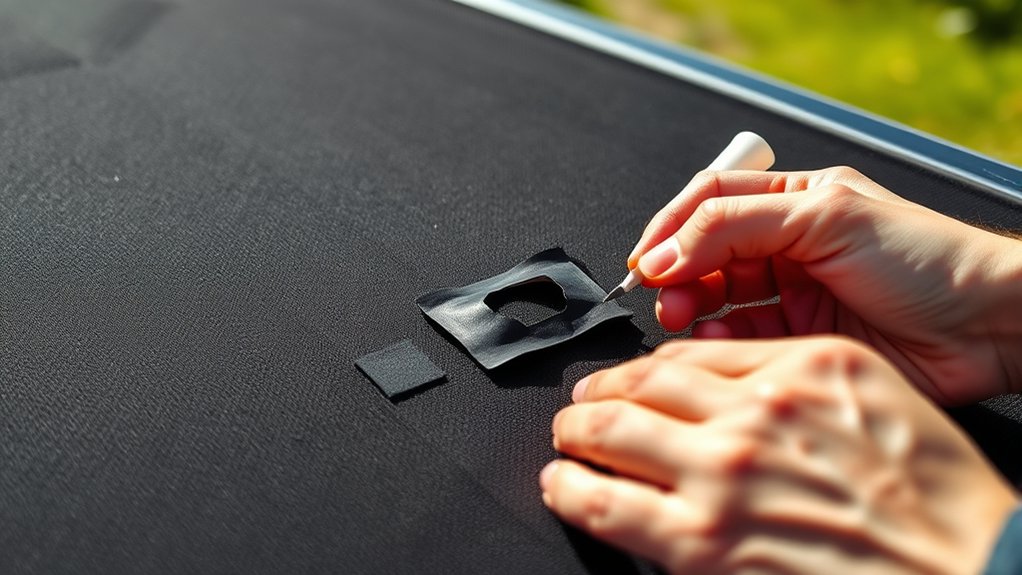
Choose a patch made from matching material and cut it with rounded corners, making it slightly larger than the hole.
Make sure the area around the hole is clean and dry before applying the patch.
Press it firmly in place and smooth out any air bubbles for a secure, lasting repair.
Selecting the Right Patch
How do you pick the right patch material to guarantee a durable repair? Start by matching your patch to your cover’s fabric. Use vinyl patches for vinyl covers or heavy-duty outdoor fabric for fabric covers.
Make sure the patch is at least 1-2 inches larger than the hole, with rounded corners to prevent peeling. Before applying, thoroughly clean the area around the hole to remove dirt and oils, which helps with strong adhesion.
Use scissors or a utility knife to cut the patch precisely, avoiding frayed edges. For secure bonding, choose a patch with adhesive or use compatible outdoor adhesive tape.
Proper Patch Application
Wondering how to guarantee your patch stays in place and provides a lasting fix? First, cut a patch slightly larger than the hole, rounding the corners to prevent peeling.
Verify that the patch material matches the cover’s fabric or vinyl for flexibility and durability. Before applying, clean the area thoroughly to remove dirt and oil, which helps with proper adhesion.
Apply a suitable adhesive evenly to the patch, then carefully place it over the hole, pressing firmly to eliminate air bubbles. Make sure to smooth out the patch, extending beyond the edges of the hole for a secure seal.
Allow the adhesive to cure according to the manufacturer’s instructions before exposing the cover to water or stress. Proper patch application ensures a durable, waterproof repair.
Seal the Patch for Waterproof Protection
Once you’ve applied the patch, you need to seal the edges thoroughly to guarantee waterproof protection. Use a high-quality sealant like silicone or seam sealer, and consider applying multiple layers for added security.
Regularly check the area for cracks or peeling, and reapply sealant as needed to keep your cover watertight.
Ensure Proper Adhesion
To make sure your patch stays waterproof and sticks well, it’s important to seal the edges properly with a compatible sealant or adhesive recommended by the patch manufacturer.
First, check that the area is thoroughly clean to help the adhesive bond better. When applying the patch, press it down smoothly, avoiding wrinkles or air bubbles, which can weaken the adhesion.
Use an appropriate waterproof sealant or adhesive to seal the edges tightly, following the manufacturer’s instructions.
After applying, give it enough time to cure before exposing it to water or stress. This curing process ensures the adhesive bonds completely, creating a strong, waterproof seal.
Once it’s cured, gently test the seal by spraying water over the patched area to make sure it’s properly sealed and protected.
Apply Additional Sealant
Applying an additional sealant over the patched area is an essential step to guarantee maximum waterproof protection. You should choose a compatible sealant like silicone or RV sealant to coat the patch thoroughly.
Make sure to apply the sealant evenly, allowing it to penetrate all edges for a secure seal. Use a caulk gun or brush to spread a thin layer, avoiding gaps or air bubbles that could weaken waterproofing.
Once applied, let the sealant cure fully according to the manufacturer’s instructions, typically 24 hours, before exposing the cover to water or outdoor elements. Remember to reapply sealant periodically, especially after cleaning or if you notice any cracks or peeling.
This ongoing maintenance ensures a continuous waterproof barrier over the repaired area.
Repair or Replace Damaged Seals and Weatherstripping
Damaged seals and weatherstripping can compromise your tonneau cover’s water resistance, but replacing them is straightforward with the right materials.
You should regularly inspect seals for cracks, hardening, or compression, and replace any damage promptly to keep it waterproof. Use adhesive-backed rubber or foam strips designed for automotive use to ensure a proper fit.
Before installing new weatherstripping, apply a high-quality silicone sealant around the edges for an extra waterproof barrier. Carefully remove old weatherstripping with a gasket scraper or plastic pry tool to avoid damaging the surface.
Properly aligned and snugly fitted seals are essential for preventing leaks. Periodic checks, especially after heavy rain or snow, help ensure your seals stay effective and your water resistance remains intact.
Test Your Repair for Water Leaks and Water Resistance
Once you’ve finished your repair, it’s time to test if it’s really holding up against water. Start with a leak test by spraying water over the patched area using a garden hose. Watch from inside the truck bed to see if anything’s getting through.
Next, mix some dish soap with water and apply it on the patch. If bubbles form, it means water or air is escaping through the seal or edges. Gradually increase the water pressure to make sure the patch stays sealed under different conditions.
Check all edges carefully for gaps or signs of water getting in. Keep an eye on the repair over time, especially during rain or after washing the truck. This helps verify if the patch remains water-resistant.
If you find leaks, reseal or reinforce the patch as needed. The goal is to make sure everything stays watertight and secure.
Maintain Your Tonneau Cover to Prevent Future Damage
To keep your tonneau cover in top shape and avoid future damage, regular inspections are a must. Check your cover often for signs of wear, tears, or loose hardware, catching problems early before they get worse.
Cleaning and conditioning vinyl or fabric covers with the right products helps keep them flexible and prevents cracking. Be sure to remove snow, ice, and heavy debris promptly to lessen stress and avoid tearing.
Make sure all seals, straps, and fasteners are secure and properly aligned to prevent gaps that could cause damage. Applying a UV protectant each year shields your cover from sun damage and extends its lifespan.
Frequently Asked Questions
How to Patch a Hole in a Tonneau Cover?
To patch a hole in your tonneau cover, start by cleaning and drying the area thoroughly.
Cut a slightly larger patch with rounded edges from vinyl or fabric. Apply a strong adhesive or vinyl repair glue to the patch, then press it firmly over the hole.
Seal the edges with waterproof tape like Flex Seal Tape for extra durability. Let it cure for 24-48 hours before exposing it to water or stress.
How to Patch Small Holes in Truck Bed?
To mend small holes in your truck bed, think of it as giving your truck a tiny spa treatment. First, clean and dry the area thoroughly.
Cut a patch slightly larger than the hole, then apply waterproof adhesive or vinyl repair glue. Press the patch firmly, smoothing out air bubbles with a roller.
Let it cure for 24 hours, and your truck’s bed will be ready to brave the elements again.
How to Repair Puncture Holes in Vinyl?
To repair puncture holes in vinyl, start by thoroughly cleaning the area with rubbing alcohol and letting it dry.
Next, cut a vinyl repair patch that’s slightly bigger than the hole, preferably with rounded corners.
Apply a strong vinyl adhesive or repair kit, then press the patch firmly over the puncture.
For extra waterproofing, seal the edges with waterproof sealant or vinyl cement.
Make sure to regularly check the repair to ensure it stays secure and durable.
Can Tonneau Covers Be Fixed?
Yes, you can fix tonneau covers. It’s often a cost-effective way to restore minor damages, especially with small tears or holes in vinyl or fabric covers. You’ll want to use waterproof repair kits, patches, or specific adhesives suited to your cover’s material.
Keep in mind that proper application guarantees a durable fix. When damage is more severe, replacing parts or the entire cover might be necessary. But many repairs work well with patience.
Conclusion
With your patch in place, think of your tonneau cover as a sturdy dam, holding back the rushing river of the elements. Just like a dam needs regular care to stay strong, your cover benefits from ongoing maintenance to keep those waters at bay.
Each repair is like reinforcing your shield, turning vulnerability into resilience. It’s about protecting your gear and keeping your truck bed safe from the weather.
By following these steps, you’re not just fixing a hole—you’re safeguarding your adventures and preserving your journey ahead. A well-maintained tonneau cover means peace of mind on every trip.