How Long Does Fuel Injector Cleaner Take to Work?
Are you tired of sluggish acceleration and poor fuel economy? You’re not alone—many drivers struggle with engine deposits that slow things down.
Luckily, fuel injector cleaner can help, but you might wonder how long it takes to see results.
In most cases, you’ll notice the effects of fuel injector cleaner after just one tank of fuel, especially if your deposits are light. For moderate buildup, it may take a few tanks over several trips to see improvements like smoother acceleration and better fuel economy.
Heavy deposits can require more time or professional help.
Keep in mind, the severity of your engine’s deposits influences how quickly cleaning happens—stick around to learn more about maximizing results.
Key Takeaways
- Improvements can be noticed after one tank of fuel, especially with light deposits.
- Heavier buildup may require multiple tanks over several cycles to see results.
- Regular use helps prevent deposits from getting heavy, which can cut down on cleaning time.
- Driving at highway speeds after treatment can help speed up the cleaning process.
- If there’s severe clogging, professional cleaning might be necessary since chemical cleaners work gradually.
How Quickly Do Fuel Injector Cleaners Show Results?
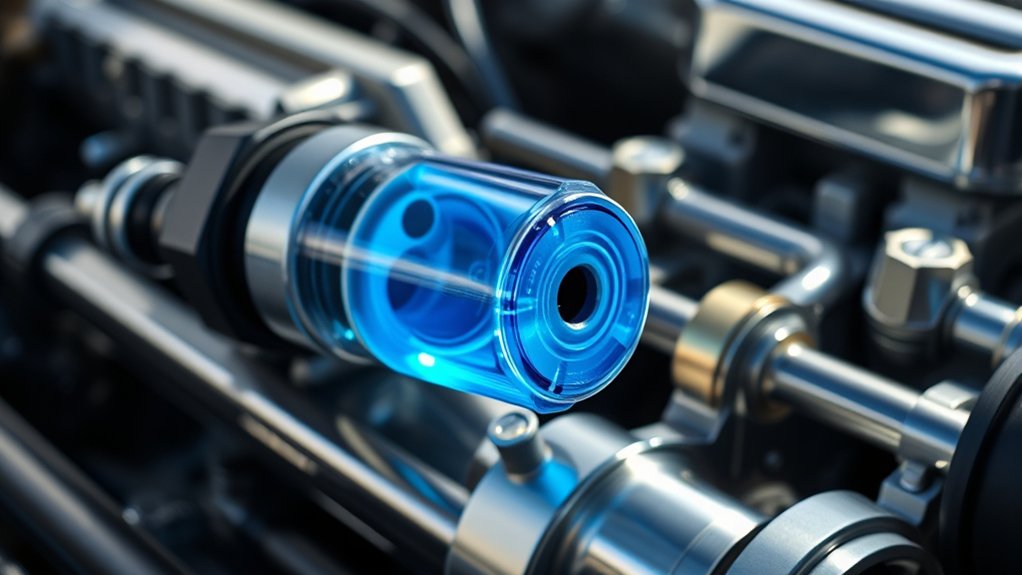
How quickly do fuel injector cleaners show results?
You might notice improvements after just one tank of fuel with the cleaner.
The speed of results depends on how much deposits are clogging your injectors and how concentrated the cleaner is.
Light buildup may clear within a few hundred miles, leading to smoother engine performance and better throttle response.
Heavier deposits can take multiple tanks to see real change, especially if you stay consistent with use.
Many drivers feel a difference in acceleration and smoother running after driving 20-30 minutes after applying the cleaner.
Many drivers notice improved acceleration and smoother engine performance within 20-30 minutes of using the cleaner.
Keep in mind, dramatic changes right away are unlikely.
Regular use over several tanks gradually keeps your injectors cleaner and helps maintain optimal engine performance, preventing future deposit buildup.
How Do Fuel Injector Cleaners Work Inside Your Engine?
When you add fuel injector cleaner, it works by breaking down stubborn deposits like varnish and carbon that clog your system. The cleaner mixes with your fuel, going to work on internal parts such as injectors and valves to improve spray patterns and fuel atomization.
Over time, this process helps restore engine performance, making your engine run smoother and more efficiently.
Chemical Breakdown of Deposits
Fuel injector cleaners work by releasing powerful chemical agents that target and dissolve stubborn deposits inside your engine. These agents, including detergents and PEA (polyether amines), break down buildup on the nozzles and internal components without needing disassembly.
When added to your fuel tank, the cleaner mixes with fuel and is carried to the injectors during engine operation. It actively works to remove deposits and restore proper function.
The chemicals specifically attack varnish, carbon, and other contaminants, helping to improve spray patterns and fuel atomization. Detergents dissolve varnish and carbon deposits, while PEA breaks down stubborn buildup effectively.
Internal chemical breakdown restores injector performance, making sure they operate smoothly. Lighter deposits are removed faster, but heavier buildup may take a bit more time to clear out.
Fuel System Integration
Once you add a fuel injector cleaner to your tank, it mixes with the fuel and starts flowing through the entire fuel system. As it moves with the fuel, the chemical agents target injector deposits, varnish, and carbon buildup inside.
These cleaners help clean the fuel injectors, nozzles, and valves from the inside out, restoring proper spray patterns. This process happens while the engine runs, improving fuel atomization and combustion efficiency.
The cleaner’s effectiveness depends on contact time, deposit severity, and engine conditions. You’ll often notice improvements after a few tanks. By integrating smoothly into your fuel system, the cleaner helps maintain ideal engine performance and fuel efficiency without disassembly or complex repairs.
Engine Performance Restoration
Fuel injector cleaners work by delivering powerful chemical agents that dissolve varnish, carbon deposits, and other contaminants inside your engine. This process restores proper spray patterns, improving overall engine performance.
As the cleaner mixes with fuel, it internally cleans injectors, valves, and combustion chambers without needing disassembly. You’ll notice effects quickly—within a few driving sessions—as deposits break down.
Using a fuel injector cleaner improves fuel atomization, leading to more efficient combustion. This results in smoother acceleration, better throttle response, and increased fuel economy.
Regular use helps prevent buildup, keeping your engine running at its best over time. By targeting internal and external deposits, a fuel injector cleaner ensures your engine runs more smoothly and efficiently, restoring power and reducing emissions for a healthier, more responsive vehicle.
What Factors Affect How Fast a Fuel Injector Cleaner Works?
Several factors influence how quickly a fuel injector cleaner works, including your engine’s condition and age. These can affect how easily deposits are removed.
The type and strength of the cleaner you use also matter, along with your driving habits and conditions. All of these can speed up or slow down the cleaning process.
Knowing what impacts the effectiveness helps you get the best results within a reasonable time frame.
Engine Condition and Age
The age and overall condition of your engine play a big role in how quickly a fuel injector cleaner shows results. If your engine has a lot of deposit buildup or is older, it might take longer to notice improvements.
Engines with higher mileage tend to be more clogged, so they often need several treatments over time for the cleaner to work effectively. The age of your vehicle also matters—newer engines usually have fewer deposits and respond faster.
Poor engine condition, like worn injectors and valves, can slow down the cleaning process. Your treatment time depends on these factors, and it might take a few fuel fills before you see noticeable effects.
Regular maintenance and knowing your engine’s condition can help the cleaner work more efficiently and faster.
Cleaner Concentration and Type
The concentration level and type of cleaner you use are key factors in how quickly deposits are dissolved and removed from your injectors.
A higher cleaner concentration usually means faster deposit removal because it boosts the cleaner’s effectiveness.
The cleaner type also matters; for example, PEA-based formulas are known for their efficiency and speed in breaking down stubborn buildup.
But even with a powerful cleaner, severe deposits can still take some time to clear.
Plus, contact time—the amount of time the cleaner stays in contact with deposits—is really important.
Driving conditions and fuel flow can influence this contact time, affecting how quickly the cleaner works.
Choosing the right cleaner concentration and type helps optimize deposit removal speed.
Driving Habits and Conditions
Driving habits and conditions really influence how quickly a fuel injector cleaner works. Your driving style impacts fuel flow, deposit removal, and how effective the cleaning is.
For faster results, try driving at highway speeds for 20-30 minutes after adding the cleaner. This helps break down deposits more effectively.
Consistent driving habits, like avoiding short trips and stop-and-go traffic, let the cleaner circulate better and dissolve deposits faster.
Driving at higher engine RPMs can also boost fuel flow, speeding up the cleaning process.
Keep in mind, the state of your engine and how heavy the deposits are will affect how long it takes to see improvements. Heavier buildup may need more time and treatments.
Your habits really shape how quickly and effectively the cleaning happens.
Signs That Your Fuel Injector Cleaner Is Effectively Working
When your fuel injector cleaner starts working effectively, you’ll notice a few clear signs. You might feel smoother acceleration and less hesitation, which means deposits are breaking down.
Smoother acceleration and reduced hesitation indicate your fuel injector cleaner is effectively breaking down deposits.
You may also notice a quieter engine during idling and less roughness, showing that the internal cleaning is happening. An improvement in fuel economy after a few tanks suggests the injectors are being properly cleaned.
Additionally, you’ll experience fewer engine misfires and less hesitation during acceleration, confirming that deposits are being removed. Early signs include restored throttle response and more consistent engine performance.
These indicators reassure you that the cleaner is doing its job, leading to better engine performance and efficiency. Keep an eye on these signs to know when your fuel injector cleaner is working at its best.
How Does Deposit Severity Impact Cleaning Time?
When your fuel injectors have light deposits, you’ll notice improvements after just one tank of fuel.
But if there’s moderate to heavy buildup, it can take several tanks and treatments to see real results.
Severe clogging often needs professional help, as cleaners may only partially restore performance.
Deposit Severity and Cleaning Speed
The severity of fuel injector deposits really affects how quickly cleaning can boost engine performance. If your deposits are light, you might see results after just one tank of fuel with injector cleaner, speeding up the cleaning process.
Moderate to heavy buildup usually needs multiple treatments over several tanks before you notice a big difference. Severe clogging can limit how well the cleaner works and might mean you need professional cleaning or even replacing the injectors.
To sum up:
- Light deposits clear quickly, often after one tank
- Moderate deposits take multiple treatments
- Heavy buildup slows down cleaning
- Severe deposits may need expert help
Your deposit severity directly impacts how fast your fuel system can get back to peak performance with injector cleaner.
Light vs. Heavy B Deposits
The severity of your fuel injector deposits plays a big role in how quickly you’ll see cleaning results. Light deposits, like minor carbon buildup, can often be dissolved within one or two tanks of fuel, leading to quick improvements in engine performance.
On the other hand, heavy buildup requires multiple treatment cycles over several tanks before you notice any real change. Severe injector clogging might even limit how effective fuel injector cleaner can be, sometimes needing professional cleaning or replacement.
The reason heavy deposits take longer to clean is that more buildup takes more time to break down. Regular use of fuel injector cleaner helps prevent deposits from becoming heavy, which can reduce overall cleaning time.
Knowing how severe your deposits are helps you set realistic expectations and choose the right approach to restore proper spray patterns and engine function.
Why Do Some Fuel Injector Cleaners Work Faster Than Others?
Certain fuel injector cleaners work faster than others because their formulation and concentration directly impact how quickly they break down deposits. Stronger detergents, like those containing PEA (Polyether Amine), tend to deliver quicker results and higher effectiveness.
The effectiveness also depends on the severity of engine deposits. Lighter buildups clear up after just one tank, while heavier deposits may take multiple tanks. Proper application, such as adding cleaner to a full tank and driving under ideal conditions, can speed up the process.
Furthermore, the engine’s condition and age influence cleaning speed. Higher concentration formulas clean faster. PEA-based cleaners outperform solvent-only options.
Lighter deposits respond more quickly, and a better engine condition accelerates results.
Tips to Maximize the Speed of Fuel Injector Cleaning Results
Maximizing the speed of fuel injector cleaning results depends on how you use the cleaner and drive afterward. To speed up deposit removal, use a concentrated fuel injector cleaner and add it to nearly full tanks, making sure you get the right dosage.
After applying the cleaner, driving at highway speeds for 20-30 minutes helps improve fuel flow and speeds up the cleaning process. Avoid short trips right after treatment, as they can reduce the cleaner’s effectiveness.
Regular use of injector cleaners every 3,000 to 5,000 miles keeps your engine performing at its best and leads to faster results over time. By following these tips, you can ensure your fuel injector cleaner works more efficiently, reducing deposits faster and keeping your engine healthier.
Can You Speed Up the Cleaning Process Without Causing Damage?
While it might seem tempting to speed up the fuel injector cleaning process, pushing the limits can cause more harm than good. Using a higher concentration of fuel injector cleaner won’t speed things up and might damage engine parts.
Increasing driving speed or RPMs can help spread the cleaner faster, but overdoing it risks engine damage. Running the engine at high speeds after adding cleaner might seem effective, but it can put stress on engine components.
To keep the cleaning process healthy, stick to recommended intervals and proper vehicle maintenance. Avoid over-concentrating fuel injector cleaner and don’t push driving speeds or RPMs excessively.
Follow the manufacturer’s suggested cleaning schedule and prioritize regular maintenance for the best results.
How Long Before You Notice Improved Engine Performance?
You can often notice improvements in your engine’s performance after just one tank of fuel treated with injector cleaner. Early signs include smoother acceleration, quieter idling, and better throttle response.
Typically, improvements become noticeable within a few driving sessions, usually after 1 to 3 tanks. Light deposits can show benefits quickly, while heavier buildup might take several tanks over weeks to see a real change.
How fast you notice improvements depends on how severe the deposits are and the concentration of the cleaner used. Consistent use over multiple tanks helps boost overall engine performance and fuel efficiency.
Generally, you’ll start feeling these improvements after the first few fill-ups, especially if deposits are light.
When Should You Seek Professional Fuel Injector Cleaning?
Sometimes, even if you regularly use fuel injector cleaner, you might notice that your engine’s performance doesn’t get better or even seems to get worse. When this happens, it’s probably time to get some professional help.
You should consider expert cleaning if you experience persistent rough idling, misfires, or engine stalls despite using treatments.
Low fuel efficiency and unchanged throttle response are also signs that it’s time to see a professional.
If your check engine light stays on or diagnostic codes point to injector issues, don’t ignore them.
Severely clogged or damaged injectors that don’t improve with additives usually need mechanical cleaning or replacement.
Recognizing these signs helps ensure you get the right diagnosis and repairs to bring back your engine’s best performance.
Frequently Asked Questions
How Long Before Fuel Injector Cleaner Starts Working?
Fuel injector cleaner usually starts working within the first few tanks of fuel, often showing noticeable improvements after 1 to 3 tanks. You’ll likely notice smoother acceleration, quieter idling, and less hesitation early on.
Heavier deposits may take longer to clear, so it might require multiple tanks to see significant results. For the best effects, drive 20-30 minutes at highway speeds after adding the cleaner, and be patient as it gradually boosts your engine’s performance.
What Are Signs of a Clogged Fuel Injector?
You’ll notice signs of a clogged fuel injector through engine misfires, rough idling, and hesitation during acceleration. A drop in fuel economy and a check engine light might also appear, indicating irregular fuel delivery.
If your engine stalls, struggles to start, or makes knocking or sputtering noises, these are signs of severe clogging. Addressing these issues promptly helps restore smooth engine performance and efficiency.
Will Injector Cleaner Fix a Rough Idle?
Yes, injector cleaner can fix a rough idle. Think of it like cleaning a clogged artery—removing deposits restores proper flow.
You might notice improvements within a few tanks of fuel, especially if deposits are mild. Sometimes, heavy buildup takes multiple treatments.
Regular use keeps your engine running smoothly, preventing rough idles. So, with patience, injector cleaner can breathe new life into your engine’s performance, making your ride smoother and more reliable.
What Happens if You Put Too Much Fuel Injector Cleaner in Your Tank?
If you put too much fuel injector cleaner in your tank, you might run into engine problems. You could notice rough idling, hesitation, or misfires because the excess cleaner loosens deposits too quickly.
This can cause clogs in filters or fuel lines, which isn’t good. It can also thin out your fuel mixture, leading to decreased performance and worse fuel economy.
In serious cases, overusing cleaner might damage engine parts. That could mean costly repairs, so always stick to the recommended amount.
Conclusion
While fuel injector cleaners can start showing results within a few hundred miles, the true effectiveness depends on how severe the deposits are and the overall engine condition.
Remarkably, some experts suggest that using a quality cleaner regularly actually prevents buildup before it causes issues, rather than just fixing existing problems.
So, don’t wait until your performance drops. Consistent cleaning with fuel injector cleaner might be your best bet for a smoother, more efficient engine.
Keep up with maintenance, and your vehicle will thank you.