How Many Spark Plugs Does a Car Have
Are you tired of wondering why your car isn’t running smoothly or why it’s hard to start? Many car owners struggle with understanding their engine parts, especially spark plugs, which are essential for your vehicle’s performance.
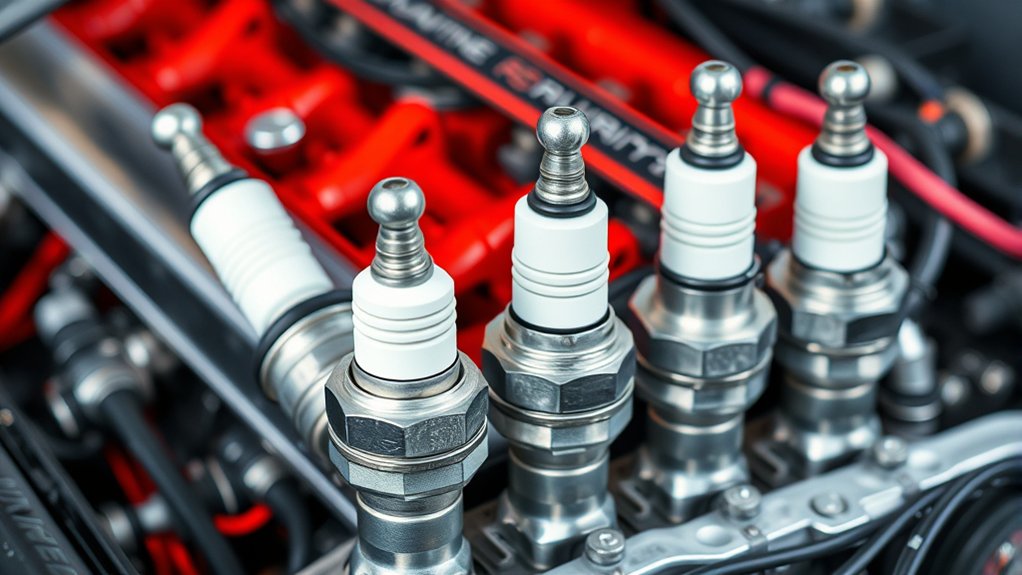
Most cars have one spark plug per cylinder, so the total depends on your engine’s design. A 4-cylinder engine needs four, while a V6 requires six, and V8 engines have eight spark plugs. Some vehicles even use multiple spark plugs per cylinder for better performance.
To find out how many spark plugs your car needs, check your owner’s manual or inspect the engine. Keep going to learn more about spark plug numbers and maintenance.
Key Takeaways
- Most cars have one spark plug per cylinder, which usually means 4, 6, or 8 plugs depending on the size of the engine.
- Inline engines typically have one spark plug per cylinder. V-shaped engines can sometimes have multiple plugs per cylinder.
- Some high-performance or older vehicles might have two spark plugs for each cylinder to improve combustion.
- To find out the exact number, you can check the owner’s manual or just take a quick look at the ignition system.
- The total number of spark plugs really depends on the engine design, configuration, and what the manufacturer specifies.
How Many Spark Plugs Does My Car Need?
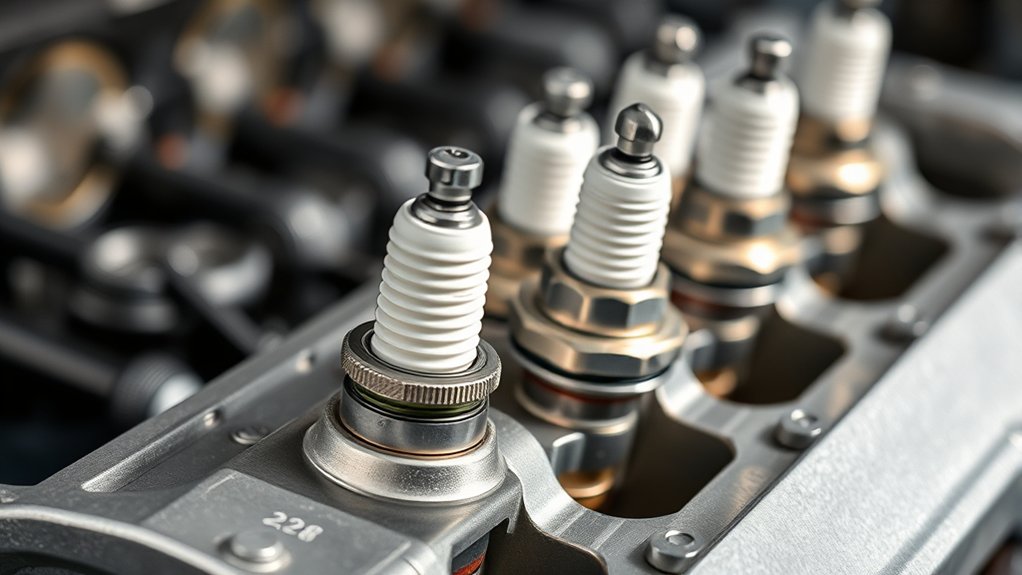
Most cars need one spark plug per cylinder to ignite the fuel-air mixture effectively. The number of spark plugs your engine requires depends on its cylinder count.
For example, a 4-cylinder engine uses 4 spark plugs, while a V6 engine needs 6. A V8 engine generally requires 8. Some vehicles may have dual ignition systems, using two spark plugs per cylinder, but that’s less common.
To find out exactly how many spark plugs your engine needs, check your owner’s manual or look at the ignition wires or coil packs. Matching the correct number of spark plugs to your engine’s cylinders is vital for peak performance and efficiency.
Proper matching ensures smooth operation and helps maintain engine health over time.
What Factors Determine Spark Plug Count in Engines?
The number of spark plugs an engine needs mainly depends on its design and layout. Most engines have one spark plug per cylinder, so a four-cylinder engine usually has four spark plugs.
Most engines have one spark plug per cylinder, with some high-performance models using more for improved ignition.
Some engines, especially high-performance or older models, have two spark plugs per cylinder for better ignition. The engine’s layout—like inline, V-shaped, or flat—also affects how many spark plugs are needed and where they’re placed.
You can often see the number of spark plugs by checking ignition coils or wires. Manufacturers specify the exact number based on the engine’s design and cylinder count.
In the end, the main factors that determine how many spark plugs an engine needs are its design and configuration.
Do Some Engines Use Multiple Spark Plugs Per Cylinder? Why?
Some engines use multiple spark plugs per cylinder to improve ignition accuracy and combustion efficiency. This setup can boost power output and make the engine run more smoothly, especially in high-performance or turbocharged vehicles.
Improved Ignition Accuracy
Ever wonder why some high-performance engines have multiple spark plugs per cylinder? It’s because adding more spark plugs can improve ignition accuracy, making combustion more reliable.
With dual ignition systems, the spark ignites the fuel-air mixture more precisely, reducing misfires. This setup helps develop a better flame kernel and speeds up combustion, boosting engine efficiency.
The table below shows how multiple spark plugs influence ignition performance:
| Benefit | Explanation | Application |
|---|---|---|
| Better Flame Kernel Development | Sparks ignite fuel more evenly | High-performance engines |
| Faster Combustion | Quicker ignition leads to smoother running | Racing and sports cars |
| Reduced Misfires | Improved ignition accuracy minimizes errors | Modern high-performance engines |
This setup results in smoother operation and lower emissions, helping your engine run better.
Enhanced Combustion Efficiency
To achieve more complete and efficient combustion, some engines use multiple spark plugs per cylinder. This setup helps ensure the air-fuel mixture ignites more evenly, leading to better combustion efficiency.
Multiple spark plugs also improve ignition reliability, especially in high-performance or larger engines. They provide a stronger flame front, which helps burn fuel more completely, boosting power and fuel economy.
Using several sparks allows for more precise control of ignition timing. This helps reduce emissions and prevent engine knocking.
While most standard vehicles rely on a single spark plug per cylinder, engines designed for better performance or efficiency often have two or more spark plugs. This helps optimize combustion and overall engine performance.
Increased Power Output
Why do certain engines feature multiple spark plugs per cylinder? The main goal is to boost increased power output by ensuring more complete combustion. Multiple spark plugs can ignite the air-fuel mixture more efficiently, especially at high RPMs.
This leads to smoother operation and higher horsepower. This setup is common in high-performance engines like racing cars, where maximizing power is critical. Vehicles with dual ignition systems often have two spark plugs per cylinder for improved ignition reliability and efficiency.
| Spark Plugs | Benefits | Applications |
|---|---|---|
| Multiple | Better combustion, increased horsepower, smoother running | Race cars, high-performance engines |
| Dual systems | Improved ignition reliability | Performance vehicles |
| High RPMs | Max power output | Sports engines |
How Can I Tell How Many Spark Plugs Are in My Vehicle?
You can find out how many spark plugs your vehicle has by checking the owner’s manual or service documentation.
Alternatively, you can open the hood and visually inspect the ignition wires, coil packs, or the spark plugs themselves.
Counting the cylinders in your engine also helps estimate the total number of spark plugs needed.
Visual Inspection Method
By opening the hood and visually inspecting the ignition system, you can usually tell how many spark plugs your vehicle has.
Look directly at the spark plugs or check the ignition coils and wires connected to each cylinder.
Count the number of spark plug wires or coil packs, as each one typically corresponds to a spark plug.
In engines with coil-on-plug systems, each coil attaches directly to a spark plug, so counting coils shows you the total number of spark plugs.
If your vehicle has a distributor, examine the distributor cap and rotor.
The contact points often match the number of spark plugs.
This simple visual check helps you quickly find out how many spark plugs your vehicle contains.
Consult Vehicle Manual
Checking your vehicle’s manual is one of the most reliable ways to find out how many spark plugs it has. Your vehicle manual provides specific engine specifications, including the number of spark plugs needed. It’s a quick reference that saves you time and guesswork.
To get accurate information, look for sections on engine components or ignition system details. The manual often lists the exact number of spark plugs for your model. Understanding your engine’s cylinder configuration—like 4-cylinder, V6, or V8—can also help confirm the number of spark plugs required.
Cross-reference with repair guides or databases, check manufacturer specifications, and inspect engine layout diagrams. Confirming your model and year can help you find even more precise details.
What Are the Signs My Spark Plugs Need Replacing?
Worn or faulty spark plugs often give off clear signs. If your engine misfires, runs roughly, or has trouble idling, it’s probably time to check the spark plugs.
You might also notice your fuel efficiency dropping or having difficulty starting your car. When spark plugs start to fail, the check engine light may come on as a warning.
Engine hesitation or chugging during acceleration are common signs of spark plug issues. During inspection, look for visible damage like cracks or fouling—these mean they need replacing.
Ignoring these symptoms can lead to more engine problems. Staying alert to these signs helps keep your car running smoothly.
When Is the Best Time to Replace Spark Plugs?
Knowing when to replace your spark plugs depends on the manufacturer’s recommended interval, usually between 30,000 and 100,000 miles.
Keep an eye out for signs like difficulty starting, misfires, or rough idling, which suggest it’s time for a change.
Regular inspections help make sure your spark plugs stay in good shape and your engine runs smoothly.
Recommended Replacement Intervals
The best time to replace your spark plugs depends on your vehicle’s make, model, and driving habits. Generally, most manufacturers recommend replacing conventional plugs every 30,000 to 50,000 miles. For long-life types like platinum or iridium, you can wait up to 150,000 miles.
Your driving environment also matters. City driving with frequent stops may require sooner replacement, while highway driving can extend spark plug life. Regular inspection during routine maintenance helps identify worn or fouled spark plugs and prevents engine performance issues.
Watch out for signs like rough idling, difficulty starting, or decreased fuel efficiency. Following your manufacturer’s guidelines and consulting your owner’s manual ensures your spark plugs are replaced at the right intervals for peak engine health.
Signs Indicating Replacement
Recognizing when to replace your spark plugs is key to keeping your engine running smoothly. Signs like difficulty starting the engine, rough idling, and higher fuel consumption often point to worn spark plugs.
If your check engine light comes on or you notice misfires and hesitation during acceleration, it’s a clear sign they need replacing. Reduced engine performance and rough running usually mean they’re nearing the end of their lifespan.
Typically, you should replace spark plugs every 30,000 to 100,000 miles, depending on your vehicle and the type of spark plugs you have. Keep an eye out for these signs to maintain optimal engine performance.
| Sign | What to Do |
|---|---|
| Rough idling or misfires | Replace spark plugs to help your engine run smoothly |
| Increased fuel use | Consider replacing spark plugs sooner |
| Check engine light | Get them inspected and replaced if necessary |
How Much Does Replacing Spark Plugs Cost?
Replacing spark plugs can vary in cost depending on your vehicle and the type of plugs you choose. The total replacement cost typically ranges from $50 to $200 for parts, but high-performance or long-life spark plugs can cost over $200.
Labor costs also fluctuate based on engine accessibility and the number of plugs involved. Complex engine designs with hard-to-reach spark plugs tend to drive up the overall replacement cost.
Choosing between standard and high-performance spark plugs can make a big difference in price. High-performance options often last longer and boost engine efficiency, but they come at a higher initial cost.
The design of your engine impacts labor charges because some engines make it easier or harder to access the spark plugs. If your engine is tricky to work on, expect to pay more for installation.
Regular spark plug maintenance helps your engine run smoothly, improves fuel efficiency, and prevents costly repairs down the line. Keeping up with replacement schedules can save you money over time.
Timely replacement of spark plugs can lead to long-term savings by maintaining optimal engine performance and preventing damage to other components. It’s a small investment that pays off in the long run.
Can My Car Run Properly With Fewer or Missing Spark Plugs?
Most cars need all their spark plugs to run smoothly; missing some can cause misfires and rough engine performance. If your engine has four, it relies on each spark plug to ignite the fuel-air mixture properly.
Missing or faulty spark plugs can lead to incomplete combustion, which results in reduced power, higher emissions, and lower fuel efficiency. While a single-cylinder engine can’t run without its spark plug, multi-cylinder engines might still run but poorly if some plugs are missing.
Missing or faulty spark plugs cause incomplete combustion, reducing power, increasing emissions, and lowering fuel efficiency.
Running a car with missing or damaged spark plugs puts extra strain on the engine and risks long-term damage. Some vehicles may tolerate a few missing spark plugs temporarily, but overall performance and engine health will suffer.
For peak operation, all spark plugs should be functioning correctly.
Are There Engines That Don’t Use Spark Plugs at All?
Are there engines that don’t use spark plugs at all? Yes, many modern engines and vehicles operate without them. Electric vehicles (EVs) and hybrid engines rely solely on electric motors, so they don’t need spark plugs for ignition.
Diesel engines also skip spark plugs. Instead, they ignite fuel through compression, using glow plugs only for cold starts. Some alternative fuel engines, like those running on compressed natural gas (CNG), also don’t require spark plugs.
Advances in engine technology have led to rotary engines and certain electric propulsion systems that operate without spark plugs. Electric motors powering EVs eliminate the need for spark plugs altogether. Diesel engines use compression, not sparks, for fuel ignition.
CNG engines don’t rely on spark plugs. Some rotary engines operate without traditional spark ignition as well.
How Can I Extend the Life of My Spark Plugs and Keep My Engine Running Smoothly?
To keep your engine running smoothly and extend the life of your spark plugs, regular maintenance is key. Check and replace your spark plugs as recommended by the manufacturer, usually every 30,000 to 100,000 miles, to prevent premature wear.
Regularly check and replace spark plugs to ensure smooth engine performance and prevent premature wear.
Use high-quality spark plugs made from durable materials like platinum or iridium. These last longer and perform better, helping you avoid unnecessary replacements.
Keep your engine’s ignition system components clean and in good shape. This ensures proper spark delivery and reduces stress on your spark plugs.
Avoid aggressive driving like rapid acceleration and high speeds, as these habits speed up wear and tear on your spark plugs.
Also, maintain proper oil levels and fix any oil leaks promptly. Oil contamination can damage spark plugs and shorten their lifespan.
Frequently Asked Questions
Does 4 Cylinder Mean 4 Spark Plugs?
Yes, a 4-cylinder engine usually means you have 4 spark plugs, with each plug igniting one cylinder. Most standard 4-cylinder engines have one spark plug per cylinder, which helps the engine run smoothly.
Sometimes, engines use dual ignition systems, doubling the number of spark plugs, but that’s less common. Regularly check and replace your spark plugs to keep your engine firing efficiently and avoid performance issues.
What Are Signs of Bad Spark Plugs?
Bad spark plugs are like a misfiring drum, disrupting your car’s rhythm. You might notice engine misfires, hesitation, or rough idling, making your drive less smooth.
A decrease in fuel efficiency, longer crank times, or difficulty starting are also signs. If your check engine light comes on or the exhaust smells unburned fuel, those are clues your spark plugs need attention.
Stay alert to keep your engine running clean and smooth.
Can You Drive With 3 Out of 4 Spark Plugs?
You can technically drive with three out of four spark plugs, but it’s not a good idea.
Having one missing or faulty spark plug causes misfires, reduces power, and boosts emissions.
Over time, your engine can get damaged, and your fuel economy will suffer.
Missing a spark plug interrupts the combustion process, leading to uneven engine operation and costly repairs.
For your vehicle’s safety and long-term health, it’s best to replace any faulty or missing spark plugs as soon as you notice the issue.
How Much Does It Cost to Replace 4 Spark Plugs?
Replacing four spark plugs usually costs between $100 and $300, depending on your vehicle and the type of spark plugs used. Labor fees can range from $50 to $150, depending on how accessible the engine is.
High-performance or long-life plugs tend to be more expensive, and if you want to include additional services like inspecting ignition components, that can add to the cost. Regular replacements help prevent costly engine issues down the line.
Staying on top of this maintenance can save you money in the long run.
Conclusion
Understanding your car’s spark plugs helps keep it running smoothly—like a well-oiled machine or even a trusty steed from the days of chivalry.
Remember, the number of plugs depends on your engine type, and replacing them at the right time saves you money and hassle.
Stay attentive to signs of wear and tear, and you’ll keep your ride roaring like a dragon—no quest required.
Keep those spark plugs happy, and your engine will thank you. Knowing how many spark plugs your car has is key to keeping it in top shape.