How Do You Make Diesel Fuel in 7 Simple Steps
Many people who want to make their own fuel often feel overwhelmed by the complex process involved. If you’re curious about how to make diesel fuel at home, you’re not alone. It can seem intimidating, but breaking it down into simple steps makes it manageable.
To make diesel fuel in 7 simple steps, you start by choosing and preparing a clean feedstock like used cooking oil, filtering out solids and water. Then, you mix methanol with a catalyst like lye to create methoxide, which you add to heated oil to trigger transesterification.
After the reaction, you separate and wash the biodiesel to remove impurities, then dry and test it for quality. Proper storage is essential to keep your fuel safe and effective—keep exploring for detailed guidance.
Key Takeaways
- Collect and filter clean vegetable or used cooking oil, making sure to remove any solids and water.
- Mix methanol with potassium or sodium hydroxide to create methoxide.
- Heat the oil to around 130-160°F. Then, slowly add the methoxide while stirring vigorously.
- Let the mixture react for 1-2 hours until the layers separate.
- Once done, wash, dry, and filter the biodiesel to make sure it’s pure before storing it.
Learn the Basics of Making Homemade Diesel
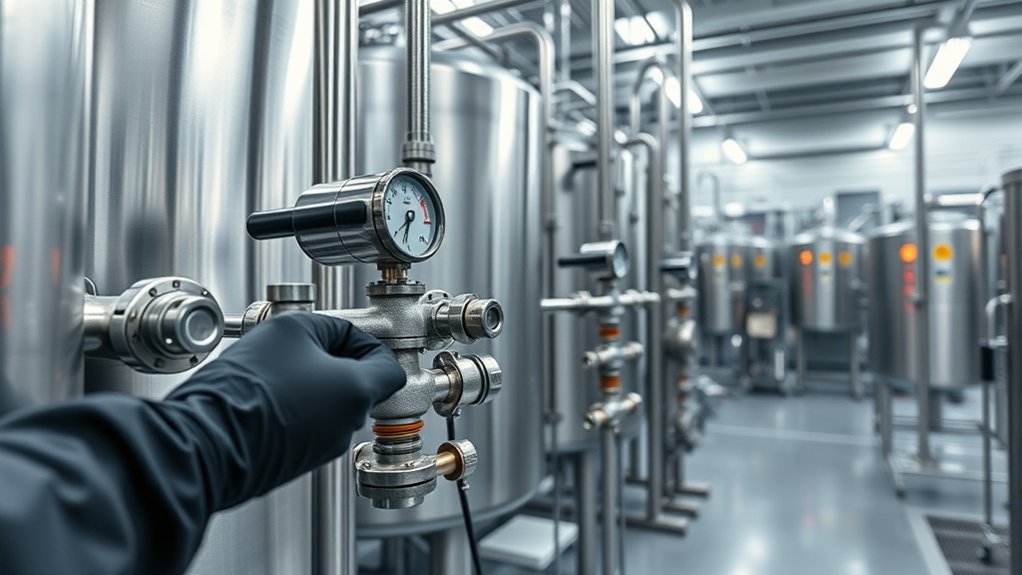
Making homemade diesel starts with refining heavier hydrocarbons from crude oil through distillation. This step separates diesel at medium boiling points in a distillation column, making sure you get the right fuel fraction.
After distillation, you can improve diesel production through hydroprocessing, which uses hydrogen gas and catalysts. This process boosts fuel stability and reduces contaminants like sulfur.
To remove impurities, hydrotreating is used. Here, hydrogen reacts with sulfur to form hydrogen sulfide, which is then separated out.
For better performance, you can blend in fuel additives. These improve combustion, cold flow properties, and engine compatibility.
This combination of refining, distillation, hydroprocessing, and additives makes your homemade diesel safer, more efficient, and better suited for engine use.
Choose and Prepare Your Feedstock Safely and Legally
Ever wondered how to choose the right feedstock for homemade diesel? Start with a clean, low-FFA vegetable oil or used cooking oil. Filtering the feedstock through a fine mesh removes solids, while settling separates water and debris, ensuring better biodiesel production.
Avoid contaminated oils like antifreeze or paint because they can damage engines and are illegal. Always check your local regulations on collecting and using waste oils. Get any necessary permits before starting.
Proper handling of chemicals like methanol and lye is vital for safety. Use well-ventilated areas and wear safety gear to protect yourself.
Mix and React to Convert Oil Into Biodiesel
To convert oil into biodiesel, you need to carefully mix methanol and a catalyst with your prepared feedstock. Make sure to heat and stir the mixture thoroughly to start the transesterification process.
Proper handling and precise timing are key to ensuring a successful reaction and a high-quality end product.
Prepare Feedstock Properly
Preparing feedstock properly is key to efficient biodiesel production. It starts with collecting clean, filtered used vegetable oil or animal fats.
During feedstock prep, filtration gets rid of impurities that can slow down the transesterification process. Filtering makes sure your oil is clean and ready to go.
Heating the oil to about 130-160°F helps reduce viscosity and makes mixing easier. Proper heating ensures a smoother process and a better biodiesel yield.
Use the table below to see the main steps:
| Step | Description |
|---|---|
| Filtration | Remove solids and impurities from used vegetable oil |
| Heating | Warm oil to 130-160°F for a better reaction |
| Quality Check | Make sure the oil is clean and debris-free |
| Storage | Keep in sealed containers until you’re ready to use |
This careful prep helps ensure your feedstock is ready for the chemical reaction.
Mix Chemicals Carefully
How do you guarantee a successful chemical reaction when making biodiesel? It starts with carefully measuring and mixing your chemicals.
Combine the methanol with potassium hydroxide (KOH) or sodium hydroxed (NaOH) to create the methoxide catalyst. Make sure the chemicals are fully dissolved and reacted in a sealed container, shaking vigorously to promote thorough mixing.
Proper mixing ensures the methoxide reacts completely with the oil, forming biodiesel. Keep the container sealed to prevent spills and contamination.
Heating the oil to around 140°F helps improve reaction efficiency. Slowly add the methoxide mixture to the hot oil, maintaining control during transfer.
Allow the mixture to react for 1-2 hours, keeping it agitated and at a consistent temperature for complete conversion.
Initiate Transesterification Reaction
Once the chemicals are fully mixed and reacted in a sealed container, you can begin the transesterification process. During this step, add a catalyst—either KOH or NaOH—to the oil and methanol mixture.
The catalyst speeds up the chemical reaction, helping the oil molecules break down into biodiesel and glycerol. Heating the mixture to around 140°F helps, but thorough mixing is really important.
Vigorous shaking or stirring ensures all reactants combine completely and promotes a uniform reaction. As the transesterification proceeds, larger oil molecules split into shorter methyl ester chains, forming biodiesel.
Maintaining proper conditions, especially temperature and mixing, is key to maximizing biodiesel yield and quality. Once complete, you’ll see the separation of biodiesel and glycerol layers.
Separate and Purify Biodiesel From Glycerin and Impurities
After the transesterification process, separating biodiesel from glycerin and impurities involves a simple settling method. You just let the mixture sit so the glycerin, which is denser, settles at the bottom.
Then, you carefully decant or siphon off the biodiesel layer, leaving glycerin and contaminants behind. To remove impurities effectively, water washing is essential. It helps eliminate residual glycerin, soap, and catalysts.
Multiple water washes and drying steps ensure high purity. Filtering through fine micron filters and heating to remove residual moisture further purify the biodiesel. Here’s a quick overview:
| Step | Purpose | Method |
|---|---|---|
| Settling process | Separate glycerin and impurities | Let mixture settle |
| Water washing | Remove residual contaminants | Rinse with water |
| Filtration | Achieve final purity and clarity | Fine micron filters |
| Drying | Remove moisture | Heating |
| Purification | Prepare for engine use | Final checks |
Wash and Dry Your Biodiesel for Safe Use
To guarantee your biodiesel is safe and reliable for engine use, you need to wash and dry it thoroughly. Biodiesel washing removes residual catalysts, soap, and impurities, ensuring cleaner fuel for your engine.
Water washing is the most common method. Gently mix biodiesel with water and let it settle, so contaminants can separate out. After washing, drying biodiesel is essential to eliminate moisture.
Moisture can cause engine corrosion, poor combustion, and microbial growth. You can dry biodiesel by heating it or passing it through a drying agent like magnesium sulfate for effective moisture removal.
Proper water removal and drying improve fuel purity, stability, and combustion quality. This results in better engine performance and longer storage life.
Test Your Homemade Diesel for Quality and Performance
Testing your homemade diesel for quality and performance is essential to make sure it burns cleanly and meets safety standards. First, measure its cetane number to see how well it ignites; a higher cetane means better combustion.
Next, check the Cold Filter Plugging Point (CFPP) to find out the lowest temperature at which your diesel flows. This helps ensure it’s usable in cold weather. Conduct distillation tests to verify the fuel’s boiling point range and volatility, which are key for consistent engine performance.
Laboratory analysis can also identify impurities, water content, and residual contaminants that might harm your engine. Keeping impurities and water levels low is critical for smooth operation. Regular testing helps ensure your diesel provides reliable ignition, clean combustion, and complies with regional regulations.
Doing these tests regularly helps your engine run efficiently and safely over time.
Store and Handle Your Diesel Safely for Longevity
To keep your diesel fuel fresh and safe, you need to store it properly and handle it carefully.
Using sealed, labeled containers in a cool, dry place helps prevent contamination and degradation.
Regularly inspecting your storage setup ensures you catch issues early and maintain fuel quality.
Proper Storage Techniques
Proper storage of diesel fuel is essential for maintaining its quality and guaranteeing safety. Always use sealed, opaque containers made of materials compatible with petroleum to prevent contamination and degradation.
For larger quantities, store diesel in secure storage tanks equipped with proper fittings and seals. Keep your storage in a cool, dry location away from heat sources, direct sunlight, and ignition hazards to preserve fuel stability.
Regularly inspect tanks and containers for leaks, corrosion, or damage, and clean or replace them as needed. To extend shelf life and prevent microbial growth, add fuel stabilizers or diesel-specific additives.
During cold weather, insulate tanks and consider using fuel heaters or cold flow improvers to prevent gelling and ensure reliable engine performance.
Safe Handling Practices
Handling diesel safely is key to maintaining its quality and preventing accidents. Proper fuel handling involves using protective gear like gloves and goggles to avoid skin contact and inhalation of fumes during transfer and storage.
Storage safety begins with sealing diesel in opaque containers to prevent contamination, evaporation, and UV damage. Always inspect tanks and fittings regularly for leaks, corrosion, or damage to ensure safe containment and prevent spills.
Keep storage areas cool, dry, and well-ventilated, away from heat sources, sparks, and flames to reduce fire hazards. Use appropriate additives or blending techniques to improve cold flow properties in low temperatures.
Frequently Asked Questions
How Do You Make Diesel Fuel?
You make diesel fuel by distilling crude oil. You heat it until it vaporizes, then cool and condense the hydrocarbons at specific heights in a distillation column.
After that, you treat the diesel with hydrogen and catalysts through hydrotreating to remove sulfur and impurities. This process helps improve its stability.
Finally, you blend in additives to boost performance and cold flow properties before storing and transporting the fuel.
What Are the 5 Components of a Diesel Fuel System?
The five main components of a diesel fuel system are the fuel tank, fuel pump, fuel filter, fuel injection pump, and fuel injectors.
You store diesel in the tank, which supplies fuel through the pump that pressurizes it. The filter removes impurities to keep the system clean.
Meanwhile, the injection pump and injectors work together to atomize and deliver precise fuel amounts into the combustion chamber for efficient burning.
What Are the Four Steps of a Diesel Engine?
Did you know diesel engines have been powering vehicles for over a century? You’ll find that the four main steps are intake, compression, power, and exhaust.
First, air is drawn into the cylinder. Then, it’s compressed to create heat. During compression, fuel ignites, pushing the piston down.
Finally, exhaust gases are expelled, completing the cycle. This process makes diesel engines efficient and durable.
What Is the Main Ingredient in Diesel Fuel?
The main ingredient in diesel fuel is hydrocarbons derived from crude oil, mostly long-chain alkanes and cycloalkanes.
You’ll find it mainly composed of saturated hydrocarbons with carbon chains from C10 to C20, including decane and dodecane.
These molecules are produced through refining processes like distillation and cracking, giving diesel its energy density and combustion properties.
This mixture provides the fuel’s essential characteristics for engine performance.
Conclusion
Making your own diesel can be rewarding and cost-effective, especially when you consider that a single gallon of homemade biodiesel can reduce carbon emissions by up to 78%. Imagine powering your vehicle with fuel you created yourself, knowing you’re cutting down on harmful pollutants.
With careful preparation and safety, you can confidently produce clean-burning diesel at home. Just remember, proper handling and testing guarantee your DIY fuel is safe and reliable for your engine.