7 Signs to Identify What Bad Spark Plugs Look Like
Are you tired of your engine misfiring or struggling to start? Many vehicle owners face this issue, and often, the culprit is bad spark plugs. Recognizing the signs early can save you time and money on repairs.
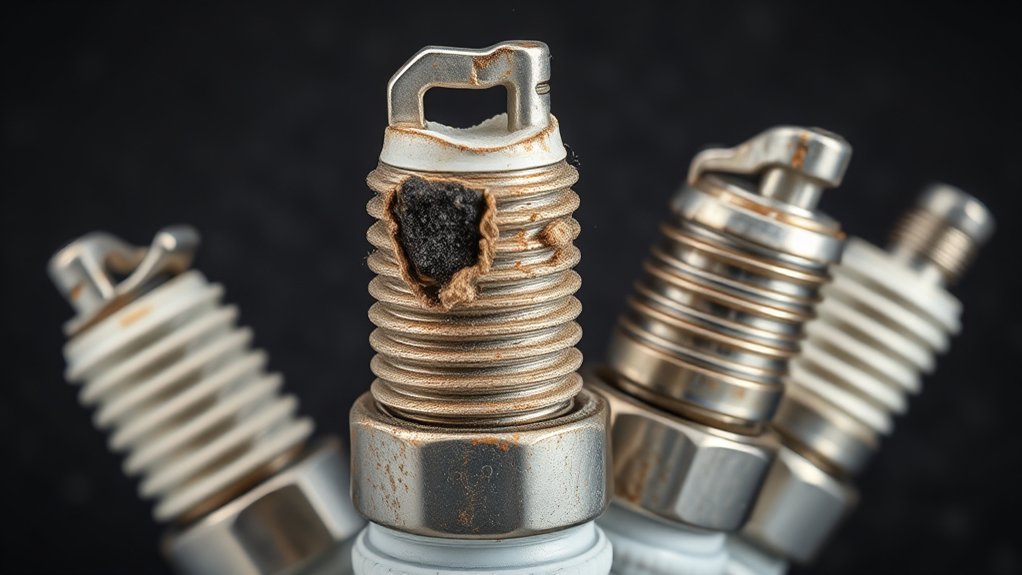
To spot bad spark plugs, look for signs like a light brown or gray insulator tip, shiny or glazed surfaces indicating overheating, and worn or rounded electrodes showing erosion. Heavy black deposits and carbon buildup suggest fouling, while damaged or cracked insulators point to physical wear. Lead fouling appears as yellow-brown spots, affecting performance.
If you notice any of these issues, your spark plug might be failing. Keep exploring to learn more about maintaining your vehicle’s health.
Key Takeaways
- Look for insulator tips that are glazed, blistered, or melted. These signs indicate overheating or damage, which can affect performance.
- Check for heavy deposits of carbon, oil, or soot on the electrode and insulator. Such buildup suggests fouling and can lead to misfires.
- Observe the electrodes; if they are worn, rounded, or have an enlarged gap, it reduces spark efficiency and can cause starting issues.
- Look for deposits like yellowish-brown lead fouling or excessive carbon buildup. These can impair ignition and engine performance.
- Also, keep an eye out for physical damage, such as cracks, chips, or broken ceramic insulators. These are clear signs that the spark plug needs replacing.
How to Recognize Normal, Healthy Spark Plugs
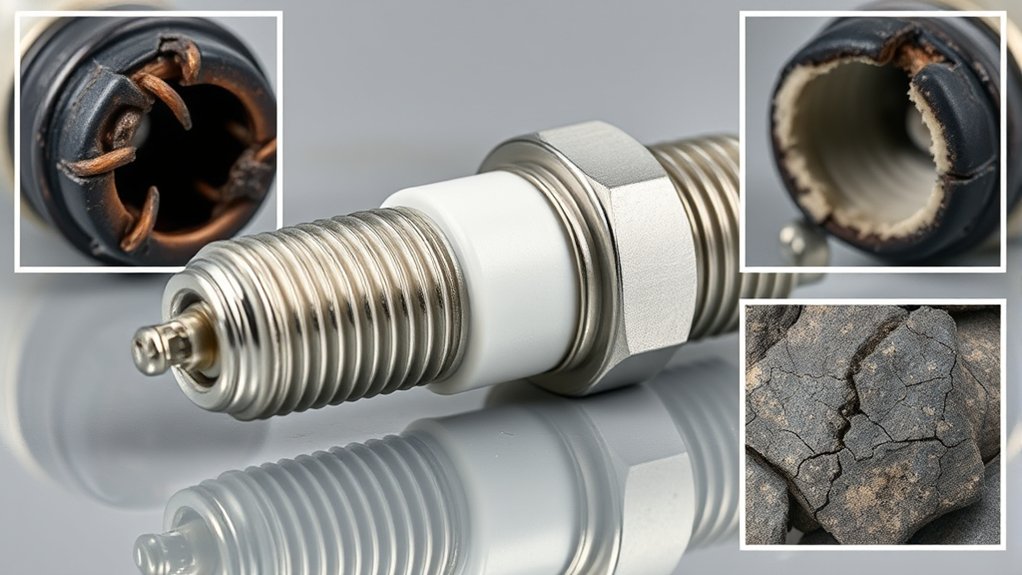
To recognize healthy spark plugs, start by inspecting the insulator tip. It should be light brown or gray, which shows proper combustion.
A healthy spark plug’s insulator tip is light brown or gray, indicating proper combustion and optimal engine performance.
A healthy plug’s insulator surface is smooth, glossy, and free of melting, glazing, or excessive wear.
Check the electrode gap, which should be within the manufacturer’s specified range, usually between 0.6 to 1.1 mm. An incorrect gap can affect spark quality.
The firing end of a good spark plug appears clean and free of heavy carbon, oil, or deposits.
If you see deposits or buildup, it may indicate issues, but their absence suggests the plug is functioning properly.
Resistance measurements above 10 ohms also point to a healthy plug, ensuring reliable spark generation.
Signs of Fouling and Carbon Deposits on Spark Plugs
If your spark plugs are covered with black, oily, or soot-like deposits, it’s a sign they’re fouled and not firing properly.
These carbon deposits can cause misfires, rough idling, and decreased fuel efficiency. Recognizing these signs helps you catch engine issues early before they get worse.
Carbon Fouling Indicators
Black, dry, and sooty deposits on your spark plug’s insulator or electrode tip are clear signs of carbon fouling. These black deposits show that carbon buildup is blocking the spark’s ability to ignite the fuel-air mixture properly.
When your spark plug is heavily carbon-fouled, you might notice increased resistance, which can lead to misfiring and poor engine performance. Symptoms like rough idling, difficulty starting, and reduced fuel efficiency often come with this fouling.
The buildup happens due to prolonged idling, driving at low speeds, or an overly rich air-fuel mixture. Visually, a spark plug covered in a black, crusty coating is a sign of excessive carbon deposits.
Addressing carbon fouling quickly can help restore proper spark quality and keep your engine running smoothly.
Deposits and Engine Health
When your spark plugs develop deposits, it’s a clear sign that something in your engine isn’t running at its best. Fouled spark plugs often have black, dry, and sooty deposits on the insulator and electrode, showing carbon buildup.
Heavy deposits can cause engine misfires, rough idling, and reduced performance by impairing proper spark generation. Usually, excessive carbon buildup happens because of a rich fuel mixture, oil leaks into the combustion chamber, or prolonged idling.
If you see black, oily, or crusty deposits on your spark plugs during a visual check, it points to fouling and potential engine issues. These deposits increase electrical resistance, weaken sparks, and raise the chances of misfires and poor fuel economy.
Addressing these deposits quickly helps keep your engine healthy and performing at its best.
How to Identify Overheating Insulators and Glossy Surfaces
Overheating insulators are easy to spot once you know what to look for because they often develop a distinct glossy or glazed surface. During visual inspections, pay close attention to the insulator tip for any signs of excessive heat.
Here are some key indicators:
- Glossy surfaces: A shiny, smooth look on the insulator tip suggests overheating.
- Glazed or glass-like coating: Deposits from oil or fuel leaks can create a reflective, glassy coating on the insulator.
- Uneven or melted insulator: Overheating might cause melting or deformation, which can compromise performance.
What Lead Fouling Looks Like and How It Affects Your Spark Plug
Lead fouling shows up as yellowish-brown deposits on the insulator nose of your spark plug. These deposits form at high combustion temperatures between 370-470°C due to lead compounds in the fuel.
Lead fouling appears as yellowish-brown deposits on the spark plug insulator nose at high combustion temperatures.
When your spark plug has lead fouling, these deposits build up and affect its ability to ignite the fuel-air mixture properly. You might notice misfires, rough idling, or difficulty starting your engine.
Lead deposits also hinder heat transfer, causing the spark plug to run hotter and potentially weaken its material over time. This erosion can lead to cracks or breakage, risking engine damage.
Lead fouling directly impacts engine performance, reducing efficiency and power. Recognizing these deposits early helps prevent further damage and keeps your engine running smoothly.
How to Detect Cracks, Chips, and Physical Damage
Detecting cracks, chips, and physical damage on your spark plug requires a careful visual check because these issues can be subtle but really affect performance. Look closely at the ceramic insulator for any visible lines or fractures, which could lead to misfires.
Chips or broken pieces on the ceramic tip or electrode might happen from impact or improper installation. These can cause poor spark delivery, so it’s important to spot them early. Also, check for bent or broken electrodes, as damage here can prevent proper spark formation.
To identify damage effectively, examine the ceramic insulator under good lighting for any hairline cracks or fractures. Next, inspect the electrode and ceramic tip for chips or broken parts. Finally, assess the overall shape for any bent or broken components.
Address any visible damage right away to keep your engine running smoothly and at its best.
Signs That Your Spark Electrode Is Worn or Eroded
You’ll notice the electrode surface becoming rounded or uneven, which indicates erosion or corrosion. A widening spark gap, often by 0.01-0.02 mm per 1,000 km, can reduce ignition efficiency and cause misfires.
Visible wear patterns and changes in the electrode gap are key signs your spark plug needs attention. Keep an eye out for these signs to ensure your engine runs smoothly.
Visible Wear Patterns
When spark electrodes become worn or eroded, their appearance changes noticeably, serving as a clear sign of trouble. You’ll notice specific visible wear patterns that indicate electrode wear and erosion.
- The tip appears rounded or flattened, showing material loss.
- The surface looks rough or uneven, which reduces spark effectiveness.
- Deposits or discoloration, like a glazed or glossy insulator tip, highlight erosion.
Excessive electrode wear can cause the gap to increase beyond what the manufacturer recommends, risking misfires. Significant wear is often marked by a gap growth of 0.01-0.02 mm per 1,000 km in 4-stroke engines.
Spotting these signs early helps prevent engine problems and keeps your vehicle running smoothly.
Electrode Gap Changes
Have you noticed that your engine isn’t running as smoothly as it used to? Worn or eroded spark plugs often show an increased electrode gap, which can widen by 0.01-0.02 mm every 1,000 km in four-stroke engines.
This excessive gap expansion weakens the spark, causing misfires and reducing engine performance. Visual inspections reveal widened or uneven electrode gaps, signaling significant wear or erosion.
Over time, high voltage sparks thin out the electrode material, eroding its shape and increasing the gap. An abnormal electrode gap makes starting your engine harder and decreases fuel efficiency due to weak, inconsistent sparks.
Recognizing these signs helps you identify when your spark plug is eroded and needs replacement to restore smooth operation.
Understanding the Visual Signs That Indicate a Faulty Spark Plug
Visually inspecting spark plugs can give you important clues about their condition and whether they’re working properly. Look for these signs:
Fouled spark plugs usually have black, wet, or dry carbon deposits on the insulator or electrode. This suggests incomplete combustion or oil fouling.
Overheated plugs show a glazed, glossy insulator tip with signs of melting or blistering. This indicates the plug is running at too high a temperature.
Worn electrodes are marked by erosion or excessive wear, which increases the spark gap and causes uneven firing.
You might also notice deposits like yellowish-brown lead fouling, but they’re harder to see visually. Recognizing these signs helps you decide if your spark plugs need cleaning or replacing.
Frequently Asked Questions
What Spark Plugs Are Best for Lexus?
The best spark plugs for your Lexus are platinum or iridium tips because they last longer and perform better. Sticking with OEM plugs ensures a perfect fit and optimal function.
Iridium plugs are especially durable, resisting wear and providing reliable ignition. If you’re after a boost in performance, high-quality copper core plugs work well but need to be replaced more often.
Always pick the correct heat range recommended by Lexus to avoid any issues and keep your engine running smoothly.
What Can Be Mistaken for Bad Spark Plugs?
You might think your spark plugs are failing, but it’s often something else sneaking in, like worn ignition coils or faulty fuel injectors causing engine misfires and rough idling.
Low-quality fuel, clogged air filters, vacuum leaks, or malfunctioning sensors can mimic spark plug problems perfectly.
These issues can make your engine stumble, hesitate, or run roughly, tricking you into thinking the spark plugs are to blame when the real culprit’s hiding elsewhere.
What Are Four Signs a Spark Plug Should Be Replaced?
You should replace your spark plugs if you notice engine misfires, hesitation, or rough idling. These are clear signs they’re failing.
Also, keep an eye on your fuel economy and acceleration. A drop in either can indicate spark plug issues.
If the ceramic insulator cracks or chips, it’s important to replace the plug right away to prevent damage to your engine.
Finally, look for deposits like carbon buildup or oil fouling on the spark plug. These can also be signs it’s time for a replacement.
What Kills Spark Plugs Quickly?
You might be surprised, but running a rich fuel mixture or taking short trips often can kill your spark plugs quickly. Excess fuel leads to carbon fouling, which affects their performance.
Short trips prevent the plugs from reaching the right temperature, causing fouling and damage over time. Using the wrong heat range or cheap plugs also speeds up wear.
Oil leaks and poor maintenance can make things worse, leading to faster deterioration. Keeping your engine in good shape helps your spark plugs last longer.
Conclusion
By keeping an eye on these signs, you’ll spot trouble early—like catching cracks in a windshield before they spread. Recognizing the visual clues of bad spark plugs helps you avoid engine misfires, poor fuel economy, and costly repairs.
Think of your spark plugs as the heartbeat of your engine. When they show signs of wear, your engine’s rhythm falters. Staying vigilant is key to keeping your car running smoothly and reliably.
By spotting these issues early, you can prevent bigger problems down the road. Bad spark plugs can cause rough idling, hard starts, and even damage other engine parts.
So, pay attention to how your car runs and look out for signs of worn spark plugs. Catching these problems early keeps your engine healthy and your wallet happy.