How Do You Dispose of Oil Filters in 8 Easy Steps?
Many people struggle with disposing of oil filters properly, and it’s a common concern for anyone who changes their own oil. You’re not alone—knowing the right steps can feel overwhelming. But don’t worry, with a simple process, you can handle it safely and responsibly.
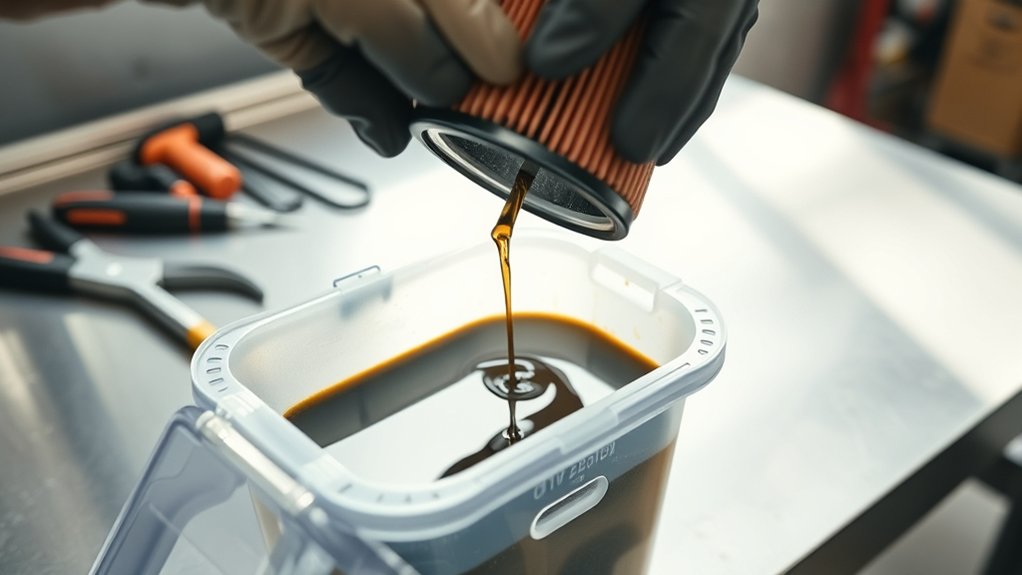
To dispose of oil filters properly, start by draining the oil into an airtight container for at least 12-24 hours. Turn the filter upside down to drain residual oil and let it dry for two days.
If it’s fully dry, you can often toss it in the trash. But if not, take it to a hazardous waste site. Always follow local regulations and safety tips to protect the environment.
Keep exploring to learn more detailed steps.
Key Takeaways
- Drain residual oil from the filter into an airtight container, turning it upside down for 12-24 hours.
- Let the filter dry completely for at least two days. Make sure there’s no residual oil left behind.
- Check if the filter is dry and oil-free. If draining wasn’t enough, consider using hazardous waste sites for proper disposal.
- Dispose of fully drained filters in your regular trash. If the filter still has some oil, take it to a hazardous waste facility instead.
- Always follow your local regulations. Contact local authorities or visit waste management websites to find out the right disposal procedures.
Why Proper Disposal of Used Oil Filters Is Important for the Environment
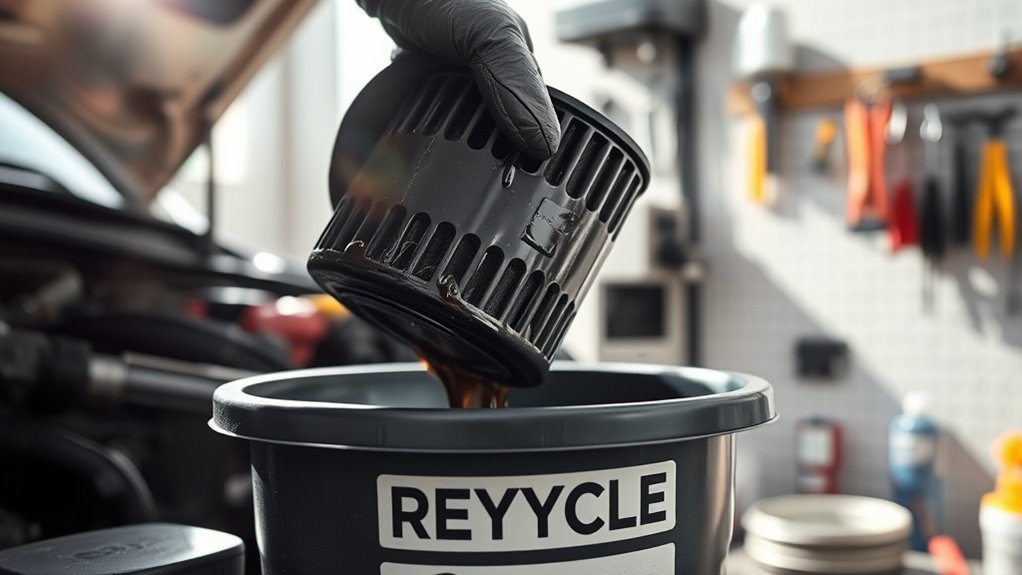
Proper disposal of used oil filters is essential because leftover oil can contaminate soil and water sources if not handled correctly. Used oil filters are considered hazardous waste due to the residual motor oil they contain, which can harm the environment.
Each filter holds 1-1.5 pounds of recyclable steel and up to 2.5 gallons of oil, making improper disposal risky. If these filters aren’t managed properly, residual oil can leach into the ground, polluting ecosystems and water supplies.
Recycling used oil filters helps recover valuable materials like steel and prevents oil from contaminating landfills and natural resources. Proper disposal practices reduce environmental hazards, support recycling efforts, and protect public health by ensuring hazardous waste components are handled safely and responsibly.
How to Prepare Used Oil Filters for Disposal
First, make sure to drain all the oil from the filter into an airtight container to prevent leaks. Turn the filter upside down to help remove any remaining oil, then let it dry for at least two days.
Only dispose of the filter once it’s completely dry and free of oil, or take it to a hazardous waste site if it won’t drain fully.
Drain Oil Completely
Wondering how to guarantee your used oil filter is safe for disposal? First, remove the filter from your vehicle and place it upright to let residual oil drain. Allow it to sit for at least 12 to 24 hours, giving enough time for most of the oil to escape.
After that, turn the filter upside down or on its side to help drain any remaining oil. Collect the drained oil in an airtight container for proper recycling or disposal.
Once the filter has drained thoroughly, wait about two days for it to dry completely before placing it in the trash or taking it to a hazardous waste site. Ensuring the filter is dry helps prevent leaks and environmental contamination during disposal.
Turn Filters Upside Down
Have you thought about flipping the oil filter upside down to help it drain better? It’s a simple trick that lets residual oil escape more easily. By doing this, gravity works in your favor and speeds up the drainage process.
Positioning the filter this way helps get rid of leftover motor oil more completely. This means less oil stuck inside, which is better for the environment. It also makes drying faster and makes disposal or recycling safer.
Here’s a quick comparison to see the difference:
| Upside Down | Upright |
|---|---|
| Better drainage | Residual oil may stay inside |
| Faster drying | Longer residual presence |
| Less environmental risk | Higher disposal concern |
| More complete oil removal | Possible oil leaks |
| Safer for disposal | Increased contamination risk |
Turning the filter upside down is a simple and effective way to prepare it for safe disposal.
Dry for Two Days
Once you’ve drained the oil and flipped the filter upside down, it’s important to let it dry completely before disposing of it. This step ensures all residual oil evaporates, which helps prevent leaks and environmental harm.
Place the filter in a well-ventilated area away from direct sunlight. Let it dry for at least two days to make sure it’s fully dry. Proper drying reduces the risk of contamination and makes disposal safer.
During this time, you can keep the filter in a ventilated space to prevent fumes from building up. Avoid stacking or covering it to allow airflow. Check periodically to see if it’s dry before moving on.
Once it’s completely dry, the filter can be safely thrown away in regular trash, as long as no residual oil remains.
How to Drain and Dry Oil Filters Safely at Home
To drain your oil filter safely at home, turn it upside down over a container so the oil can flow out completely.
Make sure to let the filter dry for at least two days before handling it further. Using a funnel can help prevent spills and make sure the oil goes into a proper storage container.
Proper Draining Techniques
Draining an oil filter properly is really important to prevent spills and protect the environment. To do this, place the used filter upside down over a drain pan so the residual oil can flow out completely. This helps remove most of the oil before disposal.
After draining, let the filter sit for at least two days. This gives any remaining oil time to evaporate or drain away. Use an airtight container to collect and store the drained oil safely, so it can be recycled or disposed of properly later.
Make sure the filter is dry before disposal to prevent leaks and environmental issues. If you’re unable to drain the filter, take it to a hazardous waste collection site instead of throwing it in the trash.
Drying Time Requirements
How long should you wait to guarantee your oil filter is completely dry? You should let the drained filter dry for at least two days. After draining the oil into an airtight container by turning the filter upside down, place it somewhere with good airflow to speed up evaporation.
This helps ensure all residual oil either evaporates or seeps out completely. It’s important to wait until the filter is fully dry before disposal to prevent environmental contamination. Do not throw away filters with leftover oil in the trash.
If you can’t drain the filter thoroughly, take it to a hazardous waste collection site for proper disposal. Being patient during this drying period is key to disposing of oil filters safely and responsibly.
When and Why You Should Take Oil Filters to Hazardous Waste Collection Sites
You should take oil filters to hazardous waste collection sites when they can’t be fully drained of residual oil. Leaving oil in the filter can harm the environment by contaminating soil and water.
Collection sites accept filters with some residual oil if they’ve been properly drained or dried, ensuring safe disposal. It’s especially important when:
- The filter still has oil after draining and drying.
- You’re unsure if the filter is completely drained.
- Local regulations require hazardous waste disposal for used filters.
These sites are designed to prevent environmental contamination and provide a safe way to dispose of residual oil. To find nearby collection points, check local listings or contact your waste management authority.
They can also give you contact info for questions about proper disposal procedures.
Choosing the Best Disposal Method for Your Oil Filters
After verifying your oil filter is properly drained or taken to a hazardous waste collection site, the next step is choosing the safest and most appropriate disposal method.
If your filter is fully drained, turn it upside down to help remove any residual oil, then let it dry for at least two days to prevent leaks. Once dry, you can dispose of the filter in your regular trash, following local regulations.
If the filter still contains residual oil or cannot be fully drained, take it to a hazardous waste collection site for proper handling. Proper disposal minimizes environmental harm and ensures compliance with safety standards.
Always prioritize draining and drying your filters thoroughly before disposal to reduce risks and make the process safer and more environmentally friendly.
Where to Find Local Recycling and Disposal Facilities
Wondering where to find local facilities that can properly handle used oil filters? Your best bet is to check with municipal or county environmental agencies for info on hazardous waste collection sites. These authorized facilities accept used filters, especially if they haven’t been drained or dried, ensuring safe disposal and environmental protection.
For filters that are drained, many recycling centers also accept them, helping prevent soil and water contamination. To locate nearby disposal options, consider these steps:
- Visit your local government’s environmental or waste management website
- Call municipal or county hazardous waste disposal helplines
- Use online directories for hazardous waste collection sites in your area
Properly disposing of your oil filters at these sites helps keep your environment clean and safe.
Top Safety Tips for Disposing of Oil Filters Properly
Handling used oil filters safely is key to protecting yourself and the environment. Always wear gloves and eye protection to avoid contact with residual oil, which can be harmful.
Before disposal, make sure the filter is completely drained of oil. This helps reduce environmental contamination. Use a sturdy, airtight container to collect the drained oil and prevent spills during transport.
Dry the filter thoroughly, ideally for two days, to ensure it’s safe for garbage disposal if fully drained. If the filter still has residual oil, take it to a hazardous waste collection site for proper management.
Following these safety tips helps reduce health risks and environmental impact. It ensures you dispose of oil filters responsibly and safely.
Understanding Local Regulations and Resources for Oil Filter Disposal
Understanding local regulations and resources for oil filter disposal is key to making sure you’re following the right procedures and protecting the environment. You should drain used oil filters completely before disposal to prevent soil and water contamination.
If a filter can’t be thoroughly drained, you’ll need to take it to a designated hazardous waste collection site. To find the best disposal options, you can contact local authorities or visit resources like the Household Product Library.
Here are some helpful points:
- Make sure filters are fully drained before disposal.
- Use hazardous waste sites for filters that can’t be drained.
- Reach out via email at haz.waste@kingcounty.gov or call 206-296-4692 (Monday–Saturday, 9 am–5 pm) for local disposal info.
Following these guidelines helps reduce pollution and keeps your community safe.
Frequently Asked Questions
What Is the Correct Way to Dispose of an Oil Filter?
You should dispose of an oil filter by first draining residual oil into an airtight container. Then, turn it upside down to drain for at least 24 hours.
After that, let it dry for two days. If it’s completely dry and regulations allow, you can throw it in your regular trash.
If it still contains oil or can’t be drained, take it to a hazardous waste collection site to ensure safe disposal.
What Is the Best Way to Dispose of Used Oil Filters?
The best way to dispose of used oil filters is to drain them completely into an airtight container and then let them dry for two days or more.
Once they’re dry, you can throw fully drained filters in your regular trash, as long as it’s allowed by your local regulations.
If the filter still contains oil or can’t be drained, it’s best to take it to a hazardous waste collection site.
Always choose safe and environmentally friendly disposal methods to protect the environment.
What Are the Correct Procedures for the Disposal of Waste Oil and Oil Filters?
You should drain used oil from the filter into an airtight container, then let the filter dry for two days. Turn it upside down to make sure all residual oil drains out.
If it’s fully drained and dry, you can dispose of it in regular trash. But if it still holds oil, take it to a hazardous waste collection site.
Proper disposal prevents environmental contamination and keeps you compliant with waste regulations.
How to Get Rid of an Oil Filter?
To get rid of an oil filter, start by draining any remaining oil into an airtight container. Turn the filter upside down to let any leftover oil escape.
Let it dry for at least two days. Once dry, check if local regulations allow you to dispose of it in the trash.
If it’s fully drained and disposal is permitted, you can toss it in your regular trash. If not, take it to a hazardous waste collection site for proper disposal.
Conclusion
By following these eight simple steps, you can dispose of your oil filters responsibly. Think of it like protecting our planet’s well-being, just like a knight guarding his kingdom. Proper drainage, drying, and recycling help prevent harmful pollutants from contaminating our water and soil.
Stay informed about local rules, and don’t hesitate to visit hazardous waste sites if needed. With a little effort, you’ll keep your environment clean and pristine. Proper disposal of oil filters is key to maintaining a healthy planet.