

How Long Does It Take to Change Spark Plugs in 7 Easy Steps
Replacing spark plugs in 7 easy steps usually takes between 30 minutes to an hour, depending on your vehicle’s engine design and experience level. Many people struggle with this task because it can be tricky to access the plugs or remove stubborn ones.
You’ll need to gather the right tools, like a spark plug socket and torque wrench, and prepare your car for access.
Challenges like tight spaces can slow you down, but don’t worry—you’re not alone.
Want to finish faster without risking quality? Keep going to explore tips to streamline the process and get it done efficiently.
Key Takeaways
The time it takes can range from about 30 minutes to over an hour. It really depends on your engine’s design and how accessible the spark plugs are.
Getting everything ready and having your tools organized can make a big difference. When you’re prepared, you can work more quickly and smoothly.
Accessing spark plugs in the rear or those that are hard to reach might take extra time. So, be patient if you encounter some obstacles.
Using the right tools, like a torque wrench and extension, helps prevent delays. They make the job easier and ensure you’re doing it correctly.
Knowing your engine layout also helps. The more familiar you are with where everything is, the faster you’ll be able to finish the task.
Why Replacing Spark Plugs on Your Toyota Matters
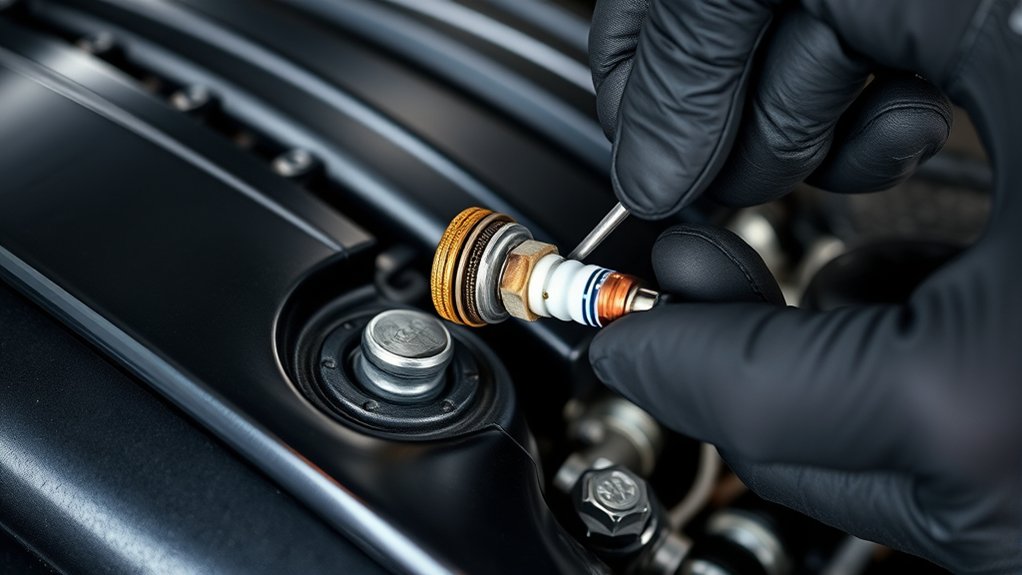
Replacing spark plugs on your Toyota matters because it directly impacts your vehicle’s engine performance and fuel efficiency. When spark plugs wear out or get fouled, they can cause misfires, rough idling, and sluggish acceleration.
Replacing spark plugs improves engine performance and fuel efficiency, preventing misfires and rough idling.
Regular maintenance and replacing spark plugs at recommended intervals help prevent these issues, keeping your engine running smoothly. Using high-quality spark plugs and installing them correctly also boosts ignition reliability and helps your engine last longer.
Ignoring spark plug replacement can lead to bigger engine problems and costly repairs down the line. Staying on top of this simple task helps your Toyota perform at its best, saving fuel and ensuring a reliable drive.
Replacing spark plugs is a small step that can make a big difference.
The 7 Easy Steps to Replace Spark Plugs
To replace your spark plugs, start by gathering the right tools like a spark plug socket, ratchet, and torque wrench. Make sure you have everything handy before you begin.
Next, carefully access the plugs by removing the necessary components, but always remember to let the engine cool first. This helps prevent any burns or damage.
Finally, install the new plugs properly. Check the gap and tighten them to the correct torque to ensure everything runs smoothly.
Prepare Your Tools
Before you start replacing your spark plugs, it’s important to gather all the necessary tools to make the process easier. You’ll need a spark plug socket, ratchet wrench, extension bar, torque wrench, gap tool, dielectric grease, and anti-seize lubricant.
Make sure the engine is cool and the vehicle is on a flat surface for safety. If your engine has an engine cover, remove it so you can access the spark plugs more easily.
Carefully disconnect the spark plug wires or ignition coil packs to avoid damage. Use the spark plug socket and ratchet wrench to gently remove the old plugs by turning counterclockwise.
Before installing the new plugs, adjust their gap with a gap tool according to the manufacturer’s specifications. Proper preparation helps save time and prevents mistakes.
Access Spark Plugs
Accessing your spark plugs is pretty straightforward. First, locate them by inspecting your engine layout. You might need to remove some engine covers or other components blocking your view.
Next, disconnect the ignition wires or coil packs. Use the right tools, like a spark plug socket and ratchet, to carefully loosen and remove the old plugs.
Often, you’ll need to take off the engine cover or intake manifold, especially for rear bank plugs in V-shaped engines. Removing coil packs or ignition coils is usually necessary to get to the spark plugs.
Take your time during this process to avoid damaging parts or cross-threading when installing the new plugs later.
Properly Install New Plugs
Once you’ve taken out the old spark plugs, it’s really important to install the new ones correctly to keep your engine running smoothly. First, check and adjust the spark plug gap to match your vehicle’s specs. Use a feeler gauge to get it just right.
When putting in the new plugs, tighten them to the right torque—usually between 11 and 22 ft-lbs. A torque wrench helps prevent over-tightening or damaging the threads.
Don’t forget to apply dielectric grease inside the coil pack or plug wire connection. This helps ensure a secure fit and keeps corrosion at bay.
Finally, reinstall all components carefully, making sure wires and coil packs are seated properly. Double-check everything before you start the engine.
What Affects How Long It Takes to Change Spark Plugs
The time it takes to change spark plugs mainly depends on how easy they are to get to. This depends on the engine’s design and layout. Some engines give quick access, while others require removing parts like the intake manifold or coil packs, which takes more time.
The number of cylinders also matters because more plugs need replacing. Plus, if the old plugs are corroded or stuck, it can slow things down even more. Using the right tools and having some experience can really help speed up the process.
A well-designed engine and knowing your vehicle’s layout make the job smoother. That way, you save time and effort when replacing spark plugs.
Essential Tools for a Fast Spark Plug Replacement
Having the right tools makes replacing spark plugs quicker and easier. You’ll need a socket wrench with the correct spark plug socket, along with an extension bar for hard-to-reach areas.
Don’t forget a torque wrench, gap tool, and safety gear to guarantee a proper and safe job. These tools help ensure everything is done correctly and efficiently.
Essential Tools Overview
To replace spark plugs quickly and efficiently, you’ll need a few essential tools designed for the task. A spark plug socket, ratchet wrench, and extension bar are vital for removing and installing spark plugs with ease.
A gap tool helps you check and adjust the spark plug gap for peak performance. A torque wrench ensures you tighten the plugs to the manufacturer’s specified torque, preventing damage or leaks.
Using high-quality tools reduces removal time and minimizes risk. Applying anti-seize lubricant during installation and dielectric grease can guarantee a secure, long-lasting fit.
Here’s a quick overview:
| Tool | Purpose |
|---|---|
| Spark plug socket | Removes and installs spark plugs |
| Ratchet wrench | Provides leverage |
| Extension bar | Reaches tight spaces |
| Gap tool | Checks and adjusts gaps |
Tool Selection Tips
Choosing the right tools can make your spark plug replacement faster and easier. Start with a spark plug socket designed for your vehicle’s plugs. This ensures a proper fit and prevents damage.
Use a ratchet wrench with an extension bar if needed to reach deep or tight spaces. A torque wrench is essential for tightening the spark plugs to the manufacturer’s specifications, avoiding over- or under-tightening.
Apply dielectric grease to electrical contacts for a secure connection and moisture resistance. Before installing new plugs, check and adjust the gap with a gap tool to match the specifications for peak performance.
Always select the correct size and type of socket to protect the plugs and surrounding components. This helps streamline the entire process and prevents unnecessary issues.
Safety Equipment Needed
Safety equipment is essential to protect yourself during a spark plug replacement, especially in tight or hard-to-reach engine bays. Wearing gloves and safety glasses helps prevent injury from debris, hot engine parts, or accidental slips.
Always confirm the engine is cool before starting to avoid burns and improve engine safety. Protective gear reduces the risk of cuts and burns, making the process safer and more comfortable.
A thorough debris protection strategy keeps dirt and grime away from sensitive components. Use safety glasses to shield your eyes from flying debris, and gloves to maintain a secure grip and protect your skin.
Prioritizing safety equipment minimizes risks, ensuring a smoother, safer spark plug change.
Preparing Your Car for a Quick Spark Plug Swap
Before you start replacing your spark plugs, make sure the engine is cool to prevent burns and make removal easier. To prepare effectively, follow these steps:
- Gather all necessary tools—spark plug socket, ratchet, extension, torque wrench, and gap tool—so you’re ready to go without delays.
- Disconnect the negative battery terminal to prevent electrical shorts.
- Remove any cover or components blocking access to the spark plugs, and clean the area around them to stop debris from falling into the cylinders.
Making sure the engine is cool and your tools are ready will help the process go smoothly. Disconnecting components and clearing the area saves you time when removing the spark plugs.
Challenges That Might Slow Down Your Spark Plug Job
Accessing rear spark plugs can be more challenging than you might think because engine parts like the intake manifold, coil packs, or wiring harnesses often need to be moved or removed.
Limited space makes it tough to reach some plugs, especially in V6 or V8 engines, which can cause delays. If the plugs are stubborn or seized, extra care and time are needed to remove them without damage.
Removing hoses or wiring adds steps that slow down the job. Sometimes, stubborn or broken plugs require specialized tools for removal to get the job done right.
Tips to Speed Up Spark Plug Replacement Without Sacrificing Quality
To speed up your spark plug replacement without sacrificing quality, start by gathering the right tools—specifically, the correct size spark plug socket, extension, and torque wrench. Using proper tools makes removing old spark plugs and installing new ones quicker and ensures proper tightening.
Use the right tools—spark plug socket, extension, and torque wrench—for faster, quality replacements.
Next, organize and label ignition wires or coil packs before starting. This way, you won’t waste time figuring out where everything goes during reassembly.
Familiarize yourself with your engine’s layout using a repair manual or online guides. Knowing where everything is helps you navigate tight spaces more efficiently.
To save time, replace multiple spark plugs in one session. This minimizes setup repetitions and keeps things moving smoothly.
Finally, regularly inspect and clean your tools. Keeping them in good shape prevents delays caused by faulty equipment, making the whole process quicker and easier.
Frequently Asked Questions
How Long Does It Typically Take to Change Spark Plugs?
Changing spark plugs usually takes anywhere from 30 minutes to 2 hours, depending on your vehicle and your experience.
If you’re working on the front bank, it might only take about 30 minutes to an hour.
Accessing the rear bank plugs is trickier and could extend the job to 1-2 hours.
If you’re a professional, expect around 30 minutes to an hour under normal conditions, but always consider your tools and engine design.
What Kills Spark Plugs Quickly?
You can kill spark plugs quickly by using low-quality or incorrect parts, which tend to wear out faster. Running your engine at high RPMs for long periods also puts a lot of stress on them.
Excessive oil consumption or leaks can foul the plugs, leading to early failure. Contaminants like dirt, carbon, or fuel deposits build up and damage the electrodes over time.
Improper ignition timing or too much voltage can cause the electrodes to overheat and burn out fast. All these factors can significantly shorten the life of your spark plugs.
What Spark Plugs Are Best for Lexus?
You want the best spark plugs for your Lexus? Go for OEM-grade iridium or platinum ones. They’re like marathon runners for spark plugs, lasting up to 100,000 miles.
These high-quality options keep your engine running smoothly and boost fuel efficiency. You won’t need to replace them every other week.
Stick with Lexus-recommended plugs, and you’ll enjoy reliable performance without the drama. Because your car deserves the best, not just whatever’s on sale.
How Much Are Spark Plugs for a Toyota Corolla?
You’ll spend between $10 and $20 per spark plug for a Toyota Corolla, with OEM options costing $15 to $25 each.
Replacing all four typically costs $40 to $100 for parts, but premium plugs can be $30 or more each.
If you hire a professional, total costs including labor range from $100 to $200.
Prices vary based on brand, type, and shop rates, so shop around for the best deal.
Conclusion
Replacing your spark plugs doesn’t have to feel like rocket science. You can do it quickly with the right steps and tools. Just follow the process, stay patient, and you’ll have your engine running smoothly again.
Don’t let complications turn this simple task into a never-ending saga. With a bit of know-how, you’ll be back on the road faster than you can say “spark plug success.”