8 Simple Steps to Replace Jeep Wrangler Ignition Lock Cylinder
Replacing a Jeep Wrangler ignition lock cylinder can be a hassle, especially if you’re not sure where to start. Many people struggle with this task, worried about messing up the steering or damaging the new part. You’re not alone—this is a common issue among Jeep owners.
To replace your Jeep Wrangler ignition lock cylinder, start by disconnecting the battery to stay safe. Remove the steering column covers, then locate and press the release pin near the cylinder.
Pull out the old lock with the key in the “on” position.
Install the new cylinder, ensuring it clicks into place, and turn the key to test smooth operation. Make sure everything lines up properly.
If you proceed, you’ll uncover detailed steps and tips to get it done right.
Key Takeaways
- Disconnect the negative battery cable to stay safe before you start working on the ignition.
- Next, remove the steering column covers by unscrewing the panels. This will give you access to the ignition cylinder.
- Insert the key and turn it to the “on” position. Then, press the release pin or tab to pull out the old cylinder.
- Take the new ignition lock cylinder and install it. Make sure it clicks into place and turns smoothly through all the positions.
- Finally, reassemble the covers, reconnect the battery, and test the ignition and steering wheel lock to make sure everything works properly.
Why You Might Need to Replace Your Jeep Wrangler Ignition Cylinder
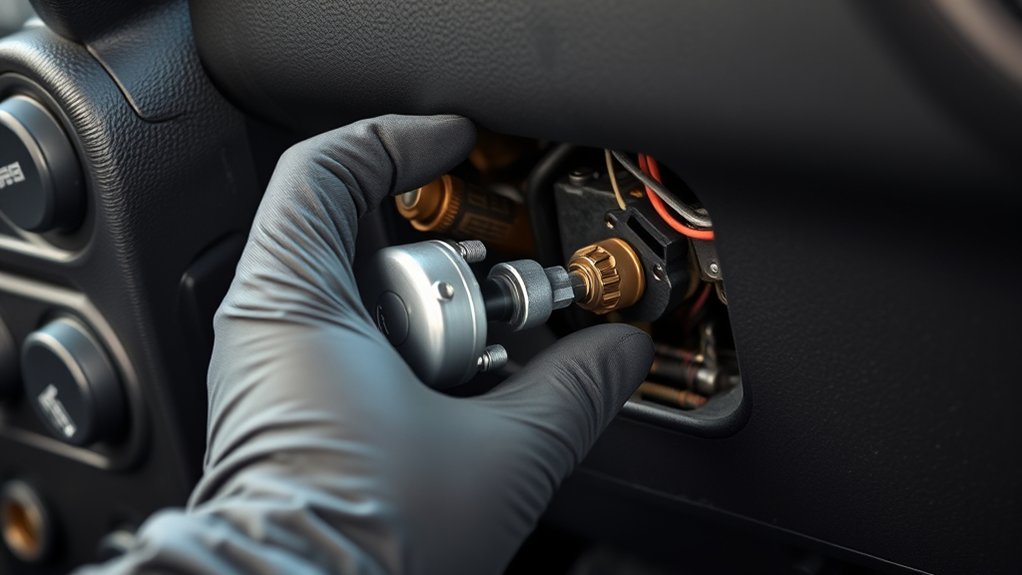
Wondering if you need to replace your Jeep Wrangler’s ignition cylinder? If your key won won’t turn, gets stuck, or you can’t remove it easily, it might be time for a replacement.
A worn or damaged cylinder can make starting your Jeep more difficult or even prevent the key from coming out. Losing your key or having a missing one also calls for a replacement to maintain security.
If you notice cracks or breakage in the ignition cylinder, it could compromise the entire ignition system, making replacement necessary.
After a theft attempt or tampering, changing the ignition lock cylinder is essential to restore security and proper functionality. Replacing it ensures your key works smoothly and your Jeep stays secure.
Tools and Parts Required for the Replacement
Before starting, gather the essential tools like a small screwdriver or pick tool to release the lock tab and needle-nose pliers for handling tumblers. Make sure you have compatible replacement parts, such as a cylinder assembly that matches your Jeep model and key code.
Having a torque wrench or socket set is also helpful if you need to remove bolts securing the steering column or ignition. This way, you’ll be ready to handle everything smoothly.
Essential Tools Needed
To replace your Jeep Wrangler’s ignition lock cylinder, you’ll need a few essential tools and parts. These will help you with removal and replacement, making sure you do it right.
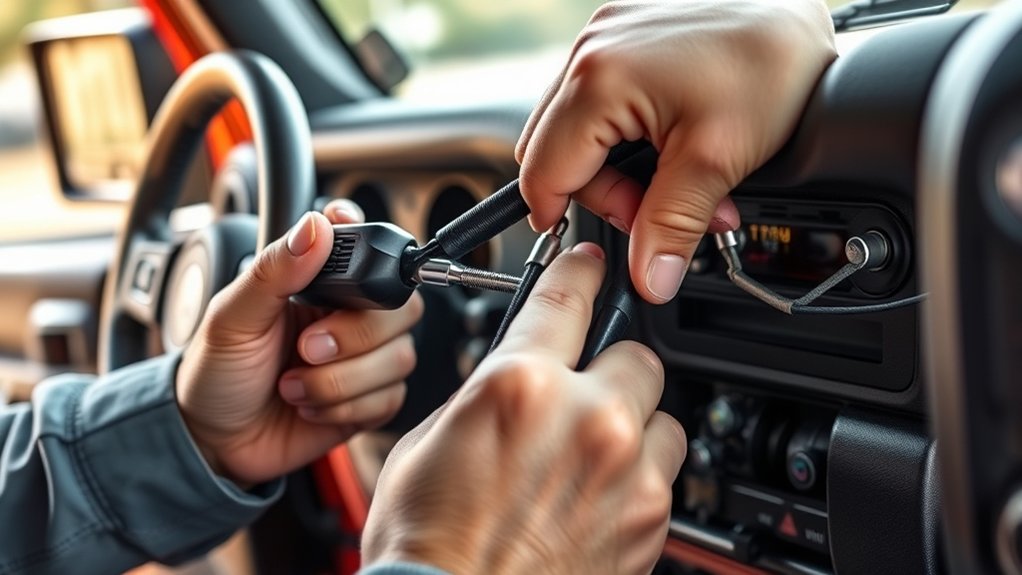
First, grab a small flathead screwdriver or pick tool to release the ignition lock cylinder from its housing. You might also need a torque wrench or socket set to take out any screws holding the steering column covers.
An ignition lock cylinder removal tool or clip removal tool can make the job easier, especially on certain models. For the new part, make sure you have the correct number, like Dorman 924-703, which comes with tumblers and a key for a proper fit.
These tools will make the process smoother and ensure a successful ignition replacement.
Compatible Replacement Parts
When choosing replacement parts for your Jeep Wrangler’s ignition lock cylinder, it’s key to pick components that match your vehicle’s specs. The recommended part is usually the Dorman 924-703, which has tumblers designed for easy key matching.
To install the new ignition lock cylinder, you’ll need a small screwdriver to release the lock and possibly pliers for removal. Make sure the replacement cylinder is keyed to your existing key or matches your original key code for smooth operation.
If you’re rekeying for better security, you might need extra parts like new tumblers or pins. Having a wiring diagram specific to your Jeep model can also come in handy when reconnecting electrical parts during the process.
Disconnect Your Battery Safely Before Starting
Before you begin, make sure to disconnect the negative terminal of your battery to prevent electrical shorts.
Use a wrench to loosen the clamp and carefully remove the cable from the battery post.
Wait at least 5-10 minutes to let residual power dissipate before proceeding with the repair.
Safety Precautions Needed
Disconnecting the battery safely is a crucial first step before working on your Jeep Wrangler’s ignition lock cylinder. This helps prevent electrical shorts, accidental airbag deployment, or damage to electrical components. Always use a properly rated wrench or socket to disconnect the negative terminal, avoiding sparks or damage to the battery post.
Wait at least 10 minutes after disconnecting to let residual electrical charge dissipate. During this process, clearly identify and label electrical connections to guarantee proper reassembly.
Precautions include:
- Always disconnect the negative terminal first to avoid electrical shorts.
- Never work on the electrical system with the battery connected.
- Handle the battery carefully to prevent sparks or damage.
Proper Disconnection Method
To guarantee safety while working on your Jeep Wrangler’s ignition system, you should always disconnect the battery properly.
Start by turning off the vehicle and locating the negative terminal of the battery. Use a wrench or socket to safely loosen the battery cable clamp from the terminal.
Carefully disconnect the negative cable, making sure it doesn’t contact any metal parts to avoid electrical shocks or short circuits.
Wait at least 5-10 minutes after disconnecting the battery to let any residual electrical charge dissipate.
Remember to clearly label or note the connection point for reattachment later. Never touch electrical components or wiring with metallic tools while the battery is disconnected, as this can cause accidental shorts.
Proper disconnection is vital for your safety and the integrity of your electrical system.
How to Remove the Old Ignition Lock Cylinder
Are you wondering how to remove the old ignition lock cylinder from your Jeep Wrangler? First, turn the ignition key to the “on” position to unlock the steering wheel and gain access to the old cylinder.
Next, remove the steering column covers by unscrewing the screws securing the upper and lower panels. Locate the small release pin or tab on the ignition lock cylinder housing, usually near the base.
Insert a small screwdriver or pick tool into the release hole and press the pin to unlock the cylinder. Finally, gently pull the ignition lock cylinder out of the steering column while keeping the key in the “on” position.
- Remove the steering column covers carefully
- Locate the release pin near the base of the old cylinder
- Use a screwdriver or pick to press the release pin
Installing Your New Ignition Cylinder Correctly
Before inserting the new ignition cylinder, make sure it’s properly aligned with the housing. Proper alignment makes the installation and operation much smoother. Turn the key to the off position to help the cylinder slide in more easily.
Push the ignition cylinder into the ignition housing until you hear a click. This sound means it’s securely in place. Test the cylinder by turning the key through all positions—off, accessory, on, and start—to ensure everything moves smoothly.
If the cylinder doesn’t turn easily or doesn’t click, double-check the alignment and try again. Finally, reconnect any electrical connectors and secure the steering column covers to finish the installation.
Ensuring Your New Cylinder Turns Smoothly and Fits Well
Ensuring your new ignition cylinder turns smoothly and fits well starts with proper alignment during installation. Make sure the ignition lock is correctly aligned with the housing before inserting it to prevent sticking or resistance.
Check that the tumblers are installed properly and match your key to avoid issues when turning the cylinder. After installing, test the cylinder in all positions—off, accessory, on, and start—to ensure it operates smoothly without sticking.
Listen for a proper click as the cylinder seats fully and securely, indicating a snug fit. To improve performance, lightly lubricate the ignition lock with a graphite-based lubricant. This helps it turn smoothly and prevents future sticking.
Verify proper alignment before inserting, confirm tumblers match your key, and test all positions for smooth operation.
Troubleshooting Common Problems During Replacement
If you run into problems during the replacement, troubleshooting can help you figure out what’s going wrong. First, make sure the ignition lock is fully disengaged before you reassemble everything. If it’s not seated properly, your car might not start.
When you take out the ignition lock, check that the tumblers and key are aligned correctly. Misalignment can cause the key to jam or make it hard to turn. Also, look over the wiring connections for any damage or wear, since faulty wiring can lead to electrical issues or the engine not starting.
Make sure the new lock cylinder matches your vehicle’s key code. Using the wrong one can make it tricky to insert or remove the key. Before you finish reassembling, use a test key to see if everything moves smoothly and to catch any internal binding or misalignment.
Following these steps can save you time and prevent frustration down the road.
Final Checks and Reassembly Tips
Once you’ve completed the reinstallation, it’s important to perform final checks to confirm everything functions correctly. Make sure the ignition lock cylinder turns smoothly through all key positions before reassembling the steering column covers.
Verify that all electrical connections are secure and working properly after reinstallation. Confirm that the steering wheel lock disengages correctly when you turn the key to the start position.
Double-check that the ignition cylinder is properly aligned and clicks into place, preventing future issues. Lastly, test the vehicle’s ignition, accessories, and start functions multiple times to ensure everything operates smoothly.
Make certain the ignition lock cylinder moves freely through all positions. Verify electrical connections are tight and functional. Confirm the steering wheel lock disengages properly.
Frequently Asked Questions
Can I Replace an Ignition Cylinder Myself?
Yes, you can replace the ignition cylinder yourself if you have basic mechanical skills and the right tools. You’ll need to remove the steering column covers, disconnect electrical connectors, and release retaining pins.
Make sure you have the correct replacement or rekey it to your existing key. Follow detailed tutorials to guide you through each step.
But if you’re uncomfortable with electrical or steering components, it’s a good idea to seek professional help for safety and proper installation.
How Much Does It Cost to Replace the Ignition Lock Cylinder on a Jeep Wrangler?
Replacing your Jeep Wrangler’s ignition lock cylinder costs between $50 and $300, depending on your choices. If you go for OEM parts, expect to pay around $100 to $200, plus labor if you have a shop do it. This adds another $50 to $100.
But if you’re handy and do it yourself, you only need to cover the cost of the part. Either way, you’ll get your vehicle back on the road quickly.
Does an Ignition Lock Cylinder Need to Be Programmed?
No, your Jeep Wrangler’s ignition lock cylinder usually doesn’t need programming if you’re using a matching key, since they’re mostly mechanical.
However, if you rekey or replace it with a different key, or if your model has a transponder chip, you’ll probably need to reprogram or re-code the system.
Always check your vehicle’s specific requirements, especially for newer or aftermarket parts, to make sure everything works properly.
Is It Hard to Change a Lock Cylinder?
Changing a lock cylinder isn’t too hard if you follow the right steps, but it can feel like unraveling a mystery—especially if the cylinder is stuck or broken.
You’ll need to remove steering column covers and possibly use special tools.
If you’re patient, have basic mechanical skills, and follow instructions, you can do it yourself.
It’s a manageable task, just like solving a puzzle in your driveway.
Conclusion
Just like a skilled conductor ensuring every instrument plays in harmony, replacing the ignition lock cylinder keeps your Jeep running smoothly.
By following these steps, you’re not just fixing a part—you’re restoring the entire ignition system’s rhythm.
With patience and precision, you’ll keep your Jeep’s engine humming as reliably as a well-rehearsed orchestra.
This simple process of replacing the ignition lock cylinder ensures your Jeep stays reliable and ready for any adventure ahead.