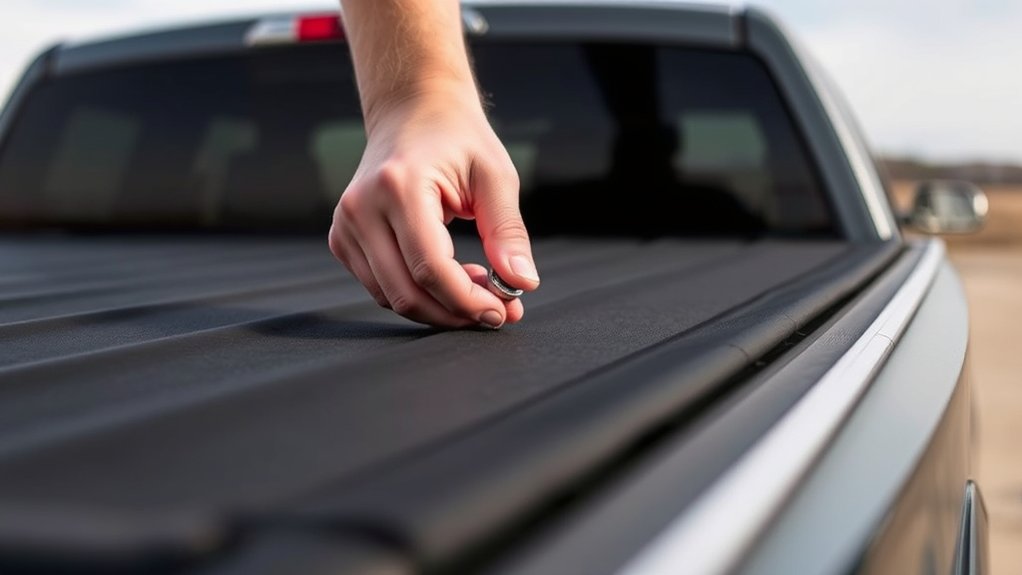
Adjust Truxedo Tonneau Cover Tension in 7 Easy Steps
Many truck owners know the frustration of dealing with a tonneau cover that’s too loose or too tight. It’s a common problem that can lead to leaks, flapping, or even damage over time. If you’re struggling to get your Truxedo tonneau cover tension just right, you’re not alone.
Luckily, adjusting it is easier than you think.
To adjust your Truxedo tonneau cover tension in 7 easy steps, start by cleaning the cover and locating adjustment points like nuts and screws. Use the proper tools such as a socket wrench or screwdriver to loosen clamps and hinges.
Pull the cover taut, then tighten straps or bolts evenly for a snug fit. Check for gaps or flapping, and re-adjust as needed.
Keep in mind, proper tension prevents leaks and guarantees durability—if you want detailed guidance, keep going.
Key Takeaways
- Locate the adjustment points, such as nuts near the tailgate and tension screws on the side or rear rails. Use the manufacturer diagrams to help you find these spots.
- Before adjusting, give the cover and bed rails a good clean. Check for any damage, and loosen the clamps or Velcro straps first. This makes the adjustment process smoother.
- Grab the right tools, like thin wall sockets or ratchet wrenches. Use them to tighten or loosen the adjustment nuts and tension screws. It’s best to be careful and go slowly.
- Pull the cover taut and evenly tighten the straps or bolts. Make sure the cover is smooth and the seal is proper. Check that everything operates smoothly.
- Remember to recheck the tension regularly, especially after weather changes. Make small, incremental adjustments to keep the fit secure.
Understanding Different Types of Tonneau Covers
Understanding the different types of tonneau covers is key to picking the right one and getting its tension just right. Soft covers usually use tension straps or clamps that you need to pull tight for a snug fit. Getting the tension right helps keep them secure and prevents flapping in the wind.
Hard tonneau covers often rely on adjustable hinges, latches, or tension bolts to stay firmly in place. Some models, like the TuxedoTrax, have self-adjusting tension systems that automatically tighten by pushing rails toward the cab. Others, like Truxport, need you to adjust specific points, like the rear tension or front screws, for the best fit.
Getting the tension right is really important for water tightness, durability, and stopping flapping—whether you have a soft or hard cover. Proper adjustment ensures your cover stays secure and performs well over time.
Finding Adjustment Points on Your Cover
To adjust your Truxedo tonneau cover, you need to find the adjustment points, which can vary depending on your model. Look for adjustment nuts near the tailgate or tension screws that control the cover tension.
Keep in mind that some models have different configurations, so it’s important to check your specific instructions to identify these points accurately.
Identifying Adjustment Nuts
Locating the adjustment nuts on your Truxedo tonneau cover is an essential first step before making any tension adjustments.
The adjustment nuts are usually near the tailgate area, but their exact spot can vary depending on your model.
For models like the LoPro or ProX15, the adjustment points might be different from the Truxport, so it’s important to identify your specific cover.
To access these nuts, you may need specialized tools like a thin wall socket because space can be tight.
Some models have adjustment screws that aren’t immediately visible or easy to reach without removing parts or using extended tools.
Always double-check the location by consulting your installation instructions or visual diagrams for your specific Truxedo tonneau cover model.
Locating Tension Screws
Finding the tension screws on your Truxedo tonneau cover requires a careful visual inspection of the rear and side rails. These screws are usually located near the tailgate area and may be accessible through small holes or slots.
Some models, like the Truxport, might have the tension adjustment points in different spots. Referring to the manufacturer’s diagram can help you find the correct screws.
You might need a thin wall socket or specialized tools to reach adjustment nuts or screws in tight or recessed locations. In certain models, tension screws could be hidden behind covers or inside the side rails, requiring removal or careful maneuvering.
Visual inspection and consulting your installation instructions are key to accurately locating tension screws for proper tension adjustment.
Recognizing Model Variations
Since different Truxedo models have unique adjustment points, it’s important to identify the specific locations for your cover. Models like Truxport, LoPro, and ProX15 each have distinct adjustment spots that influence tensioning.
Some models feature an adjustment nut near the tailgate, but access can vary depending on the design. Others may have rear tension points or additional tightening locations.
To find these points accurately, check visual guides, manufacturer instructions, or online diagrams. Recognizing model-specific differences helps ensure proper tension adjustment.
Here’s a quick reference:
| Model | Adjustment Point Location | Special Note |
|---|---|---|
| Truxport | Rear or side | Different from LoPro or ProX15 |
| LoPro | Near tailgate | May require different tools |
| ProX15 | Multiple points | Always check manufacturer instructions |
| Other | Varies | Always verify with diagrams |
| General | Visual guides recommended | Essential for proper tensioning |
Tools You Need for Tonneau Tension Adjustment
To properly adjust the tension on your Truxedo Tonneau Cover, you’ll need a few specific tools designed for tight spaces and precise fitting. The right tools make adjustment easier and more accurate.
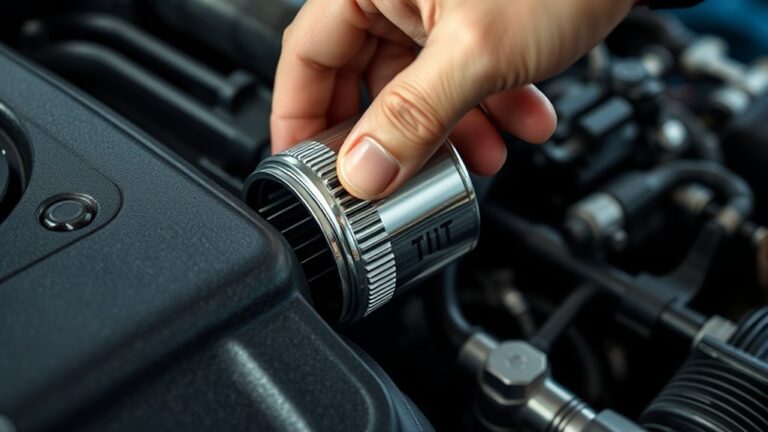
A thin wall socket is recommended for accessing and turning the tension bolts, especially since standard ratchets might not fit into tight areas. You may also need a ratchet wrench combined with extension bars to reach hard-to-access adjustment points.
Depending on your model, you might require specific socket sizes like 13mm or imperial equivalents. Some models have adjustment points that need screwdrivers or hex keys.
Having these tools ready ensures you can perform the adjustment efficiently and avoid unnecessary frustration. Proper tools are essential for a smooth, effective tension adjustment process.
How to Prepare Your Cover for Tightening
Before tightening your Truxedo Tonneau Cover, it’s important to get everything ready first. Start by thoroughly cleaning the cover and truck bed rails to remove dirt, dust, and debris. This helps the adjustment go smoothly and prevents any damage.
Next, inspect the cover for tears, worn fasteners, or damaged parts. Replace anything that’s not in good shape. Loosen any clamps or Velcro straps to relieve tension, making it easier to adjust.
Inspect the cover for damage, then loosen clamps and straps for easier adjustments.
Check that hinges and latches move freely. If needed, lubricate them for smooth operation. Finally, align the cover evenly over the bed to create a uniform surface for a tight fit.
Getting everything set up properly makes the tightening process easier and helps ensure your cover stays secure and performs well over time.
Step-by-Step: Tightening Soft and Hard Covers
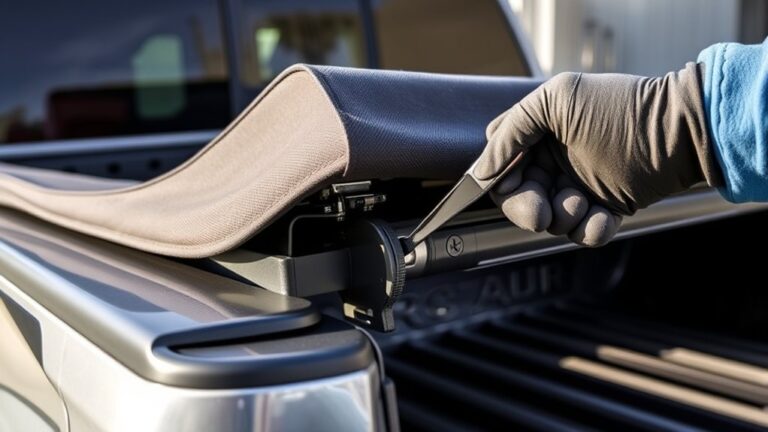
When tightening your Truxedo Tonneau Cover, it’s important to handle soft and hard covers differently to ensure a proper fit. For soft covers, pull the fabric taut and evenly tighten the tension straps or clamps, making sure to eliminate wrinkles and sagging.
Before tightening, double-check that the cover is aligned correctly over the bed. This helps ensure a secure and even fit across the entire truck bed. For hard covers, tighten the hinges and latch bolts carefully with a wrench until the cover sits flush against the truck bed.
Always check the seal and tension after tightening to prevent gaps and make sure everything operates smoothly. Regularly inspect and re-tighten the cover as needed, especially after weather changes or extended use, to keep maximum tension and protection.
How to Achieve Even Tension and a Secure Fit
Achieving even tension and a secure fit requires careful attention to alignment and gradual adjustments. First, make sure the cover is evenly aligned over the bed before tightening, which helps promote uniform tension across all sides.
Check that the fabric is smooth and wrinkle-free or that a hard cover sits tightly against the truck bed. This will confirm proper tension distribution and prevent sagging.
When adjusting tension straps or clamps, do it gradually and evenly. This prevents uneven pull or sagging that can compromise the fit.
Use a level or visual reference to verify the cover sits flush and aligned with the truck bed walls. This helps ensure a proper, even fit.
Revisit and fine-tune tension periodically, especially after temperature changes. Doing this keeps the tension even and the fit secure over time.
Make sure tension is consistent across all straps for a uniform fit. This prevents one side from being tighter or looser than the others.
Use visual cues like level lines for proper alignment. Checking regularly helps maintain the overall fit and appearance.
Periodically revisit your adjustments to sustain tension. Regular checks will help keep the cover secure and properly fitted.
Troubleshooting Common Adjustment Issues
Troubleshooting common adjustment issues with your Truxedo Tonneau Cover often involves identifying and fixing specific problems that can affect fit and security. If the adjustment nuts near the tailgate are hard to reach, try using specialized tools like thin wall sockets to tighten or loosen them properly.
Misaligned or uneven corners usually mean you should recheck and adjust tension at the front or rear adjustment points. Flapping or springiness in the cover typically results from not enough tension, which you can fix by adjusting the tension screws or tension straps.
Keep in mind that some models like the Truxport have different adjustment points, so always check your manual. Persistent tension issues might need multiple adjustments over several days, as environmental factors can influence tension stability.
Frequently Asked Questions
How to Adjust Tension on Truxedo Tonneau Cover?
To adjust the tension on your Truxedo tonneau cover, push the rails toward the cab and tighten the self-adjusting tension bolts until they just touch the bed rails.
For soft covers, tighten the tension straps evenly after pulling the fabric taut. For hard covers, carefully tighten loose bolts on hinges and latches.
Make sure to recheck the tension regularly, especially after temperature changes, to keep everything secure and working well.
How to Adjust Tension on Tonneau Cover?
Think of your tonneau cover like a tightrope walk—balance is key. To adjust tension, you’ll want to tighten or loosen the tension bolts or straps evenly.
For soft covers, pull the fabric taut and secure the straps. For hard covers, tighten the hinges gradually until it sits flush.
Keep checking and readjusting as temperatures change. This way, your cover stays snug without becoming a barrier.
Can You Tighten a Tri Fold Tonneau Cover?
Yes, you can tighten a tri-fold tonneau cover. To do that, loosen the clamps or bolts holding the cover in place. Then, pull it tighter across your truck bed.
Once it’s snug, re-secure the clamps or bolts firmly. Check for tension points along the rails or near the tailgate, and tighten those as needed.
Regular adjustments will help prevent flapping and keep your cover secure.
How Tight Should Your Tonneau Cover Be?
Did you know a properly tensioned tonneau cover can improve fuel efficiency by up to 10%? Your cover should be snug but not too tight—think of it as fitting like a glove.
It should sit flat against the bed, allowing easy closure without resistance or gaps. If it’s too tight, it risks damage; if too loose, wind and debris can get in.
Aim for a smooth, secure fit that keeps everything protected without causing stress on the cover.
Conclusion
Properly adjusting your Truxedo tonneau cover guarantees your cargo stays secure and your truck looks sharp. Did you know that a well-tensioned cover can also improve fuel efficiency by reducing drag?
By following these seven easy steps, you’ll keep your cover tight, even, and in top condition. Regular adjustments not only extend its lifespan but also save you money in the long run.
Take a few minutes now to perfect your cover. Your truck will thank you for it, and you’ll enjoy the benefits of a properly tensioned Truxedo tonneau cover.