10 Tips to Keep Your Tonneau Cover From Freezing
If you own a truck with a tonneau cover, you’ve probably faced the frustrating challenge of dealing with ice and snow buildup during winter. Many people struggle with keeping their covers clear and functional in freezing weather, which can be a real hassle. But don’t worry—you’re not alone, and there are simple tips to help you out.
To prevent your tonneau cover from freezing, start by cleaning and inspecting seals, seams, and hardware regularly. Remove snow promptly with a soft brush and clear drain tubes to prevent water buildup.
Apply waterproof protectants and silicone sprays to keep seals flexible. Use warm water or de-icers carefully to melt ice, and dry thoroughly afterward. Store the cover in a dry, warm place when not in use.
For more tips, learn how proper maintenance and quick removal techniques can keep your cover ice-free all winter.
Key Takeaways
- Clean and dry your tonneau cover thoroughly before winter. This helps prevent moisture buildup and freezing.
- Apply waterproof protectants and silicone sprays to seals and seams. They’ll help repel water and reduce the chances of freezing.
- Remove snow promptly using a soft brush. Avoid heavy tools that could damage the cover.
- Make sure drain tubes are clear and properly connected. This prevents water from pooling and forming ice.
- Use warm water or automotive de-icer spray to gently melt ice on locks, seams, and hinges. Be gentle to avoid any damage.
Why Your Tonneau Cover Freezes in Winter and How to Prevent It
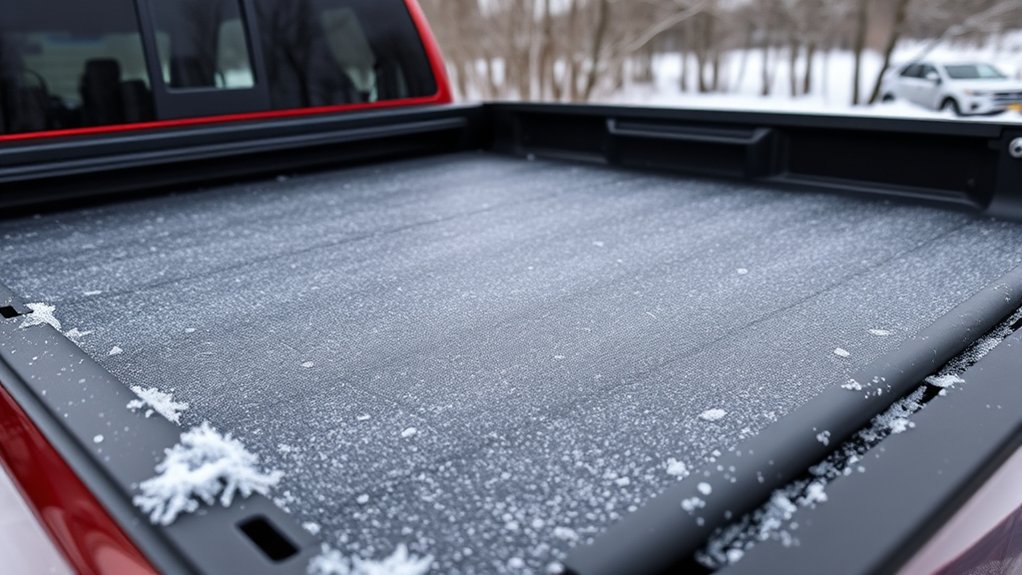
During winter, your tonneau cover is prone to freezing because moisture from snow and condensation can seep into the seams or get trapped between the cover and tailgate. When water gets trapped, it freezes overnight, causing the cover to stick or lock in place.
Moisture trapped in seams can freeze overnight, causing your tonneau cover to stick or lock in place.
Cold temperatures weaken the seal around the cover, making it less effective at keeping out moisture and increasing the risk of freezing. As ice forms, it can cause the cover to crack or become difficult to open.
Accumulated snow and ice add weight and pressure, making the problem worse. To prevent this, regularly dry the seal area, remove snow promptly, and check that the seal is intact.
These steps help reduce trapped water and prevent your cover from freezing shut.
Pre-Winter Preparation: Cleaning, Inspection, and Seal Checks
Getting your tonneau cover ready for winter starts with a good cleaning to remove dirt, grime, and debris that can trap moisture. Use automotive soap and water to make sure all surfaces are spotless.
After cleaning, take a close look at the seals, seams, hinges, and hardware for cracks, tears, or rust. Fix any damage quickly to keep everything in good shape.
Check that drainage tubes are clear and properly connected to prevent water buildup and ice from forming. This helps avoid leaks and freezing issues.
Make sure all weatherstripping is in good condition. Replace worn or damaged seals to keep a tight, waterproof fit.
Finally, dry the cover completely after cleaning to prevent moisture from freezing and causing sticking problems. Regular inspections and seal checks will help keep your tonneau cover functioning well and ice-free during winter.
Daily Tips to Keep Your Cover Free of Snow and Ice
To keep your tonneau cover free of snow and ice daily, make sure to remove snow promptly with a soft brush to prevent damage. Use gentle tools like plastic scrapers or gloves to carefully clear ice.
Check that drain tubes stay clear so water doesn’t build up. Regularly inspecting and wiping down the cover helps prevent moisture and ice from forming in seams and around hardware.
Remove Snow Promptly
Have you ever underestimated how quickly snow can pile up on your tonneau cover? Prompt snow removal is really important for winter maintenance. When you remove snow within 2-4 hours of snowfall, you prevent too much weight and ice buildup that could damage your cover.
Use a soft-bristled brush or plastic tools to clear snow gently, avoiding scratches. Start from the center and work outward to prevent pushing snow into seams or around edges, which can lead to freezing moisture. Clear heavy or wet snow before it turns into ice, reducing stress on your cover and stopping freezing issues.
Regularly checking and removing snow during storms helps keep your cover flexible and extends its lifespan. Removing snow promptly prevents ice buildup, reduces weight stress, and keeps your cover in good shape.
Use Gentle Tools
Using gentle tools is essential for preventing damage to your tonneau cover when clearing snow and ice. You should use soft-bristled brushes or microfiber cloths for ice removal, as they gently lift snow without harming the surface.
Avoid metal tools like shovels or scrapers, which can scratch or puncture vinyl or composite materials. Instead, opt for plastic scrapers or gloves to carefully remove ice, preventing tears.
Always work from the center outward to avoid pushing snow or ice into seams and edges. Apply gentle, gradual pressure when dealing with ice to prevent stressing or cracking your cover or hardware.
| Tool Type | Recommended Use |
|---|---|
| Soft-bristled brush | Removing snow without damage |
| Microfiber cloth | Gently wiping ice and snow |
| Plastic scraper | Ice removal, preventing tears |
| Gloves | Safe ice removal |
| Metal tools | Avoid to prevent scratches |
Clear Drain Tubes
Regularly inspecting and clearing your drain tubes is key to preventing ice buildup that can block water flow and cause freeze-related issues. When drain tubes get clogged or blocked, melting water can’t escape, leading to ice dams and potential damage.
To keep them clear, gently remove debris or ice inside the tubes using a flexible wire or compressed air. Be careful not to cause any damage. Make sure the drain tubes are fully extended and unobstructed so water can flow away from your truck bed easily.
During cold weather, pouring warm (not hot) water into the drain tubes can help melt any ice and restore proper drainage. After snow or ice storms, check and clear the drain tubes promptly to prevent water pooling and freezing.
This will help keep your tonneau cover free of ice buildup and ensure everything stays in good shape.
Weekly Maintenance Routine for Winter: What to Check and Do
During winter, maintaining your tonneau cover needs regular attention to prevent damage from snow, ice, and freezing temperatures. Each week, do a quick visual check of the cover, seals, and hardware for cracks, rust, or misalignment.
Check for water or ice buildup inside the truck bed and make sure drain tubes are clear of obstructions. Look closely at the hardware—tighten clamps, bolts, and latches to the manufacturer’s recommended torque to prevent loosening or damage.
Remove snow and ice buildup promptly using a soft brush or plastic scraper. This helps reduce weight stress and prevents freezing. Reapply UV or weather protectant on soft covers and lubricate hinges, seals, and locks with silicone spray to keep everything flexible and working smoothly in harsh winter conditions.
Best Products to Thaw, Protect, and Prevent Freezing on Your Cover
To keep your tonneau cover free of ice, using the right products really makes a difference. Applying silicone sprays or protectants like 303 Aerospace Protectant creates a waterproof barrier that helps prevent freezing.
De-icer sprays or warm water are safe options to thaw frozen parts. Regularly using protective coatings like Collinite 845 Insulator Wax or CRC Heavy Duty Silicone Spray can also help prevent ice buildup before cold weather hits.
Effective Thawing Products
What are the best products to thaw, protect, and prevent freezing on your tonneau cover? De-icer sprays containing methanol or ethylene glycol quickly melt ice buildup on seals and hinges, making removal easier.
Silicone spray, especially CRC Heavy Duty Silicone Spray, helps prevent water from sticking and freezing on moving parts. This ensures smooth operation even in cold weather.
A frost guard or commercial ice melt formulated to lower the water’s freezing point can significantly reduce ice formation and make thawing easier. Using these products regularly can keep your tonneau cover clear and functional in winter.
Keep your cover ice-free with these effective options, making winter maintenance simple and stress-free. Proper application ensures your cover stays protected and ready for use, no matter how cold it gets.
Protective Coatings and Sprays
Applying protective coatings and sprays is one of the best ways to prevent ice from forming on your tonneau cover. Products like silicone sprays, such as 303 Aerospace Protectant, create a water-repellent barrier that stops moisture from freezing on the surface.
Coatings like Collinite 845 Insulator Wax seal out moisture, helping reduce ice buildup during cold weather. Rubber seal protectants like Meguiar’s Gold Class Rubber Sealant keep seals flexible and prevent them from freezing shut.
Hydrophobic sprays such as CRC Heavy Duty Silicone Spray make water bead up and roll off hinges and locks, which minimizes ice formation. Reapplying these weatherproofing products before winter builds a durable protective layer that keeps your cover free from freezing shut.
This helps ensure smooth operation even in harsh conditions.
Preventative Maintenance Solutions
Using the right preventative maintenance products can significantly lower the chances of your tonneau cover freezing shut during cold weather. Applying a silicone-based spray to seals and hinges creates a waterproof barrier that reduces ice buildup and sticking.
Rubber seal conditioners like 303 Aerospace Protectant help keep seals flexible and prevent them from becoming brittle and cracking in freezing conditions. Collinite 845 Insulator Wax offers a durable, weather-resistant coating that repels moisture and inhibits freezing on your cover’s surface.
Regularly cleaning and drying the cover with automotive soap and water removes dirt and moisture that could freeze overnight. Additionally, applying commercial de-icer sprays or hydrophobic lubricants to seams and locks lowers the freezing point, making it easier to open your cover during winter.
- Waterproof sealant sprays to block moisture and freezing
- Rubber conditioners to maintain seal flexibility
- Anti-freeze lubricants for seams and locks
How to Safely Remove Snow and Ice Without Damaging Your Cover
During snowy weather, it’s important to remove snow and ice from your tonneau cover carefully to avoid damage. Use a soft-bristled broom or brush to gently sweep snow off, starting from the center and working outward. This helps prevent pushing snow into seams.
Avoid metal tools or sharp objects, as they can scratch or puncture the cover surface. For ice buildup, apply automotive de-icer spray or warm water to melt ice safely on seams, hinges, and locks.
Prompt removal within 2–4 hours prevents excessive weight and stress on the cover. If needed, carefully lift or fold the cover, making sure it’s dry and free of ice before closing or storing it.
When and How to Use Warm Water and De-Icers to Thaw Your Cover
When your tonneau cover is frozen shut, carefully applying warm water and de-icers can help melt the ice without causing damage. Use lukewarm water, not hot, to gently loosen ice and prevent warping.
Apply a commercial de-icer spray designed for automotive use to quickly free frozen components. Pour warm water slowly over seams, hinges, and locks, making sure it stays below boiling point for safety and effectiveness.
Always dry the area thoroughly afterward to prevent refreezing and water damage.
To maximize safety and efficiency, consider using warm water and de-icer spray before trying to open the cover. Focus on seams, hinges, and locks where ice tends to freeze to the tonneau.
Avoid metal tools to prevent scratching or puncturing your cover.
Protecting Soft Roll-Up and Folding Covers During Cold Weather
Cold weather can pose significant challenges for soft roll-up and folding covers, especially when snow and ice build up. To protect your soft cover from freezing to the tonneau, quickly remove snow with a soft brush to prevent weight damage and freezing issues.
Gently warm the seams with lukewarm water or a de-icer spray to melt ice buildup, making it easier to open and close the cover. Never try to fold or roll the cover when it’s frozen; instead, warm it first to avoid stretching or tearing.
Regularly applying a vinyl-safe seal conditioner or silicone spray to the edges and seams helps repel moisture and reduces ice sticking. Carefully clearing snow and ice and storing the cover in a dry, warm place when not in use can extend its lifespan and keep it functioning smoothly.
Tips for Keeping Your Cover Sealed and Preventing Water and Ice Buildup
To keep your cover sealed and prevent water and ice buildup, make sure to regularly clean and dry the seals before winter arrives. This helps maintain their effectiveness and prevents any damage.
Applying a silicone spray or rubber conditioner can really help. It keeps the seals flexible and creates a waterproof barrier, so water is less likely to seep in.
Also, double-check that your drain tubes are clear. If they’re blocked, water can pool and form ice dams, which might lead to leaks and damage.
Seal Integrity Maintenance
Maintaining the integrity of your tonneau cover’s seals is essential for preventing water and ice from seeping in and causing freezing issues. Regular inspection and cleaning help spot cracks, tears, or debris that could lead to water infiltration.
Applying a silicone-based sealant or protectant periodically keeps the seals flexible, preventing drying out or cracking. To protect your cover further, wipe away moisture after rain or snow to reduce ice formation.
Using a rubber conditioner or weatherstripping spray can improve seal elasticity and water resistance. Make sure the seals are properly aligned during installation, and reapply lubricants regularly to keep them pliable and effective.
Proper seal maintenance is key to avoiding freezing problems and extending your cover’s lifespan.
Water and Ice Prevention
Keeping your tonneau cover sealed and free from water and ice buildup requires proactive steps. Applying a silicone spray or rubber seal protectant on the edges and seals creates a waterproof barrier that repels water and prevents freezing.
Regularly cleaning and drying the cover and seals before winter reduces moisture that could freeze and cause sticking. If ice forms on seams or locking mechanisms, use de-icer sprays or warm water to carefully melt it.
This helps maintain a proper seal and easy operation. Confirm that drainage tubes are clear and properly extended to prevent water from pooling and freezing inside the bed or around the edges.
Promptly removing snow with a soft brush and avoiding heavy tools minimizes pressure that can force water into seals, reducing freezing issues.
When to Remove or Cover Your Tonneau During Severe Cold Snaps
During severe cold snaps below 0°F, it’s best to remove or fully retract your tonneau cover to prevent ice buildup and potential damage. Freezing temperatures can cause ice to form on the cover, leading to cracks or warping.
Remove or retract your tonneau cover during extreme cold to prevent ice damage and warping.
If you know a deep freeze is coming, consider removing the tonneau cover altogether. Alternatively, covering your truck with a tarp or moving it into a garage offers extra protection from extreme cold.
If the cover must stay installed, make sure it’s thoroughly dry and free of snow beforehand. Regularly check and gently warm frozen components with lukewarm water before opening or closing the cover.
- Remove the tonneau cover during prolonged deep freezes
- Cover your truck with a tarp or keep it in a garage
- Verify the cover is dry and snow-free before cold snaps
Frequently Asked Questions
Should You Roll up a Tonneau Cover in the Winter?
Yes, you should roll up your tonneau cover in winter. Doing so allows moisture to escape, reducing ice buildup and preventing freezing.
It also exposes less surface area to snow and ice, making it easier to remove any accumulated snow or ice. Just make sure to do this in a sheltered area or with caution so your cover isn’t damaged by harsh weather.
Regularly ventilating it helps keep moisture levels down.
Can I Go Through a Car Wash With a Tonneau Cover on My Truck?
You can go through a car wash with your tonneau cover on, but it really depends on the type. Soft covers might be more vulnerable to high pressure or improper cleaning, so it’s best to fold or remove them beforehand.
Hard covers usually hold up better during a wash. However, always check your manufacturer’s guidelines to make sure your specific cover is safe for a wash.
This is especially important during winter to prevent damage or water trapping, which could lead to freezing. When in doubt, it’s better to be cautious to avoid any potential issues.
Can I Use Armor All on My Tonneau Cover?
Using Armor All on your tonneau cover is like putting a slick coat on an ice rink—you’re risking more sliding and dirt buildup. It’s not meant to prevent freezing, and its oils can damage rubber or vinyl over time.
Instead, go for a specialized silicone spray or rubber protectant. These create a barrier against moisture without harming your cover.
Always test on a small area first to avoid any surprises.
What Is the Lifespan of a Tonneau Cover?
Your tonneau cover usually lasts between 5 to 10 years, depending on the material and how well you take care of it.
Vinyl covers typically last around 5 to 7 years, while aluminum or fiberglass ones can go over a decade.
To get the most life out of your cover, clean it regularly, lubricate moving parts, and fix any damage quickly.
Protect it from harsh weather and store it properly during winter to prevent damage and extend its durability.
Conclusion
Staying ahead of winter’s icy grip keeps your tonneau cover working smoothly, like a well-tuned instrument.
By following these simple tips, you’ll prevent freezing and ice buildup from turning your truck bed into an icy trap.
Think of your cover as a shield that protects your cargo from winter’s chill.
With regular care and smart prevention, you’ll keep your cover resilient and ready to face the cold, no matter how harsh the season gets.