8 Essential Tools You Need to Change Spark Plugs
Changing spark plugs can feel like a daunting task, especially if you’re not sure which tools to use or worry about damaging your engine. Many people struggle with getting the job done right and safely. You’re not alone—having the right tools makes all the difference in making this process easier and more successful.
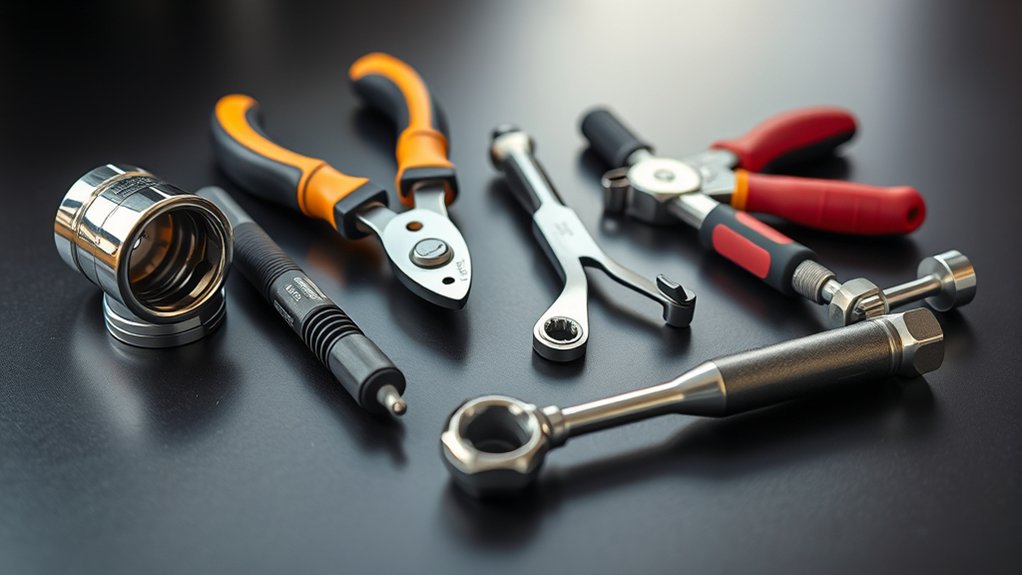
To change your spark plugs effectively, you’ll need a proper spark plug socket with a rubber insert to prevent damage, a ratchet or extension, and a torque wrench to tighten them correctly.
A gap tool helps guarantee the electrodes are set properly, while anti-seize and dielectric grease make installation easier and more secure.
Organizing small parts with trays or labels saves time.
If you want to find out more helpful tips and tools, keep exploring further.
Key Takeaways
- Spark plug socket with a rubber insert helps prevent damage to the ceramic insulator during removal and installation. It provides a snug fit, reducing the risk of cracking or breaking the spark plug.
- A torque wrench is essential for tightening the spark plug to the manufacturer’s specifications. This ensures you’re not over-tightening or under-tightening, which could cause issues down the line.
- A spark plug gap tool is handy for measuring and adjusting the electrode gap precisely. Proper gap size is key for optimal engine performance and fuel efficiency.
- Extensions and flexible joints are great for reaching deep-set or hard-to-access spark plugs. They make the job much easier when space is tight.
- Don’t forget dielectric grease and anti-seize compound. Applying dielectric grease helps ensure good electrical contact, while anti-seize makes future removal simpler.
Why You Need the Right Spark Plug Tools Before Starting
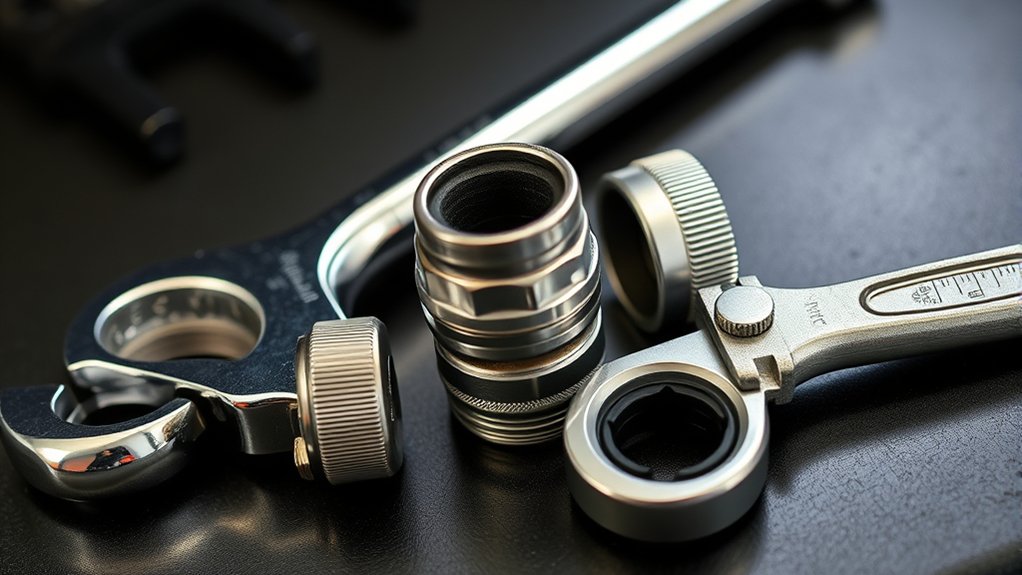
Before you start changing your spark plugs, it’s important to have the right tools ready. Using the wrong equipment can cause damage or make the job more difficult.
Having the right tools ensures a safe, efficient spark plug change and prevents engine damage.
A spark plug socket with a rubber insert is a must. It protects the ceramic insulator from cracks or chips during removal and installation.
A torque wrench helps you tighten the spark plugs to the manufacturer’s specs. This prevents over-tightening, which can damage threads, or under-tightening, which can cause misfires.
Also, a spark plug gap tool is useful for measuring and adjusting the electrode spacing. This ensures your engine runs at peak performance.
Using specialized tools like a spark plug socket and torque wrench makes the job safer, faster, and more effective. It reduces the risk of damaging parts or hurting your engine’s efficiency.
Essential Spark Plug Socket and Ratchet for Safe Removal
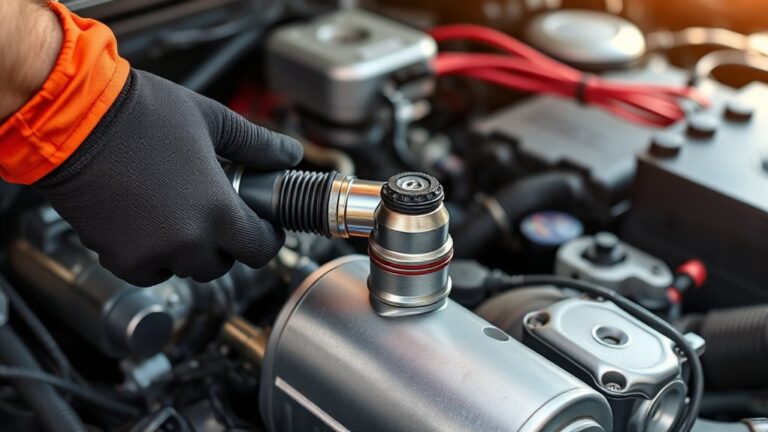
Using the right spark plug socket and ratchet is key for safe and efficient removal. A good spark plug socket usually has a rubber insert or magnet to grip the spark plug securely and prevent damage.
Pair it with a ratchet wrench of the correct size to ensure proper torque. This helps reduce the risk of stripping threads or damaging the plug.
Visualize the tools in your hand: a snug-fitting spark plug socket that grips firmly, a ratchet wrench with smooth, controlled motion, and extensions or deep sockets to reach deep-set plugs comfortably.
These tools help you avoid slips and fractures, protecting your engine components. Always double-check that the socket fits perfectly to apply the right torque, making the removal process safe and damage-free.
Reach Deep-Set Spark Plugs With Specialty Extensions
Reaching deep-set spark plugs can be tricky, especially when engine parts or tight spaces block your direct path. Specialty extensions are made to give you the extra length and flexibility you need to access those hard-to-reach plugs efficiently.
These tools usually have a universal or flexible joint, helping you navigate around obstacles while keeping proper socket alignment. Using a dedicated deep extension helps prevent damage to spark plug threads or porcelain during removal or installation.
Made from durable chrome vanadium steel, these extensions can handle torque and repeated use without breaking. Picking the right length and joint type for your engine makes it easier to access the engine bay, reduces tool strain, and makes changing spark plugs safer and simpler.
Check and Adjust Spark Plug Gaps With a Gauge
Using a spark plug gap gauge is key to measuring the distance accurately between the center and ground electrodes.
Be sure to check your vehicle’s manual for the right gap size, which is usually around 0.043 inches.
If needed, gently adjust the electrode by bending it with the gauge or a small tool, but be careful not to damage it.
Proper Gap Measurement Techniques
To ensure your spark plugs are working properly, it’s important to measure the gap accurately. Use a spark plug gap gauge to check the distance between the center electrode and the ground electrode, matching your vehicle’s specifications.
When measuring, gently slide the gauge between the electrodes without forcing it. Visualize the tiny space as a critical measurement that needs to match your manual for best performance.
Think of the gauge as a tool to verify the perfect distance for your spark plug. If the gap isn’t right, carefully adjust it by gently bending the side electrode with the gauge or small pliers.
Always double-check the gap after making adjustments, since bending can slightly change the measurement. Proper measurement and adjustment help your engine run smoothly and efficiently.
Adjusting Electrode Correctly
Before installing your spark plug, check that the electrode gap is correct. Even a small difference can impact engine performance. Use a spark plug gap gauge to measure the distance between the center and ground electrodes, making sure it matches the manufacturer’s specs.
To adjust the gap, gently bend the side electrode with the gauge or small pliers. Be careful not to damage the center electrode. Always check the gap on new spark plugs first, since manufacturing can cause slight variations.
Refer to your vehicle’s owner manual or service guide for the right spark plug gap measurement. After adjusting, re-measure the gap to make sure it stays within the specified range before installing. This helps ensure optimal engine performance.
Use a Torque Wrench to Tighten Spark Plugs Properly
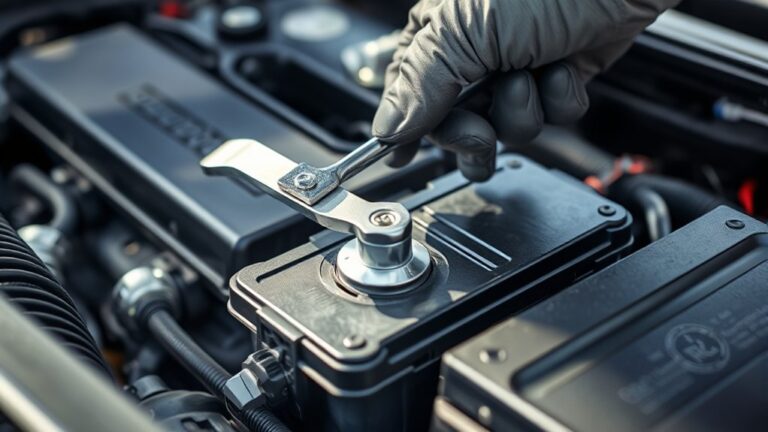
Using a torque wrench ensures you tighten spark plugs to the manufacturer’s specifications, helping prevent damage from over- or under-tightening.
Applying the correct torque helps create a proper seal and avoids cracking the threads or porcelain. It’s all about getting it just right.
Always set the wrench to the right value before tightening. This keeps things consistent and safe without guesswork.
Proper Torque Specifications
Have you ever wondered how tight spark plugs should be? The key is following the manufacturer’s torque specifications, usually between 12 to 25 ft-lb. To get this right, you need a calibrated torque wrench. It ensures you tighten evenly and accurately, preventing damage.
Visualize applying just enough force to secure the plug without stripping threads. Feel the wrench click as you reach the correct torque. Avoid cracks or porcelain breakage from over-tightening.
Using the right torque wrench helps you follow the proper torque specifications and avoid costly repairs. Remember, under-tightening can cause misfires, while over-tightening risks damaging threads. Proper torque application guarantees a secure, dependable seal for peak engine performance.
Risks of Over-tightening
Over-tightening spark plugs can cause serious damage to your engine components. Too much torque can strip threads in the cylinder head, which can lead to expensive repairs.
It can also crack or break the porcelain insulator, causing misfires or even engine failure. Applying too much torque might deform the spark plug, making it hard to seal properly and leading to compression leaks.
Over-tightening can damage the gasket or crush washer. This allows oil or gases to escape, which can affect engine performance. To avoid these issues, use a torque wrench to tighten the spark plugs within the recommended range, usually 13-18 ft-lb.
A torque wrench helps you tighten the spark plugs precisely, preventing engine damage caused by over-tightening. Knowing the risks helps you tighten your spark plugs correctly and keep your engine running smoothly.
| Risk of Over-tightening | Result |
|---|---|
| Stripped threads | Expensive repairs |
| Cracked porcelain | Misfires, engine failure |
| Deformed spark plug | Sealing issues |
Apply Anti-Seize and Grease for Easy, Reliable Installation
Applying anti-seize compound and dielectric grease correctly is key for a smooth spark plug installation. Start by putting a small amount of anti-seize on the spark plug threads to prevent seizing or bonding to the cylinder head, making future removal easier.
Next, use dielectric grease inside the spark plug boots to boost electrical conductivity and help reduce high-voltage leaks. Be careful not to get anti-seize or grease on the porcelain insulator or electrode, as that can cause electrical issues or misfires.
When installing, tighten the spark plug to the manufacturer’s recommended torque for a proper seal. Visualize this process with a thin, even layer of anti-seize on the threads, smooth application of dielectric grease inside the boots, and avoiding grease on the porcelain insulator or electrode.
Organize Small Parts With Magnetic Trays and Labels
Organizing small parts with magnetic trays and labels helps you avoid losing important components during the spark plug replacement.
Using magnetic trays and labels keeps small parts organized and prevents losing essential components during spark plug replacement.
A magnetic tray keeps small metal parts like screws, wires, and spark plugs secure, so they don’t fall into engine crevices or get misplaced. This keeps your workspace tidy and makes it easier to find what you need quickly.
Labeling spark plug wires and related parts with tape ensures correct reinstallation, helping you avoid misfiring or engine problems.
Using a magnetic tray and clear labels makes the process more efficient, saving you time and reducing frustration. Keeping everything in its proper place and clearly identified makes the spark plug change smoother, safer, and more efficient.
Additional Tools and Resources to Make Spark Plug Maintenance Easier
To make spark plug maintenance easier and more effective, having the right tools and resources on hand is essential. These include specialty tools like spark plug swivel sockets with rubber isolators to protect the insulator, and spark plug gap gauges to measure and adjust electrode spacing accurately to manufacturer specs.
Using tools like anti-seize compound prevents thread damage and guarantees easy removal during future service. Dielectric grease on boots reduces high-voltage leaks and makes removal smoother.
Additional resources such as online tutorials, expert advice, and tool loaner programs at auto parts stores can help you troubleshoot and refine your technique. With these tools and resources, your spark plug maintenance becomes faster, safer, and more reliable.
Frequently Asked Questions
What Tools Do I Need for Spark Plug Replacement?
You need a spark plug socket with a rubber insert to protect the porcelain. A ratchet wrench or flexible handle ratchet will give you better leverage.
Having various extension bars is helpful to reach deep plugs easily. A spark plug gap gauge is useful for measuring electrode gaps precisely.
A torque wrench is important to ensure you tighten the plugs properly. These tools make the replacement process easier, safer, and help prevent damage to your engine components.
What Do I All Need to Change Spark Plugs?
Changing spark plugs is like tending to the heart of your engine’s health. You’ll need a spark plug socket with a rubber insert to protect the insulator, a ratchet wrench and extension to reach tight spots, and a gap gauge to guarantee proper electrode spacing.
A torque wrench makes sure you tighten them just right, while anti-seize, dielectric grease, and a magnetic tray keep everything organized and protected.
What Spark Plugs Are Best for Lexus?
The best spark plugs for your Lexus are usually OEM, or high-quality iridium or platinum options that fit your engine model. Brands like NGK and Denso are popular because they’re tested for compatibility and performance.
Iridium plugs tend to last longer, often between 60,000 and 120,000 miles. That makes them a smart investment if you want durability and reliable performance.
Just make sure you pick the right heat range and gap size to keep your engine running smoothly and efficiently.
Does a 2015 GMC Acadia Have Spark Plugs?
Yes, your 2015 GMC Acadia has spark plugs, much like the heartbeat of your engine. Think of them as the spark of life that keeps your car running smoothly.
Usually, there are four or six platinum or iridium plugs, depending on your engine. Regularly replacing them around 100,000 miles helps keep your vehicle’s performance strong, much like a well-tuned orchestra.
Conclusion
With the right tools in hand, you’ll confidently handle spark plug changes, ensuring safety, precision, and ease. From sockets to gauges, from torque wrenches to organizers, each tool plays an essential role.
They’re like keys opening a smooth-running engine. Prepare, organize, and execute with clarity and care. Turning a simple maintenance task into a seamless routine becomes easy with the right equipment.
Equip yourself well with the essential tools for spark plug replacement. That way, you can keep your engine running reliably, quietly, and efficiently—ready for every mile ahead.