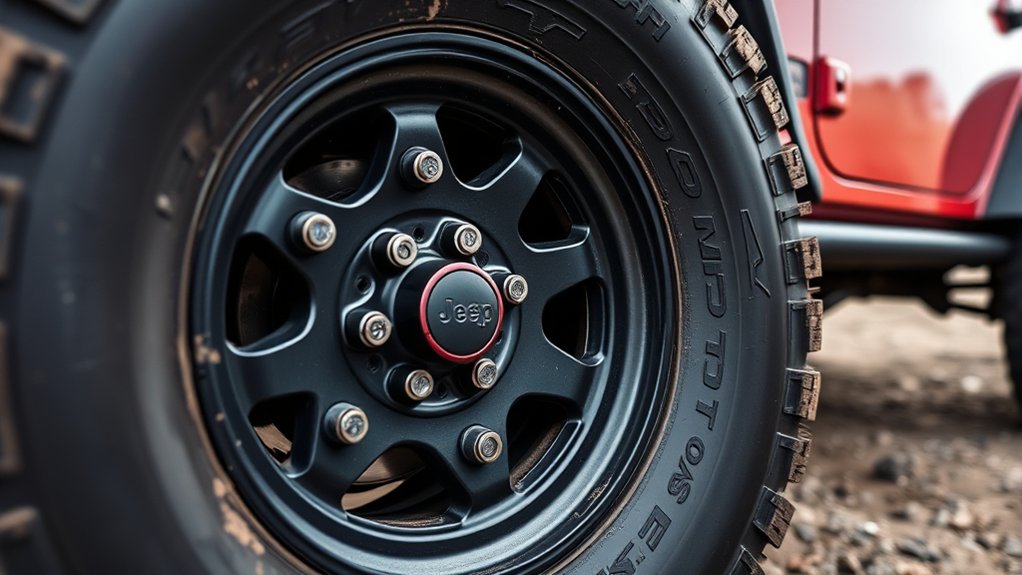
What Bolt Pattern Does a Jeep Wrangler Use?
Are you tired of guessing which bolt pattern your Jeep Wrangler needs when it’s time for new wheels? You’re not alone—many Jeep enthusiasts struggle with ensuring their upgrades fit perfectly and stay safe on the road.
Most Jeep Wranglers use a bolt pattern of 5×4.5 inches (5×114.3 mm) up to 2006. From 2007 onward, they switch to a 5×5 inches (5×127 mm) pattern. It’s important to know your specific model year since patterns changed over time.
Ensuring you have the correct bolt pattern is key for safe wheel upgrades. And there’s more to consider for proper fitment. Keep going to learn what that entails.
Key Takeaways
- Jeep Wranglers typically use a 5×5 inches (127 mm) bolt pattern from 2007 onwards.
- For models from 1987 to 2006, you’ll usually find a 5×114.3 mm (or 5×4.5 inches) bolt pattern.
- The bolt pattern changed in 2007 to support larger wheels and brakes, so be sure to check your specific model year.
- It’s always a good idea to verify your vehicle’s bolt pattern before buying new wheels.
- You can do this by measuring the distance between the lug nuts or consulting the owner’s manual for accurate information.
What Is the Standard Bolt Pattern for Jeep Wranglers?
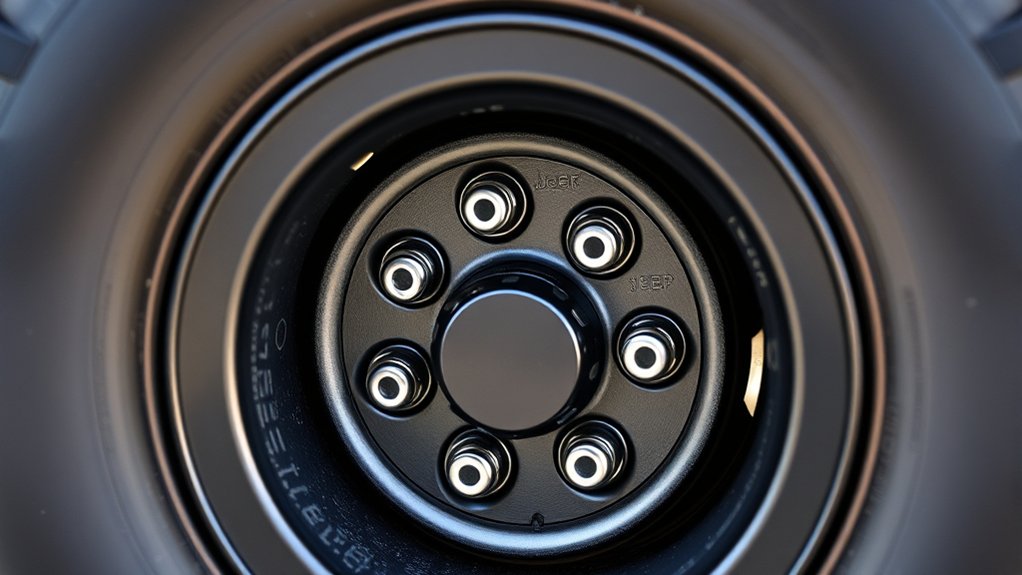
The standard bolt pattern for Jeep Wranglers varies depending on the model year, so it’s good to know which one you have. If you own a YJ (1987-1995) or TJ (1997-2006), your Jeep Wrangler uses a 5×114.3 mm (or 5×4.5 inches) bolt pattern.
Starting from 2007, Jeep switched to a 5×5 inches (127 mm) bolt pattern, and that’s the same through 2024 models. The bolt pattern is what determines how your wheels bolt onto the hub and affects which wheel sizes you can use.
Knowing your Jeep Wrangler’s specific bolt pattern helps you select the right wheels and accessories. Always double-check your vehicle’s model year and bolt pattern before buying new wheels to avoid fitting issues and keep your driving safe.
How Has the Jeep Wrangler’s Bolt Pattern Evolved From 1987 to 2024?
Since 1987, the Jeep Wrangler’s bolt pattern stayed the same at 5×4.5″ through the YJ and TJ models.
In 2007, Jeep switched to a larger 5×5″ pattern. This change reflects a design upgrade that’s still used today.
Early Pattern Consistency
From 1987 to 2006, Jeep kept a consistent bolt pattern of 5×4.5 inches (5×114.3 mm) across all Wrangler models. This made wheel compatibility straightforward during this period.
This early pattern made it easier for owners to find compatible wheels and tires without worrying about fitment issues. The uniform bolt pattern across these years provided stability and simplicity, especially for aftermarket upgrades.
During this time, Jeep focused on maintaining reliable and familiar wheel compatibility for Wrangler fans. The consistency helped build a standard that many owners appreciated, making wheel replacements and upgrades less complicated.
Pattern Changes and Reasons
As Jeep evolved its design and engineering, the bolt pattern on Wrangler models shifted to meet new performance standards and aftermarket demands. Your Jeep Wrangler’s pattern changes reflect efforts to improve wheel compatibility, strength, and overall performance.
Initially, from 1987 to 2006, it used a 5×4.5″ bolt pattern. Starting in 2007, with the JK model, it shifted to a 5×5″ pattern to support larger wheels and modernized suspension systems. This change continued with the 2018 JL redesign, maintaining the 5×5″ pattern.
These pattern updates were driven by design updates aimed at better performance and aftermarket adaptability. The table below highlights these key pattern shifts:
| Year | Bolt Pattern | Reason for Change | Model |
|---|---|---|---|
| 1987-2006 | 5×4.5″ | Consistent design, standard | YJ, TJ |
| 2007-2017 | 5×5″ | Larger wheels, strength | JK |
| 2018-2024 | 5×5″ | Compatibility, modernization | JL |
Modern Bolt Pattern Standards
Over the years, Jeep Wrangler’s bolt pattern has updated a lot to keep up with new design and performance needs.
At first, from 1987 to 2006, the Jeep Wrangler used a 5×4.5 inch bolt pattern, including the YJ and TJ models.
Starting with the 2007 JK model, the bolt pattern changed to 5×5 inches, mainly because of bigger brakes and wheels.
This 5×5 pattern has stayed the same through the JL models up to 2024.
This modern bolt pattern ensures great wheel compatibility across recent Jeep Wranglers and many aftermarket options.
The changes show Jeep’s focus on supporting advanced tech and upgrades while keeping wheel choices wide.
Why Knowing Your Jeep’s Bolt Pattern Is Key for Safe Upgrades
Knowing your Jeep’s bolt pattern is crucial because it guarantees your aftermarket wheels will fit correctly and securely. Without the right bolt pattern, you might run into compatibility issues that could be dangerous while driving.
Using the proper bolt pattern helps ensure safe upgrades and prevents problems like uneven tire wear or wheels coming loose. It’s also key to avoiding costly mistakes when upgrading or replacing your wheels.
Knowing your Jeep Wrangler’s bolt pattern is essential for keeping your wheels safe and making sure your upgrades are reliable and long-lasting.
How to Measure Your Jeep Wrangler’s Bolt Pattern Accurately
Start by counting the number of lug nuts on your wheel. Then, measure the distance between the centers of two opposite lug holes to find the bolt circle diameter. Use a ruler or caliper for an accurate reading.
Make sure your vehicle is on a flat surface with the wheel removed to get the best measurement. Finally, compare your measurement with the manufacturer’s data to confirm that it’s correct.
Count Lug Nuts Carefully
Before measuring your Jeep Wrangler’s bolt pattern, it’s important to count the number of lug nuts on your wheel. This helps ensure you’re working with the correct pattern for your vehicle. Take a close look at the wheel and see if it has 4 or 5 lug nuts, as this affects how you measure.
Key points to remember:
- Count the lug nuts to figure out the pattern type.
- Use a ruler or tape measure to find the distance between the lug nut holes.
- Focus on the center-to-center distance for an accurate measurement.
Double-check your count before moving on to measuring. Compare your measurement with standard Jeep bolt patterns like 5×4.5 inches or 5×5 inches. Getting this right prevents mistakes and makes sure your wheels will fit properly.
Measure Bolt Circle Diameter
To measure your Jeep Wrangler’s bolt pattern accurately, you need to determine the bolt circle diameter. Do this by measuring the distance across the wheel through the centers of two opposite lug nut holes.
This measurement gives you the bolt pattern diameter, which is essential for proper wheel fitment. Use a ruler or caliper to measure from the center of one lug nut hole to the center of the lug nut hole directly opposite it.
Double this measurement to find the full diameter of the bolt circle. Make sure your vehicle is on a flat surface with the wheels properly mounted for precise results.
Knowing the bolt pattern diameter helps you pick compatible wheels. Take your time with the measurement process to get accurate and reliable data for your Jeep Wrangler.
Confirm With Manufacturer Data
Verifying your measurements with manufacturer data ensures you get the most accurate bolt pattern for your Jeep Wrangler. To confirm, check your owner’s manual or the manufacturer’s specifications.
You can also cross-reference online resources for factory-installed bolt patterns. When measuring the bolt pattern:
- Count the lug nuts and measure the distance between the centers of two adjacent lug holes.
- Use a ruler or caliper to measure the diameter of the circle passing through all the lug nut centers.
- For five-lug patterns, measure directly across from one lug nut to its opposite or between two adjacent lug nuts.
This guarantees your measurement is precise. When in doubt, consult a professional mechanic or tire specialist to verify the bolt pattern and ensure a perfect fit for your Jeep Wrangler’s wheels and accessories.
What Are the Common Bolt Pattern Sizes in Jeep Wranglers?
Jeep Wranglers have used a few common bolt pattern sizes over the years, so it’s important to know which one your vehicle needs. The bolt pattern is crucial for making sure your wheels fit properly, whether you’re replacing lug nuts or wheel bolts.
From 1987 to 1995, including YJ models, Jeep Wranglers typically had a 5×4.5-inch (5×114.3 mm) bolt pattern. The TJ models (1997-2006) also mostly used this pattern.
Starting in 2007, Jeep switched to a 5×5-inch (5×127 mm) bolt pattern. This size has been used on models up to 2024, including JL and newer versions.
Knowing these common sizes helps you pick the right wheels and ensures your Jeep stays secure and safe on the road.
How Bolt Pattern Variations Affect Wheel Compatibility
Bolt pattern variations are really important when it comes to wheel compatibility. Even small differences can stop wheels from fitting properly, which can be a big problem.
If the bolt pattern, including the number of lugs and bolt diameter, doesn’t match your Jeep Wrangler’s specs, you risk improper fitment, safety issues, and potential damage. For example, a Jeep with a 5×4.5″ pattern won’t fit wheels designed for a 5×5″ pattern unless you use adapters.
Making sure you have the right bolt pattern ensures proper lug nut engagement and stability. Using incompatible bolt patterns can cause wheel wobble or even wheels coming loose.
Incorrect bolt diameter affects how well the lug nuts fit and how tightly they can be torqued. Over the years, changing bolt patterns reflect technological updates and influence the aftermarket options available.
Verifying your Jeep Wrangler’s bolt pattern is key to safe, reliable wheel upgrades and keeping your vehicle in good shape.
Common Challenges When Swapping Wheels Based on Bolt Pattern
When swapping wheels, verifying the bolt pattern can be tricky, and even small measurement errors can cause issues.
If you don’t measure carefully, you might end up with incompatible wheels or uneven wear.
Making sure you get accurate measurements before buying is key for a safe, proper fit.
Compatibility Verification Challenges
Verifying the bolt pattern before swapping wheels is crucial, but it can be tricky and sometimes lead to costly mistakes. Accurate checks involve more than just a quick visual glance.
Measuring bolt circle diameter can be challenging, especially on older vehicles with rust or debris hiding the markings. It’s easy to misread or mismeasure, which can cause problems later.
Common pitfalls include confusing bolt pattern terms, like 5×114.3 mm versus 5×4.5 inches. Overlooking these details can lead to improper fitment or damage.
Also, don’t forget to check if aftermarket wheels match your vehicle’s bolt pattern. Cross-referencing manufacturer specs and measuring directly helps ensure compatibility and saves money in the long run.
Measurement Accuracy Importance
Accurate measurement of your wheel’s bolt pattern is essential to guarantee proper fitment, but it can be challenging due to small errors or overlooked details. Using precise tools like a caliper or ruler is necessary because even tiny inaccuracies can cause compatibility issues.
Common challenges include miscounting the number of lug nuts or measuring the diameter incorrectly, which leads to wrong specifications. Rust, dirt, or corrosion on lug holes can make measurements tricky, so cleaning and inspecting thoroughly is a good idea.
Variations between different years or models can also cause confusion, so it’s important to verify the exact bolt pattern specifications. Remember to re-measure after removing wheels or changing tires, as fitment might shift and increase the risk of errors.
How to Verify Your Jeep’s Bolt Pattern Before Buying Wheels
Before buying new wheels for your Jeep Wrangler, it’s important to check the bolt pattern to make sure they fit. Start by counting the number of lug nuts to figure out the pattern type, like 5-lug or 6-lug.
Next, measure the diameter of the circle passing through the center of all the lug nut holes. You can use a ruler or caliper for this—this is your bolt pattern size. Alternatively, measure the distance between the centers of two adjacent lug nuts.
Always double-check your vehicle’s specifications label inside the driver’s door frame or look in the owner’s manual for accurate details. For verifying wheels, follow these steps:
- Count the lug nuts to determine the pattern type.
- Measure the lug nut circle diameter accurately.
- Cross-check with your vehicle’s specs.
If you’re unsure, it’s a good idea to consult a professional mechanic or use a bolt pattern measurement tool for help.
What Factors Beyond Bolt Pattern Matter When Upgrading Wheels?
When upgrading your Jeep Wrangler’s wheels, focusing only on the bolt pattern isn’t enough to guarantee a perfect fit. You also need to consider factors like wheel fitment, offset, backspacing, hub bore, and lug nut size.
These elements impact clearance, bearing load, and how securely the wheel attaches. For example, improper offset or backspacing can cause rubbing or make handling feel off. Mismatched hub bore sizes can lead to vibrations and imbalance.
Check these key specs carefully. Measure and compare offset and backspacing to your stock wheels. Make sure the hub bore matches the wheel hub diameter. And always use the correct thread pitch and lug nut size for a safe, reliable upgrade.
Can You Use Wheels With a Different Bolt Pattern on Your Jeep?
Using wheels with a different bolt pattern on your Jeep isn’t as simple as swapping them out; it requires careful modification to guarantee safety and proper fitment. If you try to install incompatible wheels, you could experience vibrations, damage to hub or brake components, or issues with wheel compatibility.
To make it work, you’ll need a high-quality wheel spacer or adapter designed specifically for your Jeep Wrangler and the mismatched bolt pattern. Always check the bolt pattern of both the wheel and the vehicle beforehand.
Keep in mind that adapters can affect safety and performance. Proper lug nuts are essential for a secure fit. Multi-pattern or adjustable wheels are rare and should be chosen carefully.
Following these steps helps ensure your wheel setup stays safe and reliable.
Risks of Installing Incorrect Bolt Patterns or Lug Nuts
Installing the wrong bolt pattern or lug nuts can jeopardize your safety by causing wheels to fit improperly or come loose while driving. An incorrect bolt pattern can lead to vibrations, uneven tire wear, and potential damage to wheel bearings or suspension parts.
Using incompatible lug nuts or bolts may result in uneven pressure distribution, increasing the risk of wheel detachment or failure. Mismatched bolt patterns or improper lug nut sizes can strip lug holes or prevent proper tightening, which compromises wheel security.
These issues can be especially dangerous at high speeds or off-road conditions, risking catastrophic wheel failure. Ensuring the correct bolt pattern and lug nuts is essential for safe driving, maintaining wheel security, and preventing costly damage or accidents.
Final Tips for Ensuring Proper Fitment and Safe Wheel Installation
To make sure your wheels fit properly and stay secure, double-check all measurements before installing. Confirm the lug pattern for your Jeep Wrangler’s model year, whether it’s 5×4.5″ or 5×5″. Use a caliper or pattern measurement tool to verify the diameter between lug holes for a precise fit.
Match the hub bore size to prevent vibrations and ensure a snug fit. During installation, tighten the lug nuts to the torque specified by the manufacturer, usually between 55-130 ft-lbs. Regularly inspect lug nuts and bolts for corrosion or damage, replacing any that are swollen or warped.
Proper installation relies on accurate measurements and following torque specs. This guarantees safety and optimal wheel performance. Always verify your lug pattern and hub bore size before purchasing new wheels, and use the correct torque during installation.
Frequently Asked Questions
Are 4.5 and 114.3 the Same?
Yes, 4.5 inches and 114.3 millimeters are the same. When you see a bolt pattern listed as 5×4.5″ or 5×114.3 mm, it’s just different ways of showing the same measurement.
This interchangeability exists because 4.5 inches equals 114.3 millimeters, using the conversion factor of 1 inch = 25.4 mm. So, whether in inches or millimeters, they represent the same bolt pattern.
What Jeep Wranglers Have a 5×5 Bolt Pattern?
If you’re wondering which Jeep Wranglers have a 5×5 bolt pattern, the answer is all models from 2007 onward, including the JK, JL, and facelifted JL versions up to 2024. Think of it as the universal handshake for these vehicles, ensuring your wheels fit like a glove.
Always double-check your specific model before buying new wheels, but rest assured, most modern Wranglers share this pattern.
At What Mileage Do Jeeps Break Down?
Jeep Wranglers usually start having mechanical issues somewhere between 100,000 and 150,000 miles. But of course, it depends a lot on how well you maintain it and the driving conditions.
Regular oil changes and fixing problems early can help you get more miles out of your Jeep. Some older models, especially if they haven’t been taken care of, might run into trouble as early as 80,000 miles.
Staying on top of routine inspections can help delay big breakdowns. That way, you can enjoy your Jeep longer without facing costly repairs.
Which Jeep Engine Is Most Reliable?
You’ll find the 3.6-liter Pentastar V6 engine to be the most reliable in a Jeep Wrangler. It’s known for its durability, efficiency, and overall longevity.
You benefit from its low maintenance costs and balanced performance, especially if you keep up with regular maintenance and cooling. Many owners trust this engine for off-road adventures and daily driving, making it a smart choice if you want a dependable Jeep engine.
Conclusion
To keep your Jeep Wrangler safe, make certain you know your bolt pattern, measure accurately, and choose compatible wheels. Double-check specifications, consider factors beyond bolt size, and avoid shortcuts that could compromise safety.
By staying informed and verifying details, you protect your vehicle, improve performance, and enjoy every adventure confidently. Proper wheel installation isn’t just a task; it’s a commitment to safety, reliability, and peace of mind on every journey.
For a Jeep Wrangler, the most common bolt pattern is 5×5 inches (or 127mm). Knowing this helps you find the right wheels and avoid issues down the road.