How to Stop Your Tonneau Cover From Leaking Step by Step
Many truck owners know the frustration of dealing with a leaking tonneau cover. It’s a common issue that can leave your belongings wet and your truck bed messy. If you’re tired of water seeping in and want a simple fix, you’re not alone—many people struggle with this problem.
To stop your tonneau cover from leaking, start by inspecting the seals and gaskets for damage or gaps, then re-tighten or replace them if needed. Check and clear all drainage tubes to prevent water buildup. Make sure the cover is properly aligned and tensioned to fit snugly without gaps.
Patch any small tears and keep everything clean and well-maintained. If issues persist, more detailed steps can help you resolve the leak effectively.
Key Takeaways
- Inspect seals, gaskets, and drainage systems for any damage or blockages. Clean them thoroughly or replace any parts that are worn out or broken.
- Conduct water tests by spraying water along the seams and edges. This helps you spot exactly where the leaks are happening.
- Once you’ve identified the problem areas, re-tighten or realign the cover and clamps. Make sure everything fits snugly to prevent water from sneaking in.
- If you notice small tears or damaged seals, repair them using waterproof patches and sealant. This can make a big difference in stopping leaks.
- Regular maintenance is key. Clean out the drainage tubes and apply lubricant to seals to keep everything working smoothly and watertight.
Recognize Signs of a Leaking Tonneau Cover
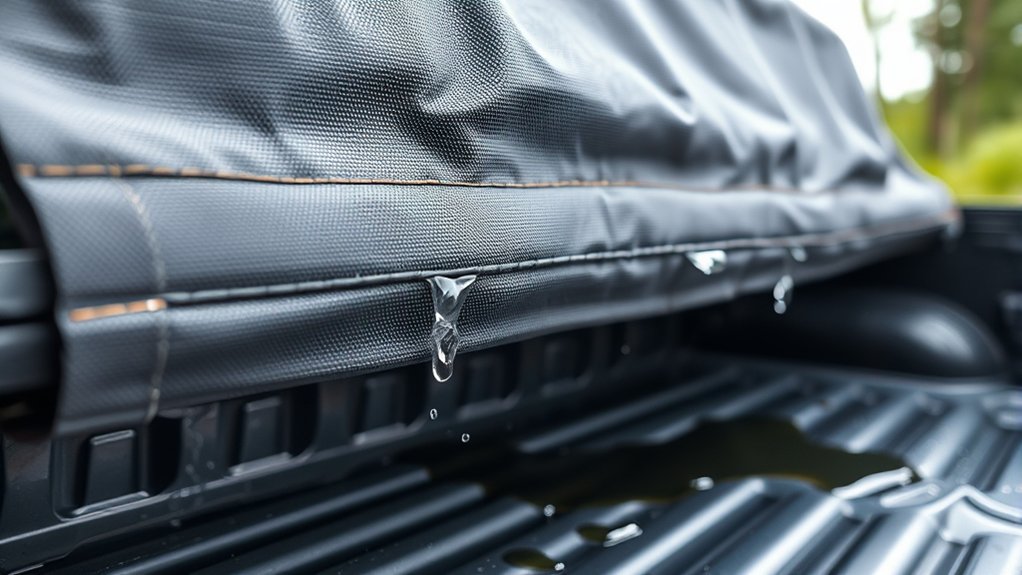
To effectively address a leaking tonneau cover, you first need to recognize the signs that water is getting inside. Look for visible puddles or damp spots in your truck bed after rain or washing.
Water stains or rust on the surface can also indicate moisture intrusion. To pinpoint leak sources, inspect the seals and edges of the cover for gaps or daylight, especially when the cover is closed.
Running a hose over the cover and observing underneath can help identify where water seeps in. Be alert for musty odors or mold, which suggest trapped moisture.
Gaps along seams or edges are common leak points. Recognizing these signs early allows you to take targeted actions to seal leaks and prevent further water intrusion.
Check and Clear Drainage Systems to Prevent Leaks
Ensuring your drainage systems are clear is essential for preventing leaks in your tonneau cover. Properly maintained drainage tubes allow water to flow out freely, reducing the risk of water leaks inside your truck bed.
To keep them clear, follow these steps:
- Inspect drains regularly for blockages or debris.
- Disconnect drainage tubes and flush them with water to clear obstructions.
- Clear dirt, leaves, or other obstructions at tube openings or inside the tubes.
- Verify proper routing to ensure water flows away from the cargo area.
Inspect Seals and Gaskets for Damage or Gaps
Regularly inspecting the seals and gaskets along your tonneau cover is key to preventing leaks. Carefully check the rubber seals for tears, cracks, or signs of deterioration, especially after harsh weather.
Run your fingers along the seal perimeter to feel for any gaps, hardened areas, or sections pulling away from the cover or bed surface. Look for debris, dirt, or grime lodged within the seals, and clean thoroughly with mild soap and water to keep the waterproof barrier intact.
At the corners and seams, look for fraying, brittleness, or broken stitching that could cause leaks. Make sure the seals stay flexible and properly seated without twists or distortions. Replace or repair damaged sections to keep your tonneau cover watertight.
Ensure Proper Alignment and Tighten Clamps and Rails
Proper alignment of your tonneau cover is key to preventing leaks, so take some time to check that the side rails are straight and level. Misaligned rails can create gaps that let water in.
To get a good seal, measure the rails at three points to make sure they are parallel and adjust if needed. Make sure the front and rear bed rails are level too, so the cover seals evenly.
Once everything looks good, tighten all the clamps securely. This helps prevent gaps at the edges and corners. Remember to recheck and tighten the clamps and rails regularly, especially after rough driving or bad weather.
Patch Small Tears and Holes in the Cover
When you notice small tears or holes in your tonneau cover, addressing them quickly can stop water from seeping through and causing leaks. Start by cleaning the torn area with mild soap and water, then let it dry completely.
Address small tears promptly with cleaning, drying, and sealing to prevent leaks and water damage.
Next, cut a patch from repair tape or a vinyl repair kit, making it at least 1 inch larger than the tear on all sides. Firmly press the patch over the tear, smoothing out any air bubbles or wrinkles for a strong bond.
For extra durability, apply a thin layer of waterproof adhesive or vinyl sealant around the edges of the patch. Let the sealant or adhesive cure fully according to the manufacturer’s instructions before exposing the cover to water.
This simple fix helps seal small tears and prevents water leaks effectively.
Test the Cover for Leaks With Water Spray
Start by preparing your testing area. Make sure the cover is fully closed and all fasteners are secure.
Use a garden hose to spray water over the entire cover. Pay close attention to seams, edges, and fasteners.
Watch underneath the truck bed for any signs of water seepage. This will help you locate and mark leaks for targeted repairs.
Prepare the Testing Area
To effectively test your tonneau cover for leaks, fill a spray bottle with water and set it to produce a fine mist that mimics rain. First, choose a suitable testing area on your truck bed, making sure it’s clean and easy to access.
Next, gather inspection tools like a flashlight and mirror to help check the seals. Identify spots that might be vulnerable, such as corners, seams, fasteners, and any existing damage or gaps.
Then, prepare the waterproof mounting to keep everything stable during the test. Focus on spraying water along the edges and seals, and watch underneath for any signs of water getting through or leaks.
Testing at different angles and pressures helps confirm the waterproof integrity of your cover and makes sure you catch any leaks effectively.
Spray Water Methodology
Using a garden hose to spray water over your tonneau cover is a simple way to check for leaks. Focus on seams, edges, and seals by spraying water at different angles and pressures to mimic weather conditions.
This helps you see how water gets in and whether your waterproof seals are still good. During the inspection, look underneath the cover and bed for damp spots or drips that could indicate leaks. Mark these spots so you can target them for repair or resealing.
Make sure the truck bed is dry before you start to avoid false positives. This method tests the integrity of your seals and shows where the cover might need reinforcement.
Properly inspecting with water highlights potential leak points, guiding your repair efforts for a watertight tonneau cover.
| Spray Angles | Pressure | Focus Areas |
|---|---|---|
| From above | Light | Seams and edges |
| From sides | Moderate | Seal perimeter |
| From below | Strong | Underneath and drainage |
| Various | Varies | All potential leak points |
Observe and Identify Leaks
Applying water to your tonneau cover shows where leaks might happen. To check properly, spray evenly over the whole surface, paying close attention to edges and seams where water could seep in.
Watch underneath the truck bed for drips or signs of water while or after spraying. Look for daylight or gaps along the edges when the cover is closed, as these are spots water can get through.
To mimic heavy rain, use a hose or spray bottle and see where water starts to penetrate. Make a note of these spots to find the weak points.
Replace Damaged Seals and Seal Gaps With Sealant
Inspect the rubber seals along your tonneau cover’s edges for tears, cracks, or signs of deterioration, and replace any damaged seals promptly. Clean the existing seals thoroughly with mild soap and water to remove dirt and debris that can prevent proper sealing.
Apply a high-quality silicone-based sealant around the perimeter of the seals, especially at corners and seams, to fill gaps and reinforce waterproofing. For larger gaps or damaged areas, consider using sealing tape as an extra barrier against leaks.
Make sure the sealant you choose is compatible with rubber and vinyl surfaces so it remains flexible and weather-resistant over time. Allow the sealant to cure completely before testing for leaks with water or a hose spray, ensuring your tonneau cover stays dry.
Adjust Tension and Re-Align for a Secure Fit
To make sure your tonneau cover stays leak-proof, it’s important to check and adjust its tension for a snug fit. Start by loosening the tension adjusters to reduce slack, then pull the cover taut across the bed.
Use a measuring tape to re-align the cover evenly with the bed rails at multiple points, making sure there are no gaps. Gradually tighten the tension adjusters, ensuring the vinyl or fabric remains drum-tight without overstretching.
Next, re-align the cover by repositioning clamps or bed rails, especially near the front and sides, to eliminate any gaps. Finally, test the fit by spraying water over the cover and inspecting for leaks or slack areas that need further tightening.
Proper tension and re-alignment will keep leaks out and ensure a secure, snug fit.
Perform Routine Maintenance to Prevent Future Leaks
Performing routine maintenance is essential to keep your tonneau cover leak-free over time. Regularly inspect the seals and drainage tubes to spot debris that can cause leaks. Clean these components with mild soap and water to remove dirt, grime, and obstructions.
Keep drainage pathways clear to prevent water buildup. Tighten clamps and adjust tension systems periodically to guarantee a snug, leak-proof fit. Applying silicone-based lubricant to seals every few months helps maintain their flexibility and prevents cracking or damage.
Proper maintenance also involves storing the cover properly in a dry, shaded area when not in use. This helps prevent deterioration of sealing components. Consistent upkeep ensures your tonneau cover remains secure, functional, and leak-free for the long haul.
Decide When to Repair or Replace Your Tonneau Cover
Knowing when to repair or replace your tonneau cover can save you both time and money. If leaks are caused by minor damage like worn seals, small tears, or loose clamps, a quick repair during routine checks will usually do the trick.
But if leaks keep coming back despite repairs, or if the cover has extensive damage, it’s better to replace it. Think about the age of your cover too—most need replacing after 5-7 years because the material wears out.
If multiple areas need repairs or the damage is severe, swapping out the entire cover is a smart move for long-term reliability. Use leak testing methods to see if your repairs are working.
When you’re unsure, replacing your tonneau cover can prevent ongoing leaks and save you from costly repairs later on.
Verify Leak Fixes With Water Testing
To verify your leak fixes, spray water over the entire tonneau cover, focusing on seams, edges, and repair spots.
Keep an eye underneath for any signs of water entry, like damp spots or drips.
If you notice leaks, tighten seals or reapply sealant and test again until no water gets through.
Conduct Water Spray Test
Before considering further repairs, it’s important to check if your tonneau cover still leaks by doing a water spray test. Use a garden hose to spray water over the entire cover, paying close attention to seams, edges, and seals to mimic rain conditions.
Watch underneath the truck bed for any signs of water getting in or leaks during and right after spraying. Test from different angles and with various water pressures to make sure you catch any leaks thoroughly.
Focus on areas where water first appears or where you’ve previously made repairs, as these spots are common leak points. Once the test is done, let the cover dry completely and re-inspect the seals and fasteners for any signs of wear or water ingress, confirming your waterproofing efforts.
Inspect for Water Entry
After completing the water spray test, it’s important to check if your repairs have sealed the leaks effectively. Use a hose to spray water over the tonneau cover while inspecting underneath the truck bed for water entry.
Focus on seams, edges, and around seals to spot any leaks. Try water testing at different angles and pressures to mimic various weather conditions and find the leak’s source.
After testing, inspect the inside of the truck bed for damp spots, water stains, or moisture buildup that could mean water is getting in. If you find leaks, reapply sealant or tighten fasteners in those spots.
Reinforce the seals and edges, then repeat the water test until no water enters. This way, you can be confident your seal is watertight.
Frequently Asked Questions
How Do I Stop My Tonneau Cover From Leaking?
To stop your tonneau cover from leaking, start by inspecting and cleaning all seals and seams regularly.
Adjust the tension and alignment to close any gaps. If you find damaged seals, replace them immediately.
Make sure drainage tubes are clear so water can be diverted away properly. For small leaks, you can apply waterproof tape or sealant to the affected areas.
Keeping everything tight, clean, and well-maintained helps prevent water from seeping through.
How to Make a Tonneau Cover Watertight?
To make your tonneau cover watertight, start by inspecting and cleaning the seals and edges for cracks or damage. Replace any worn seals with tight-fitting, manufacturer-approved ones.
Use silicone sealant or weatherproof tape along seams and gaps, making sure everything fits snugly. Regularly test for leaks by spraying water and reapplying sealant or adjusting the cover’s tension as needed.
Proper alignment and maintenance will keep your cover watertight effectively.
What to Use to Seal a Tonneau Cover?
Sealing your tonneau cover is like wrapping a gift tightly to prevent water from sneaking in. Use rubber weather seals or foam edge seals with adhesive backing to block gaps along the perimeter.
Silicone-based sealants work well for seams and edges, creating a flexible barrier. Waterproof tapes, such as butyl or coax-seal, are great for fixing minor leaks and keeping your cover dry and secure.
How to Keep Water From Pooling on a Tonneau Cover?
To prevent water from pooling on your tonneau cover, make sure it’s installed with a slight incline to help water run off.
Regularly clean the surface and seals to remove debris that can trap water. Check and adjust or replace seals and drainage tubes to keep water flowing smoothly.
After it rains or you wash the truck, make sure to remove any standing water promptly. These steps help water slide off instead of pooling, which can reduce leaks and extend your cover’s lifespan.
Conclusion
By following these steps, you’ll keep your tonneau cover watertight and ready for any weather, just like a trusty knight’s shield. Regular checks and maintenance are your best allies—don’t wait till the Great Flood, or you might find yourself wishing you’d taken action sooner.
Think of it as maintaining your chariot; a little effort now saves you from a soggy surprise later. Stay vigilant, and your cover will serve you well through many a rainy day. Keeping your tonneau cover leak-free is all about prevention and regular upkeep.