7 Factors That Make Spark Plugs Expensive
Many car owners find themselves frustrated when it’s time to replace spark plugs, especially when prices seem to skyrocket unexpectedly. If you’re wondering why some spark plugs cost more than others, you’re not alone. Several factors make spark plugs expensive, and understanding these can help you make smarter choices.
The materials used, like platinum and iridium, cost more than copper, boosting price and durability. Larger engines with more cylinders require extra plugs, increasing costs. Advanced manufacturing steps, such as laser welding and high-quality insulators, add to expenses.
Difficult access during installation, vehicle make and model, and premium brand names also drive prices higher. If you want to understand what else influences costs, keep exploring these key points.
Key Takeaways
- Using rare and durable materials like platinum and iridium makes manufacturing more expensive.
- Advanced features, like built-in sensors and dual-electrode designs, also add to the cost because they make the spark plugs more complex.
- When engine designs are complicated or hard to access, it takes more time and effort to install them, which raises labor costs.
- Precise manufacturing processes, such as laser welding and strict quality control, increase production expenses.
- Reputable brands tend to charge higher prices because people perceive them as more reliable and of better quality.
How Material Choices Like Copper, Platinum, and Iridium Affect Spark Plug Costs
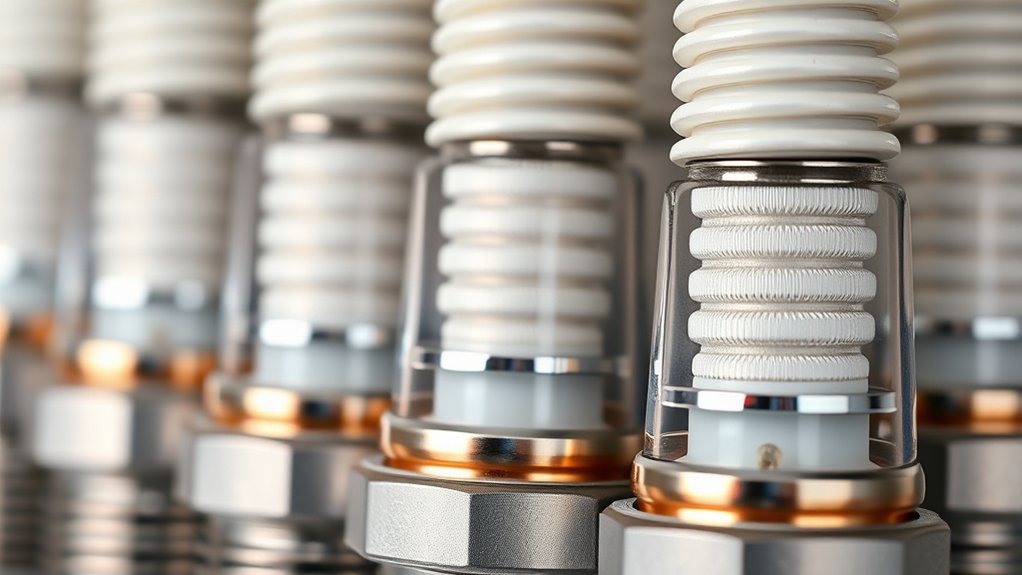
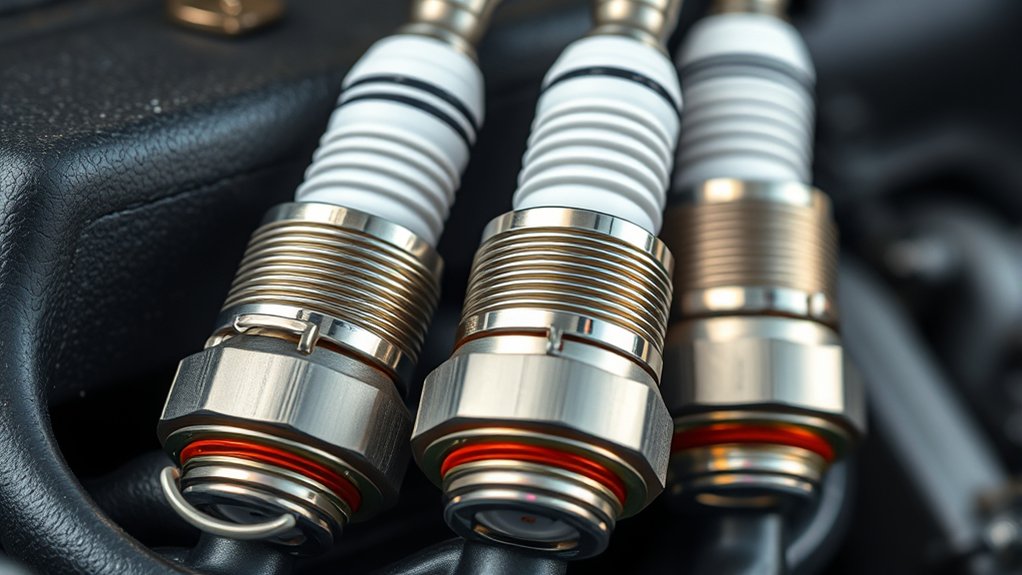
The choice of materials really impacts the cost of spark plugs, with copper, platinum, and iridium each bringing their own unique qualities. Copper spark plugs are the most budget-friendly because of their simple metal design and lower manufacturing costs.
Platinum spark plugs cost more because they use durable platinum, which helps them last longer and perform better. Iridium spark plugs are the most expensive since iridium is a rare metal that offers exceptional durability and resistance to wear.
This choice of material directly affects the price, with iridium plugs often costing several times more than copper ones. Even though they’re pricier, platinum and iridium spark plugs provide better performance and longer intervals between replacements, making them a smart investment for many drivers.
How Engine Size and Cylinder Count Drive Spark Plug Pricing
Your engine’s size and cylinder count directly influence how much you’ll pay for spark plugs. Larger engines with more cylinders need more plugs, which adds to the overall cost.
Plus, complex engine designs can make installation take longer, increasing labor charges. So, the bigger and more complicated your engine, the higher your spark plug costs will be.
Impact of Engine Size
Larger engines with more cylinders significantly increase spark plug costs because each cylinder needs its own spark plug.
The engine size, measured by displacement, affects the size and complexity of the spark plugs, often making them more expensive.
Engines with more cylinders, like V8s, require extra parts and labor during replacement, which raises overall costs.
The number of cylinders directly impacts the parts and labor involved since more plugs need to be removed and installed.
Engine layouts like V-shaped or flat engines can also extend labor time, further increasing spark plug service expenses.
As engine size and cylinder count grow, so does the spark plug cost, making maintenance more expensive for larger, complex engines.
Number of Spark Plugs
Have you ever wondered how the number of spark plugs affects their overall cost? It mainly depends on the engine size and how many cylinders it has, which directly impacts replacement expenses.
Larger engines with more cylinders need more spark plugs, so the parts cost goes up. For example, a four-cylinder engine requires four spark plugs, costing between $20 and $80 just for the parts.
V8 engines might need eight or more spark plugs, which increases the parts cost accordingly. More spark plugs also mean longer labor because of the extra disassembly and installation time.
Complex engine designs like boxer or V-type engines can add to labor costs because of their intricate setups.
As the number of spark plugs increases, both parts and labor costs go up, making replacements more expensive overall.
Why Manufacturing Processes Make Some Spark Plugs More Expensive
Manufacturing high-quality spark plugs requires precise techniques and specialized materials, which naturally drive up costs.
Precise machining ensures each spark plug meets strict tolerances for peak performance.
Advanced manufacturing methods like laser welding and meticulous quality control are essential for premium plugs, increasing production expenses.
Using rare metals such as iridium and platinum in electrodes adds to the cost because of their scarcity and high value.
Complex designs tailored to modern engines often demand sophisticated manufacturing equipment, making production more expensive.
These processes guarantee durability and high performance but also involve higher labor and machinery costs.
How Labor and Installation Challenges Impact Spark Plug Expenses
When replacing spark plugs, tricky access caused by engine design or nearby components can significantly raise labor costs.
Getting to the plugs might be a hassle, especially in engines with compact layouts or crowded engine bays.
Proper installation also matters — setting the right torque and gap takes precision and extra time, which adds to the overall cost.
Complex engine setups, like V8s or boxer engines, make the job even harder and more expensive to do.
Accessing Difficult Locations
Ever wondered why some spark plug replacements cost more than others? It often comes down to accessing difficult locations. When spark plugs are hard to reach, extra steps are needed, which can increase labor costs.
You might have to remove engine covers or even components like the intake manifold, which extends the repair time. Engines with complex layouts, such as transverse or V-shaped designs, make access even more challenging.
In such cases, specialized tools or techniques are required to reach deep or obstructed spark plugs. These added complexities mean more labor hours and higher expenses.
Vehicles with tight engine compartments or unique designs further complicate the process, making repairs more costly. Overall, difficult access significantly impacts both the time and effort involved in spark plug replacement.
Proper Torque Application
Proper torque application is crucial for keeping spark plug replacements cost-effective and reliable. Using a torque wrench helps you apply the right amount of force, preventing damage during installation.
Under-tightening can cause the plug to loosen, which may lead to misfires and leaks. That means you’ll probably need extra labor to fix those issues. Over-tightening, on the other hand, risks stripping threads or cracking the ceramic insulator, which can be costly.
Modern engines with tight clearances make precise torque even more important. Following the manufacturer’s specs helps you avoid expensive mistakes and keeps the spark plug performing at its best.
Engine Design Complexities
Engine design complexities can significantly increase spark plug replacement costs because accessing and removing the plugs often takes more time and effort.
Different engine layouts, like V-shaped or boxer designs, can make spark plugs harder to reach, which raises labor costs.
Engines with tightly packed or recessed spark plugs need special tools and techniques, making the process more complicated.
Sometimes, disassembling parts like intake manifolds or cylinder heads is necessary, adding to both time and expense.
Additionally, systems like multi-valve or turbocharged engines further complicate the job.
Knowing these factors can help you understand why engine design intricacies lead to higher service charges.
Do Brand Reputation and Quality Affect Spark Plug Pricing?
Brand reputation and quality are big factors in spark plug prices. Well-known brands with solid reputations often charge more because people see them as more reliable and long-lasting.
High-quality spark plugs from reputable makers usually use better materials and have more precise manufacturing. This naturally boosts their costs. These brands often include advanced features like improved heat transfer and corrosion resistance, justifying the higher prices.
Your trust in a reputable name can make you willing to pay more, even if the actual manufacturing costs are similar to lesser-known brands.
| Brand Reputation | Quality | Price Premiums |
|---|---|---|
| Trusted names | Superior materials | Higher costs |
| Performance focus | Precision manufacturing | Consumer trust |
| Advanced features | Durability | Willing to pay more |
What Are the Extra Features and Technologies That Raise Spark Plug Costs?
Advanced spark plug features and cutting-edge technologies significantly increase the cost. These innovations boost performance but come with a higher price tag.
For example, platinum and iridium tips are more durable and efficient, which improves both longevity and performance. Built-in sensors enhance ignition control but also make manufacturing more complex.
Dual-electrode designs help optimize spark coverage, which raises the price. Ceramic insulators with better heat resistance add to production costs as well.
Laser-welded electrodes create a stronger, more reliable connection, but their precise manufacturing process is costly. These extra features, while useful, greatly raise the overall price of spark plugs.
If you’re after top-tier performance, be prepared to pay more for these technological upgrades.
How Your Vehicle Make and Model Impact Spark Plug Expenses
The specific make and model of your vehicle play a big role in how much you’ll spend on replacing spark plugs. Different cars need different numbers of plugs, which impacts the overall cost.
Luxury or performance vehicles often require specialized, high-performance spark plugs that tend to cost more. The engine design, like inline, V-shaped, or boxer engines, also affects how complicated the job is and how long it takes.
Some makes have spark plugs tucked away in hard-to-reach spots, which can increase labor costs. Plus, the age and compatibility of OEM parts can bump up the price, especially if newer or specific parts are needed for your vehicle.
Frequently Asked Questions
What Makes Spark Plugs Expensive?
Spark plugs are expensive because they often use advanced materials like iridium or platinum, which last longer and boost performance. You’ll pay more if they’re designed for complex engine setups or need special installation.
Premium parts and precise manufacturing also drive up the cost. Plus, limited availability or OEM-specific designs can make certain spark plugs pricier, especially for high-performance or specialized vehicles.
How Much Are Spark Plugs for a 4runner?
Spark plugs for your Toyota 4Runner usually cost between $5 and $20 each, depending on the brand and material.
If you’re replacing all of them, you can expect to spend around $100 to $250 for parts and labor.
V6 and V8 models need more plugs, which can increase the overall cost.
Premium options like iridium or platinum plugs cost more upfront but tend to last longer, saving you money in the long run.
What Spark Plugs Are Best for 1zz?
Did you know iridium spark plugs can last up to 100,000 miles? For your 1ZZ engine, iridium or platinum spark plugs are the best choices.
They offer superior durability, ignition efficiency, and performance. Stick with reputable brands like NGK or Denso for the best results.
Avoid copper plugs, as they wear out faster. Upgrading to high-quality plugs ensures better fuel economy and smoother engine operation.
What Spark Plugs Are Best for Lexus?
The best spark plugs for your Lexus are high-quality iridium or platinum ones, as recommended by the manufacturer.
You should choose OEM or equivalent plugs designed specifically for your model to guarantee peak performance and longevity.
Using these premium plugs helps prevent misfires, improve fuel efficiency, and keep your engine running smoothly.
While they cost more upfront, their durability and better performance make them a smart investment for your Lexus.
Conclusion
Understanding these factors is like peeling an onion—you’ll discover more layers that influence spark plug prices.
Knowing how materials, engine size, manufacturing, and brand reputation come into play helps you navigate your options better.
Think of it as choosing the right tool for a job—you want quality without overspending.
Being informed allows you to make smarter decisions, ensuring your vehicle runs smoothly without breaking the bank.
After all, a well-chosen spark plug is like the spark that ignites perfect engine performance.
Understanding why spark plugs can be expensive helps you get the best value for your money.