How to Fix Spark Plugs in 7 Simple Steps
Are you tired of your car running rough or struggling to start? Many people face these issues and feel overwhelmed trying to fix their spark plugs on their own. But don’t worry—you’re not alone, and fixing spark plugs is easier than you think.
To fix your spark plugs in 7 simple steps, first check for signs like misfires or rough idling to know if replacement is needed.
Gather the right tools, including a spark plug socket, ratchet, and gap tool. Remove the old plugs carefully, inspect them for wear or fouling, and decide if they can be cleaned or need replacing.
Install new plugs with the proper gap and torque, reconnect the wires or coils securely, then start your engine.
Ensuring smooth performance means you’re on the right track—learn more if you want to get it perfect.
Key Takeaways
- Gather the correct replacement spark plugs, tools, and safety gear before you start. It’s always best to be prepared so you don’t have to stop halfway through.
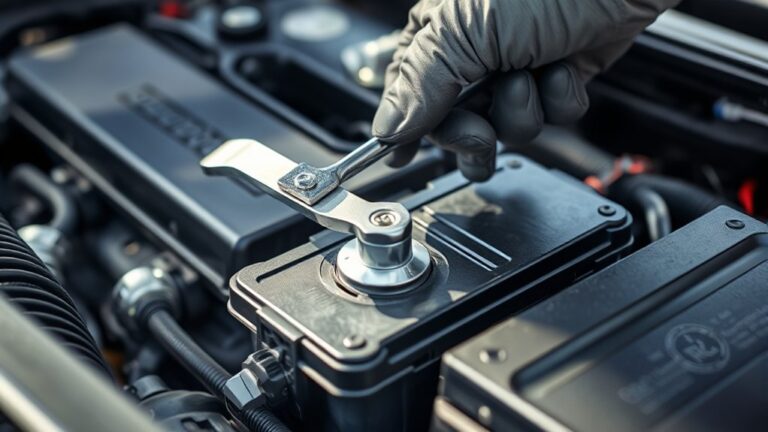
- Disconnect the negative battery terminal to stay safe while you work on removing and installing the plugs. Safety first!
- Carefully loosen the old spark plugs using a spark plug socket. Take your time to avoid damaging anything. Once they’re out, inspect them to see if there’s any damage or wear.
- Check and set the correct gap on your new spark plugs. This is important for proper engine performance. Then, install the new plugs and tighten them to the torque specified by the manufacturer.
- Reconnect the spark plug wires or coils securely. Make sure everything is attached properly. Finally, start your engine to check if it runs smoothly without any misfires or issues.
How to Recognize When Your Spark Plugs Need Replacing
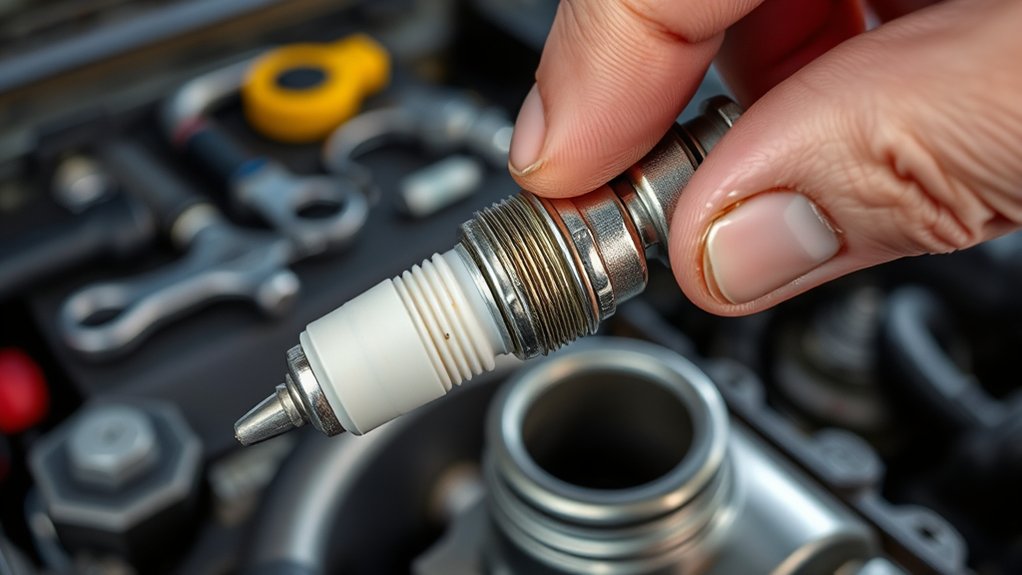
Recognizing when your spark plugs need replacing is key to keeping your engine running smoothly. Worn electrodes or heavy carbon buildup can cause misfires, which lead to rough idling and trouble starting your car.
If your engine misfires or idles roughly, that’s a good sign your spark plugs might be failing. You might also notice your fuel efficiency dropping or your acceleration feeling sluggish—that’s another clue.
Look for visual signs like cracked, chipped, or overly worn ceramic insulators. These indicate it’s time to replace your spark plugs. Also, check the gapped electrodes—if they’re much wider or uneven compared to factory specs, it’s time for a change.
Addressing these signs early helps ensure your engine runs smoothly and keeps your fuel economy on point.
Gather Your Tools and Materials for Spark Plug Replacement
Before you start replacing your spark plugs, gather the essential tools like a spark plug socket, ratchet, extension bar, and gap tool.
Make sure you have the correct spark plugs for your vehicle, as specified in your owner’s manual, and keep safety items like dielectric grease and anti-seize handy.
Confirm your workspace is clean and well-lit, and disconnect the negative terminal of the battery for safety.
Essential Replacement Tools
Gathering the right tools is essential for a smooth spark plug replacement. First, you’ll need a spark plug socket with a rubber insert to grip the plug securely without causing damage.
An extension bar can help you reach tight spots, especially in hard-to-access engine areas. A ratchet wrench makes loosening and tightening the plugs easier.
A torque wrench is important to tighten the plugs to the manufacturer’s specs without overdoing it. You’ll also want a spark plug gap tool to measure and adjust the electrode gap on new plugs.
For added protection and ease, applying anti-seize compound helps prevent the plugs from seizing in the cylinder head. Optional tools like dielectric grease can improve electrical connections, but the core essentials are the socket, extension, ratchet, torque wrench, and gap tool.
Correct Spark Plug Types
Do you know how to choose the right spark plugs for your vehicle? Picking the correct spark plug types guarantees ideal engine performance and reliable replacement. Check your vehicle’s specifications, including size, heat range, and type like iridium or platinum, before purchasing.
Refer to your owner’s manual or a trusted catalog to confirm the correct model and part number. Inspect existing spark plugs for wear or damage to decide if replacement is necessary or if cleaning will do. Before installing, use a spark plug gapping tool to set the right spark plug gap according to the manufacturer’s specs.
Using the right spark plug types helps keep your engine running smoothly and prevents future problems. It makes your replacement process more effective and efficient.
Safety and Preparation
Ensuring you have all the necessary tools and materials ready is key for a safe and efficient spark plug replacement. Before you start, make sure the engine is completely cool to avoid burns or damage.
Gather your tools like a spark plug socket, ratchet, extension bar, and a gap gauge. Check your vehicle’s manual to pick the right type and size of spark plugs for a proper fit.
Apply dielectric grease on ignition coil boots and plug wires to prevent moisture and improve electrical contact. Keep your workspace clean by removing dirt or debris around the spark plugs with compressed air or a vacuum.
If needed, disconnect the battery for safety, and make sure your work area is well-lit and organized. Proper preparation helps you avoid accidents and makes the whole process smoother.
Inspect Your Spark Plugs and Decide: Clean or Replace?
Before deciding whether to clean or replace your spark plugs, carefully inspect the electrode and ceramic insulator for cracks, heavy deposits, or signs of wear.
During a thorough spark plug inspection, check the electrode gap against your vehicle’s specifications. A widened or uneven gap signals the need for replacement.
Light fouling can be cleaned with a wire brush or spark plug cleaner, but heavy fouling usually means replacing the plug.
If you notice corrosion, oil fouling, or damaged electrodes, replacing the spark plug is your best option to maintain reliable ignition.
Worn or rounded electrodes reduce spark efficiency, so replacing them ensures better engine performance.
Always prioritize replacing damaged or excessively worn plugs to keep your engine running smoothly.
How to Safely Remove and Inspect Old Spark Plugs
Before removing your spark plugs, make sure the engine is completely cool to avoid burns.
Gently twist and pull the spark plug wire or ignition coil straight off. Then, use a spark plug socket and ratchet to loosen it counterclockwise.
Once you’ve removed the plug, examine it closely for signs of wear, carbon buildup, cracks, or damage. This will help you decide if it needs cleaning or replacement.
Proper Removal Techniques
When removing spark plugs, it’s important to do it safely to avoid damaging the engine and to ensure proper inspection. First, make sure the engine is completely cool to prevent burns and damage.
Use a spark plug socket with a rubber insert to grip the plug securely without risking damage to the ceramic insulator. Attach the socket to a ratchet and extension, then turn counterclockwise with steady pressure to loosen the plug, being careful not to cross-thread.
If the plug is stubborn or rusted, spray penetrating oil around the threads and let it sit for a few minutes to make removal easier. Gently lift the spark plug out by hand after loosening, making sure not to damage the threads or the cylinder head.
Inspecting Spark Plug Condition
Have you ever wondered how to tell if your spark plugs are still working properly? To check, start by carefully loosening and removing the plug with a spark plug socket and ratchet, making sure the engine is cool.
Next, examine the electrode for wear, erosion, or heavy carbon deposits, which could mean it needs replacing. Also, check the ceramic insulator for cracks, chips, or damage that might affect spark performance.
Measure the spark plug gap with a gapping tool and make sure it matches the manufacturer’s specs. If you see excessive carbon buildup, clean it with a wire brush if you’re reusing it; otherwise, it’s best to replace the spark plug.
Properly inspecting your spark plugs helps keep your engine running smoothly and prevents misfires.
Installing New Spark Plugs the Right Way
Are you ready to guarantee your new spark plugs are installed correctly? Start by checking and setting the right spark plug gap with a gap tool to maximize engine performance.
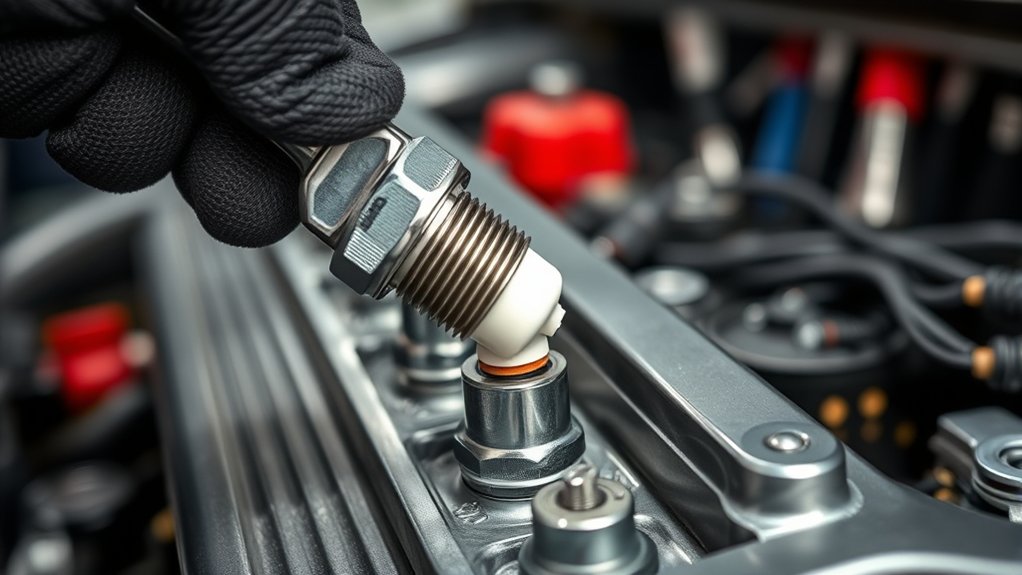
When installing, hand-thread the spark plugs into the cylinder head to prevent cross-threading. Once in place, tighten them to the manufacturer’s specified torque using a torque wrench. This helps avoid thread damage and over-tightening.
If recommended, apply a small amount of anti-seize compound to the threads, but don’t overdo it. After installation, firmly reconnect the spark plug wire or ignition coil, making sure it clicks into place.
Finally, verify the spark plug is seated properly and check for any signs of cross-threading or leaks. Proper installation is key for smooth engine operation.
Reconnect Wires or Coils and Finalize the Installation
To keep your engine running smoothly, make sure to reconnect the spark plug wires or ignition coils properly after installing new spark plugs. Ensure each one is fully seated onto its terminal to prevent misfires.
Use dielectric grease inside the boot of each wire or coil; it helps with insulation and makes future removal easier. Double-check that the firing order matches your vehicle’s manual to avoid engine issues.
Apply dielectric grease inside each boot for insulation and easier removal; verify firing order with your vehicle’s manual.
When reconnecting, firmly press or snap each wire or coil onto its spark plug. You should hear a click or feel a firm fit. Before starting the engine, double-check all connections are tight and properly aligned.
- Reconnect each wire or coil securely, ensuring no loose connections.
- Verify the correct firing order to avoid engine problems.
- Double-check all connections are secure before proceeding.
Start Your Engine and Check for Smooth Performance
Once you’ve finished reconnecting the wires or coils, start your engine and let it reach its normal operating temperature. Now, listen and watch closely to see how it performs.
Check the engine’s idle for roughness, misfires, or hesitation. These can be signs of ignition problems. Also, listen for unusual noises like knocking or sputtering that might point to spark plug issues.
Make sure the engine accelerates smoothly without jerking or stalling when you press the gas pedal. To be thorough, use a scanner or engine diagnostic tool to check for any codes related to misfires or ignition faults.
This step helps confirm your spark plugs are working properly and that your engine is healthy.
Frequently Asked Questions
How Do I Fix My Spark Plugs?
To fix your spark plugs, start by locating and carefully removing the wires or coils. Use a spark plug socket and ratchet to unscrew the old plugs.
Check the old plugs for wear or damage, then set the correct gap on your new ones. Hand-tighten the new plugs, then tighten to the recommended torque.
Finally, reconnect the wires or coils securely. This process helps your engine run smoothly and efficiently.
Can You Fix a Spark Plug at Home?
Yes, you can fix a spark plug at home if you have the right tools and some basic mechanical knowledge.
Start by making sure the engine is cool and disconnect the battery for safety. Then, remove the spark plug, inspect or clean it, and check the gap.
If it’s damaged or heavily fouled, replace it. Properly gapping and torquing the plug is key to keeping your engine running smoothly and avoiding damage.
How Do You Change Spark Plugs Step by Step?
To change spark plugs, start by disconnecting the spark plug wire or ignition coil once the engine has cooled down.
Use a spark plug socket and ratchet to carefully unscrew and remove the old plug.
Next, check and adjust the gap on the new plug to ensure proper fit and performance.
Thread the new plug in by hand first to avoid cross-threading, then tighten it with a torque wrench.
Finally, reconnect the wire, start the engine, and listen for smooth operation to make sure everything’s working correctly.
How to Fix Spark Plug Problems?
To fix spark plug problems, start by inspecting them for wear, cracks, or carbon buildup.
Check the gap and adjust it to the manufacturer’s specs using a gap tool. Clean any fouled plugs with a wire brush if they’re still good.
If the plugs are damaged or worn out, replace them with the correct type. Finally, make sure they’re torqued properly to avoid misfires and guarantee peak engine performance.
Conclusion
Replacing your spark plugs can boost your engine’s efficiency and save you money on repairs. Did you know that worn spark plugs can reduce fuel efficiency by up to 30%?
By following these simple steps, you guarantee your car runs smoothly and reliably. Regular maintenance not only prolongs your engine’s lifespan but also keeps your driving experience enjoyable.
Keep an eye on your spark plugs, and you’ll enjoy better performance and savings in the long run. Properly fixing your spark plugs is key to maintaining a healthy engine and ensuring your vehicle runs at its best.