How to Clean Spark Plugs in 7 Easy Steps
Many car owners find themselves frustrated when their engine runs rough or stalls unexpectedly. One common culprit? Dirty or worn spark plugs. If you’re tired of these issues and want to keep your engine running smoothly, learning how to clean spark plugs is a great place to start. You’re not alone—many people struggle with maintaining their vehicle’s performance, but a simple cleaning can make a big difference.
To clean your spark plugs in 7 easy steps, start by inspecting them for signs of fouling or damage.
Next, safely remove them after ensuring the engine is cold and disconnect the wires carefully.
Use a wire brush or cleaner to remove carbon buildup, then check and adjust the gap to the manufacturer’s specs.
Once cleaned, reinstall and tighten to the correct torque, ensuring everything is secure.
For more detailed tips, continue exploring how to maintain your spark plugs effectively.
Key Takeaways
- Carefully remove the spark plug using a spark plug socket and ratchet after the engine has cooled down.
- Check for any damage, carbon buildup, and measure the electrode gap before you start cleaning.
- Use a wire brush or a specialized cleaner to scrub away deposits. If there’s stubborn grime, spray some WD-40 to help loosen it.
- Make sure the spark plug is completely dry before proceeding. Then, adjust the electrode gap to match the manufacturer’s specifications.
- Finally, reinstall the spark plug with the proper torque, reconnect the wire, and ensure everything is seated securely.
Signs Your Spark Plug Needs Cleaning or Replacement
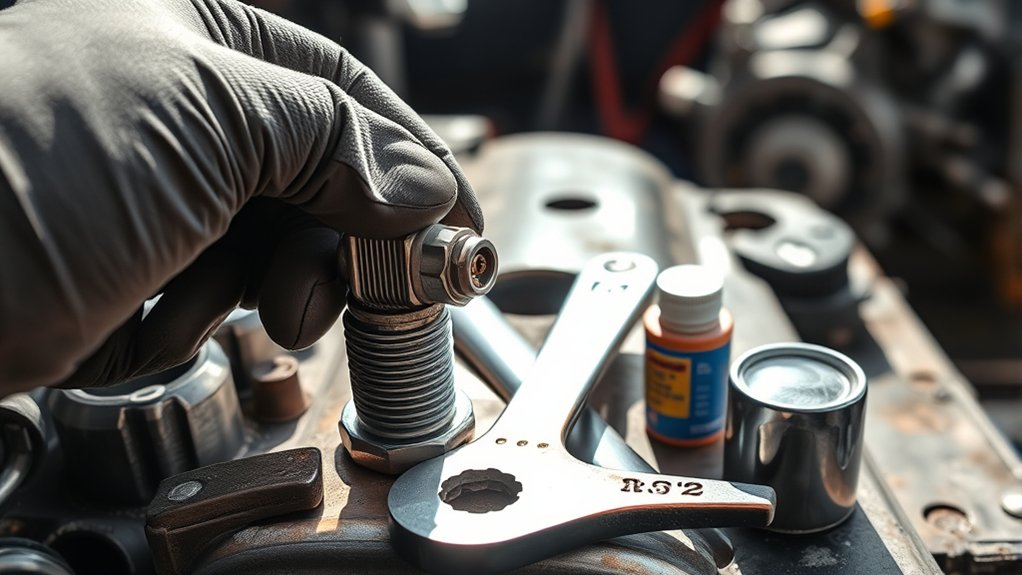
Your engine will often give you clear signals when your spark plug needs cleaning or replacement. If you notice misfires, rough idling, or difficulty starting, it’s time to check your spark plugs.
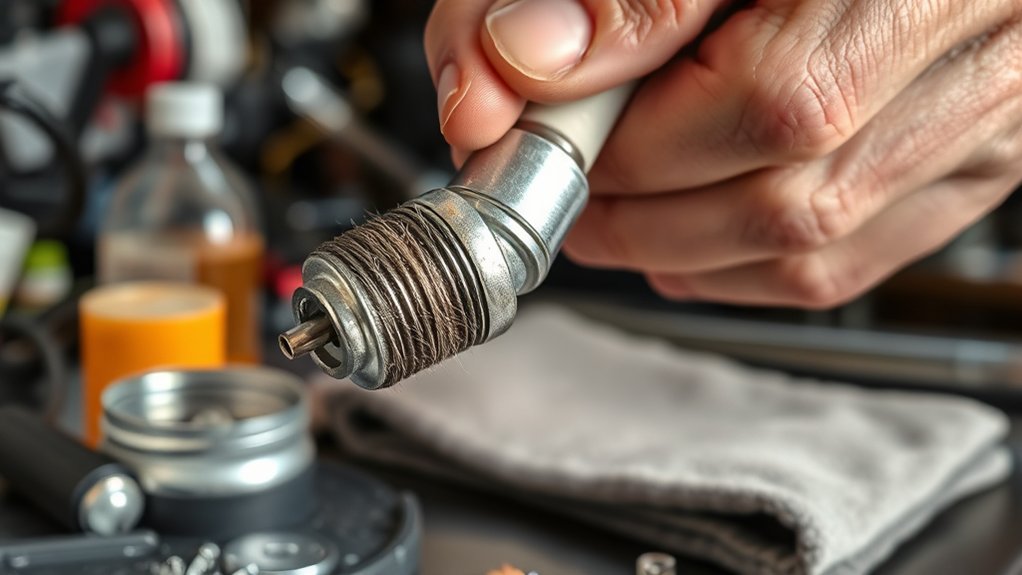
Dirty spark plugs usually show visible buildup of carbon deposits or soot on the electrode, which means they need cleaning. Worn or damaged electrodes, like cracks or rounded tips, suggest you should replace them instead.
An increased gap between the electrode and insulator also points to wear and can reduce spark efficiency. Plus, poor fuel economy and sluggish acceleration are common signs of fouled or aging spark plugs.
Recognizing these signs early helps keep your engine running smoothly and prevents further damage. Regular inspections ensure your spark remains clean and your vehicle performs at its best.
Preparing and Safely Removing Your Spark Plug
Before you start, make sure the engine has cooled completely to avoid burns or damage.
Locate the spark plug wires or ignition coils carefully, and disconnect them without pulling on the wires.
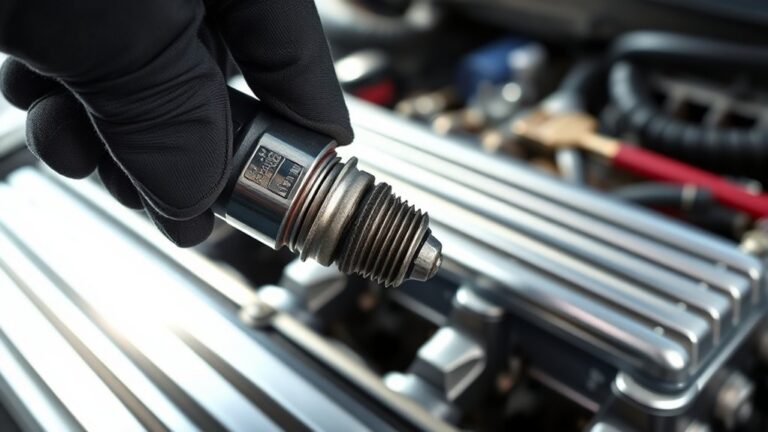
Use a spark plug socket and ratchet to gently unscrew the plug, handling it carefully to prevent damage.
Cool Engine Before Work
To safely remove a spark plug, make sure the engine has cooled completely. A cool engine helps prevent burns and damage, keeping you safe during the process.
Once it’s cooled, find the spark plug wires and carefully disconnect them by pulling on the boot, not the wire itself. This helps avoid damaging the wires.
Use a socket wrench with an extension to gently unscrew the spark plug by turning counterclockwise. Handle the spark plug carefully to prevent dropping or damaging the ceramic insulator.
Locate Spark Plug Easily
Wondering how to find the spark plug easily? First, make sure your engine is completely cool to avoid burns or damage.
Next, follow the spark plug wires or ignition coil leads—they go directly to each plug on the engine. Carefully trace these wires to locate the spark plug, which is usually on the cylinder head.
Once you find the plug, check for dirt or debris around it and clear it away. This will make removal easier.
Use a spark plug socket with a ratchet wrench to safely loosen the plug without forcing it. Keep track of each spark plug’s position so you can reinstall them correctly later.
Locating the spark plug accurately is key to a smooth cleaning process.
Remove Spark Plug Carefully
Ensuring the engine is completely cool is essential before attempting to remove the spark plug, as hot components can cause burns or damage.
To remove the spark plug carefully, start by gently disconnecting the spark plug wire or ignition coil. Pull on the boot rather than the wire itself to prevent damage.
Use a properly sized spark plug socket with a ratchet wrench to carefully turn counterclockwise and loosen the plug without forcing it.
Keep track of each spark plug’s position during removal so you can reinstall it correctly later.
Handle the spark plug carefully to avoid dropping or damaging the ceramic insulator or electrode.
If the spark plug is dirty, use a wire brush to clean the electrodes before reinstallation, ensuring ideal performance.
Inspecting Your Spark Plug for Damage or Fouling
Inspecting your spark plug for damage or fouling is an important part of keeping your engine running smoothly. During inspection, look at the insulator for cracks, chips, or discoloration—these can be signs of damage that might cause misfires.
Check the electrode for excessive carbon buildup, soot, or oil fouling, as these can reduce spark efficiency. Use a feeler gauge to measure the spark plug gap and make sure it matches the manufacturer’s specs for the best performance.
Also, look for signs of wear like rounded or eroded electrodes, which might mean it’s time to replace the spark plug. Carefully inspect the ceramic insulator for cracks or chips, as these can lead to engine issues or misfires.
Doing these checks early helps you spot problems before they get worse, keeping your engine running smoothly.
Cleaning and Adjusting Your Spark Plug for Optimal Performance
To keep your spark plugs running smoothly, use proper cleaning techniques that remove carbon deposits without damaging the ceramic.
Check and adjust the electrode gap to match the manufacturer’s specs for maximum combustion.
Once cleaned and adjusted, wipe the plug dry and reinstall it for peak performance.
Proper Cleaning Techniques
Cleaning your spark plug thoroughly is essential for maintaining optimal engine performance. Start by inspecting the spark plug for any carbon buildup or grime.
Use a spark plug cleaner, like a wire brush or a specialized tool, to gently remove deposits. Be careful not to damage the ceramic insulator or electrode.
For stubborn grime, spray WD-40 or carburetor cleaner onto the plug and let it sit for a few minutes to loosen dirt.
Gently scrape off deposits with a small file or scraper, avoiding abrasive materials.
After cleaning, ensure the spark plug is completely dry and free of residues before reinstalling.
Proper cleaning techniques help your spark plug fire correctly, leading to smoother engine operation and better fuel efficiency.
Electrode Gap Adjustment
Ensuring your spark plug’s electrode gap is correct is key to getting the best engine performance. The gap affects how well the spark ignites the fuel mixture.
Use a feeler gauge to measure the gap and compare it to the manufacturer’s specs, usually between 0.028 and 0.060 inches. If it’s too wide or narrow, gently bend the ground electrode with pliers.
Be careful not to damage the ceramic insulator or the electrode itself while adjusting. Afterward, re-measure the gap to make sure it’s set correctly.
A properly gapped spark plug produces a strong, consistent spark, which improves engine efficiency and helps prevent misfires. Checking and adjusting the gap regularly while cleaning helps keep ignition performance optimal and extends the spark plug’s lifespan.
Ensuring Optimal Combustion
Regularly cleaning and adjusting your spark plug helps maintain a strong, consistent spark that promotes complete combustion in your engine. To keep your engine running smoothly, you need to clean your spark, remove carbon deposits, and set the correct electrode gap using a feeler gauge.
This process prevents misfires, rough idling, and engine damage. Properly gapped spark plugs improve ignition efficiency, fuel economy, and help reduce emissions. When you use the right method and tools to spark plug, you boost engine reliability and longevity.
Remember, a well-maintained spark plug ensures reliable ignition and smooth operation. Keep these principles in mind:
| Step | Purpose | Result |
|---|---|---|
| Clean your spark | Remove debris and carbon buildup | Better spark strength |
| Adjust gap | Set correct electrode distance | Efficient ignition and combustion |
| Inspect | Check for wear or damage | Prevent engine issues |
| Reinstall | Secure and reconnect properly | Reliable engine performance |
Knowing When to Clean or Replace Your Spark Plug
Knowing when to clean or replace your spark plug is key to keeping your engine running smoothly. Check your spark plug every 25 hours of use or once per season to catch problems early.
Check your spark plug every 25 hours or season to prevent engine issues.
Look for deposits, cracks, or burned electrodes—these signs mean it might be time for a clean or a replacement. If the spark plug is heavily soiled with oil, soot, or carbon buildup, cleaning can help.
But if there’s severe damage, it’s best to replace it entirely. Always measure the spark plug gap before reinstalling; a widened gap suggests you need to clean or get a new one.
Regular inspections can prevent misfires, poor fuel economy, and engine damage caused by faulty spark plugs.
Reinstalling and Securing Your Spark Plug Properly
Before reinstalling your spark plug, make sure it’s completely dry and free of debris. This helps prevent misfires and ensures a proper seal.
Start by threading the spark plug in by hand to avoid cross-threading. Once it’s finger-tight, use a torque wrench to tighten it to the manufacturer’s specified torque, usually between 15-30 ft-lbs.
Proper torque helps prevent damage and makes sure your engine runs smoothly. After tightening, reconnect the spark plug wire or ignition coil securely, making sure it clicks into place.
Double-check that the spark plug is firmly seated and properly secured. Keep these tips in mind: always use a torque wrench for accurate tightening, confirm the spark plug is clean and dry before installation, and avoid over-tightening to prevent damage.
Secure the ignition connection tightly, and verify the spark plug’s seating before starting the engine.
Testing Your Engine After Spark Plug Maintenance
After replacing and securing your spark plug, start your engine and let it run for a few minutes to help the ignition system stabilize. During this time, listen carefully for smooth, consistent engine operation without misfires, hesitation, or rough idling.
Keep an eye on the exhaust emissions. Excessive smoke or irregular patterns can be a sign of underlying issues. Use an OBD-II scanner or diagnostic tool to check for error codes related to ignition or sensors to ensure everything is working properly.
Once the engine has warmed up, take your vehicle for a test drive. Pay attention to how it accelerates and maintains power. Notice how the engine runs under load; if it stalls or struggles, revisit your spark plug installation or perform further diagnostics.
This step helps confirm that your maintenance was successful and your engine is running smoothly.
Frequently Asked Questions
What’s the Easiest Way to Clean a Spark Plug?
The easiest way to clean a spark plug is to remove it from your engine and scrub the electrode and threads with a wire brush or spark plug cleaner.
Spray a bit of WD-40 or carb cleaner to loosen stubborn deposits, then scrub gently.
After cleaning, check the gap with a tool and let it dry completely before reinstalling to ensure the best performance and prevent misfires.
What Kills Spark Plugs Quickly?
Did you know that using low-quality fuel can shorten a spark plug’s life by up to 50%?
You can quickly kill spark plugs by neglecting regular maintenance, using the wrong fuel mixtures, or constantly letting your engine idle.
Overly rich air-fuel ratios wash away the electrode’s coating, leading to fouling.
Aggressive cleaning methods or harsh abrasives can also damage the spark plug, speeding up wear and reducing its lifespan.
Stay attentive to maintenance to keep your spark plugs working longer.
Is WD-40 Good for Cleaning Spark Plugs?
WD-40 can help loosen stubborn carbon deposits and grime on spark plugs thanks to its penetrating and lubricating qualities. While it’s not a specialized cleaner, applying WD-40 before scrubbing with a wire brush makes deposits easier to remove.
Just use it sparingly, make certain you dry the plug thoroughly afterward, and don’t rely solely on WD-40. Combining it with other cleaning methods yields the best results for spark plug maintenance.
What to Use to Clean the Carbon Build up on a Spark Plug?
You should use a wire brush or a specialized spark plug cleaner to remove carbon buildup. Spray WD-40 or carburetor cleaner first to loosen stubborn grime.
Then, gently scrape off heavy deposits with a small file or stiff-bristled brush. Be careful not to damage the ceramic insulator.
After cleaning, wipe the spark plug with a clean cloth before reinstalling. Avoid harsh abrasives that could cause damage.
Conclusion
Now that you’ve learned the seven easy steps to clean your spark plugs, you’re ready to give your engine the attention it needs.
But remember, a clean spark plug isn’t just about performance; it’s also about trusting your vehicle’s reliability.
Will you catch potential issues before they turn into bigger problems? Stay vigilant and keep your engine running smoothly.
Sometimes, the smallest maintenance like cleaning your spark plugs can make all the difference.
Are you prepared to take that extra step to keep your engine in top shape?