How Do Air Shocks Work Step by Step
If you’ve ever felt discomfort from bumpy roads or struggled to keep your vehicle stable on uneven terrain, you’re not alone. Many people want a smoother ride but don’t know how modern suspension systems can help.
Air shocks work by using compressed air in a chamber to adjust the suspension’s firmness and ride height, helping you handle bumps smoothly.
Sensors monitor ride conditions and send data to a control system, which opens or closes valves to add or release air.
This dynamic adjustment guarantees your ride remains stable and comfortable, whether you’re on rough terrain or smooth roads. Keep exploring to find out how these systems keep your vehicle performing at its best.
Key Takeaways
– Sensors keep an eye on the ride height and load, sending that info to the vehicle’s electronic control unit (ECU).
The ECU then processes this data and decides what to do next. It activates valves to adjust the airflow into or out of the air springs.
These valves open or close to regulate the air pressure. That changes the firmness and ride height almost instantly.
Inside the shock absorber, the piston moves up and down. This movement helps control the suspension and absorb impacts.
To keep everything running smoothly, regular maintenance is key. It helps catch air leaks, ensures the compressor works properly, and keeps the pressure just right for a comfortable ride.
What Are Air Shocks and How Do They Differ From Traditional Suspension Components
What exactly are air shocks, and how do they differ from traditional suspension components?
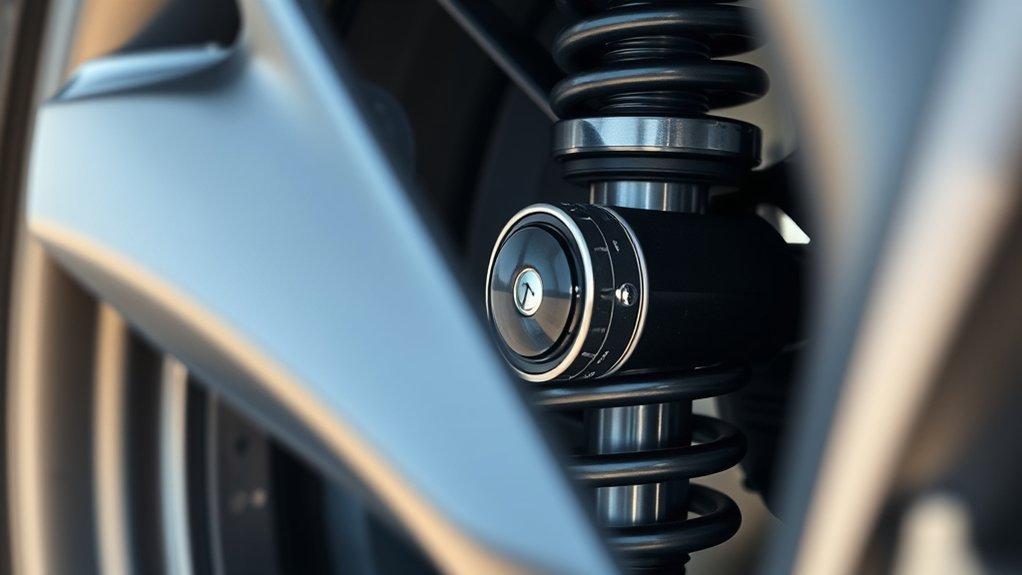
Air shocks are suspension parts that use compressed air in a chamber to support your vehicle’s ride.
Air shocks utilize compressed air in a chamber to provide adjustable support for a smoother, customizable ride.
Unlike traditional coil or leaf springs made of metal, air shocks have an air-filled bag that you can inflate or deflate to change ride height and stiffness.
They work together with a shock absorber to control suspension movement, helping you get a smoother ride.
The main difference is that air shocks let you adjust the air pressure, so you can customize your suspension based on load or driving style.
This makes them part of an adjustable suspension system, offering more versatility than fixed metal springs and giving you better control over comfort and handling.
Key Components of Air Shocks: Air Springs, Valves, Sensors
The key components of air shocks work together seamlessly to provide a smooth and adaptable ride. Air springs are rubber bellows that contain compressed air, offering adjustable support and ride comfort.
Valves regulate airflow into and out of the air springs, allowing you to precisely inflate or deflate them as needed. Sensors constantly monitor the vehicle’s ride height and load conditions, sending real-time data to the suspension system’s control unit.
This system uses the information to adjust air pressure within the air springs, maintaining ideal suspension performance. Together, these components guarantee your vehicle adapts smoothly to changing road conditions and loads, providing a comfortable ride while maintaining proper suspension geometry.
How Do Air Shocks Use Compressed Air to Absorb Bumps
When your vehicle hits a bump, the piston inside the air shock compresses, forcing the air inside the chamber to become more pressurized. This compressed air acts like a spring, absorbing bumps and reducing the impact transmitted to your vehicle’s chassis.
The air shocks use this increase in pressure within the air chamber to smooth out your ride, making it more comfortable and controlled. As the air is compressed, it expands gradually during rebound, helping to maintain stability and ride height.
The flexibility of the air spring allows it to adjust firmness dynamically, depending on the level of compression and load. This process guarantees that your vehicle absorbs bumps efficiently, providing a smoother, more comfortable ride over uneven surfaces.
How Valves and Sensors Control Air Shock Performance
Sensors constantly monitor your vehicle’s ride height and load conditions, sending real-time data to the electronic control unit (ECU). The ECU processes this information to decide if adjustments are needed for peak performance.
It then activates the valve manifold, which controls the air flow into or out of the air shocks. Valves open or close to release or admit compressed air, changing the firmness and height of your air shocks.
As the system detects shifts in ride height or load, it makes quick, precise adjustments to keep everything smooth and stable. This dynamic control helps your air shocks respond instantly, providing consistent support and comfort.
The coordinated work of sensors, valves, and the ECU keeps your vehicle’s ride height just right at all times.
How Adjusting Air Pressure Changes Ride Comfort and Vehicle Stability
Adjusting the air pressure in your air shocks directly impacts both ride comfort and vehicle stability. When you increase the air pressure, the air spring gets stiffer, which helps reduce body roll and improves stability during turns.
Conversely, lowering the air pressure softens the suspension, allowing more compression for a smoother ride over bumps. Higher air pressure also raises the vehicle’s ride height, boosting ground clearance and off-road control.
Lowering the air pressure, on the other hand, drops the vehicle, which can improve aerodynamics and look. By adjusting air pressure on the fly, you can customize your suspension based on load, terrain, or personal taste.
This control ensures you get the perfect balance of comfort and stability, making your driving safer and more enjoyable.
How Dampers in Air Shocks Affect Handling and Ride Quality
Dampers in air shocks play a crucial role in controlling how your suspension responds to road conditions by managing the speed of compression and rebound. These dampers directly influence ride quality and handling, helping your vehicle stay stable and comfortable.
Adjustable damping allows you to fine-tune the suspension’s softness or firmness, making handling better for different driving situations. Proper damper settings prevent excessive body roll, which improves tire contact with the road and increases traction.
They also help your suspension respond quickly to bumps and steering inputs, boosting ride comfort. High-quality dampers in air shocks ensure consistent performance by reducing oscillations and maintaining vehicle control, so your ride stays smooth and predictable no matter the road.
How Electronic Control Systems Optimize Air Shock Functionality
Have you ever wondered how modern air suspension systems deliver such a smooth and responsive ride? Electronic control systems are key because they constantly monitor vehicle conditions using sensors that track ride height, load, and terrain. They then automatically adjust air pressure in the shocks by activating solenoid valves to inflate or deflate air chambers.
Here’s how it works:
Sensors send real-time data to onboard microprocessors, which analyze the vehicle’s needs.
The microprocessors determine the ideal damping and spring stiffness and adjust air pressure accordingly.
Solenoid valves open or close to regulate air pressure, keeping the ride height and comfort just right.
Some systems even include wireless controls or smartphone apps for manual overrides and fine-tuning, giving you better ride control and customization.
Signs Your Air Shocks Need Attention and How to Troubleshoot
Noticing changes in your vehicle’s ride quality is often the first sign that your air shocks may need attention. If your ride feels rough or bouncy, or if the vehicle’s ride height looks uneven, it could mean there’s an issue with air pressure or leaks.
Hissing sounds might be a sign of air leaks or faulty valves in the air shock system. Visibly damaged or corroded shocks and air lines are clear signs you should inspect and possibly replace components.
Regularly using a pressure gauge helps spot slow leaks or pressure drops, making troubleshooting easier. If your air shocks aren’t maintaining proper ride height or feel inconsistent, check the air lines, look for leaks, and ensure the air pressure is correct for optimal performance.
Maintaining Your Air Shocks for Long-Lasting Performance
To guarantee your air shocks deliver consistent performance and last longer, regular maintenance is essential. Proper care keeps your air suspension system functioning smoothly and helps prevent costly repairs.
Inspect air lines and fittings regularly for leaks, cracks, or corrosion. This helps prevent pressure loss and keeps everything working properly.
Keep the air compressor clean, perform routine maintenance, and update software as needed. This ensures the compressor operates efficiently and reliably.
Monitor system pressure frequently, refilling or adjusting air pressure according to the manufacturer’s recommendations. This keeps your shocks performing at their best.
Additionally, check the condition of air springs and seals periodically for signs of wear or damage. Following manufacturer guidelines for servicing components like valves, sensors, and compressors is also important.
Consistent maintenance helps your air shocks maintain ideal air pressure and overall performance over time.
Air Shocks vs. Coil Springs: Which Is Better for Your Vehicle?
When choosing between air shocks and coil springs, consider how adjustable and flexible they are. Air shocks can adapt to different loads and road conditions easily.
Maintenance and durability are important too. Coil springs are simpler, often last longer, and require less upkeep.
Finally, think about ride comfort and handling. Air shocks usually offer a smoother, more customizable ride.
Adjustability and Flexibility
Air shocks stand out for their remarkable adjustability and flexibility compared to coil springs, making them a popular choice for drivers who want more control over their vehicle’s ride quality. With air pressure adjustments, you can easily change ride height and firmness thanks to the air suspension system. This allows for quick modifications via onboard compressors or external pumps, so you can make on-the-fly pressure changes.
You can fine-tune the compressible air in the shocks to match load conditions or road surfaces. Adjusting air pressure directly influences ride comfort and handling, giving you tailored responses. Unlike coil springs, air shocks let you switch between different stiffness levels without replacing parts.
This flexibility makes air shocks ideal for those seeking a customizable driving experience.
Maintenance and Durability
Choosing between air shocks and coil springs for your vehicle mostly comes down to how much maintenance you’re comfortable with and what kind of driving you do.
Air shocks need regular checks for air leaks and compressor health because they rely on compressed air inside a flexible rubber bladder. If not maintained properly, leaks can lower pressure and affect ride quality and support.
Coil springs usually require less upkeep over time and are more durable, especially in tough conditions. They give consistent support without worrying about pressure loss or leaks.
While air shocks let you adjust ride height and firmness, coil springs tend to last longer with less maintenance. That makes them a better choice for rough or demanding environments.
Ride Comfort and Handling
If you want a smoother ride and better handling, understanding how air shocks and coil springs perform can help you make the right choice for your vehicle.
Air shocks adjust air pressure to absorb impacts, giving you superior ride comfort compared to coil springs, which rely on fixed metal coils.
They can be fine-tuned on-the-fly for excellent vehicle handling, while coil springs offer consistent performance without any adjustments.
The progressive shock characteristics of air shocks improve stability over rough terrain and heavy loads, making them better suited for ride quality and adaptability.
While coil springs are simpler and more durable, air shocks excel in comfort and customizable handling, making them ideal for vehicles that prioritize ride quality.
Applications of Air Shocks in Different Vehicles and Driving Scenarios
Air shocks are used in many vehicles and driving scenarios, helping customize suspension for better performance and comfort. In passenger cars, trucks, and SUVs, you can adjust air pressure to control ride height and load balancing, making handling smoother no matter the cargo.
Off-road vehicles benefit from air shocks that soak up rough impacts and keep stability over uneven terrain. Performance and racing cars use air shocks for precise damping and quick height changes, helping them perform well in different conditions.
Commercial and fleet vehicles rely on air shocks to stabilize heavy loads, prevent sagging, and deliver consistent rides. Luxury vehicles incorporate air shocks to improve ride smoothness, make entry easier, and boost aerodynamics.
Frequently Asked Questions
How Does an Air Shock Work?
An air shock works by using compressed air inside a sealed chamber to support and dampen your suspension. When you hit a bump, the piston compresses the air, absorbing the impact.
You can adjust the firmness and height by inflating or deflating the air chamber through valves. The damping mechanism then controls how smoothly the piston moves.
This gives you a comfortable, controlled ride whether you prefer a softer or firmer feel.
How Many Pounds of Air Do You Put in Air Shocks?
You typically put between 20 to 50 PSI in your air shocks, but don’t just guess—check your vehicle’s manual!
Overinflating can damage your suspension more than a wrecking ball, while underinflating makes your ride bounce like a trampoline.
Regularly monitor and adjust the pressure to keep your ride smooth and your shocks in perfect shape.
What Is the Most Common Problem With Air Shocks Is Air?
The most common problem with air shocks is air leaks. You might notice the suspension sagging or the ride height dropping because air escapes from the air bags, valves, or lines.
Over time, seals and connections can degrade, making leaks more likely. Cold weather can also cause the air to contract, leading to pressure drops.
Regular inspections and maintenance are key to catching leaks early. This helps keep your shocks working properly and ensures a smooth ride.
Which Car Is the Very Smoothest Ride?
The smoothest ride often comes from luxury vehicles like the Mercedes-Benz S-Class or Lexus LS, thanks to their advanced air suspension systems. You’ll experience a plush, comfortable drive because these cars automatically adjust ride height and damping to road conditions.
Vehicles with electronically controlled air shocks, magnetic ride control, or air suspension on electric models provide consistently smooth rides by adapting in real-time. This means you feel minimal bumps and vibrations, making your drive much more comfortable.
Conclusion
Understanding how air shocks work helps you improve your vehicle’s ride and safety. Knowing their components and how to adjust them can turn a bumpy ride into a smooth one.
Air shocks work by using compressed air inside a chamber to support the vehicle’s weight and absorb shocks from the road. This allows for customizable ride comfort and handling.
When you adjust the air pressure, you change the firmness of the shocks. More air makes the ride stiffer, ideal for heavy loads or sporty driving, while less air offers a softer, more comfortable experience.
Regular maintenance keeps air shocks performing at their best. Checking for leaks, cleaning components, and adjusting pressure as needed ensures they work like a finely tuned machine.
Proper air shock care is your secret weapon against rough roads. It helps your vehicle maintain stability and comfort, making your driving experience smoother and safer.