What Do Bad Shocks Sound Like
If you’ve ever noticed strange noises or a bumpy ride when driving, you’re not alone. Many people struggle with identifying the source of these issues, especially when it comes to bad shocks.
Bad shocks often make noises like dull clunks, knocking sounds, or metallic banging when you go over bumps or rough terrain. You might notice squealing from shock mounts or sudden “pop” sounds during quick turns or braking.
Excessive bouncing, rattling, or rattling from loose parts also signals shock problems.
If you want to understand why these noises happen and how to fix them, keep exploring to get the full picture.
Key Takeaways
- Bad shocks often make dull clunks, knocking, or metallic banging sounds when you go over bumps or rough patches.
- You might also notice squeaking or squealing from the shock mounts or bushings if they’re worn out or loose.
- Repetitive rattling or knocking noises, especially on uneven surfaces, are a sign that something’s wrong with your shocks or suspension parts.
- Sharp “pop” or “snap” sounds can happen during sudden moves or turns if your shocks are failing.
- If your car bounces excessively or sways after hitting something, it’s a good sign that your shocks aren’t doing their job anymore.
Recognizing the Common Sounds of Bad Shock Absorbers
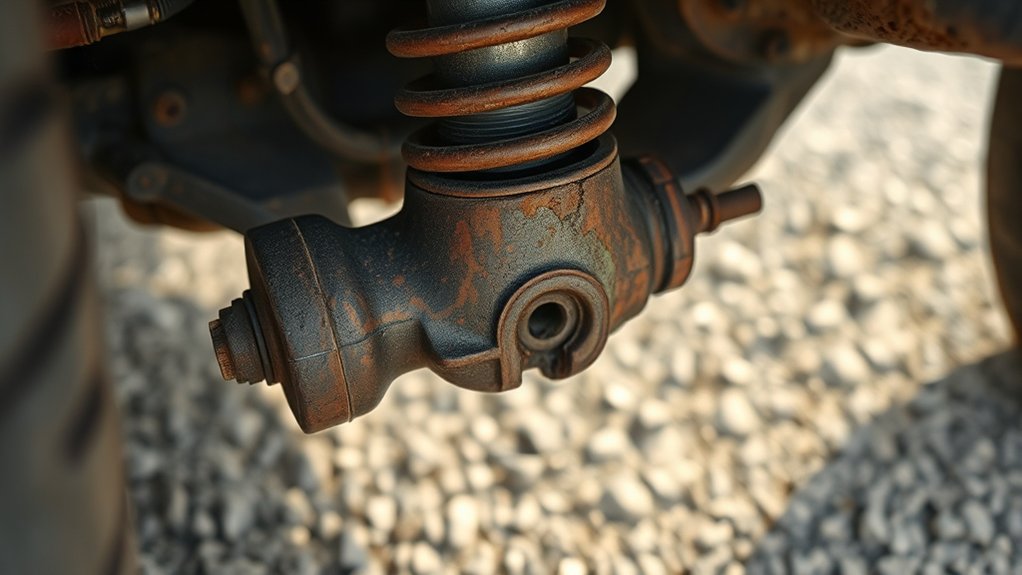
When your shocks start to fail, you’ll likely notice some specific sounds that signal trouble. Commonly, you’ll hear dull clunks or knocking sounds when driving over bumps or rough roads.
Suspension noises may include a “drop” or “slap” sound that seems to come from above the wheel area, especially during impact. A metallic banging or knocking noise is typical and often mistaken for loose suspension parts.
Suspension noises like “drop,” “slap,” or metallic banging often signal worn shocks or loose parts.
These sounds become more noticeable when reversing into driveways or hitting uneven surfaces. Some drivers describe the noise as similar to an empty plastic cup dropping onto a hard surface, which indicates internal shock failure.
Recognizing these suspension sounds early can help you identify worn shocks before more serious issues develop.
How Worn Shocks Affect Your Ride and Handling
Worn shocks can make your ride feel bumpy and uncomfortable, especially over bumps or uneven surfaces.
They also reduce your vehicle’s control, causing more body sway during turns and making handling less predictable.
When shocks are bad, you’ll notice a decrease in stability and a rougher ride overall.
Impact on Ride Comfort
If your shocks are worn, you’ll notice that your vehicle no longer glides smoothly over bumps and uneven surfaces. You might feel more discomfort, with the suspension feeling “floaty” or “spongy,” especially on highways or potholes.
Worn shocks don’t absorb impacts well, so you’ll notice more vibrations through the steering wheel and inside the cabin. You could also hear suspension noise, like clunking or knocking sounds, during bumps.
This noise is a sign that your shocks are failing and can’t dampen properly. As a result, your vehicle may bounce excessively, making the ride rougher and less controlled.
Over time, poor shock condition can cause uneven tire wear, which worsens ride quality and reduces overall comfort. Fixing worn shocks is essential to restore a smooth, comfortable ride.
Influence on Vehicle Control
As your shocks wear out, they can’t keep your vehicle stable and responsive. This leads to noticeable handling issues that make driving less safe.
Worn shocks cause excessive bouncing, nose-diving during braking, and sway or roll in turns. All of these make controlling your vehicle more difficult.
Faulty shocks also lead to uneven tire wear and less grip on the road, which increases the risk of losing control. You might also feel vibrations or loose steering, especially on smooth roads.
The table below shows how bad shocks affect handling:
| Effect | Description | Impact on Vehicle Control |
|---|---|---|
| Bouncing | Excessive up and down movement | Reduced stability |
| Sway | Increased body roll in turns | Poor cornering response |
| Tire Wear | Uneven contact patch | Loss of grip and control |
Ignoring warning signals from your shocks can jeopardize safety and handling.
Typical Noises That Signal Shock or Strut Failure
You’ll notice specific sounds when shocks or struts fail, like dull clunks or knocking over bumps.
These noises often follow patterns, such as a consistent thud or a sharp drop, that signal worn components.
Recognizing these common sounds helps you identify suspension issues early before they get worse.
Common Noise Types
Bad shocks often produce distinctive noises that signal they’re wearing out or failing. You might hear knocking or banging sounds that seem to come from the suspension area, especially over rough roads or potholes.
Squeaking or creaking noises are common if the shock mounts or bushings are dry or worn. This usually means they lack proper lubrication or have some damage.
A metallic “pop” or “snap” sound can happen if internal shock components or mounting hardware have failed or become loose. That’s usually a sign of a serious issue.
Excessive bouncing or a “slappy” noise after hitting a bump also points to shocks that can’t absorb impacts effectively. Recognizing these common noise types helps you spot suspension problems early and prevent more severe damage.
Identifying Sound Patterns
Recognizing specific sound patterns can help you identify when your shocks or struts are failing. A muffled clunk or thud when going over bumps signals internal shock damage.
You might also hear a sharp “pop” or “snap” during sudden suspension movements, indicating internal failure. Repetitive knocking or rattling noises, especially on rough roads, often point to worn suspension components.
Squeaking or squealing sounds can occur if shock bushings or mounts are loose or worn, adding to the warning signs. Furthermore, a knocking sound during turns or acceleration suggests compromised shock or strut performance.
Paying attention to these distinct noises helps you catch suspension issues early, ensuring your vehicle stays safe and comfortable on the road.
What Causes Clunking and Drop Sounds Over Bumps?
Clunking and drop sounds over bumps usually happen when suspension parts become loose, worn out, or damaged. Loose or worn shock mounts let the shock absorber move too much, causing rattling noises.
Internal shock failure, like broken valving or hydraulic leaks, can lead to sudden drops or thuds during compression and rebound. This happens because internal seals lose pressure and metal parts unexpectedly contact each other.
Damaged or worn leaf spring clamps can create knocking sounds that mimic shock issues during impacts. Improperly tightened shocks may rattle or clunk as they move excessively over uneven surfaces.
All these problems disrupt the suspension’s stability, leading to those unmistakable clunking or dropping sounds when you drive over bumps. Fixing these parts quickly helps restore smoothness and safety.
Could Leaf Spring Clamps Be Causing Suspension Noises?
If your suspension makes knocking or rattling sounds, loose or worn leaf spring clamps could be the cause. When these clamps aren’t tight enough, the leaf spring can move around and create noise.
You might notice this noise during acceleration or when driving over rough terrain. Checking and tightening these clamps is a simple way to see if they’re causing the problem.
Fixing loose clamps can often stop the noise and improve your ride. It’s an easy step to take before looking into more complicated suspension issues.
Loose Clamp Effects
Loose leaf spring clamps can cause noticeable suspension noises, especially when driving over bumps or uneven roads. If the clamps are loose, the leaf spring can shift or rattle against other suspension parts, making knocking or clunking sounds.
You might notice the suspension noise coming more from the rear of the vehicle on rough surfaces. A loose clamp lets the leaf spring move freely, leading to metal-on-metal contact and a rattling noise.
Securing the leaf spring clamps with the right torque usually fixes the problem. Many drivers find that tightening or replacing loose clamps gets rid of suspension noises that can sound like worn shocks.
Just making sure the clamps are tight can restore smoothness and silence those unwanted sounds caused by looseness.
Spring Movement Symptoms
When leaf spring clamps are worn or not secured properly, they can cause noticeable movement in the suspension components, especially during rough driving conditions. This movement often leads to distinct suspension noises that signal potential problems.
You might hear knocking or clunking sounds when hitting bumps, rattling noises during acceleration or deceleration, or metallic banging as the suspension shifts. These sounds happen because damaged or worn clamps allow the leaf spring to shift or loosen.
As a result, you may notice loud metallic noises that sound like banging or knocking, particularly on uneven surfaces. If these symptoms continue, it’s likely that the leaf spring isn’t secured properly.
The suspension noise is probably caused by loose or damaged clamps. These need to be inspected and repaired to prevent further issues.
Inspection and Tightening
Wondering if your suspension noises might be caused by leaf spring clamps? During inspection, check these clamps for looseness, rust, or signs of wear. Loose clamps can produce knocking or clunking sounds, especially over bumps or during acceleration.
Improperly secured leaf spring clamps let the spring shift or rattle, creating audible suspension noise. Tightening or replacing worn clamps often solves these issues and restores proper spring alignment.
Make sure each clamp is securely fastened to prevent future noise and keep your suspension working well. Regular inspection of leaf spring clamps is essential because they help absorb shocks and keep your ride quiet.
Addressing loose or worn clamps promptly can save you from more costly repairs down the line.
Diagnostic Tips to Find Out If Your Shocks Are Worn Out
To figure out if your shocks are worn out, start by listening to the sounds your vehicle makes over bumps and rough surfaces. Worn shocks often make a dull, repetitive knocking noise or a “drop” when you drive over potholes or back out of driveways. You might also hear a rattling sound from the rear, which could mean loose mounts or damaged parts.
Worn shocks cause knocking sounds, bouncing, and rattling from loose mounts or damaged parts.
These tips can help you diagnose worn shocks:
- Listen for knocking sounds when driving over uneven terrain.
- Notice if your car bounces or sways more than usual after hitting bumps.
- Check directly for leaks, cracks, or damaged mounts on the shocks.
If you notice these signs, your shocks are probably worn out and should be replaced to keep your ride smooth and safe.
Why Do Shocks Make Noise During Turns or Braking?
Worn shocks often make noise during turns or braking because they can’t control suspension movement properly anymore. When they start to fail, internal parts don’t dampen the suspension’s motion as they should.
This leads to metal parts inside the shock absorber rubbing against each other, causing knocking, squeaking, or clunking sounds when you turn or brake. During braking, the suspension might not absorb impacts evenly, resulting in thumping or banging noises.
When you’re turning, reduced damping allows more body roll and loose suspension parts to rattle, making additional noise. These sounds are clear signs that your suspension system isn’t working right and needs attention.
How Upgrading Shocks Can Stop Noises and Improve Ride Comfort
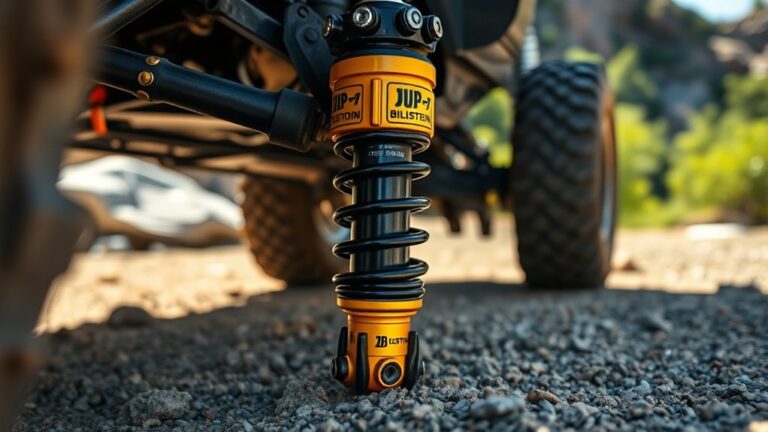
Replacing worn or damaged shocks with high-quality upgrades like Bilstein 5100s can effectively eliminate the knocking and clunking sounds that often develop over time. Bad shocks cause internal failure or loose mounts, leading to noises like knocking or “solo cup” sounds.
Replacing worn shocks with Bilstein 5100s stops knocking and clunking sounds, restoring smooth, quiet rides.
Upgraded shocks improve ride comfort by better absorbing impacts and reducing excessive bouncing. They also enhance vehicle stability, minimizing body sway and noise on rough roads.
A steering stabilizer works alongside new shocks to provide a smoother, quieter ride.
- Eliminate clunking and knocking sounds
- Reduce excessive bouncing and noise
- Improve stability and ride comfort
Upgrading your shocks not only stops noise but also makes your driving experience quieter and more comfortable.
Common Mistakes That Lead to Suspension Noise and How to Avoid Them
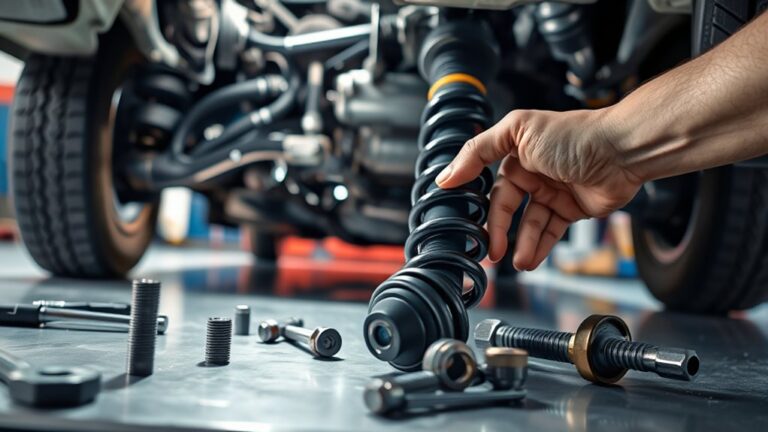
Many suspension noises come from simple installation mistakes or overlooked maintenance issues. For instance, if you don’t tighten mounting bolts properly, you might hear knocking or clunking sounds when the suspension moves.
Ignoring signs like leaking fluid or uneven wear can lead to internal shock failure, which often causes knocking over bumps. Using incompatible or low-quality shocks instead of recommended OEM or high-performance options increases the risk of noise and instability.
Neglecting to inspect and secure leaf spring clamps or other components can create rattling or banging sounds. Delaying shock replacement after symptoms like excessive bouncing or nose-diving worsens wear on other suspension parts and amplifies noise.
To avoid these mistakes, consider consulting trusted sources through affiliate links or small commission programs for quality parts and expert advice.
When to Replace Your Shocks for Better Safety and Performance
Knowing when to replace your shocks is key to keeping your vehicle safe and handling well.
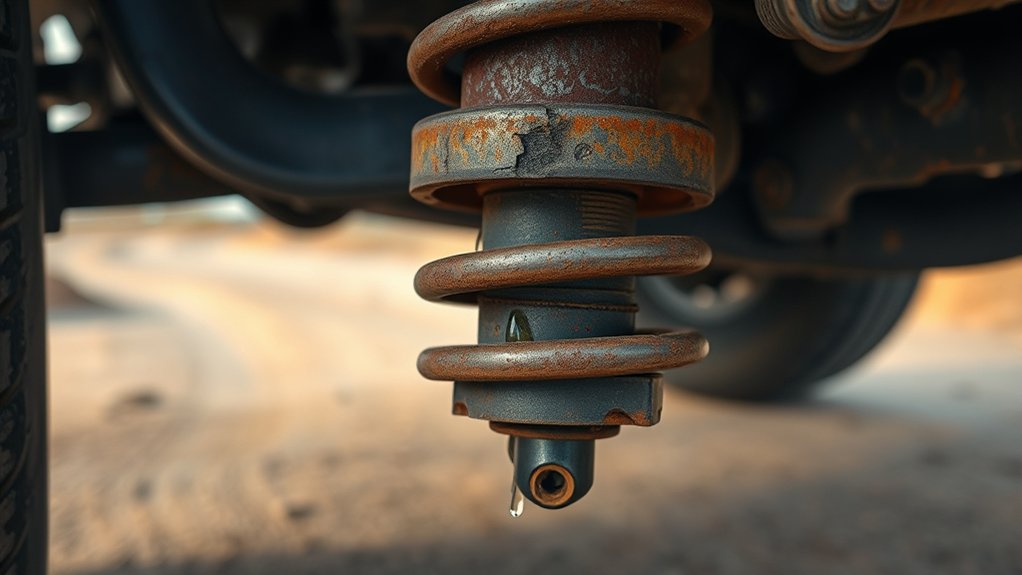
Look out for signs like leaking hydraulic fluid, which means the seals have failed and the shocks aren’t damping properly anymore.
Unusual noises such as clunking or knocking over bumps also indicate worn shocks that need attention.
If your car bounces excessively or dips forward during braking, it’s a sign the shocks aren’t controlling suspension movement as they should.
Visible uneven tire wear or cupping can also point to deteriorated shocks affecting tire contact with the road.
For optimal safety and performance, most shocks should be replaced every 50,000 to 100,000 miles, depending on your driving conditions.
Keep an eye out for these signs to make sure your shocks stay in good shape and your ride remains smooth and safe.
Frequently Asked Questions
What Kind of Noise Does a Bad Shock Make?
When your shocks are bad, you’ll notice a dull thumping or clunking noise as you go over bumps.
You might also hear knocking or rattling sounds from the suspension area, especially on rough roads.
Squeaking or squealing noises can happen if bushings are worn out.
Excessive bouncing or a “thud” after hitting a bump are common signs.
You might also hear a “drop” or “slap” sound when backing up.
How Can You Tell if Shocks Are Bad?
You can tell your shocks are bad when your ride feels bouncy or unstable, like a ship in rough seas.
Look for signs like excessive body movement, vibrations in the steering wheel, or strange noises during turns or braking.
Also, check for visible leaks or fluid on the shocks.
If your car’s handling feels off, don’t ignore these signs. They’re your vehicle’s way of warning you that shocks need replacing.
Can You Still Drive With Bad Shocks?
You can still drive with bad shocks, but it’s not a good idea. Worn shocks make your vehicle less safe by making it harder to control during turns and increasing stopping distances.
They also cause a rough ride and uneven tire wear. While you might get away with it temporarily, driving on damaged shocks can lead to more suspension problems and unsafe handling.
It’s best to replace them quickly to keep your vehicle safe and comfortable on the road.
What Is the Average Cost to Replace Shocks?
The average cost to replace shocks ranges from $200 to $400 per axle, including parts and labor. Premium or heavy-duty shocks can cost $500 or more per axle.
Labor typically adds $100 to $200, depending on your vehicle and location. Basic shocks cost around $50, while high-performance models can go over $300.
Some shops offer package deals for replacing both front and rear shocks, which can save you money.
Conclusion
Pay attention to the noises your shocks make. They often tell you it’s time for a check-up. Ignoring warning sounds can lead to worse handling, safety issues, and costly repairs later on.
Remember, an ounce of prevention is worth a pound of cure. Addressing suspension issues early keeps your ride smooth and safe. Bad shocks can cause your vehicle to feel bumpy, unstable, or noisy.
Stay vigilant and don’t wait until trouble knocks. Your vehicle’s health depends on timely maintenance. Recognizing the sounds of bad shocks is key to keeping your ride comfortable and safe.