How to Add Transmission Fluid to a Jeep Cherokee in 10 Easy Steps
If you’re like many Jeep Cherokee owners, keeping your transmission in top shape can sometimes feel overwhelming. Finding the right fluid level, knowing when to add more, and doing it safely can be confusing and frustrating. But don’t worry—you’re not alone, and with a few simple steps, you can handle this maintenance with confidence.
To add transmission fluid to your Jeep Cherokee, raise the front on ramps, locate the transmission dipstick and fill port, and warm up the engine to about 105°F. Check the current fluid level, drain old fluid if needed, then carefully pour new fluid through the fill port using a funnel and vinyl tubing.
Recheck the level, tighten all components, and shift through gears to guarantee proper fill. Keep going to find more tips for smooth transmission service.
Key Takeaways
- Warm up the transmission to about 105°F. This helps ensure you get an accurate fluid level measurement.
- Find the fill plug on the side of the transmission case and remove it.
- Using a funnel and some vinyl tubing, slowly add new ATF through the fill port.
- Keep filling until the fluid reaches the “Full” mark on the dipstick. Make sure the transmission is at the right temperature.
- Once done, reattach the fill plug securely. Start the engine and shift through all the gears.
- Check the fluid level again to make sure it’s correct after shifting.
How to Prepare Your Jeep Cherokee for Transmission Fluid Service
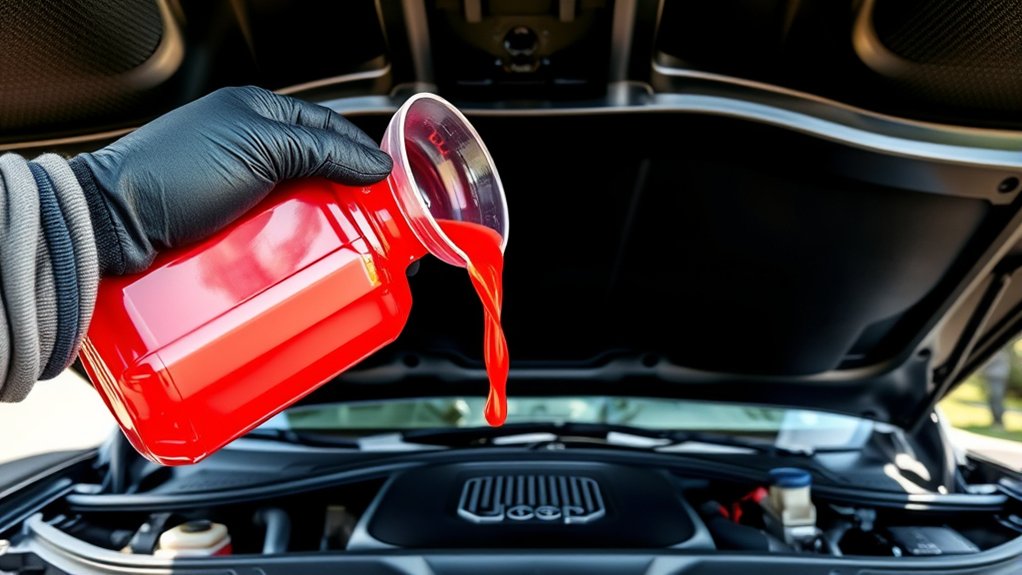
Before adding transmission fluid to your Jeep Cherokee, you’ll need to prepare the vehicle properly. Start by elevating the front of the vehicle using ramps. This makes accessing the transmission components safer and easier.
Elevate the front of your Jeep Cherokee with ramps for safer, easier transmission access.
Next, remove the front skid plate or undercover, usually held in place with 13mm bolts. Doing this gives you a clear view of the transmission area.
Gather essential tools like an 8mm Allen socket, a catch container, vinyl tubing, a funnel, and a torque wrench. Having everything ready makes the process smoother.
Before checking or adding fluid, warm up the transmission to about 105°F. This helps ensure an accurate fluid level reading.
Use the vehicle’s dipstick and the correct type of ATF, such as Mopar 8/9 speed fluid, to test and refill the fluid properly.
Proper preparation helps ensure a smooth, safe service process.
Tools and Supplies Needed to Add Transmission Fluid
To add transmission fluid to your Jeep Cherokee, gather the right tools and supplies to make the process smooth. You’ll need specific tools to access and fill the transmission properly.
Essential tools include an 8mm Allen socket for draining, a 6mm Allen socket for filling, and a torque wrench to tighten bolts to the manufacturer’s specs. A funnel helps pour fluid accurately, preventing spills.
A catch container or drain pan is useful for collecting used fluid during drainage. Vinyl tubing about two feet long allows controlled transfer, especially when access is tight. Extensions and a U-joint can help reach hard-to-access drain and fill plugs.
Where Is the Transmission Dipstick and Fill Port on Your Jeep Cherokee?
You can find the transmission dipstick near the back of the engine bay on the driver’s side, marked with a yellow or red handle.
The fill port is typically on the side of the transmission case and may require removing a small cover or bolt for access.
A quick visual inspection helps you identify these components and guarantees proper fluid levels when checking or adding transmission fluid.
Dipstick Location Identification
The transmission dipstick on a Jeep Cherokee is usually located towards the back of the engine bay, near the firewall. Look for a handle that’s often yellow or orange, making it easy to spot.
The dipstick is your main indicator for checking transmission fluid levels. To find it, open the hood and examine the rear section of the engine bay, near the firewall.
The handle should be labeled or distinctively colored to stand out. Keep in mind, the exact location may vary between models, so consulting your owner’s manual can help confirm its position.
Once located, you can remove the dipstick to check the fluid level or add fluid as needed. Remember, proper identification of the dipstick simplifies the process of maintaining your Jeep’s transmission.
Fill Port Accessibility
Wondering where the transmission fill port and dipstick are on your Jeep Cherokee? The fill port is usually on the side of the transmission housing, accessible through an opening near the engine bay.
Depending on your model, you might need to remove a splash shield or protective cover to reach the fill plug. The fill port is typically threaded and secured with a bolt, which you can loosen with an Allen or socket wrench.
If your vehicle has a dipstick, it’s generally located toward the back of the engine compartment, marked with a bright handle for easy identification.
Always check your specific year and model’s service manual to precisely locate the fill and dipstick. This helps ensure you add transmission fluid correctly and safely.
Visual Inspection Tips
Locating the transmission dipstick and fill port on your Jeep Cherokee is easy with a quick visual check of the engine bay. Start by looking toward the back of the engine compartment for the dipstick, which is often marked with a yellow or orange handle.
It’s usually labeled or color-coded to show it’s for transmission fluid. For the fill port, find the side of the transmission housing, which might require removing a skid plate or cover.
As you inspect, keep these key points in mind: the yellow or orange handle marking the dipstick, its rear position near the back of the engine bay, the side access point on the transmission housing, and any protective cover that may need removing.
This visual check helps you confirm you’re looking in the right spots to check your fluid level and add fluid correctly.
How to Check Your Transmission Fluid Level Correctly
To check your Jeep Cherokee’s transmission fluid level correctly, start the engine and let it warm up to normal operating temperature. This helps you get an accurate reading.
Start the engine and warm up your Jeep Cherokee to ensure an accurate transmission fluid level check.
Park the vehicle on a level surface to prevent false results caused by tilting. Remove the dipstick, wipe it clean with a cloth, then fully reinsert it.
Pull the dipstick out again to check the fluid level. The fluid should be between the “Full” and “Add” marks on the dipstick. Also, examine the fluid’s color; it should be red or pink and smell sweet or neutral.
Dark, burnt-smelling fluid indicates the need for a replacement. Checking the transmission fluid level correctly helps maintain your Jeep’s transmission health and performance.
How to Drain Old Transmission Fluid Safely
Before draining the old transmission fluid from your Jeep Cherokee, make sure the vehicle is securely raised using ramps or a lift. Locate the transmission drain plug, usually at the bottom of the transmission case. Use the correct size wrench or socket to carefully remove the drain plug.
As you loosen it, place a catch container beneath to collect the old fluid. Visualize the shiny metal of the drain plug, thick dark fluid starting to flow, and the container filling up slowly. The transmission pan opening is ready for complete draining.
Allow the fluid to drain fully, which can take up to 30 minutes depending on your transmission’s internal volume. Once drained, reinstall the drain plug and tighten it to the manufacturer’s specified torque to prevent leaks.
How to Choose the Right Transmission Fluid for Your Jeep Cherokee
Choosing the right transmission fluid for your Jeep Cherokee is key to smooth shifting and lasting performance. Check your owner’s manual to find the manufacturer-recommended fluid type and specs.
Always go for OEM-approved fluids like Mopar ATF+4 or their equivalents that meet Chrysler’s standards. Make sure the viscosity grade, like 75W90 or 80W90, matches your transmission and driving needs.
Avoid generic or incompatible fluids such as non-recommended gear oils or additives, as they can harm your transmission parts. Picking the right fluid ensures reliable performance and a longer lifespan.
Here’s a quick guide:
| Transmission Type | Recommended Fluid | Viscosity Grade | Compatibility | Notes |
|---|---|---|---|---|
| Automatic | Mopar ATF+4 or equivalent | 75W90 or 80W90 | Certified OEM | Ensures smooth shifting |
| Manual | Gear oil specified in manual | Varies | Manual specs | Provides proper lubrication |
Step-by-Step: How to Add New Transmission Fluid
Start by gathering the necessary tools, including a funnel and vinyl tube, and make sure your vehicle is on a level surface with the engine warmed up.
Remove the fill plug and carefully add the recommended transmission fluid in small amounts, checking the level often.
Once the fluid is at the correct level, tighten the plug securely. Start the engine, shift through all gears, and then recheck the fluid level to avoid any issues.
Gather Necessary Tools
To add transmission fluid to your Jeep Cherokee, you’ll want to gather the right tools to make the process smooth. Having the proper tools means you can access and fill the transmission correctly.
You’ll need an 8mm Allen socket to remove the fill plug, a catch container for the old fluid, vinyl tubing about 2 feet long for controlled pouring, and a funnel to guide the new fluid into the fill port.
A torque wrench is also helpful to tighten components to the right specifications. Visualize these tools: an 8mm Allen socket, catch container, vinyl tubing, funnel, and torque wrench.
Gathering these tools beforehand will prevent delays and make refilling the fluid easier and more efficient.
Drain Old Fluid Properly
Lifting your Jeep Cherokee safely and locating the transmission drain plug are important first steps. Once you’ve accessed the underside, use an 8mm Allen socket to remove the drain plug. Allow the old transmission fluid to drain into a catch container. This can take about 30 minutes.
After draining, clean the drain plug thoroughly and reinstall it, tightening to around 26 ft/lbs of torque. To ensure an accurate refill, measure the drained fluid to see how much new fluid you need to add.
Here’s a quick overview:
| Step | Action |
|---|---|
| 1 | Remove the drain plug carefully |
| 2 | Allow old fluid to fully drain |
| 3 | Reinstall the drain plug securely |
Properly draining old fluid is key before refilling to keep your transmission running smoothly.
Refill to Correct Level
After removing the drain plug and letting the old fluid drain completely, it’s time to refill your Jeep Cherokee’s transmission to the correct level. First, remove the fill plug and insert a funnel into the opening.
Carefully add transmission fluid through the funnel, pouring small amounts at a time and letting it settle. As you fill, watch the level with the dipstick or level indicator to avoid overfilling.
Aim to reach the specified full mark at the proper operating temperature, usually around 105°F. Once the fluid is at the right level, securely reinstall the fill plug, making sure it’s torqued to the manufacturer’s specs.
Finally, start the engine and recheck the fluid level to ensure it’s accurate.
How to Verify and Fine-Tune Your Transmission Fluid Level
Ensuring your transmission fluid is at the right level is key for smooth shifting and keeping your transmission healthy. To check it, start with a warm engine that’s idling in park or neutral.
Remove the dipstick, wipe it clean, then fully reinsert it before pulling it out again for an accurate reading. The fluid should be between the “Full” and “Add” marks on the dipstick.
If it’s outside this range, add fluid or drain some as needed. Also, check the color and smell—ideally, it should be reddish and slightly sweet, not dark or burnt.
Once checked, make sure to securely reinsert the dipstick to avoid dirt contamination and ensure accurate readings next time. Keeping your fluid at the right level helps prevent potential transmission problems.
Common Issues When Checking or Filling Transmission Fluid (And How to Fix Them)
You might run into issues like getting inaccurate fluid level readings because of a dirty dipstick or an uneven surface.
Accessing the dipstick can also be tricky, especially in tight spots, making it easy to check or fill the fluid incorrectly.
Overfilling can cause foaming and shifting problems, so it’s important to add fluid carefully and not go overboard.
Incorrect Fluid Levels Readings
Incorrect fluid level readings often happen because the transmission fluid isn’t checked under the right conditions. Checking when the engine is cold or not properly warmed up can lead to inaccurate readings because the fluid hasn’t expanded to its normal level.
Overfilling can cause foaming and erratic shifting, while underfilling leads to gear slippage and increased wear. Not leveling the vehicle during the check can also skew results, making the fluid appear higher or lower than it actually is.
To avoid these issues, make sure you check after the engine warms up and runs for a few minutes. Verify the vehicle is on a level surface and use the correct transmission fluid type and dipstick.
Wait for the engine to reach operating temperature before checking. These steps help prevent incorrect fluid level readings and ensure proper transmission function.
Difficulties Accessing Dipstick
Many Jeep Cherokees have their transmission dipstick located in tight, hard-to-reach spots, often hidden beneath engine components or the air intake. This makes accessing the dipstick challenging, especially when you’re trying to check or add fluid.
The dipstick tube can be recessed or covered by other parts, so you might need to remove or reposition engine covers or nearby components to get better access. Limited space around the transmission makes it tough to insert tools or reach with your fingers.
This can increase the risk of incorrect readings or spills. To make things easier, use long, flexible extensions or specialized dipstick tools designed for tight engine bays.
Always be careful when moving or removing surrounding parts to avoid damage. Doing so will help you access the dipstick more safely and ensure a more accurate reading.
Overfilled Transmission Risks
Overfilling the transmission fluid can cause serious issues that affect your vehicle’s performance. When there’s too much fluid, it can foam up, reducing hydraulic pressure and making gears shift roughly or slip.
Extra fluid also increases internal pressure, which can damage seals and lead to leaks. Plus, an overfilled transmission may overheat because aerated fluid doesn’t circulate properly and cools less efficiently.
Watch out for signs like strange noises, difficulty shifting, or slipping gears. To fix an overfilled transmission, carefully drain the excess fluid through the fill port or drain plug until the level is right.
Ignoring these risks can lead to costly damage. Keeping the fluid at the proper level is key to ensuring your Jeep Cherokee runs smoothly and avoiding long-term problems.
Long-Term Maintenance Tips for Your Jeep Cherokee Transmission
Maintaining your Jeep Cherokee’s transmission long-term means paying attention to fluid levels and quality. Regularly check the fluid to make sure it’s at the right level and stays clean.
Perform a fluid flush every 60,000 to 90,000 miles to clear out contaminants and worn residues. This helps prevent shifting problems and overheating.
Use the manufacturer-recommended fluid, like Mopar ATF+4, for the best performance. Watch for signs of fluid breakdown, such as dark color, burnt smell, or shifting issues, and address them right away.
Proper drain and refill procedures are essential to avoid overfilling or underfilling, which can cause damage. Stay vigilant and keep your transmission in top shape with these simple tips.
Frequently Asked Questions
Where Do I Put Transmission Fluid in My Jeep?
You add transmission fluid to your Jeep through the dipstick tube.
First, locate the dipstick near the back of the engine bay, remove the cap, and wipe it clean.
With the engine running and at the proper temperature, reinsert the dipstick and then pull it out to check the level.
If it’s low, carefully pour the correct fluid through the same tube using a funnel until the level reaches the proper mark.
Can I Just Pour Transmission Fluid In?
You shouldn’t just pour transmission fluid in without checking the level first. Doing so risks overfilling or underfilling, which can cause shifting problems or damage your transmission.
Always check the fluid level with the engine running and at the right temperature. Add small amounts gradually, and make sure you’re using the correct type of fluid.
This careful approach helps keep your transmission running smoothly and avoids costly repairs.
What Are the Signs of Low Transmission Fluid?
You’ll notice signs like slipping gears or delayed engagement when your transmission fluid runs low. Unusual noises such as whining or grinding during shifts also signal low fluid levels.
If you smell burning odors near the transmission area or see leaks underneath your vehicle, those are red flags.
Moreover, difficulty shifting gears smoothly or hesitation during acceleration indicates your transmission needs more fluid.
Pay attention to these signs to prevent further damage.
How Do You Check the Transmission Fluid on a Jeep Cherokee?
Imagine your Jeep’s engine humming steadily, ready for a quick check. To check the transmission fluid, park on a level surface and warm up the engine.
Find the dipstick near the back of the engine bay, pull it out, and wipe it clean. Reinsert and pull it again, then read the level.
The fluid should be pinkish-red with a sweet smell, indicating it’s in good condition.
Conclusion
Just like tending a garden requires regular care to keep it thriving, maintaining your Jeep Cherokee’s transmission keeps your ride smooth.
By following these simple steps, you’re taking care of your vehicle’s health, preventing future issues, and extending its lifespan.
Think of it as caring for a trusted companion—your car’s performance depends on the attention you give today.
Stay diligent, and your Cherokee will serve you reliably mile after mile, like a loyal friend on every journey.