Which Way to Turn Oil Filter in 10 Essential Steps
Many car owners find changing an oil filter to be a tricky and sometimes frustrating task. You’re not alone—getting it just right can feel confusing, especially if you’re worried about leaks or damaging the engine.
Luckily, with a few simple steps, you can master this process and do it confidently every time.
To turn your oil filter correctly, turn clockwise to tighten it, guaranteeing a proper seal and avoiding leaks, and counterclockwise to loosen it during removal. Start by hand, spinning gently to ensure threads align smoothly, and then tighten with a few extra turns.
Use tools carefully without overtightening. Check gasket placement, seating, and sealing before completing the install.
If you keep these steps in mind, you’ll prevent damage and leaks—learn more to master the process.
Key Takeaways
- Turn the oil filter clockwise to tighten it and secure it properly during installation.
- Start threading the filter by hand in the clockwise direction to avoid cross-threading.
- Turn the filter counterclockwise to loosen and remove it safely.
- Use a filter wrench carefully during tightening, but avoid overtightening.
- Confirm the filter is properly seated and sealed before final tightening.
Why Turning Your Oil Filter the Right Way Matters
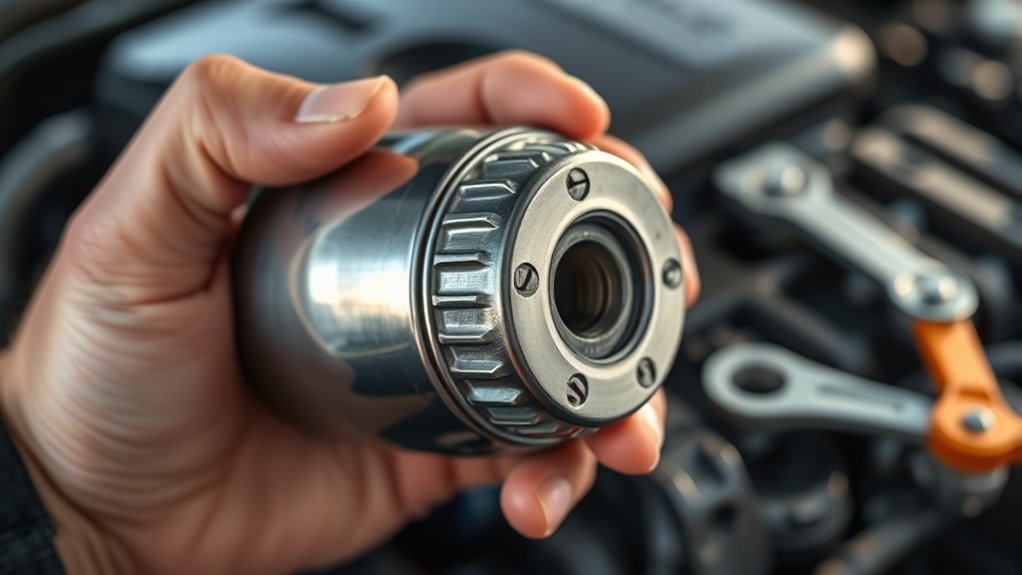
Turning your oil filter the right way is key to making sure it seals properly and prevents leaks. When you turn the oil filter clockwise, you tighten it, helping the gasket create a secure seal against the engine.
Turning your oil filter clockwise tightens the seal and prevents leaks.
On the other hand, turning it counterclockwise loosens the filter, making it easier to remove during oil changes. Just be careful not to over-tighten, because that can damage the gasket or the threads.
Over-tightening can cause leaks and might even strip the threads, which can lead to costly repairs. Using the correct direction helps prevent cross-threading and keeps everything in good shape.
Properly tightening or loosening your oil filter keeps it working well and extends its lifespan. Remember, turning clockwise tightens it, and turning counterclockwise loosens it. Following these directions helps ensure a secure, leak-free fit.
How to Identify the Correct Thread and Gasket Alignment
To ensure a proper fit, start by matching the thread size of the new filter to the old one.
Next, check that the gasket is oriented flat and seated correctly against the mounting surface.
Finally, make sure the filter threads smoothly onto the engine without cross-threading or gaps.
Match Thread Size
How can you guarantee the oil filter you’re installing has the correct thread size? First, check the filter’s specifications or your vehicle manual to ensure it matches the engine’s filter mounting.
The correct thread size is usually either ¾-16 UNF or M20x1.5, which are critical for a proper fit and sealing. To confirm, compare the new filter’s threading with the old one or reference matching specifications.
Use the following table to verify:
| Thread Size | Filter Mounting | Seal Compatibility |
|---|---|---|
| ¾-16 UNF | Standard | Correctly seated |
| M20x1.5 | Metric | Properly sealed |
| Other | Consult manual | Ensure match |
Start threading by hand, turn clockwise, and tighten to the recommended torque. Never overtighten to ensure a proper seal and fit.
Check Gasket Orientation
Ensuring the gasket is properly oriented is key to a secure seal and preventing leaks. Before installing, check the rubber ring on the gasket to make sure it’s seated evenly and isn’t twisted or pinched.
Proper gasket orientation helps create a tight seal and avoids oil leaks later. Lubricate the rubber ring with fresh oil to help it seat correctly and prevent twisting during installation.
When installing the filter, turn it clockwise by hand until the gasket touches the mounting surface. Then tighten it an additional 3/4 to 1 turn.
Always double-check that the rubber ring is aligned properly, not cross-threaded, and has a good seat. Twisting or misaligning the gasket can break the seal, leading to leaks and possible damage.
Confirm Proper Fit
Is the filter you’re about to install the right one for your vehicle? To confirm proper fit, check that the filter’s threading matches your old filter’s pattern and size to prevent cross-threading. Make sure the gasket is properly aligned and seated before installation—misaligned gaskets can cause leaks.
Match the filter’s threading direction with the original: clockwise to tighten, counterclockwise to loosen. Always verify manufacturer specifications or markings to confirm it’s designed for your specific vehicle model.
When installing, hand-tighten the filter until the gasket contacts the mounting surface, then turn an additional ¾ to 1 full turn to secure it properly. Confirming proper fit ensures a secure seal and prevents leaks or damage during operation.
- Verify matching threading and size
- Check gasket alignment and seating
- Follow manufacturer specifications
- Hand-tighten and secure properly
How Do You Know If Your Oil Filter Is Threaded Correctly?
When installing a new oil filter, it’s important to check that it’s threaded correctly to avoid leaks or damage. Start by hand-threading the filter onto the engine, making sure it turns smoothly without resistance or cross-threading.
The filter should spin easily when it’s properly aligned, which shows you’ve got the threads right. Once the gasket touches the mounting surface, hand-tighten the filter until it stops.
Then, turn it an additional ¾ to 1 full turn clockwise to create a good seal. If you feel resistance before the gasket seats or the threads feel uneven, it’s probably cross-threaded.
Proper alignment is key. If it threads in smoothly, you’re good to go. Always double-check that the gasket is seated properly before tightening it fully.
How to Remove a Stubborn Oil Filter Without Damage
Removing a stubborn oil filter can be tricky, especially if it’s really stuck or has been on for a long time. To loosen it without causing damage, grab an oil filter wrench or strap wrench to get some extra leverage. Turn the filter counterclockwise to start loosening it.
Apply gentle, steady pressure. Rushing or forcing it can crush or deform the filter or the mounting surface. Make sure the engine is cool and there’s no residual pressure before you begin.
Double-check that the filter is fully unscrewed and free before trying to remove it. Using the right tools and leverage helps avoid damage and makes the job easier, even if the filter is stubborn.
How to Hand-Tighten Your Oil Filter Properly
Once the oil filter is loosened and removed, it’s important to install the new one correctly to prevent leaks and keep your engine running smoothly. Start by applying a small amount of fresh oil to the gasket. This helps create a better seal and makes tightening easier.
Next, turn the oil filter clockwise to tighten it by hand. Make sure it’s snug but not overtightened. Once the gasket touches the mounting surface, tighten the filter an additional 3/4 to 1 turn by hand.
Avoid using tools beyond hand-tightening to prevent damaging the gasket or threads. Check that the filter feels secure and is properly seated, with no gaps or cross-threading. Proper hand-tightening ensures a good seal, prevents leaks, and keeps your engine performing well.
Common Mistakes When Installing an Oil Filter: And How to Avoid Them
Installing an oil filter might seem straightforward, but common mistakes can cause leaks, damage, or engine issues. One mistake is turning the oil filter clockwise to tighten; instead, you should turn it counterclockwise. Over-tightening the filter can damage the gasket or threads, so hand-tightening after contact is best.
Failing to lubricate the gasket with a bit of oil before installation can cause it to seize or leak. Using a wrench to overtighten can distort the gasket or damage the housing, making gentle hand-tightening preferable. Lastly, not ensuring the filter is securely tightened can result in leaks.
Always double-check that the filter is snug but not over-tightened to prevent problems during operation.
Using the Right Tools Safely to Remove and Install Your Oil Filter
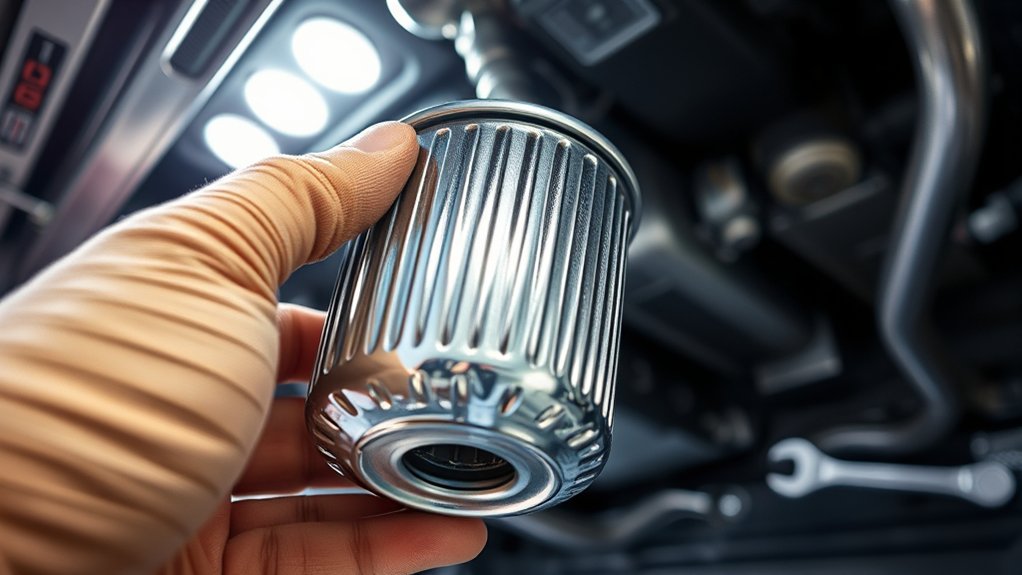
To safely remove and install your oil filter, it’s important to use the right tools designed specifically for the job. An oil filter wrench provides a secure grip, making it easier to turn the filter without slipping.
Always turn the filter counterclockwise to loosen and remove it. Apply steady pressure to avoid damage or slips. When installing a new filter, turn it clockwise and tighten it by hand until the gasket touches the mounting surface.
Then, tighten it an additional ¾ to 1 turn for a proper seal. Be careful not to over-tighten, as this can damage the gasket or threads and cause leaks. Using the correct tools and safety precautions helps ensure a good fit and proper functioning of your oil filter.
How to Check That Your Oil Filter Fits and Seals Properly
Before tightening your new oil filter, make sure the gasket is properly seated and seals correctly. You want to check that it isn’t pinched or tilted during installation, which could cause leaks later.
Ensure the gasket is properly seated and sealed to prevent leaks and ensure a secure oil filter installation.
Verify that the gasket matches the size and type specified in your vehicle’s manual for a proper fit. When installing, turn the filter clockwise by hand until the gasket touches the mounting surface, then tighten an additional 3/4 to 1 turn.
Use a torque wrench if recommended to ensure you’re tightening to the proper torque. This helps prevent over-tightening or under-tightening, which can cause problems.
After installing, inspect the gasket’s alignment. Look for any gaps or misalignment that could lead to leaks. Proper fit and sealing are key to a secure installation and avoiding future issues.
- Confirm gasket matches the specified size and type.
- Verify gasket is properly seated and not pinched.
- Check for any gaps or misalignment around the gasket.
- Use a torque wrench to tighten to the recommended torque.
What If Your Oil Filter Leaks or Won’t Turn? Troubleshooting Tips
If your oil filter leaks or won’t turn, start by checking that the gasket was installed correctly and isn’t damaged.
Applying a small amount of fresh oil to the gasket can help create a better seal and make removal easier if it’s stuck.
Using the right wrench and proper technique ensures you avoid overtightening or damaging the filter.
Proper Gasket Installation
Have you noticed your oil filter leaking or just can’t get it to turn properly? Proper gasket installation is key to preventing leaks and ensuring a good seal.
First, check that the gasket sits correctly on the filter before you install it. When installing, hand-tighten the filter about 3/4 to a full turn after the gasket touches the mounting surface.
To make sure the threads are engaged properly, avoid cross-threading by lining up the filter carefully. Also, check that the gasket isn’t pinched or damaged, as this can cause leaks.
Use a clean cloth to wipe the mounting surface free of debris that could interfere with sealing. Always ensure the filter is snug but not overtightened, since overtightening can deform the gasket and lead to leaks.
Proper gasket installation guarantees a reliable seal and smooth operation.
Applying Penetrating Lubricant
Applying penetrating lubricant can make it easier to loosen stubborn or stuck oil filters, especially if dirt, corrosion, or debris have caused resistance. Start by applying lubricant around the oil filter gasket, letting it seep into the seal and reduce the force needed to turn the filter.
Wait a few minutes so the lubricant can work effectively. If the filter still won’t budge, use a filter wrench with extra leverage, but be careful not to overtighten, which could damage the gasket or threads.
If the filter remains stuck, try gently tapping around it with a rubber mallet or consider seeking professional help. Properly applying penetrating lubricant can help loosen a stuck filter and prevent damage, making the removal process smoother and safer.
Final Tips for a Leak-Free, Secure Oil Filter Installation
To guarantee a leak-free and secure oil filter installation, paying attention to the final tightening process is essential. Start by hand-tightening the filter about three-quarters of a turn after it contacts the mounting surface. Use a filter wrench if needed, but avoid overtightening, which can damage the gasket or threads.
Make sure the gasket from the old filter is fully removed to prevent leaks caused by a stuck gasket. Applying a light coat of fresh engine oil to the gasket helps create a proper seal and makes gasket removal easier during the next change.
After installation, double-check that the filter is securely tightened. Run the engine and inspect for leaks to ensure a proper, leak-free seal.
Confirm gasket removal before installing a new filter. Hand-tighten the filter for a good seal. Avoid overtightening to prevent gasket damage. Double-check for leaks after running the engine.
Frequently Asked Questions
Which Direction Should I Unscrew the Oil Filter?
You should unscrew the oil filter by turning it counterclockwise. Most filters follow the standard right-hand thread rule, so turning left loosens it.
Use an oil filter wrench for better grip and support, especially if it’s tight or hot. If you’re unsure, check the filter for directional arrows or consult your vehicle’s manual.
Be cautious to avoid damaging the filter or surrounding components.
Which Direction to Spin an Oil Filter?
You should turn the oil filter counterclockwise to remove it. This is the standard threading direction for most oil filters.
When installing a new filter, turn it clockwise until the gasket contacts the mounting surface, then tighten about three-quarters to one full turn.
Using a filter wrench can help ensure you apply the correct torque, which helps prevent leaks or overtightening.
Always check your vehicle manual for specific instructions.
Which Way Does Your Oil Filter Turn?
You turn your oil filter counterclockwise to remove it, following the standard “lefty-loosey” rule.
When installing a new filter, turn it clockwise until it’s hand-tight, then give it an extra ¾ to 1 turn.
If the filter has an arrow or marking, follow that direction. Using a filter wrench can make turning easier, especially if the filter is tight.
Always check the manufacturer’s instructions for proper tightening.
Which Way to Put in an Oil Filter?
You should turn the oil filter clockwise to install it. Start by screwing the filter in until the gasket touches the mounting surface.
Then, tighten it an additional 3/4 to 1 turn by hand. Use an oil filter wrench if needed, but don’t overtighten to avoid damage.
Always check the manufacturer’s recommended torque specs to ensure a secure, leak-free installation.
Conclusion
By following these steps, you’ll confidently install your oil filter the right way, avoiding leaks and damage. Don’t worry if it feels tricky at first. Practice makes perfect.
Imagine the peace of mind knowing your engine is protected and running smoothly. All because you took the time to do it correctly.
With patience and the right tools, you’ll master this simple task and keep your vehicle in top shape mile after mile. Properly installing the oil filter is key to maintaining your engine’s health and performance.