7 Key Differences Between Soft and Hard Tonneau Covers
Are you tired of struggling to find the perfect tonneau cover for your truck? Many people face this dilemma, feeling overwhelmed by all the options and unsure which will keep their cargo secure and weatherproof. You’re not alone—choosing between soft and hard tonneau covers can be confusing.
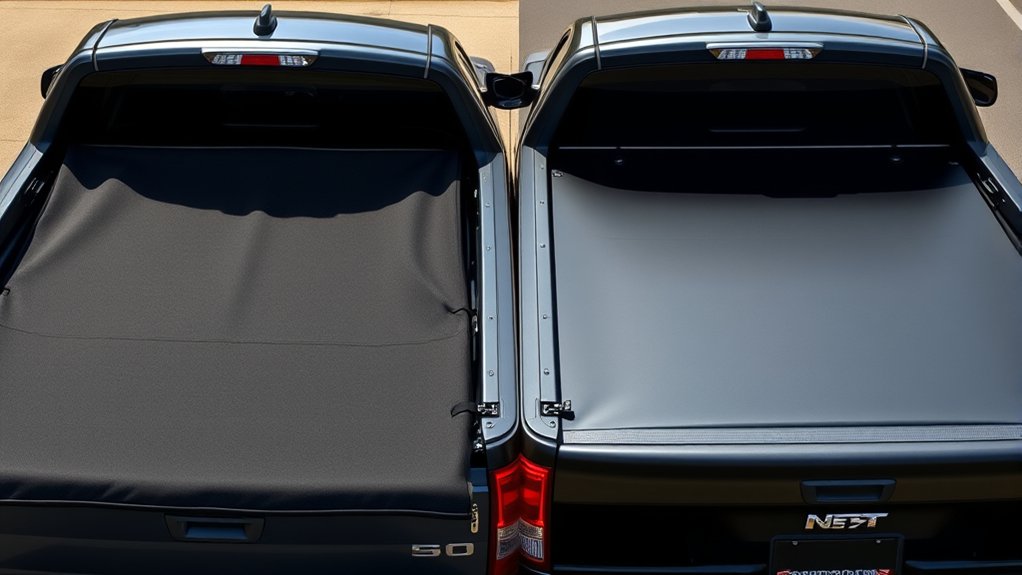
Soft tonneau covers are made from flexible materials like vinyl, polyester, or canvas, making them lightweight and easy to install. But they’re less secure and vulnerable to weather damage.
Hard covers are constructed from tough materials like aluminum or fiberglass, offering better security, impact resistance, and weatherproofing.
Soft covers usually improve fuel efficiency somewhat, but hard covers provide long-term durability. Want to know more about how each type fits your needs? Keep exploring to find out the details.
Key Takeaways
- Soft covers are flexible, lightweight, and easy to remove. You can quickly take them off when you need more space in your truck bed. Hard covers, on the other hand, are rigid and more durable. They usually take more effort to install or remove.
- Hard covers offer better security with lockable panels. This means your belongings are more protected when you’re away. Soft covers rely on fasteners that are easier to cut open, so they might not be as secure.
- When it comes to impact resistance and weather protection, hard covers are the better choice. They can handle tougher climates and harsh conditions. Soft covers might not provide the same level of protection against heavy rain or snow.
- Soft covers are great for quick bed access. Many have roll-up or fold designs, so you can get to your gear in seconds. Hard covers tend to have more complex systems, making access a bit more involved.
- Soft covers can improve your fuel efficiency by allowing better airflow around your truck. Hard covers can also boost aerodynamics if they fit tightly and are properly sealed.
Material & Construction: What Are Soft and Hard Tonneau Covers Made Of?
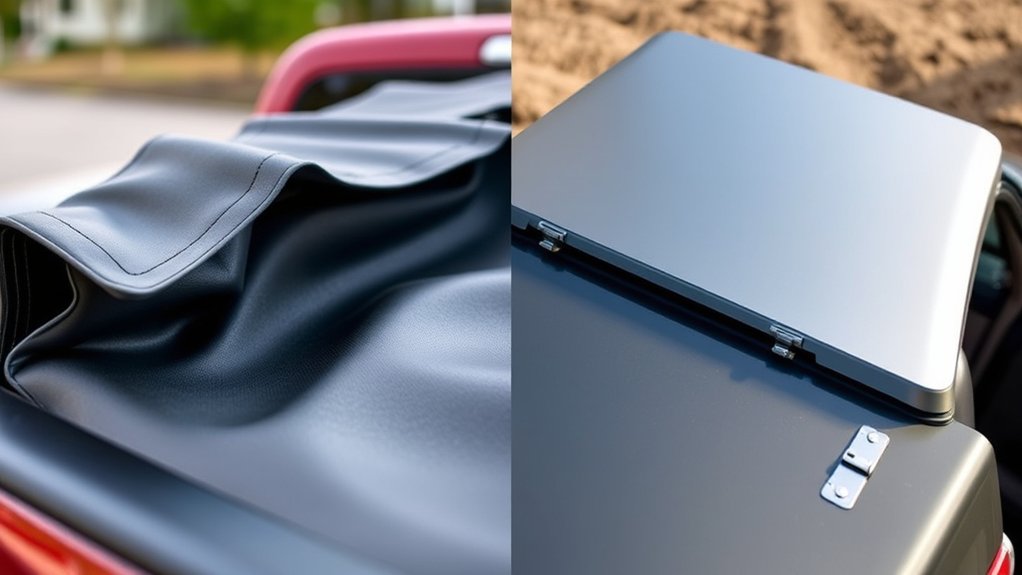
Soft tonneau covers are usually made from flexible materials like vinyl, polyester, or canvas. These are stretched over lightweight frames made of aluminum or fabric.
Vinyl is a common choice because it’s water-repellent and tear-resistant, making it durable against tough weather and rough handling. The aluminum or fabric frames give support while keeping the cover lightweight and easy to handle.
Vinyl is durable, water-repellent, and tear-resistant, ensuring protection and easy handling for everyday use.
Vinyl soft covers often have a shiny or matte finish, giving them a sleek look. The combo of vinyl and aluminum offers a good balance of flexibility and durability, perfect for everyday use.
Their design allows for easy rolling or folding, so you can quickly access your truck bed while staying protected from the elements.
Security Features: Which Cover Keeps Your Gear Safer?
When it comes to protecting your gear, hard tonneau covers generally provide better security because they’re made from sturdy materials like aluminum or fiberglass and often feature integrated locks. These lockable covers offer a higher level of protection against theft and vandalism.
Soft covers, relying on fasteners like Velcro, snaps, or clamps, are easier to cut or force open, which makes them less secure. Many hard covers include lockable panels or connect with your truck’s tailgate lock, giving you even more protection.
Consider these points:
- Hard covers provide superior security thanks to durable materials.
- Lockable features help prevent unauthorized access.
- Soft covers are more vulnerable to vandalism.
- For maximum protection, go for a cover with integrated or lockable panels.
Durability & Weather Resistance: How Do Soft and Hard Covers Stand Up?
Hard tonneau covers are made from tough materials like aluminum, fiberglass, or composites, which makes them highly resistant to impacts and harsh weather. This durable construction helps them stand up to daily wear and tear.
They also offer better weather resistance thanks to sealed gaskets and drainage systems that prevent water from seeping in during heavy rain or snow. Soft covers, made from vinyl or fabric, are more prone to UV damage, tearing, and stretching over time.
The seams and fasteners on soft covers, like Velcro and snaps, can allow water to leak inside during wet conditions. Overall, hard covers give better long-term impact protection and weather resistance, making them a more reliable choice for tough climates and heavy use.
Installation & Accessibility: How Easy Is It to Use Your Cover?
Soft covers are usually quick and easy to install, often needing just a few tools or none at all. They’re simple to remove when you need access.
Hard covers tend to be more complex, sometimes requiring professional help or drilling. This can make regular access a bit less convenient.
For quick bed access, soft covers—especially roll-up or foldable types—let you open and close the bed quickly. Hard covers might need lifting or removal for larger items.
Installation Complexity and Time
Installing a tonneau cover can vary a lot in how complex and time-consuming it is, which affects how easy it is to access your truck bed daily.
Soft covers are generally quick and simple to install, often taking less than an hour with minimal tools. They use clamp-on or hook-and-loop fasteners, making setup fast and hassle-free.
Hard covers tend to be more complicated, sometimes requiring drilling, extra hardware, or even professional help. This makes them a bit more time-consuming and less straightforward to install.
When it comes to removal, soft covers are easier to take off for daily use. Hard covers may need lifting or partial removal, which adds to the time and effort needed for full bed access.
Ease of Bed Access
When it comes to accessing your truck bed regularly, soft tonneau covers generally make the process quicker and easier. Soft covers, especially roll-up and folding styles, allow for effortless bed access with minimal effort. You can typically roll or fold them back in seconds, making loading or unloading large or irregular items straightforward.
They’re also easy to install, often requiring just a few minutes and basic tools, so you won’t waste time struggling with complex mechanisms. In contrast, hard covers usually need manual removal or lifting, and even retractable models involve multiple steps.
Fuel Efficiency: Do Tonneau Covers Affect Your Gas Mileage?
Tonneau covers can significantly boost your truck’s fuel efficiency by reducing aerodynamic drag. This is especially true when you’re driving at highway speeds. By streamlining the airflow over the truck bed, they help you save on gas.
Soft covers, with their flexible and flush-fitting design, often provide better aerodynamic benefits than hard covers. Low-profile hard covers can also be very effective if they seal tightly against the truck bed.
Keep in mind that actual fuel savings depend on factors like driving conditions, cover type, and how well the cover seals the bed against air resistance. To get a better idea, consider these points:
- Improving aerodynamics reduces drag and increases fuel efficiency.
- Soft covers usually allow better airflow because of their flexible design.
- Hard covers that sit low can offer even greater aerodynamic benefits.
- Gas mileage savings can range from 5 to 10%, depending on various conditions.
Cost & Longevity: Which Cover Offers Better Long-Term Value?
Although the initial cost of a tonneau cover varies widely, hard covers tend to be more cost-effective long-term because of their durability and security. Hard covers typically range from $900 to $2,500, while soft covers are usually between $250 and $600 upfront.
However, the durability of hard covers means they can last 10 years or more with proper care, which reduces the need for replacements and repairs over time. They also resist weather, impacts, and theft better, lowering long-term expenses.
Soft covers are cheaper at first but often need replacing or repairing sooner because of wear, UV damage, or seam issues. Overall, hard tonneau covers offer better value in the long run by combining durability, security, and longevity.
Best Tonneau Cover for Winter: Handling Snow and Ice Conditions
Cold winter conditions call for a cover that can handle heavy snow and ice buildup without risking your truck’s security or damage. Hard tonneau covers are great for this because they can support between 200 and 400 lbs, making them perfect for winter weather.
Soft covers, on the other hand, only support about 50 to 100 lbs. They struggle under heavy snow or ice and can get damaged more easily. So, they’re not the best choice for harsh winter conditions.
Here are some key points to keep in mind:
- Hard covers shed snow more efficiently, helping to reduce buildup.
- Soft covers can freeze or tear in really cold weather.
- When it’s cold, hinges and locks on soft covers may stiffen up, so extra lubrication helps.
- Removing snow from hard covers is easier because of their rigid structure.
For tough winter climates, hard tonneau covers are the way to go. They offer better durability, security, and resistance to snow loads.
Frequently Asked Questions
Can Soft Covers Be Reinforced for Added Security?
Yes, you can reinforce soft covers for added security. You might add extra locks, like cable locks or padlocks, to make it harder for thieves to access your truck bed.
Installing a security system or using high-quality, durable materials can also help deter theft.
Keep in mind, though, that soft covers generally aren’t as secure as hard covers. So, it’s a good idea to weigh your options based on your security needs.
How Do Hard Covers Perform in Extreme Cold Temperatures?
Hard covers generally perform well in extreme cold temperatures because their sturdy materials resist cracking and warping better than soft covers. You’ll find they maintain their shape and protection even in freezing conditions.
That said, it’s a good idea to regularly check for ice buildup and make sure the seal is tight to prevent moisture from sneaking in. With a little care, hard tonneau covers can stay reliable and durable in harsh winter weather.
Are Soft Covers More Prone to Damage From UV Exposure?
Yes, soft covers are more prone to UV damage because their materials, like vinyl or fabric, can degrade over time when exposed to sunlight. UV rays cause fading, cracking, and weakening of the cover’s surface.
To protect your soft cover, you should regularly apply UV protectant sprays and park in shaded areas when possible. Proper maintenance helps extend its lifespan and keeps it looking good longer.
Do Hard Covers Require Special Maintenance in Winter?
Yes, hard covers do need special winter maintenance, or they might turn into an icy fortress!
You should regularly clean off snow and ice to prevent damage from the weight.
Applying a protective wax helps keep the surface smooth and resilient against winter’s brutal assault.
Don’t forget to check the latches and hinges for rust or freezing, making sure your cover stays sturdy and functional all season long.
Can You Upgrade a Soft Cover to a Hard Cover Later?
Yes, you can upgrade a soft cover to a hard cover later, but it really depends on your truck and the covers’ compatibility.
You’ll need to check if the hard cover fits your truck’s dimensions and mounting system. Some soft covers are designed to be easily removable, which makes switching much simpler.
Be prepared for potential modifications or extra hardware to ensure a secure fit and proper functionality.
Conclusion
Choosing between soft and hard tonneau covers really comes down to what matters most to you—security, durability, or ease of use. Think of it like picking a trusty steed; some riders prefer the flexibility of a soft cover, while others want the strength of a hard shell.
Weigh your needs carefully, and you’ll find the perfect match. It’s a lot like uncovering the right saddle for your journey.
Whichever you choose, it’ll serve you well, just like a reliable compass in uncharted territory. Main keyword: tonneau covers.