Do Bad Spark Plugs Cause Your Car to Stall?
Are you tired of your car stalling unexpectedly? Many drivers face this frustrating problem, especially during hot weather. It’s a common issue that can leave you stranded and stressed out.
Yes, bad spark plugs can cause your car to stall, especially in hot weather. When spark plugs are worn, fouled, or cracked, they struggle to ignite the fuel properly, leading to misfires and rough idling. Heat accelerates this damage, increasing the chances of engine stalls.
Ignoring these issues can worsen engine performance and reliability.
If you want to understand how to prevent stalls and keep your engine running smoothly, keep going for important insights.
Key Takeaways
- Bad spark plugs can cause misfires, which lead to engine hesitation and stalls, especially when it’s hot outside.
- When spark plugs are worn or fouled, they struggle to ignite the fuel properly. This increases the chances of your engine stalling unexpectedly.
- Failing spark plugs also make your engine less responsive. You might notice rough idling or sudden stalls while you’re driving.
- Ignition problems caused by bad spark plugs can put extra stress on ignition coils and fuel injectors. This can lead to more parts failing over time.
- Keeping an eye on your spark plugs and replacing them regularly can help prevent stalls. This way, your engine stays reliable, even in summer heat.
Can Faulty Spark Plugs Cause Your Car to Stall in Summer?
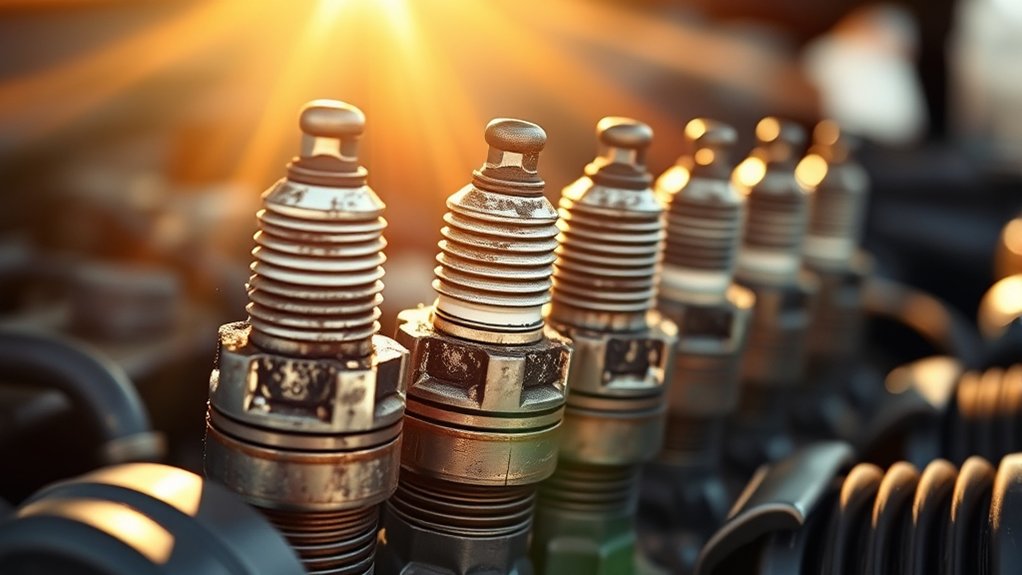
When the summer heat rises, faulty spark plugs can become a major cause of engine stalling. During hot weather, worn or fouled spark plugs struggle to ignite the air-fuel mixture consistently, leading to misfires and hesitation.
This unreliable ignition can cause your engine to stall unexpectedly. The heat makes existing problems worse, making weak sparks less effective and increasing the chances of stalling.
Hot temperatures also reduce air density, which worsens the performance of compromised spark plugs. If your spark plugs aren’t in good shape, the summer heat can push them over the edge, causing misfires and stalls.
Regular inspection and replacement before summer can help prevent these issues, keeping your ignition reliable even in the heat.
How Summer Heat Worsens Spark Plug Problems and Leads to Stalls
As the summer heat rises, it directly impacts your vehicle’s engine and under-the-hood components, making existing spark plug problems worse. The high temperatures cause worn or fouled spark plugs to fail more often, leading to engine stalls or hesitation.
Raised heat reduces air density, which affects the air-fuel mixture and makes spark plug misfires more likely. Prolonged exposure to summer heat speeds up the deterioration of engine parts, worsening overall performance.
Hot summer weather lowers air density, increasing spark plug misfires and speeding up engine component deterioration.
Here are four ways summer heat makes spark plug issues worse:
- Increased engine temperatures cause spark plugs to expand and wear out faster.
- Hot weather worsens fouled spark plugs, impairing firing reliability.
- Elevated heat raises the risk of engine misfire and rough idling.
- Higher temperatures make engine stalls more common due to compromised spark performance.
Signs Your Spark Plugs Are Failing and Causing Engine Stalls
If your engine stalls unexpectedly or struggles to stay running, your spark plugs might be the culprit.
You’ll also notice misfires or rough idling, which are signs of ignition issues.
Keep an eye out for these signs to prevent more serious engine problems.
Engine Stalls Unexpectedly
Engine stalls can catch you off guard, especially during low-speed driving or idling. They often point to underlying spark plug issues. If your engine stalls unexpectedly, it might be a sign that your spark plugs aren’t igniting the air-fuel mixture properly.
Common signs include sudden hesitation or stalling during idle or slow speeds. You might also notice misfires that disrupt smooth combustion, or the check engine light coming on unexpectedly. Rough idling or uneven engine performance are also clues.
Failing spark plugs can cause inconsistent ignition, leading to engine stalls without warning. High summer temperatures can make this problem worse. Replacing worn spark plugs helps restore proper ignition and prevents these unexpected stalls, keeping your engine running smoothly.
Engine Misfires and Rough Idling
Worn or fouled spark plugs often cause engine misfires and rough idling, disrupting smooth engine operation. When spark plugs have carbon buildup, worn electrodes, or cracks, they struggle to ignite the fuel-air mixture properly.
This leads to engine misfires, which can make your engine shake or vibrate excessively at idle. You might also notice popping or skipping sounds, along with engine hesitation.
Poor spark plug performance throws off the engine’s timing, causing it to stumble or stall unexpectedly during low-speed operation. If your engine idles roughly or behaves irregularly, check your spark plugs for signs of wear or carbon buildup.
Addressing these issues quickly can prevent engine stalling and help ensure smoother driving.
How to Diagnose Spark Plug Issues Before Replacing Them
Before replacing spark plugs, take a close look at them for any visible signs of wear, like eroded electrodes or cracks. Also, check for carbon buildup, which can affect performance.
Next, use a spark plug gap gauge to make sure the electrodes are set to the right clearance. Performing a spark test can also help—you want to see a strong blue spark.
These quick diagnostic steps can help you figure out if the spark plugs are the real issue or if there might be other engine problems to consider.
Visual Inspection Techniques
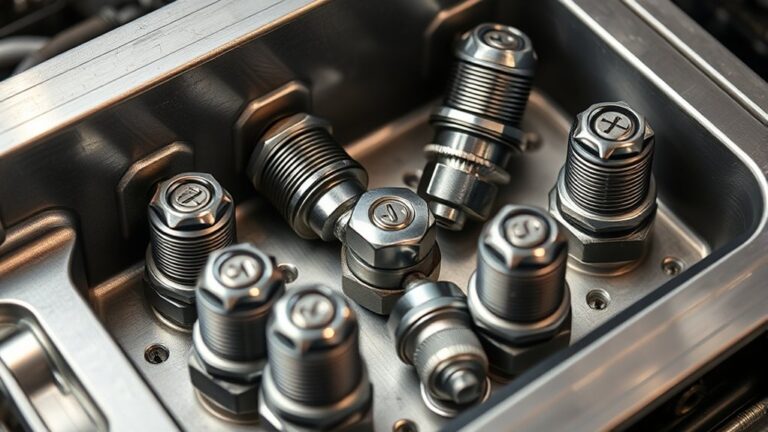
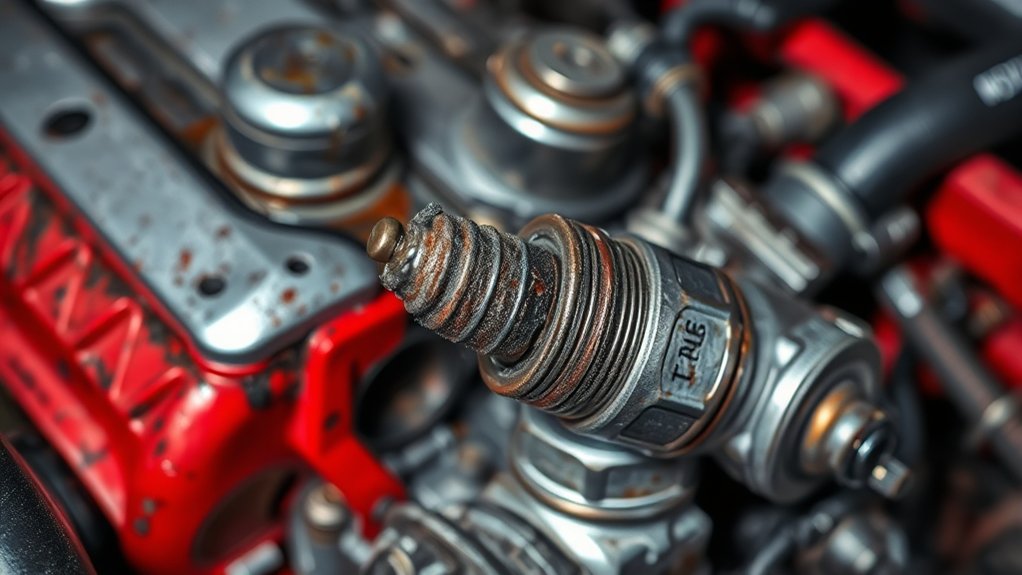
Performing a visual inspection of your spark plugs is a simple way to catch potential issues early. Carefully look at each plug for common problems like carbon buildup, which appears as black, soot-like deposits on the electrode and insulator tip.
Check for electrode wear—rounded or thinning tips that can reduce spark efficiency. Also, look for cracks or chips in the ceramic insulator, as these can cause misfires and engine hesitation.
Inspect for oil fouling, which shows up as oily deposits and suggests internal engine leaks. Remove the spark plugs and compare them to the manufacturer’s specs to spot signs of excessive wear or damage.
Here are some key points to keep in mind:
- Carbon buildup
- Electrode wear
- Insulator cracks
- Fouling
Diagnostic Testing Methods
After visually inspecting your spark plugs, it’s important to verify their electrical and mechanical condition through targeted testing methods. Diagnostic testing includes performing a spark test by removing a spark plug, connecting it to the ignition coil, and checking for a strong, blue spark during cranking. Weak or absent sparks suggest issues.
An engine scan tool can also identify diagnostic trouble codes linked to misfires or ignition problems, helping pinpoint spark plug concerns. Furthermore, testing the resistance of spark plug wires with an ohmmeter ensures proper electrical conductivity.
To rule out internal engine issues that mimic spark plug problems, conduct a compression test. These diagnostic testing methods help you accurately diagnose spark plug issues before replacing them, saving time and preventing unnecessary part replacements.
Other Common Reasons Your Car Stalls in Summer (Beyond Spark Plugs)
During hot summer days, your car can stall for reasons beyond faulty spark plugs. High temperatures put extra stress on components, leading to various issues. Here are some common culprits:
Failing ignition coils can cause misfires and engine stalls when things heat up. Dirty fuel injectors might clog or spray unevenly, messing with fuel delivery during summer drives.
Vapor lock in older vehicles happens when high temps vaporize fuel in the lines, blocking the flow. Cracked vacuum hoses from heat expansion create air leaks that disturb engine balance.
Additionally, overheating sensors may give false readings, causing the engine to stall as a safety measure. Addressing these issues helps prevent summer stalls and keeps your engine running smoothly.
What Are the Risks of Ignoring Bad Spark Plugs During Hot Weather?
Ignoring bad spark plugs in hot weather can significantly increase the risk of engine misfires and stalls. As temperatures go up, worn or fouled spark plugs struggle to produce a consistent spark, which hurts your ignition system’s reliability.
Ignoring bad spark plugs in hot weather increases engine misfires and stalls, risking your vehicle’s reliability and safety.
This can cause engine hesitation, rough idling, and even stalls, especially during long drives or when your car is parked. If you don’t maintain your spark plugs, misfires can become worse, raising the chances of sudden stalls.
Neglecting spark plug care also puts extra stress on other engine parts like ignition coils and fuel injectors. This makes stall risks even higher. In hot weather, these problems can escalate quickly.
Timely replacement and proper maintenance are crucial to keep your engine running smoothly. Doing so helps you avoid inconvenient breakdowns and keeps your vehicle reliable in the heat.
When and How to Replace Spark Plugs to Prevent Summer Stalls
To prevent summer stalls, it’s important to replace your spark plugs before they get worn or fouled. Regular inspections and replacements based on your vehicle’s maintenance schedule help keep ignition reliable and your engine running smoothly, especially in hot weather.
Here’s when and how to replace your spark plugs:
- Follow your vehicle’s recommended mileage, usually every 30,000 to 100,000 miles.
- Watch out for signs like misfiring, rough idling, or trouble starting.
- Use the correct type of spark plug and set the right gap when replacing.
- Make sure to replace worn or fouled spark plugs promptly to avoid summer stalls and keep your engine working properly. Proper spark plug maintenance helps your ignition system run efficiently and reduces the risk of stalls during hot summer days.
Frequently Asked Questions
Can a Faulty Spark Plug Cause Stalling?
Yes, a faulty spark plug can cause your car to stall. When the spark plug fails to ignite the air-fuel mixture properly, your engine misfires and runs irregularly.
This disruption can lead to sudden stalling, especially if the spark plugs are worn or fouled. High temperatures make this problem worse, increasing the chances of your vehicle stalling unexpectedly.
Replacing the spark plugs usually fixes these stalling issues.
What Is the First Thing to Do if Your Engine Stalls?
When your engine stalls, the first thing you should do is safely pull over and turn on your hazard lights. This alerts other drivers and keeps you safe.
Check if the engine has completely stopped or just struggles to run smoothly. If it stalls, try restarting after a few moments.
If it won’t restart or stalls repeatedly, get a mechanic to diagnose potential issues, including spark plug problems.
What Are Four Signs a Spark Plug Should Be Replaced?
Your spark plugs are like the heartbeat of your engine; when they falter, so does your car.
Signs you need replacements include visible carbon buildup or soot, which signals fouling. Cracks or chips in the ceramic insulator weaken sparks.
An increased gap size can cause weak ignition, and oil fouling indicates deeper engine issues.
Recognizing these signs helps keep your engine running smoothly and prevents unexpected stalls.
How Does a Car Act With Bad Spark Plugs?
When your spark plugs are bad, your car might run rough, hesitate, or even misfire. You’ll especially notice this during acceleration or when the car is idling.
You might also feel the engine vibrating or hear popping sounds. Plus, your fuel economy could take a hit, and the car may be less responsive.
Starting could become a challenge, or the engine might stall unexpectedly. These problems often happen during low-speed driving or when idling.
All of this occurs because faulty spark plugs aren’t igniting the air-fuel mixture properly, which throws off the smooth operation of your engine.
Conclusion
Ignoring bad spark plugs is like ignoring a ticking time bomb. It can lead to unexpected stalls, especially in the summer heat. Regularly checking and replacing your spark plugs keeps your engine running smoothly.
This helps prevent embarrassing stalls and costly repairs. Think of your spark plugs as the heartbeat of your engine. When they fail, everything starts to falter.
Stay proactive about spark plug maintenance, and your car will keep you moving like a well-oiled machine through every season. Yes, bad spark plugs can definitely cause your car to stall.