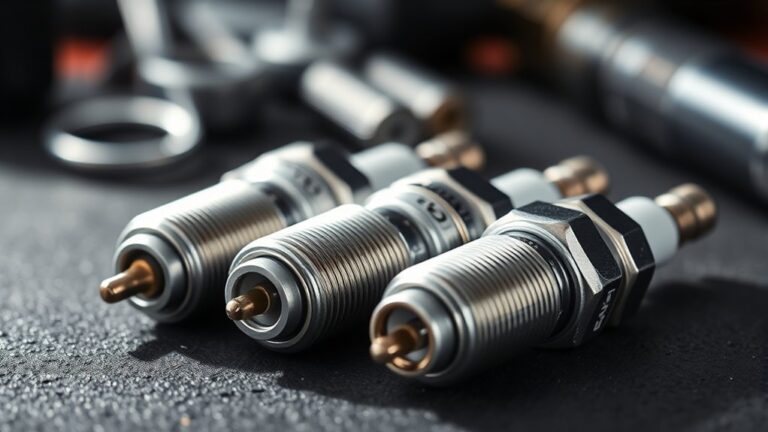
How to Properly Gap Spark Plugs for Optimal Combustion
Are you tired of your engine running rough or not performing as smoothly as it should? Many car owners struggle with optimizing spark plug gaps, which can impact ignition and fuel efficiency. Don’t worry—you’re not alone, and fixing this can make a big difference.
To properly gap your spark plugs for ideal combustion, first check your vehicle’s manual for the correct gap measurement. Use a feeler gauge or a dedicated spark plug gap tool to measure the current gap.
Gently bend the ground electrode to adjust, avoiding excessive force or damage. Recheck the gap multiple times for accuracy.
Ensuring the correct gap improves ignition, engine efficiency, and longevity—if you want detailed steps, keep going to learn more.
Key Takeaways
- Check your vehicle’s manual or the manufacturer’s specs to find the right spark plug gap measurement.
- Grab a good quality feeler gauge or gap tool to measure the existing gap accurately.
- Gently bend the ground electrode inward or outward using a dedicated gapping tool to make adjustments.
- It’s a good idea to recheck the gap several times as you work to ensure it’s just right.
- Before installing the spark plug, double-check that the final gap matches what the manufacturer recommends.
Why Does Spark Plug Gapping Matter for Your Engine?
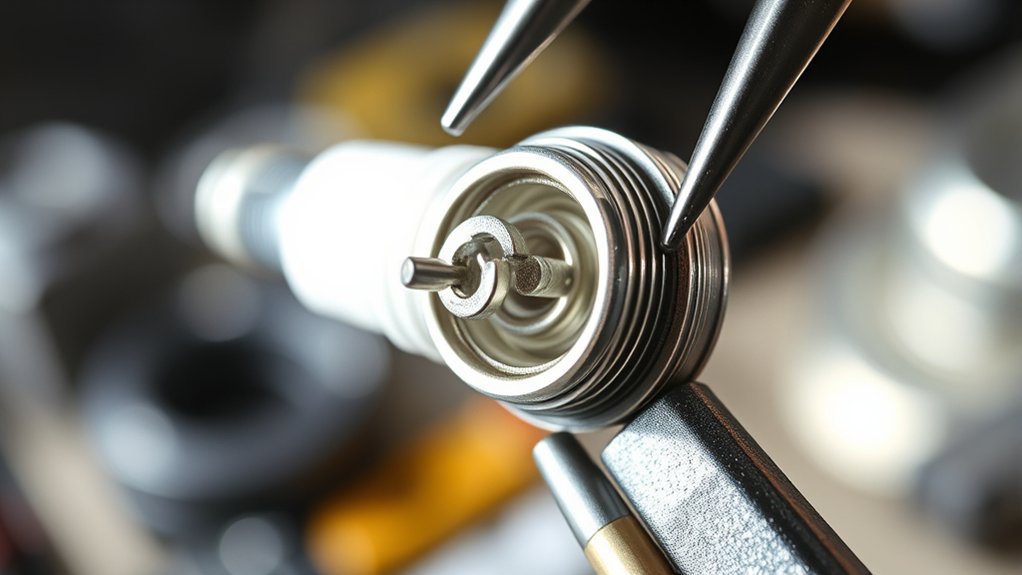
Proper spark plug gapping is crucial because it makes sure the ignition arc happens at the right voltage, which is needed for efficient combustion. When your spark plugs are gapped correctly, they produce a strong, consistent spark that ignites the air-fuel mixture effectively.
If the gapping is off, it can cause misfires, engine hesitation, power loss, and lower fuel efficiency. Keeping the correct gap helps your engine run smoothly and prevents your spark plugs from wearing out too quickly.
What Tools Do You Need to Measure and Gap Spark Plugs?
To measure and gap your spark plugs accurately, you’ll need a feeler gauge or a dedicated spark plug gap tool. These tools make it easy to get the right gap size.
A torque wrench can help you apply consistent pressure when making adjustments, ensuring you get precise results.
Always keep your tools clean and ready to go to avoid errors or damage during the process.
Necessary Measuring Tools
When measuring and gapping spark plugs, having the right tools is really important for accuracy. A spark plug gap tool or feeler gauge with measurements in thousandths of an inch helps you get an exact reading.
These tools let you check the current gap and see if adjustments are needed to match what the manufacturer recommends. Using a dedicated gapping tool makes it easier to bend the ground electrode safely without damaging the spark plug.
Some feeler gauges come with multiple blades of different thicknesses, so you can quickly compare the gaps. Always go for a high-quality, durable tool to ensure your measurements are consistent and accurate.
Having the proper tools helps you get the best engine performance by making sure your spark plugs are gapped correctly.
Proper Gapping Instruments
What tools do you need to measure and gap spark plugs accurately? The most essential tools are a gapping tool and a feel gauge.
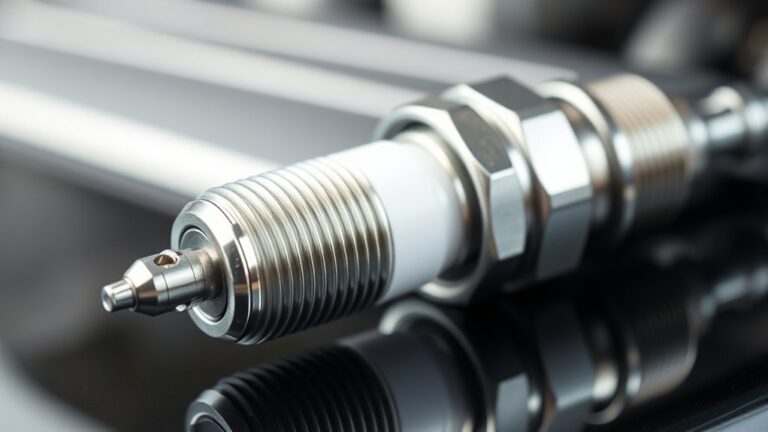
A gapping tool, often made of metal or plastic, is designed to gently bend the ground electrode without damaging the plug. A feel gauge, or spark plug gap tool, helps you measure the existing gap precisely and set it to the manufacturer’s specifications.
Feel gauges usually come with multiple blades of different thicknesses, allowing you to measure in thousandths of an inch. For higher precision, especially in performance engines, digital gap measuring devices are available.
Always keep your tools clean and free of debris to ensure accurate measurements and avoid damaging the spark plug electrodes. Proper tools make gapping quick and precise.
How Do You Find Your Engine’s Recommended Spark Plug Gap?
To find your engine’s recommended spark plug gap, start by checking your vehicle’s owner’s manual or the manufacturer’s specifications.
You can also verify the correct gap using trusted online resources or the spark plug maker’s catalog, like Champion®.
If you’re unsure, contacting a mechanic or the supplier guarantees you get the right setting for maximum performance.
Consult Vehicle Manual
Finding the recommended spark plug gap for your vehicle starts with checking your owner’s manual or the manufacturer’s specifications sheet. These resources give you the right measurement for your engine, helping ensure it runs smoothly.
To find this info, look inside the owner’s manual, usually in the maintenance or specifications section. You can also check the manufacturer’s specs sheet, which is often available online or with your vehicle documentation.
Another option is to search online using your vehicle’s make, model, and year to get specific spark plug gap details. Always double-check the exact gap requirement before gapping or installing new spark plugs.
Using the owner’s manual guarantees you follow the correct measurement, preventing potential engine issues and keeping your engine running efficiently.
Use Manufacturer Specifications
How do you determine your engine’s recommended spark plug gap using manufacturer specifications? First, check your vehicle’s owner’s manual or manufacturer’s documentation, as they often list the ideal spark plug gap.
You can also find this information on the spark plug packaging, manufacturer’s catalogs, or trusted online resources specific to your make and model. Many spark plug manufacturers, like Champion®, print the recommended gap directly on the packaging or the plug itself.
Moreover, vehicle-specific forums and repair guides frequently list the correct spark plug gap for various engine types. Always verify the manufacturer’s specifications before installing new spark plugs to guarantee proper engine performance and fuel efficiency.
Following these guidelines helps you set the proper spark plug gap from the start.
Verify With Trusted Sources
Once you have the manufacturer’s specifications, confirming the correct spark plug gap with trusted sources guarantees accuracy. To verify the right gap for your engine, check reliable resources like your vehicle owner’s manual or the official website of the spark plug maker, such as Champion®.
You can also consult trusted automotive repair databases or online guides that offer vehicle-specific maintenance info. If you’re still unsure, reaching out to a professional mechanic or an authorized service center is a good idea.
Always make sure the source you use is reputable and current. Using trusted sources helps prevent incorrect gaps that could impact your engine’s performance and lifespan.
- Check your owner’s manual or manufacturer’s website
- Use trusted automotive repair databases
- Contact a professional mechanic
How to Measure Your Spark Plug Gap Correctly?
Measuring your spark plug gap accurately is key to keeping your engine running smoothly. It’s pretty simple if you have the right tools.
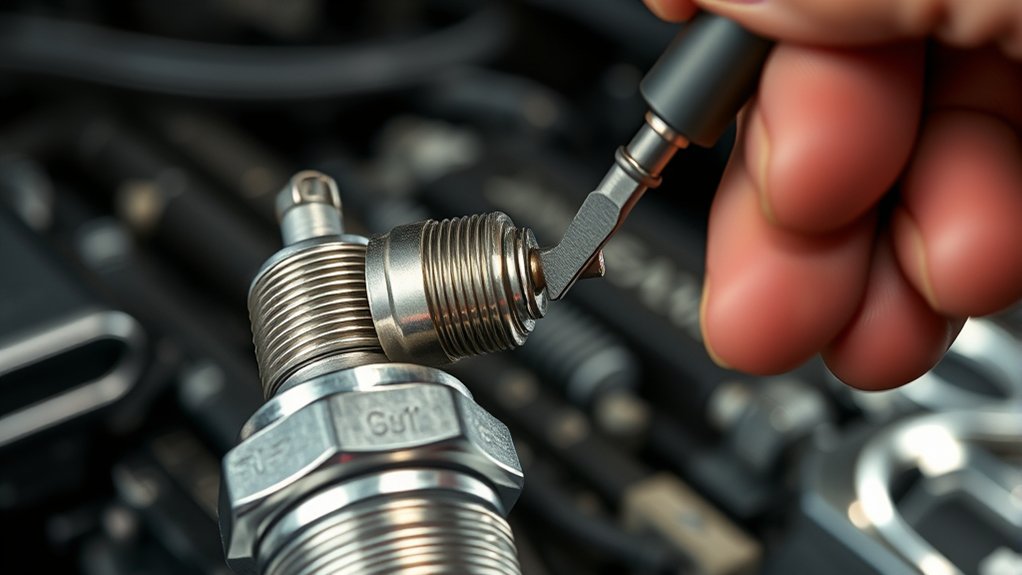
Start by grabbing a precise feeler gauge or spark plug gap tool. Gently slide the gauge into the spark plug’s gap, applying slight resistance to feel the current size.
Compare the measurement to your vehicle manufacturer’s recommended specs, which you can find in the owner’s manual or official resources.
If the gap isn’t right, carefully bend the ground electrode with the gapping tool until it matches the specified measurement.
After you make adjustments, re-measure to ensure the gap is correct and consistent.
Getting the gap right helps create a strong spark and better combustion, which boosts engine efficiency and longevity.
Always double-check your measurements before installing the spark plug to make sure everything’s spot-on.
How Can You Adjust Your Spark Plug Gap Safely and Accurately?
To adjust your spark plug gap safely, start by using a proper feeler gauge to measure the current gap accurately. Handle the electrodes gently with a gapping tool or pliers, avoiding excessive force that could cause damage.
Recheck the gap after each adjustment to make sure it stays within the manufacturer’s specifications. Taking your time and being careful helps ensure a proper, safe adjustment.
Using Proper Gapping Tools
Using the right gapping tools is crucial for adjusting your spark plug gap safely and accurately. A good quality feeler gauge or spark plug gapping tool helps you measure and set the gap correctly.
When using the gapping tool, gently bend the ground electrode, applying even pressure to avoid damaging the spark plug. Make sure the gauge fits snugly with slight resistance to confirm an accurate measurement.
Recheck the gap multiple times during adjustment to ensure it matches the manufacturer’s specifications. Handling the spark plug carefully is key to preventing damage to the electrodes and ensuring peak combustion.
- Use a high-quality gapping tool for precise adjustments
- Always double-check the spark plug gap after bending
- Handle the spark plug gently to avoid electrode damage
Handling Electrodes Carefully
Handling the electrodes carefully is essential to guarantee your spark plug is properly gapped without causing damage. Use a proper gapping tool or feeler gauge to measure the gap precisely, avoiding any contact with the ceramic insulator.
When adjusting the gap, gently bend the ground electrode inward or outward using a specialized gapping tool. Avoid using pliers or applying excessive force, as this can deform the electrode or misalign it, affecting spark consistency.
Keep the ground electrode flat and even, ensuring it maintains good contact with the spark. After adjusting, recheck the gap multiple times to confirm it matches the manufacturer’s specifications.
Proper handling prevents damage and ensures your spark plug functions reliably for maximum engine performance.
What Are Common Mistakes When Gapping Spark Plugs and How to Avoid Them?
One common mistake when gapping spark plugs is applying too much force to bend the ground electrode, which can damage the plug or change its designed gap. This often results in improperly gapped spark plugs and engine misfires.
Applying excessive force when gapping can damage spark plugs and cause engine misfires.
Another mistake is not cleaning the spark plug before gapping. Debris can interfere with accurate measurement and lead to incorrect gaps.
Using the wrong tools, like a knife or screwdriver instead of a proper feeler gauge, increases the risk of setting the wrong gap. Repeatedly adjusting the gap without rechecking can cause inconsistent gaps and unreliable ignition.
To avoid these issues, always handle spark plugs carefully, verify the manufacturer’s recommended gap, and make sure the plug is clean before measuring. Properly gapped spark plugs are key for peak engine performance and preventing problems like spark plug fouling.
How Does an Incorrect Spark Plug Gap Affect Engine Performance and Longevity?
An incorrect spark plug gap can seriously affect your engine’s performance by causing weak or inconsistent sparks. When the gap is too small, the ignition energy might not be enough, leading to incomplete combustion and less power.
On the other hand, a gap that’s too wide can prevent the spark from firing reliably. This increases misfires and can cause engine damage over time. Both issues speed up wear on spark plugs and ignition parts, shortening their lifespan.
Consistently incorrect gaps can lead to engine knocking, fouling, and reduce overall engine longevity. To get the best performance, it’s important to ensure your spark plugs are gapped correctly.
When Should You Check and Re-Gap Your Spark Plugs?
You should check and re-gap your spark plugs during every major tune-up or roughly every 30,000 miles, whichever comes first. This helps ensure your engine runs smoothly and efficiently.
Also, inspect and re-gap your spark plugs if you notice symptoms like misfiring, rough idling, or decreased fuel efficiency. After cleaning or handling spark plugs, re-gapping is essential to keep the gap within manufacturer specs.
When installing new plugs that aren’t pre-gapped, verify and adjust the gap before installation. Regularly re-gap spark plugs, especially in high-performance or modified engines, since increased stress can change the gap over time.
Staying proactive with your spark plug gap helps maintain peak combustion and extends engine life.
- Misfiring or rough idle signals it’s time to check the gap
- After cleaning or handling spark plugs
- When installing new, un-gapped plugs
Gapping Tips for Different Engine Types and Spark Plug Materials
Different engine types and spark plug materials need specific gap adjustments to ensure optimal performance.
High-performance engines with high compression ratios benefit from narrower gaps, around 0.020 to 0.025 inches, to prevent pre-ignition and knocking.
Copper spark plugs have high thermal conductivity, so they can usually have slightly wider gaps within the manufacturer’s recommended settings for efficient ignition.
Platinum and iridium plugs are typically pre-gapped, but it’s a good idea to check and adjust the gap based on your engine’s needs for the best performance.
Engines with turbochargers or superchargers require precise, narrower gaps to handle increased cylinder pressures and prevent misfires.
Always check the manufacturer’s recommended gap and inspect the center electrode to make sure your spark plug is properly adjusted for your specific engine and material.
Final Tips for Ensuring Your Spark Plugs Are Gapped for Optimal Combustion
Before installing your spark plugs, double-check the spark plug gap with a feeler gauge to ensure it matches the manufacturer’s specifications. Use a precise gapping tool to gently bend the ground electrode until you reach the desired gap size, being careful not to damage the ceramic insulator.
After adjusting, recheck the gap to confirm it’s within thousandths of an inch of the recommended measurement. Keep the spark plug surface clean and free of debris to avoid inaccurate readings.
Always handle the spark plug carefully to prevent damaging the electrodes, which can impact proper gapping and engine performance. Reverify the gap after each adjustment to make sure it stays within the proper range.
Frequently Asked Questions
How Does Spark Plug Gap Affect Combustion?
The spark plug gap directly affects combustion by controlling the strength and timing of the spark. If the gap is too narrow, the spark might be weak, leading to incomplete fuel ignition and lower engine efficiency.
If it’s too wide, the spark may be inconsistent or fail to ignite properly. You want the gap just right to ensure a strong, reliable spark that ignites the air-fuel mixture efficiently for smooth engine performance.
What Spark Plugs Are Best for Lexus?
The best spark plugs for your Lexus are platinum or iridium types because they last longer and improve ignition.
Check your owner’s manual for the recommended model and gap size, which is usually between 0.028 and 0.044 inches. Using the right plugs and proper gap helps your engine run smoother and more efficiently.
It also reduces misfires and improves fuel economy. Always follow the manufacturer’s specs for the best results.
What Spark Plugs Are Best for 1zz?
For your 1ZZ engine, copper core spark plugs like NGK BKR5E or Denso IK20 are great choices. They offer about 20% better conductivity than platinum or iridium options.
The ideal gap is usually between 0.028 to 0.040 inches, depending on any modifications you’ve made.
Using the right heat range and checking manufacturer specs helps ensure efficient combustion, longer plug life, and prevents fouling.
When you have properly gapped, high-quality plugs, they can really boost your engine’s performance.
What Is the Optimal Spark Plug Gap?
The ideal spark plug gap usually falls between 0.028 and 0.060 inches, but it depends on your engine’s specifications. Check your vehicle’s owner manual or manufacturer’s guidelines to find the precise gap.
Ensuring the correct gap helps the spark occur at the right voltage, leading to efficient ignition and combustion. Regularly verify and adjust the gap during maintenance to keep your engine running smoothly and efficiently.
Conclusion
Properly gapping your spark plugs isn’t just a chore. It’s the key to unleashing your engine’s full potential. Think of it like tuning a fine instrument—every detail matters.
When you maintain the correct gap, you’ll enjoy smoother starts, better fuel efficiency, and longer-lasting spark plugs. Small adjustments can make a big difference in performance.
Don’t let a small oversight hold back your engine’s power. Take control today and get your spark plugs gapped correctly.
Because when it comes to your car, every gap counts for optimal combustion.