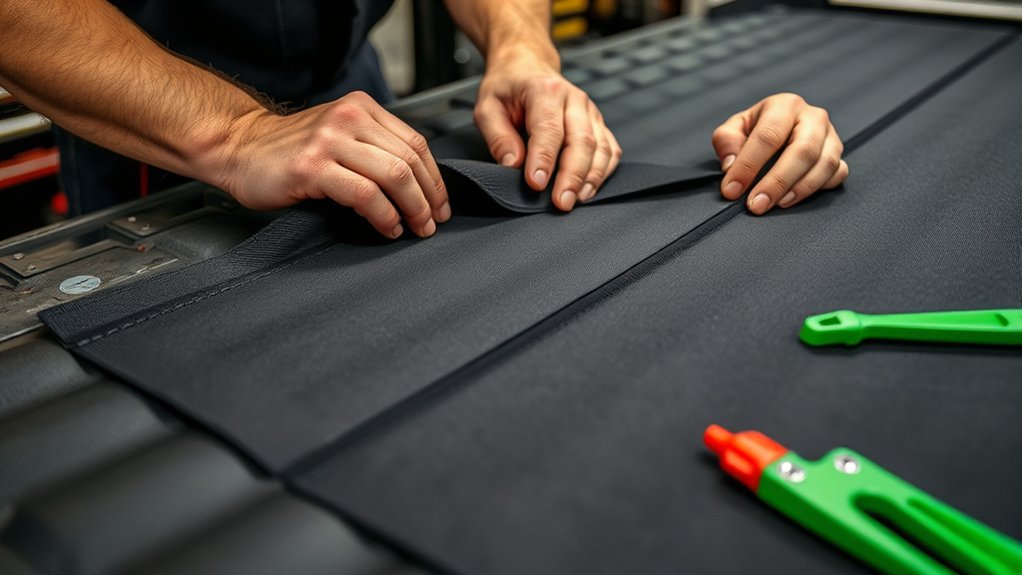
Can You Replace Velcro on a Tonneau Cover in 7 Easy Steps?
Dealing with a worn-out or loose Velcro on your tonneau cover can be frustrating. Many people struggle with keeping their cover secure, especially after some time.
Luckily, replacing Velcro is a simple fix that can save you money and hassle.
Yes, you can replace Velcro on your tonneau cover in 7 simple steps. First, identify signs of wear like loosening or dirt buildup.
Next, carefully remove the old Velcro with a scraper or your fingers.
Clean the surface thoroughly and cut new Velcro strips to size.
Then, stick the new Velcro in place, pressing firmly to guarantee good adhesion.
Finally, test the fit and keep an eye on it for future maintenance—more helpful tips await those who continue.
Key Takeaways
- Carefully remove the old Velcro using a scraper. Make sure to get all the adhesive residue off the surface. Once done, clean the area thoroughly to prepare for the new Velcro.
- Measure and cut the new Velcro strips so they match the original size and shape. Take your time to get it right; a proper fit makes all the difference.
- Use rubbing alcohol to clean the mounting areas. Let it dry completely before attaching the new Velcro.
- Press the new Velcro firmly onto the surface. Hold it in place for at least 30 seconds to ensure a strong bond.
- Finally, test the fit by closing the cover. Check that everything lines up properly and that the fastening feels secure.
How to Recognize When Your Tonneau Cover Velcro Needs Replacing

You’ll know it’s time to replace your tonneau cover Velcro when it no longer keeps the cover securely fastened, especially during driving or windy conditions.
Check for signs of wear on the hooks and loops, like fraying, missing parts, or dirt buildup that makes it harder to grip. Feel along the Velcro strips for looseness or gaps, which show weakened adhesion or damage.
If cleaning no longer restores the grip, it might mean the adhesive has failed or the material is heavily worn. Also, look out for visible damage like frayed edges, torn fabric, or peeling adhesive backing.
These signs show your Velcro isn’t holding as well as it used to, so replacing it is the best way to keep your tonneau cover secure during use.
Causes of Velcro Deterioration and Signs It’s Time to Switch
Over time, dirt, dust, and debris can weaken the Velcro’s hooks and loops, making it less effective.
Exposure to sun, heat, and moisture speeds up the breakdown of the material and adhesive.
When cleaning no longer restores its grip or the Velcro shows signs of fraying, missing parts, or peeling, it’s time to replace it.
Wear and Tear Signs
Velcro on a tonneau cover can wear out over time because of exposure to dirt, dust, and debris. This buildup weakens the hooks and loops, making the grip less effective. As a result, securing the cover properly becomes more difficult.
Frequent opening and closing also cause the hook-and-loop material to deform and fray, which further reduces its grip strength. Weather elements like UV rays, moisture, and temperature swings speed up the breakdown of Velcro’s adhesive and fibers.
You’ll notice frayed or missing hook-and-loop parts, or a loss of adhesion, which makes the cover less secure. When cleaning no longer restores grip and the Velcro looks worn or the adhesive backing weakens, it’s a clear sign it’s time to replace it.
When to Consider Replacement
When Velcro on your tonneau cover starts losing its grip despite regular cleaning, it’s a clear sign that it’s reaching the end of its lifespan. Over time, dirt, debris, UV exposure, and frequent use speed up Velcro’s wear, causing it to weaken and lose effectiveness.
Signs of deterioration include frayed hooks and loops, missing patches, or the Velcro peeling away from its backing. When cleaning no longer restores proper adhesion and the Velcro looks visibly damaged, it’s time to consider replacement.
Weakening adhesive backing and damaged parts make it harder for the Velcro to secure your cover properly. Recognizing these signs early helps keep your tonneau cover securely closed, preventing potential damage or loss.
Tools and Materials for Replacing Your Tonneau Cover Velcro
To replace your tonneau cover Velcro, you’ll need some specific tools and materials. Gather replacement Velcro strips, scissors, a cleaning cloth, rubbing alcohol, and a plastic scraper or credit card.
Having strong adhesive or outdoor double-sided tape on hand will help guarantee your repair holds firmly.
Tools Needed for Replacement
Replacing Velcro on your tonneau cover needs a few tools and materials to make sure the fix is secure and lasts a long time.
First, get replacement velcro strips, ideally with an adhesive backing, that match the width and length of your current strips. This helps create a strong, seamless bond.
Next, gather scissors to cut the strips to the right size, rubbing alcohol and a clean cloth to thoroughly clean the surface, and a plastic scraper or credit card to smooth out the Velcro during application.
For attaching the strips, use a strong fabric adhesive or outdoor double-sided tape designed for outdoor use. Having the right tools and materials is key to a durable repair that can handle weather and regular use.
Materials for Velcro Repair
To guarantee a durable Velcro repair on your tonneau cover, you’ll need a combination of specific tools and materials. Replacement Velcro strips, available in various lengths and widths like 17 feet long and 1-1/2 inches wide, are designed for rail attachment.
Essential tools include scissors, a cleaning cloth, rubbing alcohol, a plastic scraper, and strong adhesive such as E6000 or outdoor double-sided tape.
Proper surface preparation involves cleaning with rubbing alcohol, removing old Velcro, and making sure the surface is dry and free of debris.
To improve adhesion, lightly sand the metal or plastic surfaces with fine-grit sandpaper before attaching the new Velcro strips.
Carefully align the Velcro along the rails, press firmly for at least 30 seconds, and test the grip to ensure a secure closure.
Removing Old Velcro and Preparing for New Installation
Removing old Velcro is simple, but it’s best to do it carefully so you don’t damage the surface. Gently peel the Velcro away with your fingers or a plastic scraper to avoid tearing or scratching.
Next, follow these steps:
- Clean the area thoroughly using rubbing alcohol or a mild soap solution to get rid of any leftover adhesive, dirt, or debris.
- Check for any leftover adhesive or fibers. Use a scraper or tape to make the surface smooth and clean.
- If the Velcro was sewn on, carefully cut along the stitches with scissors to detach it without harming the material underneath.
- Let the surface dry completely before installing new Velcro for the best adhesion.
This prep work ensures the surface is ready for a secure, long-lasting bond.
Installing and Aligning New Velcro for a Secure Fit
Once the old Velcro has been peeled away and the surface is clean and dry, it’s time to start installing the new strips. Measure and cut the Velcro so it matches the length and width of the original, ensuring a precise fit along the rails.
Clean the mounting surfaces thoroughly with rubbing alcohol, then let them dry completely. Carefully align the Velcro strips along the edges of the rails or bed, using a straightedge or tape to keep them straight and even.
Press firmly and hold each strip in place for at least 30 seconds to maximize adhesion and ensure proper alignment. Once installed, test the fit by closing the cover, checking that the Velcro lines up correctly and provides a secure, flush connection.
Tips to Maintain Velcro and Extend Its Life
Maintaining your Velcro strips properly can reliably extend their lifespan and make sure they keep your tonneau cover secure. To do this, follow these tips:
- Regularly clean Velcro with a soft brush or lint roller to remove dirt, dust, and debris that weaken adhesion.
- Gently wash Velcro areas with a mild soap and water solution, then let them dry completely before use.
- Apply a fabric protector spray periodically to repel water and prevent grime buildup that degrades Velcro performance.
- Store your tonneau cover in a shaded area or indoors when not in use to minimize UV damage and adhesive deterioration.
Common Velcro Repair Problems and When to Seek Help
Over time, Velcro on your tonneau cover can weaken from dirt buildup, weather exposure, and frequent use, causing it to lose its grip. Common repair issues include frayed hooks, missing loops, or adhesive failure, which are signs it’s time for a fix.
If cleaning no longer restores proper adhesion or the Velcro no longer holds securely during driving, you might need professional help. Continuous detachment or water getting in during rain indicates the Velcro has degraded beyond simple repair and needs replacing.
Frequent Velcro failure despite cleaning and reapplication can also point to material deterioration. Recognizing these signs early helps prevent further damage and keeps your tonneau cover secure, saving you from costly or incomplete repairs later on.
Frequently Asked Questions
Can You Replace Velcro on a Tonneau Cover?
Yes, you can replace Velcro on a tonneau cover. First, carefully remove the old strips and clean the surface thoroughly.
Next, cut new Velcro to fit your cover’s rails. Apply it using a strong outdoor-rated adhesive or mechanical fasteners.
Make sure to press firmly and let it cure completely. Regular maintenance will keep your cover secure and help it last longer.
How Do You Replace Velcro?
To replace Velcro, start by carefully peeling off the old strips and scraping away any leftover adhesive. Clean the surface thoroughly with rubbing alcohol to remove dirt and residue.
Next, measure and cut the new Velcro to fit exactly where you need it. Apply a strong adhesive like E6000 or double-sided tape to the back of the Velcro.
Press the new Velcro firmly onto the cleaned surface. Let it cure before testing how well it holds and reattaching your tonneau cover.
How to Fix Velcro Without Replacing It?
To fix Velcro without replacing it, start by cleaning the existing strips with rubbing alcohol or a stiff brush to remove dirt and debris.
Reinforce the adhesive by applying a strong fabric glue like E6000 along the original strips. Make sure the Velcro is properly aligned and pressed firmly during reattachment.
For a temporary fix, use double-sided outdoor tape or additional adhesive. Regular maintenance will also help the Velcro work better over time.
Are Velcro Tonneau Covers Good?
Velcro tonneau covers are very popular, with over 60% of truck owners choosing them because they’re convenient. They’re great for quick access and sealing, especially if you keep the Velcro clean and maintained.
While they can weaken over time, replacing or repairing the strips can really extend their lifespan. Overall, if you want something simple and fast to use, Velcro covers are a practical and reliable option for your truck bed.
Conclusion
Replacing your tonneau cover Velcro is simple and a great way to save some money.
Imagine you’re getting ready for a long trip, and suddenly your cover starts to flap. Replacing the Velcro can quickly fix that and restore a tight seal.
Just follow these easy steps to keep your cover secure. It helps protect your cargo and extends the life of your tonneau cover.
With a little effort, you’ll get a snug fit every time. That way, your truck is always ready for whatever adventure comes next.
Replacing your tonneau cover Velcro is a smart move to keep everything tight and secure.