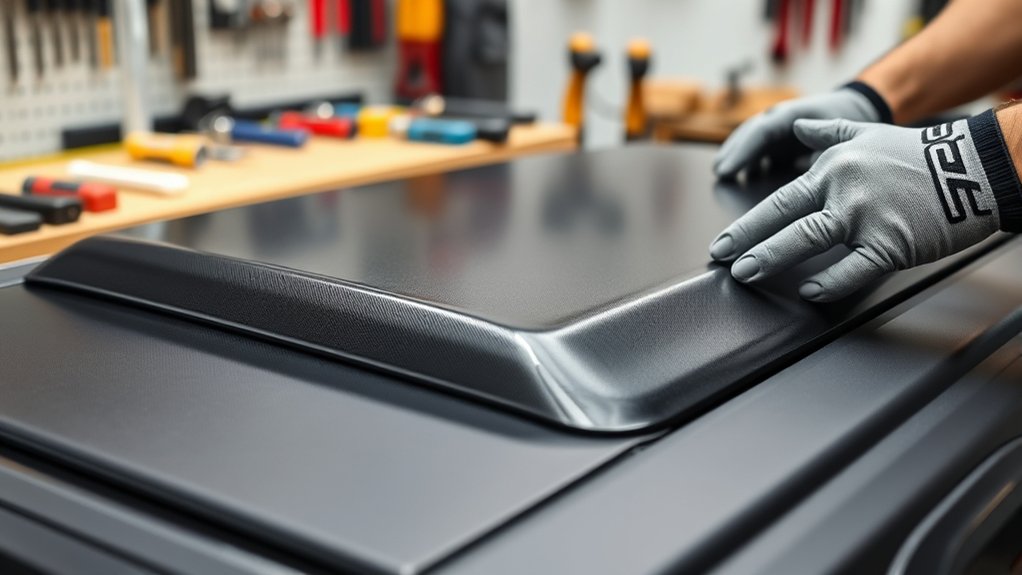
10 Steps for Fiberglass Tonneau Cover Installation Instructions
Dealing with fiberglass tonneau cover installation can feel overwhelming, especially if you’re new to it. Many people struggle with aligning and securing the cover properly, worried about leaks or a poor fit. You’re not alone—getting that perfect seal and fit is a common challenge.
Start by gathering your tools and prepping your workspace, making sure it’s clean and debris-free. Remove any old components and thoroughly clean your truck bed.
Position the fiberglass cover, aligning and centering it properly with a level. Secure it with clamps or fasteners, then make adjustments to guarantee a perfect fit and watertight seal.
Tighten everything securely, test the operation, and check for gaps. If you keep going, you’ll get all the detailed steps for a smooth install.
Key Takeaways
- Prepare your workspace, gather all necessary tools, and make sure to protect your truck bed surfaces before you start.
- Next, remove any old components or covers that are in place. Clean the truck bed thoroughly and check for any damage that might need fixing.
- Place the fiberglass cover over the bed, making sure it’s positioned correctly and aligned evenly. Take your time to ensure it fits just right.
- Use clamps to hold the cover in place, then tighten all the hardware. Double-check that the cover sits flush and that the seal looks good.
- After everything is secured, test the cover’s operation. Look for any leaks or gaps.
- Make any final adjustments needed to ensure a watertight seal. This will help keep your truck bed protected from the elements.
Gather Your Tools and Prepare the Workspace
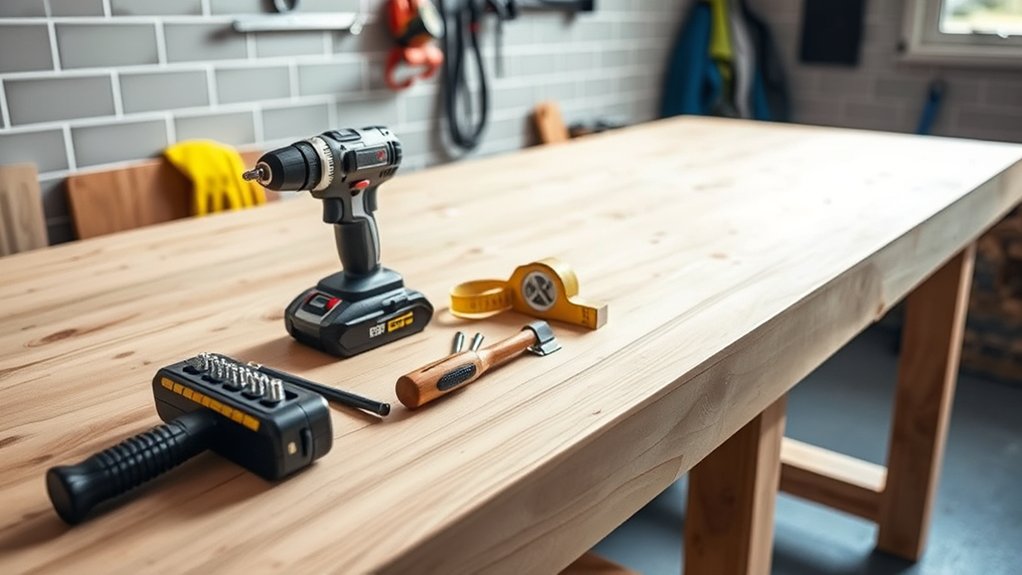
Before starting the installation, it’s important to gather all the necessary tools and prepare your workspace. Make sure you have essential tools like screwdrivers, a tape measure, and a cordless drill ready. These will help you complete the installation efficiently.
Your workspace should be clean and level, free of debris to avoid damaging the fiberglass cover and to guarantee a precise fit. Take time to lay out all parts and hardware beforehand, checking against the installation manual to confirm everything is present.
Protect your truck’s paint by using soft cloths or foam pads during the process. A well-prepared workspace and the right tools will make the installation smoother and help you avoid unnecessary issues or damage.
Remove Old Components and Clean the Truck Bed
Start by removing any existing tonneau cover hardware, clamps, or mounting brackets from your truck bed. This keeps your workspace clean and prevents anything from getting in the way during installation.
Remove old hardware and brackets to keep your workspace tidy and ensure smooth installation.
Once everything’s removed, give the truck bed a good clean with a broom, vacuum, or cloth to get rid of dust, dirt, and debris. This helps the fiberglass cover fit properly and stick better.
Next, check the bed for any dents, rust, or damage. Fix these issues beforehand to ensure a smooth fitment.
Remove old weatherstripping, tape, or sealant along the bed rails for a smooth surface. Then, verify the bed is dry and free of moisture.
Finally, clean the entire bed area thoroughly to get the best adhesion and secure mounting.
Position and Align the Fiberglass Tonneau Cover
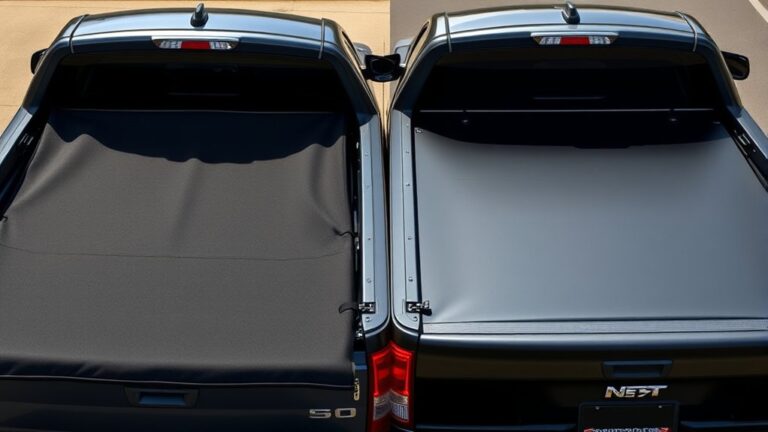
To guarantee a proper fit, carefully position the fiberglass tonneau cover over the truck bed. Center it so the overhang is even on all sides.
Use a tape measure to confirm equal spacing from the bed rails to the edges of the cover. Make sure the overhang is consistent.
Align the front edge of the cover flush with the cab or tailgate, depending on your design. Temporarily secure it with clamps or masking tape to check the fit and alignment.
Before final fastening, double-check that the cover sits level side-to-side and front-to-back. Make adjustments as needed.
Proper positioning and alignment are essential for a secure fit and smooth operation. Take your time to verify everything before moving to the next step.
Secure the Cover Using Clamps or Fasteners
Once the fiberglass tonneau cover is properly positioned, start securing it with clamps or fasteners underneath the bed rails.
As you tighten the clamps or fasteners, alternate sides to prevent warping and ensure a snug fit. Use a tape measure or alignment tools to check that the cover is flush and evenly secured along the entire bed length.
Keep pressing down on the rubber gasket or weatherstripping as you tighten each clamp. This helps create an effective water seal. Test the cover’s stability by opening and closing it multiple times.
Make sure all clamps and fasteners hold securely without shifting. Remember to tighten gradually on both sides and check the alignment often during this process.
Make Adjustments for a Perfect Fit and Seal
Before tightening the clamps, double-check that the fiberglass tonneau cover is perfectly aligned with the truck bed rails. Proper alignment ensures there are no gaps that could compromise the seal and let water in.
Press down evenly on the rubber gasket or weatherstripping around the edges to create a tight seal. This step is key to preventing leaks and making sure the cover fits securely.
Gradually tighten the clamps underneath the rails, checking for a flush fit and even pressure. Make small adjustments as needed to avoid warping or uneven tension.
Once everything is secure, test the cover’s opening and closing multiple times. Confirm smooth operation and proper latch engagement to ensure a secure, weatherproof fit.
Tighten Hardware to the Recommended Torque
Using a torque wrench guarantees you tighten hardware to the correct specifications, preventing damage or loose fittings. Always refer to the manufacturer’s torque values to get it just right.
Regularly recheck fasteners after installation to keep everything secure over time. This helps ensure everything stays tight and safe as things settle or shift.
Importance of Proper Torque
Ensuring hardware is tightened to the correct torque is crucial for the long-term performance of your fiberglass tonneau cover. Proper torque guarantees all hardware stays secure, preventing loosening or detachment over time.
Over-tightening can damage fiberglass components or strip threads, which can compromise the cover’s integrity. Following the manufacturer’s recommended torque specifications is essential for safety and to keep your warranty valid.
Using a torque wrench helps you apply the right amount of torque, avoiding both under- and over-tightening. Consistent, correct torque not only secures the hardware but also ensures a proper seal, which enhances durability.
- Proper torque prevents hardware loosening and detachment
- Over-tightening risks damaging fiberglass parts
- Correct torque maintains warranty and safety standards
Tools for Accurate Tightening
To tighten hardware accurately, a torque wrench is an essential tool that helps you apply the precise amount of force specified by the manufacturer. During installation, using a torque wrench ensures you tighten all bolts and nuts to the recommended torque settings, which are usually listed in the manual.
Over-tightening can damage the fiberglass or mounting components, while under-tightening might cause loose fitment, leaks, or rattling. Refer to the torque specifications, usually measured in foot-pounds (ft-lb) or Newton-meters (Nm), to find the right tightness.
Properly torqued hardware guarantees a secure attachment, preserves the structural integrity of the tonneau cover, and prevents future issues. Investing in a quality torque wrench makes your installation more precise and reliable.
Test Opening, Closing, and Locking the Cover
Begin by opening and closing the fiberglass tonneau cover several times to verify it moves smoothly and aligns properly. During this process, test how easy it is to operate, making sure it opens fully without resistance.
Check that the hinges and latches stay aligned and work smoothly. Next, focus on the locking mechanism: test the lock at different points to confirm it engages fully when closed, securing the cover tightly.
Make sure the lock and unlock functions disengage smoothly without resistance, so you can access the cover easily when needed. After opening and closing, look for any gaps or misalignments to ensure the seal remains watertight.
Confirm the lock engages fully and securely. Guarantee the cover opens and folds smoothly. Check for proper alignment and no obstructions.
Inspect for Gaps and Confirm Secure Mounting
You should check for even gaps along the edges of the cover to guarantee a proper seal and prevent leaks.
Confirm that all brackets and clamps are tightly secured to keep the cover stable over time.
Use a flashlight to inspect the seals closely and press along the perimeter to verify the cover sits flush without warping.
Checking Seal Compression
Once the fiberglass tonneau cover is mounted, it’s important to check that the seal is properly compressed so water doesn’t leak in. Inspect the weatherstripping and rubber gasket along the entire perimeter, making sure it’s pressed down evenly.
Look for gaps between the cover and truck bed, and adjust the clamps or position if needed to get full contact. Make sure the weatherstripping is consistently compressed on all sides to avoid weak points.
Gently press along the weatherstripping with your fingers or a tool to ensure it’s fully seated without pinching or twisting. To test the seal, lightly spray water over the edges and watch for leaks or areas needing further adjustment.
Make certain the weatherstripping is even and flush on all sides. Check for gaps and tweak the clamps to improve contact. Finally, spray water around the edges to confirm there are no leaks.
Ensuring Even Mounting
After confirming the seal compression, focus on making sure the mounting is even across the entire cover. Check for uniform gaps along the edges to verify a consistent seal.
Make sure all mounting brackets are securely fastened and evenly tightened to prevent warping or uneven mounting. Use a tape measure to confirm the distance between mounting points is consistent on both sides, ensuring proper alignment.
Press down firmly on weatherstripping and gasket areas to promote even compression and a tight seal. Regularly inspect the cover for gaps or misalignments, adjusting clamps or brackets as needed.
Proper alignment of mounting brackets is essential for an even mount, which helps prevent leaks or cover shifting over time.
| Mounting Aspect | Check/Adjustment |
|---|---|
| Gaps along edges | Ensure uniform gaps |
| Bracket tightness | Fasten evenly |
| Distance between mounting points | Confirm consistent spacing |
| Weatherstripping | Press firmly for compression |
| Overall alignment | Verify and adjust as needed |
Perform Final Checks and Make Fine-Tuning Adjustments
Performing final checks and fine-tuning adjustments ensures your fiberglass tonneau cover functions properly and looks professional. Start by verifying that all clamps and fasteners are securely tightened to prevent movement during use.
Check the alignment of the cover panels to make sure they sit flush with the bed rails and tailgate, creating a seamless appearance. Test opening and closing the cover multiple times to confirm smooth operation and proper latch engagement.
Inspect the weatherstripping around the edges to ensure even compression and a watertight seal. Make small adjustments to the positioning of the cover or clamps as needed to eliminate gaps or misalignments.
- Confirm all fasteners are tight
- Make certain the cover opens and closes smoothly
- Check for proper seal and alignment
Maintain and Care for Your Fiberglass Tonneau Cover
To keep your fiberglass tonneau cover looking its best, you need to clean and protect its surface regularly.
Using gentle soap and water helps prevent dirt buildup. Applying polish or wax then guards against UV damage and scratches.
Be sure to check the sealant around the edges. This helps maintain a watertight seal and keeps moisture from getting in.
Cleaning and Washing Tips
Keeping your fiberglass tonneau cover looking its best means cleaning it regularly with the right techniques. Use a mild soap and water solution to wash away dirt, dust, and road grime.
Be gentle by using a soft microfiber cloth or sponge to avoid scratching the fiberglass surface. Avoid abrasive cleaners or harsh chemicals because they can damage the gel coat, leading to fading or oxidation.
After washing, rinse thoroughly and dry with a clean, soft cloth to prevent water spots. Periodically, apply a dedicated fiberglass or gel coat polish to boost the finish and add a protective barrier against UV rays.
Proper cleaning helps extend the life and appearance of your fiberglass tonneau cover, keeping it looking sleek and new.
Protecting Surface Finish
Protecting the surface finish of your fiberglass tonneau cover is key to keeping it looking sleek and lasting longer. Regularly wash it with a mild soap and water solution to remove dirt and prevent surface scratches.
Every few months, apply a specialized fiberglass or gel coat polish to keep the finish glossy and add a protective barrier against UV rays. Avoid abrasive cleaners or rough scrubbing tools, as they can damage the surface and cause micro-scratches.
Periodically check the cover for cracks or chips and fix any damage quickly to prevent it from getting worse. Use a UV protectant spray made for fiberglass to extend the life and maintain your cover’s appearance.
Proper care helps your fiberglass surface stay pristine and protected for years to come.
Frequently Asked Questions
How to Install a Leer Hard Tonneau Cover?
To install a Leer hard tonneau cover, start by removing any existing hardware and cleaning your truck bed.
Next, assemble the side rails inside the bed, making sure they’re level and secure.
Attach the cover panels to the rails, then unfold and lock the cover into place.
Finally, double-check all clamps, seals, and latches, and test the cover’s operation to make sure everything is secure and working smoothly.
Which Is Better, Aluminum or Fiberglass Tonneau Cover?
You’ll find fiberglass covers better if you prioritize durability, sleek looks, and insulation. They tend to cost more and are heavier, but they give a high-end appearance.
Aluminum covers are lighter, easier to install, and resistant to dents and corrosion. They’re a practical and affordable choice if you want something simple and durable.
Ultimately, choose fiberglass for a premium look and noise reduction, or aluminum for lighter weight and easier handling. Your specific needs and budget will help you decide.
How Long Does It Take a Professional to Install a Tonneau Cover?
A professional usually takes about 30 minutes to an hour to install a fiberglass tonneau cover. The exact time can vary depending on the cover’s complexity and the installer’s experience.
Securing side rails, attaching the cover, and adjusting seals tend to go smoothly when done by a skilled installer. If any modifications or drilling are needed, it might take a little longer.
How Heavy Is a Fiberglass Truck Bed Cover?
A fiberglass truck bed cover usually weighs between 60 and 100 pounds, depending on its size and thickness.
This weight makes it sturdier and more secure than soft covers. However, it also means you should be prepared for handling it, possibly needing help or extra support during installation.
Keep in mind, the weight affects how easy it is to mount and the overall setup process. Plan accordingly for a smoother installation.
Conclusion
Now that you’ve followed these steps, your fiberglass tonneau cover should fit snugly and look sharp. A well-installed cover not only boosts your truck’s style but also keeps your gear protected.
Keep an eye on the fit and make adjustments as needed. Think of it as channeling your inner MacGyver to get everything just right.
With proper care, your cover will serve you faithfully for many moons to come. Happy driving, and may your adventures be ever smooth!